⚠️ Affiliate Disclaimer: This post may contain affiliate links, which means I may earn a small commission at no extra cost to you, if you make a purchase through one of these links. I only recommend products or services I genuinely trust and believe can provide value. Thank you for supporting My Medical Muse!
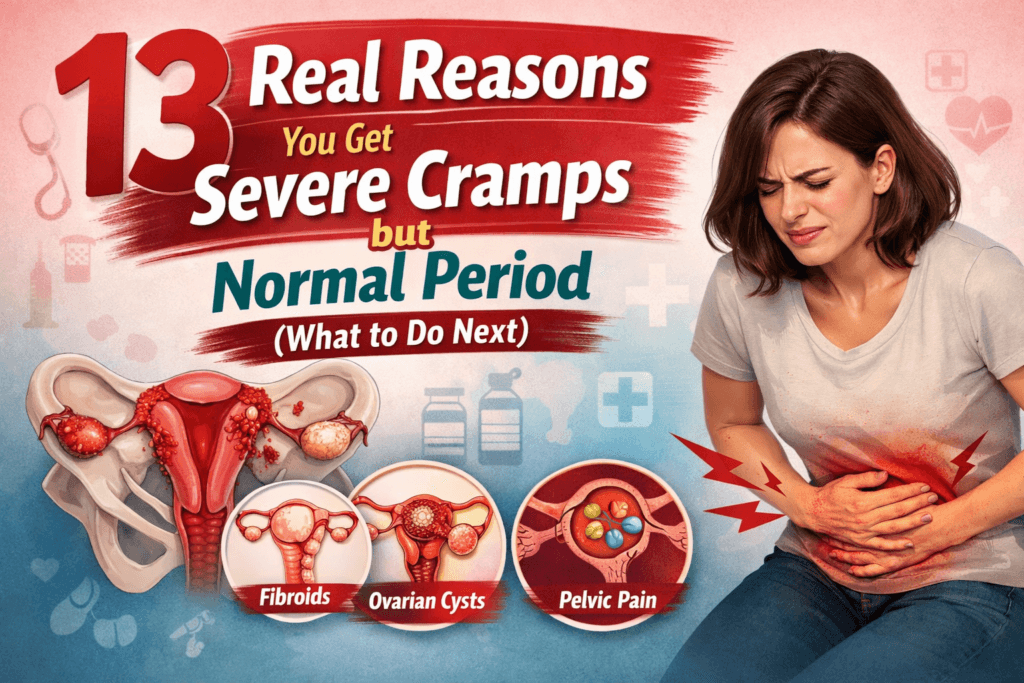
13 Real Reasons You Get Severe Cramps but Normal Period (What to Do Next)
Severe menstrual cramps can be alarming, especially when everything else about your period seems normal. Your cycle arrives on time, the bleeding pattern is predictable, the flow and color look typical, nothing appears out of place.
Yet the pain is intense, sometimes overwhelming, sometimes disabling.
Many people are told that as long as their period is regular, there is nothing to worry about. That belief is widespread, it is also wrong.
A normal-looking period does not automatically mean a healthy menstrual cycle. Menstrual pain exists on a spectrum, and severe pain is not something the body is meant to tolerate in silence. When cramps interfere with daily life, they are signaling that something deserves attention, even if bleeding appears normal.
This article explains what severe cramps with a normal period really mean, the medical conditions that can cause them, how to tell the difference between common discomfort and a real problem, and when it is time to stop enduring the pain and seek proper medical evaluation.
Understanding What “Normal Period” Really Means
When people say a period is “normal,” they usually mean three visible things:
Timing: Your cycle happens regularly, typically every 21-35 days.
Bleeding amount: The flow is neither too heavy nor too light.
Duration: Periods last between 3 and 7 days.
On the surface, this seems straightforward. But a menstrual cycle is more than just the blood that comes out.
Even if your bleeding appears normal, the pain you experience matters. Severe cramps that interfere with your work, sleep, or daily activities are not something your body is meant to tolerate. Pain is a signal, not a normal feature of menstruation. Your body is trying to tell you that something may be off, even if everything else looks fine.
What Causes Menstrual Cramps in the First Place?
Menstrual cramps, or dysmenorrhea, are caused by the uterus contracting to shed its lining. These contractions are triggered by hormone-like chemicals called prostaglandins.
Higher prostaglandin levels equals stronger contractions
Stronger contractions equals reduced blood flow to the uterine muscle
Reduced blood flow equals increased pain
This mechanism explains mild to moderate cramps that many people experience but it doesn’t fully explain intense, debilitating pain that can leave you doubled over.
If your cramps are severe, persistent, or worsening over time, it’s usually a sign that something else is going on beyond normal prostaglandin activity.
Primary Dysmenorrhea: Pain Without Disease
Primary dysmenorrhea is menstrual pain that occurs without any underlying medical condition. It usually starts in adolescence or early adulthood and is tied to higher prostaglandin production.
Key features include:
Pain starting just before or at the beginning of your period
Cramping in the lower abdomen
Pain lasting 1-3 days
Tends to improve with age or after childbirth
Many people manage this pain with heat packs, over-the-counter anti-inflammatory medications, or rest.
However, if the pain is severe enough to cause vomiting, fainting, missed work or school, or reliance on strong painkillers every month, it deserves further medical evaluation even if it started when you were a teen.
Long-standing pain doesn’t automatically mean it’s harmless.
Secondary Dysmenorrhea: Pain With an Underlying Cause
Secondary dysmenorrhea happens when menstrual pain is caused by an actual medical condition.
This is often the case for people who have normal-looking periods but debilitating cramps. The bleeding may remain regular, but the pain gradually worsens or changes in intensity.
Common causes include:
The tricky part? These conditions are often missed because doctors may focus too much on bleeding patterns. Severe pain should always be evaluated in context, regardless of how your period looks.
Endometriosis: Severe Pain With Normal Bleeding
Endometriosis is one of the most common reasons for severe cramps even when your period appears normal.
It happens when tissue similar to the uterine lining grows outside the uterus, often on the ovaries, pelvic walls, bowel, or bladder. During your period, this tissue responds to hormonal changes just like the lining inside your uterus but because it has no way to exit your body, it causes inflammation, irritation, and intense pain.
Signs of endometriosis-related cramps:
Periods may be perfectly regular
Bleeding can appear normal in amount and color
Pain can be severe and worsen over time
Pain may start days before bleeding begins
Pain may radiate beyond the pelvis
Pain during sex is common
Many people are told their pain is “normal” for years before being diagnosed. Worsening cramps over time are a major red flag.
Adenomyosis: Pain Hidden Inside the Uterus
Adenomyosis occurs when endometrial tissue grows into the muscular wall of the uterus. Unlike endometriosis, the tissue is trapped inside, which makes it harder to detect.
Symptoms can include:
Deep, heavy cramping
Lower back pain
Pelvic pressure or fullness
While bleeding may be heavy in some cases, many people still experience normal flow and regular cycles. Pain is often described as crushing or deep, and because it usually affects people in their 30s and 40s, it’s often dismissed as “age-related changes”, when in fact, it deserves investigation.
Fibroids: Pain Without Heavy Bleeding
Uterine fibroids are benign muscle tumors that can occur anywhere in the uterus.
While fibroids are often associated with heavy bleeding, pain can appear without any change in your period.
Symptoms may include:
Cramping and pelvic pressure
Back pain
Bloating or discomfort
Fibroids can grow slowly, so the pain may feel “normal” at first and gradually worsen over time. Many people normalize it until it becomes debilitating.
Ovarian Cysts and Ovulation-Related Pain
Ovarian cysts, fluid-filled sacs that form on the ovaries can also cause severe cramps during menstruation.
Functional cysts are a normal part of ovulation, but they can sometimes enlarge or rupture.
Pain may feel sharp, stabbing, or one-sided.
It can appear suddenly or persist throughout the period.
Movement, exercise, or sexual activity can worsen the discomfort.
If severe pain comes with nausea, dizziness, or sudden changes, seek medical care immediately.
Pelvic Floor Dysfunction and Nerve Pain
Not all menstrual pain comes from the uterus.
Pelvic floor dysfunction and nerve irritation can amplify cramps. Muscle tension or nerve hypersensitivity during your period may mimic uterine pain.
Signs include:
Pain radiating to hips, thighs, or lower back
Worsening pain while sitting or standing
Limited relief from heat or medication
Even with structurally normal reproductive organs, hormonal changes can increase muscle tension and nerve sensitivity, creating intense discomfort.
Gastrointestinal Conditions That Mimic Menstrual Pain
Your intestines and reproductive organs share the same nerve pathways, which means that discomfort in the gut can sometimes feel like menstrual cramps. For some people, gastrointestinal issues can flare during their period, creating the illusion of uterine pain, even when the uterus itself is healthy.
Common gastrointestinal conditions that mimic menstrual cramps include:
Irritable Bowel Syndrome (IBS): IBS symptoms such as cramping, bloating, diarrhea, or constipation can worsen around menstruation. Hormonal changes during your cycle can make the gut more sensitive, intensifying the discomfort.
Inflammatory Bowel Disease (IBD): People with Crohn’s disease or ulcerative colitis may notice flare-ups during their periods. Pain, bloating, or diarrhea may overlap with the timing of menstruation, making it hard to tell if the uterus or the gut is causing the discomfort.
Clues that the pain may be gastrointestinal rather than uterine:
Pain that improves or worsens with bowel movements
Noticeable bloating or gas during your cycle
Diarrhea or constipation specifically during periods
Even if your bleeding is normal, these conditions can contribute to severe cramping. Identifying the source of pain is key to finding effective relief.
When Severe Cramps Are Still Considered “Normal”
Menstrual pain exists on a spectrum. Some degree of cramping is common, but there’s a line between discomfort that is typical and pain that is abnormal.
Cramps generally considered within normal limits:
Occur only on the first one or two days of menstruation
Improve with rest, heat, or over-the-counter medications such as ibuprofen
Do not interfere with daily life, work, or school
Cramps that are not normal and require attention:
Pain prevents normal daily activities
Pain requires prescription-strength or multiple pain medications
Pain causes vomiting, fainting, or severe nausea
Pain worsens over time or changes in pattern
Pain persists beyond the period itself
Simply “tolerating” the pain does not make it harmless. Normal bleeding does not justify ignoring severe symptoms. Your body is signaling that something may be wrong, and it deserves evaluation.
Why Severe Period Pain Is Often Dismissed
Menstrual pain has historically been minimized. Many people hear messages like:
“Everyone gets cramps.”
“It will get better after childbirth.”
“You’re just sensitive.”
“That’s part of being a woman.”
While well-intentioned, these statements are not medical assessments. Pain is subjective, but underlying conditions are not.
Because of this, diagnosis is often delayed, sometimes for years especially for conditions like endometriosis, where the average time to diagnosis can exceed seven years. During this time, people may continue to suffer unnecessarily, using over-the-counter medications to cope rather than addressing the underlying issue.
Normal bleeding should never override severe pain. Your experience matters.
How Severe Cramps Are Evaluated Medically
When menstrual pain is severe or unusual, doctors typically take a stepwise approach to evaluate the cause:
Detailed menstrual history: Questions about cycle length, bleeding patterns, pain timing, and severity.
Pelvic examination: A physical exam to detect tenderness, masses, or anatomical anomalies.
Ultrasound imaging: Often the first imaging tool used to look for fibroids, cysts, or structural issues.
Blood tests: May be ordered to check for infection, hormone imbalances, or other underlying conditions.
MRI: Used selectively for complex or unclear cases, such as deep endometriosis.
Important note: Some conditions, particularly early-stage endometriosis, may not appear on ultrasound. Normal imaging does not automatically mean there is no disease, a skilled clinician will rely on history, examination, and clinical judgment to guide diagnosis.
Treatment Options Depend on the Cause
Effective management of menstrual pain depends on identifying the underlying cause, not just masking the symptoms. Treatment options may include:
Anti-inflammatory medications: Such as NSAIDs, which reduce prostaglandin production and relieve cramping.
Hormonal therapy: Birth control pills, IUDs, or other hormone-based treatments can reduce endometrial growth, ovulation-related pain, and inflammation.
Pelvic floor physical therapy: For people with pelvic floor tension, therapy can release tight muscles and improve nerve signaling.
Dietary and lifestyle changes: Regular exercise, stress management, and anti-inflammatory diets can reduce the severity of cramps.
Surgical evaluation: In cases of fibroids, severe endometriosis, or ovarian cysts, surgery may be necessary to remove tissue causing pain.
Continually masking pain with medications alone can delay diagnosis, prolong suffering, and potentially worsen underlying conditions. Relief is important, but understanding the source is critical for long-term health.
When You Should Seek Medical Attention Immediately
Some menstrual symptoms require urgent evaluation. Contact a healthcare provider immediately if cramps are accompanied by:
Sudden severe pain that comes on abruptly
Fever, indicating possible infection
Vomiting or severe nausea
Dizziness or fainting, which may indicate internal complications
Unusual vaginal discharge or bleeding outside your normal period
Positive pregnancy test with pain, as this could indicate an ectopic pregnancy
These symptoms could indicate serious conditions such as infection, ovarian torsion, or ectopic pregnancy. Prompt medical attention can prevent complications and protect your reproductive health.
The Bottom Line
Severe cramps during a normal period are never something you should just accept.
Even if your bleeding is regular and your cycle looks normal, pain that disrupts your life is a warning sign, not a normal rite of passage.
Your body is communicating with you. Ignoring the message does not make it disappear. Listening, observing, and taking action can protect your long-term reproductive and overall health.
If your cramps are severe, worsening, or unlike anything you’ve experienced before, trust your instincts. Seek evaluation, ask questions, and get answers. Your pain is not an overreaction, it is your body being honest and it deserves to be heard.
👩⚕️ Need Personalized Health Advice?
Get expert guidance tailored to your unique health concerns through MuseCare Consult. Our licensed doctors are here to help you understand your symptoms, medications, and lab results—confidentially and affordably.
👉 Book a MuseCare Consult NowMust Read:
- Menstrual Cycle Related Symptoms: 21 Normal Signs vs Dangerous Red Flags Every Woman Must Know
- 7 Reasons Your Period Smells Metallic or Strong And What You Must Know
- Why Your Period Blood turns Brown at the End: 7 Fascinating Reasons and When to Worry
- 7 Surprising Reasons Why You Have Mucus in Period Blood and Why It’s Usually a Good Sign
- 8 Surprising Reasons Why Your Period Blood Looks Watery and Why It’s Usually Nothing to Worry About
- 10 Surprising Reasons Why Your Period Suddenly Became Shorter This Month and Why It’s Not Always Bad
- 10 Powerful Reasons Why You Get Dizzy Right Before Your Period

Dr. Ijasusi Bamidele, MBBS (Binzhou Medical University, China), is a medical doctor with 5 years of clinical experience and founder of MyMedicalMuse.com, a subsidiary of Delimann Limited. As a health content writer for audiences in the USA, Canada, and Europe, Dr. Ijasusi helps readers understand complex health conditions, recognize why they have certain symptoms, and apply practical lifestyle modifications to improve well-being