⚠️ Affiliate Disclaimer: This post may contain affiliate links, which means I may earn a small commission at no extra cost to you, if you make a purchase through one of these links. I only recommend products or services I genuinely trust and believe can provide value. Thank you for supporting My Medical Muse!
7 Proven Ways to Relieve Back Pain During Ovulation Naturally
Back pain during ovulation is real, it is common and yet, it often catches women by surprise.
For some, it is a dull, nagging ache in the lower back that comes and goes, for others it can feel sharp, one sided, or even radiate into the hips. It may appear alongside bloating, mild abdominal cramps, or a subtle sense of pressure in the pelvis because it occurs mid cycle, many women wonder if it signals something serious or if it is simply a normal part of the menstrual rhythm.
The short answer is simple, for most women, this type of back pain is normal. The longer answer is more nuanced.
Ovulation is not just the release of an egg, it is a complex physiological process involving hormones, ligaments, pelvic muscles, and nerve signals. Each of these factors can contribute to discomfort in ways that may surprise you.
Understanding the causes of ovulation-related back pain is key. It helps you recognize what is harmless, what can be managed, and when a deeper medical evaluation is necessary. This article breaks down the anatomy, hormonal fluctuations, nerve pathways, and common conditions that can trigger back pain during ovulation. No myths, no exaggeration, just clear, science-based explanations.
By the end, you will not only know why this pain happens but also how to respond to it effectively and with confidence.
What Ovulation Actually Is
Ovulation is much more than a simple release of an egg, it is a carefully coordinated hormonal and physiological event that involves the brain, ovaries, uterus, ligaments, nerves, and pelvic muscles. Every step in this process can influence how your body feels.
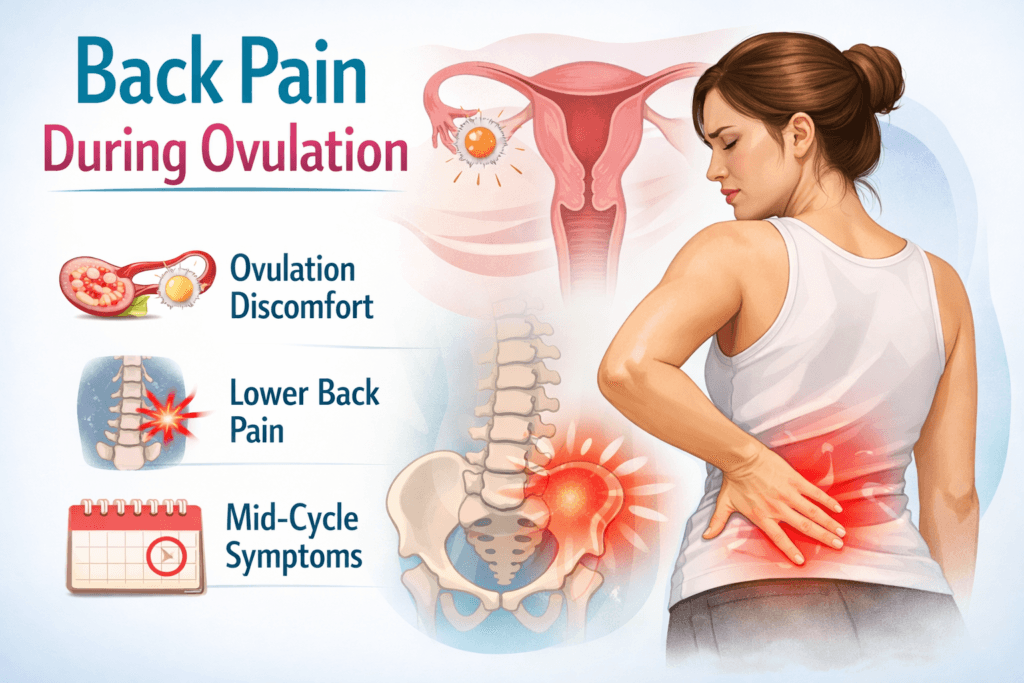
Around the middle of a typical menstrual cycle, the pituitary gland releases a surge of luteinizing hormone (LH), this surge triggers a mature follicle in one ovary to rupture and release an egg. The rupture itself is a tiny injury at the cellular level. It causes local inflammation, and the body reacts by sending pain signals through the nerves. These signals are not always confined to the ovary or pelvic region, instead, they can be interpreted by the brain as discomfort in the lower back, hips, or even the thighs.
This is why mid-cycle back pain is a common, yet often misunderstood, symptom of ovulation.
Why Ovulation Can Cause Back Pain
Back pain during ovulation does not have a single cause. Instead, several mechanisms often work together, producing the sensation of discomfort or aching in the lower back.
1. Referred Pain From the Ovary
The ovaries sit deep within the pelvis and share nerve pathways with the lower back and surrounding structures. When a follicle ruptures, irritation or inflammation at the ovary can trigger pain signals that the brain interprets as originating from the lower back.
This phenomenon is known as referred pain. It explains why ovulation-related discomfort can mimic muscle strain or a pulled back, even when the back muscles themselves are not injured.
2. Pelvic Fluid Irritation
The rupture of a follicle releases a small amount of fluid and sometimes a trace of blood into the pelvic cavity. This fluid can irritate the peritoneum, the sensitive membrane lining the abdominal and pelvic cavities.
The peritoneum responds strongly to both chemical and mechanical stimuli. Irritation here can manifest as a dull ache or pressure that radiates backward toward the lower spine, sometimes lasting several hours or more.
3. Hormonal Effects on Ligaments
Just before ovulation, estrogen levels rise sharply. Estrogen influences connective tissue, making ligaments temporarily more flexible. This increase in ligament laxity can subtly affect spinal alignment and posture, creating tension in the lower back.
Women with pre-existing back issues or weaker core muscles may feel this effect more strongly, sometimes experiencing soreness or stiffness that coincides with ovulation.
4. Uterine and Pelvic Muscle Contractions
Ovulation can also trigger mild uterine contractions. These contractions are far less intense than menstrual cramps, but they can stimulate nearby nerves.
The pelvic floor and lower abdominal muscles are closely connected to the lumbar spine. When these muscles tighten or spasm even briefly, pain can be perceived in the lower back or hips, further contributing to mid-cycle discomfort.
What Ovulation Back Pain Feels Like
The sensation of ovulation-related back pain varies widely between women and even between cycles for the same woman. Common experiences include:
Dull aching in the lower back that comes and goes
One-sided pain, often alternating sides month to month
A sense of pressure or heaviness in the pelvis accompanied by back discomfort
Mild cramping that radiates backward into the spine
Sharp twinges lasting a few minutes, followed by lingering soreness
Typically, this discomfort lasts a few hours up to two days. If the pain persists longer, intensifies over time, or disrupts daily activities, it may indicate that factors beyond ovulation are contributing to the discomfort.
Why It Often Happens on One Side
Only one ovary releases an egg per cycle, which explains why ovulation-related back pain is usually unilateral.
For example, if the right ovary ovulates, the pain is often felt on the right side of the lower abdomen or back. The next cycle, ovulation may occur on the left ovary, shifting the discomfort to the left side.
This alternating pattern is a strong indicator that ovulation is the source of the pain. Conversely, persistent one-sided pain over several cycles without alternating sides may suggest another condition, such as an ovarian cyst or musculoskeletal issue, and should be evaluated by a healthcare professional.
Back Pain During Ovulation vs Period Back Pain
Although both are forms of cyclical discomfort, back pain during ovulation and period-related back pain are distinct experiences. Understanding the differences helps you identify what is normal and what may require attention.
Ovulation pain occurs mid-cycle, typically between day 12 and day 16 in a 28-day menstrual cycle. It is usually milder, short-lived, and more localized, often affecting one side of the lower back or pelvis.
Period-related back pain, on the other hand, coincides with menstruation. It is primarily driven by prostaglandins, hormone-like compounds that trigger uterine contractions. This pain is often diffuse, crampy, and lasts longer, sometimes for several days.
The simplest way to distinguish the two is timing. Ovulation pain appears mid-cycle, while menstrual back pain appears just before or during menstruation. Noting the timing over a few cycles can provide clarity.
Is Ovulation Back Pain a Sign of Fertility?
Experiencing ovulation pain does not directly indicate fertility. Some women feel pain when an egg is released, but this does not mean the egg is more viable or that conception is more likely.
Ovulation pain simply reflects how sensitive the nervous system is to the ovulatory process. It is not predictive of egg quality, hormone balance, or your chances of getting pregnant.
Recognizing this helps reduce unnecessary worry. Feeling mild or moderate back pain mid-cycle is usually a normal bodily signal, not a marker of fertility.
When Ovulation Back Pain Is Normal
For most women, ovulation-related back pain is a harmless and temporary phenomenon. It is generally considered normal if it meets the following criteria:
Occurs mid-cycle
Lasts less than 48 hours
Is mild to moderate in intensity
Resolves with rest, heat, or simple over-the-counter pain relief
Alternates sides from one cycle to the next
When these characteristics are present, reassurance and simple self-care measures are typically all that is needed.
When Ovulation Back Pain Is Not Normal
Certain warning signs suggest that back pain may not be solely caused by ovulation and should prompt medical evaluation. Seek help if you experience:
Severe or disabling pain
Pain lasting more than two to three days
Worsening pain over multiple cycles
Accompanying fever, nausea, or vomiting
Abnormal vaginal bleeding
Pain that does not alternate sides
Pain radiating down the legs or causing numbness
These signs can indicate underlying conditions that require attention, such as ovarian cysts, infections, or musculoskeletal issues.
Conditions That Can Mimic Ovulation Back Pain
Several gynecological and non-gynecological conditions can produce mid-cycle back pain similar to ovulation discomfort:
1. Endometriosis
Endometrial tissue growing outside the uterus can become inflamed during ovulation. This can lead to deep pelvic pain, back pain, and pain during intercourse. Ovulation often worsens these symptoms.
2. Ovarian Cysts
Functional cysts may form around ovulation. If a cyst stretches the ovarian capsule, it can trigger sharp, one-sided pain radiating to the back.
3. Pelvic Inflammatory Disease
Chronic infections of the reproductive organs can produce back and pelvic pain that fluctuates with the menstrual cycle. This is often associated with abnormal discharge or fever.
4. Fibroids
While fibroids do not directly cause ovulation pain, they can amplify pelvic pressure and back discomfort during hormonal changes.
6. Musculoskeletal Issues
Weak core muscles, poor posture, or lumbar disc problems can flare during ovulation due to hormonal ligament laxity. In such cases, ovulation triggers the pain but is not the root cause.
Why Some Women Suddenly Start Feeling Ovulation Back Pain
It is common for women to notice ovulation back pain for the first time in their late twenties or thirties. This change is not random. Factors that contribute include:
Hormonal sensitivity changes with age
Stress, which amplifies pain perception
Previous pregnancies, which alter pelvic anatomy
Lifestyle factors, such as prolonged sitting or weak core muscles
Even though the ovulation process itself remains consistent, the body’s response can shift over time, making mid-cycle back pain more noticeable.
How Stress Makes Ovulation Pain Worse
Stress plays a significant role in amplifying ovulation discomfort.
Stress increases cortisol, which enhances inflammation and lowers pain thresholds
It causes muscle tension, particularly in the lower back and pelvis
Mild ovulatory discomfort can therefore become more intense and noticeable
The ovulation itself is not the problem; the nervous system’s response under stress magnifies the sensation of pain.
How to Relieve Back Pain During Ovulation
Most cases of ovulation-related back pain respond well to simple, non-invasive strategies:
1. Heat Therapy
Applying a heating pad or warm compress to the lower back or abdomen for 15-20 minutes relaxes muscles and calms nerve sensitivity.
2. Gentle Movement
Activities like walking, stretching, or yoga improve circulation, reduce stiffness, and ease discomfort. Avoid high-intensity workouts while pain is present.
3. Anti-Inflammatory Pain Relief
Over-the-counter medications such as ibuprofen or naproxen can reduce inflammation and ease pain if needed. Use them responsibly and under guidance.
4. Hydration
Dehydration can worsen muscle cramps and heighten pain perception. Drink adequate water, especially mid-cycle.
5. Posture Awareness
Avoid prolonged sitting and support the lower back when working or driving to reduce strain.
Lifestyle Changes That Reduce Recurrence
If ovulation back pain occurs regularly, long-term strategies can help reduce severity and frequency:
Strengthen core muscles to support the lower back
Improve pelvic stability with targeted exercises
Manage stress through meditation, breathing exercises, or other relaxation techniques
Prioritize sleep for recovery and hormonal balance
Maintain a healthy weight to reduce spinal strain
These changes decrease the body’s sensitivity to normal hormonal fluctuations and improve overall comfort during ovulation.
Can Birth Control Stop Ovulation Back Pain?
Yes. Hormonal contraceptives work by suppressing ovulation, which effectively prevents the release of an egg each cycle.
If ovulation is the primary cause of your mid-cycle back pain, stopping ovulation often leads to significant relief or complete elimination of the discomfort.
However, this is not a universal solution. The decision to use hormonal contraceptives should be made in consultation with a healthcare provider, especially if your pain is severe, disruptive, or if you have other health considerations. A provider can help you choose the right method and discuss potential side effects or alternatives.
Does Ovulation Back Pain Mean Something Is Wrong With Hormones?
Usually, no. Experiencing ovulation-related back pain does not indicate a hormonal imbalance.
Pain during ovulation simply reflects normal fluctuations in hormones and tissue response. Hormonal disorders typically present differently, often causing:
Irregular menstrual cycles
Missed or skipped periods
Abnormal bleeding
Other systemic symptoms
Isolated ovulation pain in an otherwise healthy cycle is usually a normal physiological response, not a sign of dysfunction.
Tracking Ovulation Pain for Clarity
Keeping a symptom journal can be very helpful in understanding your body. Track:
Day of your cycle when pain occurs
Pain location and whether it alternates sides
Duration and intensity
Associated symptoms such as bloating, cramping, or fatigue
If your pain consistently aligns with ovulation, this reassures you that the pattern is normal. Irregular, worsening, or unpredictable pain patterns can provide valuable information to your healthcare provider for further evaluation.
When to See a Doctor
While most ovulation back pain is harmless, medical evaluation is warranted when:
Pain interferes with daily life or prevents normal activity
Over-the-counter measures do not relieve the discomfort
Symptoms are new, severe, or progressively worsening
There is concern about fertility or other underlying conditions
A doctor may perform a pelvic examination, ultrasound, or hormonal assessment depending on your history and symptoms. Early evaluation ensures that any treatable conditions are addressed promptly and provides peace of mind about normal ovulatory discomfort.
The Bottom Line
Back pain during ovulation is real, it is not a sign of weakness, nor is it something to dismiss lightly. Your body is communicating through sensations, and understanding them is key to maintaining reproductive and musculoskeletal health.
This pain arises from a complex interplay of hormones, nerves, muscles, and pelvic anatomy. It is a normal physiological response for many women, and in most cases, it is temporary, mild, and harmless. Awareness and simple self-care strategies like heat therapy, gentle movement, and posture support are often enough to manage it effectively.
At the same time, persistent, severe, or unusual pain should not be ignored. Sometimes, back discomfort is a signal that something else may be happening, whether it is a gynecological condition, musculoskeletal issue, or other health concern. Listening to your body, tracking your symptoms, and seeking medical evaluation when needed ensures that you respond appropriately without unnecessary worry.
Ultimately, your body speaks in patterns, learning to recognize these patterns allows you to distinguish normal ovulatory pain from warning signs, empowering you to care for yourself intelligently and confidently. Awareness, education, and proactive self-care are your most effective tools for managing ovulation-related back pain.
👩⚕️ Need Personalized Health Advice?
Get expert guidance tailored to your unique health concerns through MuseCare Consult. Our licensed doctors are here to help you understand your symptoms, medications, and lab results—confidentially and affordably.
👉 Book a MuseCare Consult NowRelated Blog Post:
- Dizziness During Period: 9 Real Causes Every Woman Should Know
- 7 Proven Ways to Beat Fatigue Before Period: Stop Feeling Drained Every Month
- Period Pain Worse Some Months: 9 Shocking Reasons Your Cramps Change
- 13 Real Reasons You Get Severe Cramps but Normal Period (What to Do Next)
- Menstrual Cycle Related Symptoms: 21 Normal Signs vs Dangerous Red Flags Every Woman Must Know

Dr. Ijasusi Bamidele, MBBS (Binzhou Medical University, China), is a medical doctor with 5 years of clinical experience and founder of MyMedicalMuse.com, a subsidiary of Delimann Limited. As a health content writer for audiences in the USA, Canada, and Europe, Dr. Ijasusi helps readers understand complex health conditions, recognize why they have certain symptoms, and apply practical lifestyle modifications to improve well-being