⚠️ Affiliate Disclaimer: This post may contain affiliate links, which means I may earn a small commission — at no extra cost to you — if you make a purchase through one of these links. I only recommend products or services I genuinely trust and believe can provide value. Thank you for supporting My Medical Muse!
15 Hidden Reasons You Feel “Wired but Tired” at Night
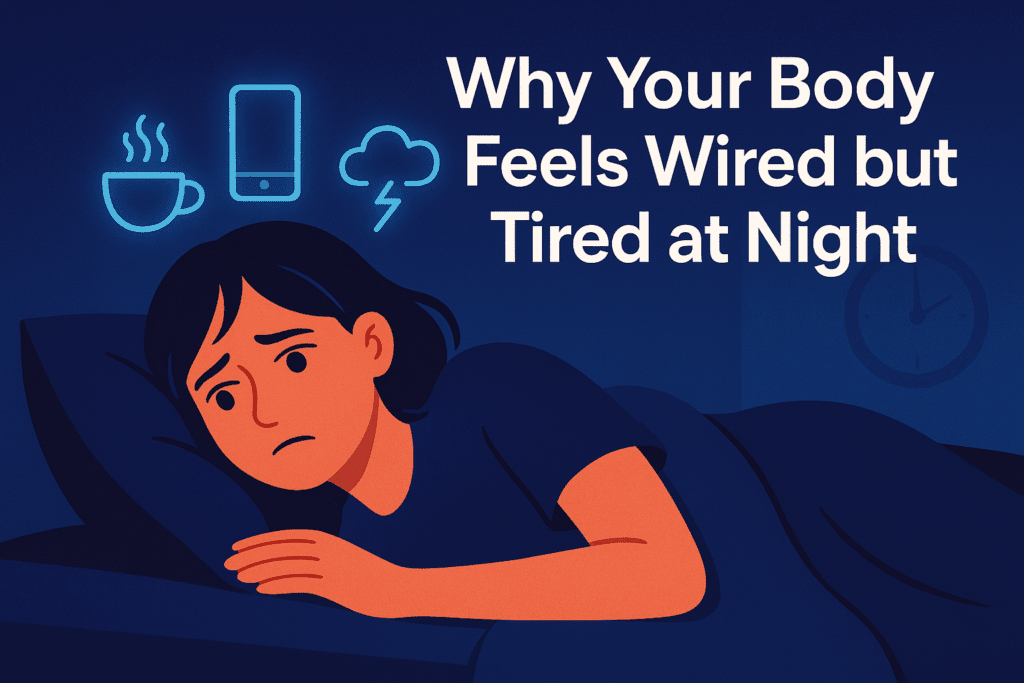
You’ve had a long, demanding day. Your body feels heavy, your muscles ache and your eyelids droop, begging for sleep. Yet, the moment your head hits the pillow, your brain refuses to switch off. Thoughts race, your heart pounds and a restless energy pulses through you leaving you wide awake even as your body screams for rest.
This experience of being “wired but tired” at night is more common than you might think. Millions of people wrestle with the same paradox: physically drained, yet mentally alert, caught in a cycle that makes falling asleep feel impossible.
The frustrating part? It’s not simply “stress” or poor self-control. This pattern has deep biological, psychological, and lifestyle roots. Hormones, nervous system activity, diet, light exposure and even small daily habits all conspire to keep your mind alert long after your body has given up.
Understanding what’s really happening inside your body, why your brain feels awake when your body is exhausted is the first step toward reclaiming restful nights. In this guide, we’ll break down the science, explore the triggers and share practical strategies to help you finally drift into deep, restorative sleep.
1. The Cortisol-Melatonin Tug-of-War
Your body runs on an internal clock called the circadian rhythm, which governs when you feel awake and when you feel sleepy. Two key hormones keep this rhythm in balance:
- Cortisol, your daytime alertness hormone.
- Melatonin, your nighttime sleep hormone.
When functioning normally, cortisol peaks in the morning to help you wake up, then gradually declines as melatonin rises in the evening, but chronic stress, caffeine, irregular meals or late-night screen exposure can flip that script.
Instead of calming down, your body keeps producing high cortisol levels at night, leaving you alert when you should be winding down. The result, you feel wired yet tired because your energy reserves are gone, but your brain chemistry is still in “fight-or-flight” mode.
Fix it:
- Set a strict cut-off for screens at least an hour before bed.
- Try soft lighting in the evening, warm, amber tones tell your brain it’s nighttime.
- Practice a wind-down ritual (reading, stretching, or breathing exercises) to signal cortisol shutdown.
2. The Blue Light Effect
That late-night scroll on your phone might seem harmless, but your screen emits blue light, which tricks your brain into thinking it’s daytime. This suppresses melatonin release, your body’s natural “sleep switch”.
Your brain responds as if morning has arrived, keeping you alert even when you’re physically exhausted. The problem is even worse with LED lights, TVs, or laptops close to bedtime.
Fix it:
- Use a night mode or blue light filter after sunset.
- Keep devices out of the bedroom if possible.
- Dim overhead lights, use lamps instead. Within a week of doing this, many people notice they fall asleep faster and wake up feeling more refreshed.
3. Hidden Caffeine Carryover
Caffeine doesn’t just live in coffee. It hides in tea, chocolate, energy drinks, sodas, and even certain pain relievers and because caffeine has a half-life of 6-8 hours, that afternoon cup can still be stimulating your nervous system well into bedtime.
Even if you don’t “feel” caffeinated, caffeine blocks adenosine receptors, the chemical that builds up sleep pressure throughout the day, without adenosine’s calming influence, your brain remains too alert to rest.
Fix it:
- Avoid caffeine after 2 p.m.
- Switch to herbal teas like chamomile or rooibos at night.
- If you’re sensitive, try decaf or half-caf even in the morning for a week and see if sleep improves.
4. The Overstimulated Nervous System
Every stressor from work deadlines to doom-scrolling activates your sympathetic nervous system, the part responsible for the “fight or flight” response. Ideally, this system powers down at night while the parasympathetic system (“rest and digest”) takes over.
But modern life often keeps us stuck in high gear. When you’re emotionally overstimulated, juggling worries, notifications or overthinking your heart rate, adrenaline, and cortisol remain elevated. Your body feels tired, but your nervous system is still braced for danger.
Fix it:
- Try box breathing (inhale 4 sec, hold 4, exhale 4, hold 4) to activate calm nerves.
- Use progressive muscle relaxation before bed.
- Disconnect from stimulating input like emails, news or social media an hour before sleeping.
5. Blood Sugar Imbalance
What you eat affects how you sleep. If you eat sugary snacks, refined carbs or skip meals during the day, your blood sugar can crash at night. This triggers a release of adrenaline and cortisol to stabilize your glucose, right when your body should be resting.
You might wake up around 2-3 a.m. with a pounding heart or racing thoughts, a sign of nocturnal hypoglycemia.
Fix it:
- Eat balanced meals with protein, fiber, and healthy fats.
- Avoid heavy sugar intake within three hours of bedtime.
- A small snack (like Greek yogurt or a banana with peanut butter) can help prevent overnight crashes.
6. Hormonal Shifts
For women, the “wired but tired” feeling can spike around ovulation, PMS or perimenopause due to estrogen-progesterone fluctuations that affect temperature regulation and serotonin balance.
In men, declining testosterone or elevated cortisol from chronic stress can cause similar disruptions. Hormones are deeply tied to the body’s sleep-wake cycle and even subtle changes can leave you feeling fatigued but restless.
Fix it:
- Keep a symptom journal to track when insomnia appears in your cycle.
- Discuss with a healthcare provider if you notice persistent patterns, sometimes, simple nutritional or hormonal support can help.
- Prioritize consistent sleep times to stabilize hormonal rhythms.#
7. Overthinking and Mental Overload
The brain loves to process unresolved issues at night when external distractions fade. That’s why racing thoughts often hit hardest when your head hits the pillow.
Cognitive activity spikes in the prefrontal cortex, the area responsible for decision-making and worry, the same area that should quiet down for sleep.
Fix it:
- Try a “brain dump” journal before bed, write down everything on your mind.
- Use a to-do list for tomorrow so your brain doesn’t cling to pending tasks.
- Guided meditations or sleep stories can help redirect attention and slow mental chatter.
8. The Revenge Bedtime Procrastination Trap
Ever notice how you stay up late doing mindless things even when you’re exhausted? That’s revenge bedtime procrastination, sacrificing sleep for a sense of control or “me time”.
It’s common among people with busy schedules or high stress. But those extra late-night hours often worsen the problem, leading to sleep debt, irritability, and a more overstimulated brain the next evening.
Fix it:
- Create intentional “wind-down” me-time earlier in the evening.
- Set an alarm for bedtime, not just for waking up.
- Reward yourself for sticking to your routine, not for staying up.
9. Irregular Sleep and Light Exposure
Your circadian rhythm needs consistent light cues to stay synchronized. If you go to bed and wake up at random times or spend too much time indoors without daylight exposure, your internal clock becomes confused.
As a result, your body might release alertness hormones at the wrong time, making you feel wired when it’s dark and sluggish when it’s light.
Fix it:
- Get 15-30 minutes of natural sunlight in the morning.
- Keep consistent sleep and wake times, even on weekends.
- Avoid sleeping in late to “catch up”, it often makes insomnia worse.
10. Sedentary Days, Restless Nights
Your body needs physical exertion to build genuine fatigue. Without it, your muscles aren’t tired enough to cue deep sleep, even if your mind feels drained.
Sitting all day limits oxygen flow, lowers endorphins, and reduces the natural decline in cortisol at night leaving you physically still but internally restless.
Fix it:
- Aim for 30-45 minutes of moderate activity daily (walking, yoga, cycling).
- Avoid intense workouts right before bed, which may keep cortisol high.
- Even short movement breaks every hour during the day can improve nighttime relaxation.
11. Hidden Anxiety and Emotional Suppression
Sometimes, the body feels wired because you’ve spent all day suppressing emotion. When you finally slow down, your nervous system releases that pent-up tension, often showing up as a racing mind, twitching muscles, or jittery restlessness.
Nighttime anxiety doesn’t always feel like fear; it can feel like agitation, restlessness, or mental loops that won’t stop.
Fix it:
- Acknowledge what you’re feeling, name it instead of pushing it away.
- Try somatic techniques like slow belly breathing or gentle shaking to discharge energy.
- Journaling or therapy can help unpack recurring nighttime anxiety patterns.
12. Nutrient Deficiencies
Your sleep chemistry depends on micronutrients like magnesium, vitamins, zinc, and omega-3 fatty acids. Deficiencies in these can impair neurotransmitters that regulate relaxation and sleep, including GABA and serotonin.
Magnesium, in particular, is vital for calming nerves and relaxing muscles. When you’re low, you may experience twitching, muscle tension, or a “tired but wired” restlessness.
Fix it:
- Eat magnesium-rich foods (pumpkin seeds, almonds, spinach).
- Consider a gentle magnesium glycinate supplement before bed
- Eat a nutrient-dense diet with balanced fats and proteins to support neurotransmitters.
13. Temperature and Environment
A hot or stuffy bedroom can make you feel physically restless even if your mind is ready to sleep. Your body needs to cool slightly to trigger melatonin and deep sleep stages.
If your room is warm or your bedding traps heat, you may toss and turn, tired but unable to drift off.
Fix it:
- Keep bedroom temperature around 18-20°C.
- Use breathable cotton bedding and avoid heavy duvets.
- Try a cool shower or warm bath before bed (the post-bath cooling helps sleep onset).
14. Alcohol and Nicotine Confusion
A nightcap might make you drowsy, but alcohol disrupts REM sleep and raises your heart rate as it metabolizes. Similarly, nicotine is a stimulant, keeping adrenaline and dopamine elevated. Both can leave you feeling drowsy yet physiologically aroused, the classic “wired but tired” combo.
Fix it:
- Limit alcohol to 1-2 drinks max, and stop at least 3 hours before bed.
- Avoid nicotine close to bedtime even small doses can delay sleep onset.
15. Your Brain’s Sleep Pressure is Broken
Your drive to sleep (called homeostatic sleep pressure) builds as adenosine accumulates. But excessive napping, caffeine use, or inconsistent schedules can break this mechanism.
When adenosine doesn’t rise properly, you never reach that strong, irresistible sleepiness at night, only fatigue without rest.
Fix it:
- Skip naps longer than 30 minutes or after 3 p.m.
- Keep bedtime consistent.
- Limit caffeine to the morning hours only.
When to See a Doctor
If your “wired but tired” state persists for weeks despite good habits, it may point to underlying conditions such as:
- Hyperthyroidism (overactive thyroid)
- Adrenal dysfunction or HPA axis dysregulation
- Anxiety disorders
- Sleep apnea or restless leg syndrome
- Medication side effects
A doctor can evaluate your sleep hormones, thyroid levels, and overall nervous system health. Sometimes, a targeted approach (like CBT-I for insomnia or addressing hormonal imbalances) restores your natural rhythm.
Conclusion
Feeling “wired but tired” isn’t a weakness, and it’s not all in your head, it’s your body’s way of telling you that its internal systems are out of sync. When your stress hormones surge while your sleep hormones lag behind, your brain and body end up speaking two different languages. The result is that exhausting paradox: you’re weary to the bone but can’t seem to switch off.
The good news is that your body is not broken, it’s adaptable. Once you understand what’s happening internally, you can gently guide it back into rhythm. It starts with awareness, dimming the lights when night falls, cutting back on stimulants, calming your nervous system, and setting boundaries with screens and stressors that hijack your rest. These simple, consistent habits slowly retrain your biology to remember what true rest feels like.
Think of it less as forcing yourself to sleep and more as creating space for sleep to unfold naturally. When your mind begins to trust that it’s safe to slow down and your body recognizes that the day is truly done, rest comes without resistance.
Over time, your nights stop feeling like a battle. You drift into sleep with ease, wake up clear-headed and move through the day with energy that feels steady rather than scattered. Balance isn’t instant but it’s possible.
So tonight, don’t chase sleep, Invite it. Let your mind settle, your body soften and your systems realign because real energy doesn’t come from pushing through exhaustion, it comes from honoring the body’s quiet request to pause, recover, and restore.
👩⚕️ Need Personalized Health Advice?
Get expert guidance tailored to your unique health concerns through MuseCare Consult. Our licensed doctors are here to help you understand your symptoms, medications, and lab results—confidentially and affordably.
👉 Book a MuseCare Consult NowOther Related Blog Post:
- 7 Fascinating Reasons Why Your Body Shakes After Stretching or Yawning
- Why Do I Always Feel Tired as a Man? 7 Powerful Reasons & Fixes
- First Trimester Fatigue: 7 Powerful Reasons You Feel Tired During Pregnancy
- Why Do I Feel Tired Even After Sleeping 8 Hours?
- Tired All the Time? It Might Be a Vitamin Deficiency Draining Your Energy

Dr. Ijasusi Bamidele, MBBS (Binzhou Medical University, China), is a medical doctor with 5 years of clinical experience and founder of MyMedicalMuse.com, a subsidiary of Delimann Limited. As a health content writer for audiences in the USA, Canada, and Europe, Dr. Ijasusi helps readers understand complex health conditions, recognize why they have certain symptoms, and apply practical lifestyle modifications to improve well-being