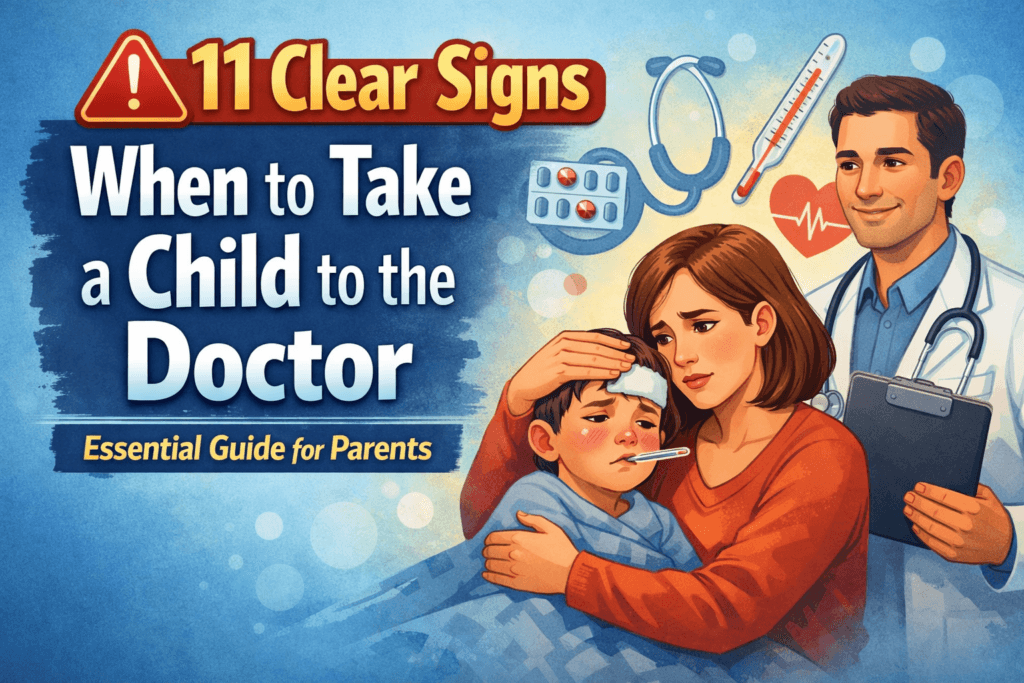
11 Clear Signs When to Take a Child to the Doctor (Essential Guide for Parents)
Parents worry, that is not weakness, it is instinct.
Children fall sick often, they cry without clear reasons. They develop symptoms that can look alarming but turn out to be harmless. At the same time, some of the most serious childhood illnesses begin quietly, with signs so subtle they are easy to dismiss.
This is where parenting becomes difficult, the hardest part is not love.
It is judgment.
Knowing when to w atch and when to act is a skill that develops over time. Acting too quickly can lead to unnecessary anxiety, tests, and treatments. Acting too late can allow a preventable condition to worsen. The line between the two is thin, and many parents struggle to find it.
This uncertainty is normal, children cannot always explain what they feel, and their bodies respond to illness differently from adults. They compensate well until they suddenly cannot. By the time obvious danger appears, valuable time may already be lost.
This guide exists to bring clarity, it explains when a child should be taken to the doctor, which symptoms truly matter, how to recognize warning signs early, and how to rely on observation and logic rather than fear or denial. The goal is not to turn parents into doctors. The goal is to help parents make calm, informed decisions when it matters most because in child health, timing is often everything.
Why This Question Matters
Children are not small adults, their immune systems are still developing. Their symptoms can change rapidly, their bodies often compensate impressively in the early stages of illness, appearing stable until they suddenly are not. This is why many serious childhood conditions begin quietly and worsen quickly if missed.
At the same time, children also experience frequent minor illnesses as part of normal growth. Colds, stomach bugs, and short lived fevers are common, especially in the early years of life. Most resolve on their own with rest, fluids, and time.
This creates a constant tension for parents, overreacting leads to unnecessary stress, repeated hospital visits, financial strain, and medical tests that may not be needed. Underreacting leads to delayed diagnosis, worsening disease, and preventable complications.
The goal is not panic or neglect, the goal is balance.
Understanding Normal Childhood Illness
Before identifying danger signs, it is essential to understand what falls within the range of normal childhood illness.
Healthy children commonly experience:
Frequent colds, especially under five years of age
Low grade fever with viral infections
Occasional vomiting or diarrhea
Mild coughs that can last one to two weeks
Short periods of reduced appetite
Temporary rashes during viral illnesses
Nighttime crying or restlessness in toddlers
These symptoms, when mild and short lived, do not usually require urgent medical attention. They are often part of normal immune development.
What matters most is not the presence of symptoms alone, it is the pattern of illness, how severe the symptoms are, how long they last, and how the child behaves during the illness.
A child who remains playful, alert, and responsive despite mild symptoms is very different from a child who appears withdrawn, exhausted, or difficult to engage.
The Single Most Important Rule
How the child looks and behaves matters more than the symptom itself, this principle cannot be overstated.
A child with a high fever who is drinking fluids, interacting, and playing intermittently is usually less concerning than a child with a low or moderate fever who is lethargic, unusually quiet, irritable, or hard to wake.
Numbers alone do not tell the full story, temperature, pulse rate, or cough frequency should never be interpreted in isolation. The overall condition of the child provides far more information than any single measurement.
Always assess the child, not just the number on the thermometer.
When Fever Requires a Doctor Visit
Fever is the most common reason parents seek medical care for their children.
Fever itself is not dangerous, it is a natural response that helps the immune system fight infection. The real concern is not the fever, but what is causing it.
Medical evaluation is recommended if any of the following are present:
Any fever in a baby under 3 months of age
Fever lasting longer than 3 days
Fever higher than 39°C in any age group
Fever accompanied by stiff neck, severe headache, or sensitivity to light
Fever with persistent vomiting or diarrhea
Fever with a rash that does not fade when pressed
Fever with difficulty breathing
Fever with seizures, confusion, or altered consciousness
These situations raise concern for serious infection or complications that require prompt assessment.
Fever alone is generally less concerning when:
The child is drinking fluids adequately
The child becomes active and alert when the fever reduces
There are clear symptoms of a mild viral illness
The fever responds appropriately to recommended medication
However, fever in very young infants is different.
Babies under three months do not have mature immune systems, they cannot localize infection effectively, and serious bacterial infections may present with few outward signs.
For this reason, fever in young infants should never be ignored or managed at home without medical guidance. Early evaluation in these cases is not overreaction.
It is essential care.
Breathing Problems That Need Immediate Attention
Breathing problems should never be observed casually.
Children can deteriorate rapidly when oxygen levels fall, and respiratory distress may progress faster than many parents expect. Even short delays in care can have serious consequences.
Urgent medical evaluation is needed if you notice any of the following:
Fast breathing while the child is at rest
Chest retractions, where the skin pulls inward between the ribs or at the base of the neck
Flaring of the nostrils with each breath
Grunting sounds during breathing
Blue or gray discoloration of the lips, tongue, or face
Persistent wheezing that does not improve with prescribed medication
A cough so intense that it causes vomiting, exhaustion, or difficulty catching breath
Stridor, which is a harsh, high pitched sound heard during breathing in
These signs indicate that the child is working hard to breathe or is not getting enough oxygen. If a child appears to be struggling to breathe, do not wait to see if symptoms improve. Seek medical care immediately.
Vomiting and Diarrhea: When to Worry
Most episodes of vomiting and diarrhea in children are caused by viral infections and resolve without complications.
The primary danger is not the infection itself, the danger is dehydration.
Children lose fluids faster than adults and have smaller reserves. What begins as a mild stomach illness can become serious within hours if fluid loss is not corrected.
Medical evaluation is recommended if:
Vomiting persists beyond 24 hours in young children
Vomiting is forceful or projectile
Vomit appears green, bloody, or coffee colored
Diarrhea lasts longer than 3 days
Blood or mucus is present in the stool
Severe or persistent abdominal pain occurs
Signs of dehydration become noticeable
Signs of dehydration include:
Dry mouth and cracked lips
Absence of tears when crying
Sunken eyes
Reduced frequency of urination
Lethargy or unusual irritability
A sunken soft spot on the head in infants
Dehydration can become life threatening faster than many parents realize, especially in infants and toddlers. Early medical care can prevent serious complications.
Abdominal Pain That Should Not Be Ignored
Children frequently complain of stomach pain, and in many cases the cause is harmless. Constipation, gas, emotional stress, or mild viral illness are common explanations.
However, abdominal pain can also signal serious conditions such as appendicitis, intestinal obstruction, or infection.
Medical evaluation is needed if abdominal pain is:
Severe and persistent
Localized, particularly to the lower right side of the abdomen
Worsening rather than improving over time
Accompanied by vomiting or fever
Causing the child to refuse movement or walk bent over
Associated with abdominal swelling or firmness
Accompanied by blood in the stool
Pain that wakes a child from sleep or prevents normal movement is not typical and should never be dismissed.
Headaches in Children: Red Flags
Headaches are relatively common in older children and adolescents and are often related to stress, dehydration, or migraine.
They are less common and more concerning in younger children, especially when accompanied by other symptoms.
Medical evaluation is recommended if a headache:
Is severe or of sudden onset
Wakes the child from sleep
Occurs early in the morning and is associated with vomiting
Is accompanied by fever and neck stiffness
Becomes progressively worse over time
Follows a head injury
Is associated with vision changes, weakness, or balance problems
Recurring headaches that interfere with school, sleep, or daily activities also deserve medical assessment, even if no emergency signs are present.
Rashes That Need Medical Evaluation
Most childhood rashes are harmless and resolve without treatment.
Some, however, signal serious infection or severe allergic reactions and require prompt medical attention.
Seek medical care if a rash:
Does not fade when pressed
Is accompanied by fever and lethargy
Spreads rapidly over the body
Causes swelling of the lips, tongue, or face
Is associated with difficulty breathing
Resembles bruises without a history of injury
Appears soon after starting a new medication
A rash should never be assessed in isolation. Always consider how the child looks and behaves overall.
Seizures in Children
Witnessing a seizure is frightening for any parent, not all seizures indicate epilepsy, and many children who experience a single seizure never have another. However, certain situations require immediate medical evaluation.
Urgent assessment is needed if:
It is the child’s first seizure
The seizure lasts longer than 5 minutes
The child does not return to normal behavior shortly afterward
Seizures occur repeatedly in a short period
The child has difficulty breathing after the seizure
There is no fever and no known history of seizures
Febrile seizures are relatively common in young children and are usually benign. Even so, the first episode should always be evaluated by a healthcare professional to rule out serious causes and to guide future care.
Prompt medical attention in these situations is not overreaction. It is appropriate and necessary.
Changes in Behavior and Consciousness
Subtle changes in behavior often appear before obvious physical signs of serious illness.
Children may not be able to describe what they feel, but their behavior frequently reflects what is happening internally. A child who is acting “off” deserves attention even if no single symptom seems alarming.
Medical evaluation is recommended if you notice:
Persistent lethargy or unusual lack of energy
Irritability that is out of proportion to the situation
Confusion, disorientation, or difficulty recognizing familiar people
Reduced responsiveness or delayed reactions
Loss of previously acquired developmental skills
Sudden or unexplained personality changes
Excessive sleepiness that is difficult to interrupt
Parents often sense that something is wrong before clear signs appear. That intuition should not be ignored. When behavior changes without a clear explanation, seeking medical advice is appropriate.
Injuries That Need Medical Care
Children fall, bump into objects, and get hurt as part of normal development.
Most minor injuries heal without complications. However, some injuries that appear mild on the surface can hide serious internal damage.
Seek medical care if any of the following occur:
Loss of consciousness, even briefly
Vomiting after a head injury
Severe or worsening headache following trauma
A wound that is deep, gaping, or bleeding heavily
A limb that appears deformed, swollen, or cannot be moved
Pain that is severe or increasing rather than improving
Refusal to use an injured limb or bear weight
Head injuries deserve particular attention. Symptoms may evolve hours after the injury, especially in young children. Never ignore changes in behavior, vomiting, or drowsiness after a fall or blow to the head.
Growth and Development Concerns
Delays in growth and development are not always obvious and may progress gradually.
Early recognition and intervention can significantly improve outcomes, waiting for a child to “outgrow” a concern often leads to missed opportunities for effective treatment.
Speak with a doctor if a child:
Misses expected developmental milestones
Loses skills they had previously mastered
Shows poor weight gain or unexplained weight loss
Has persistent feeding or swallowing difficulties
Experiences regression in speech or communication
Displays ongoing behavioral or social concerns
Do not wait until school age to raise developmental concerns. Early evaluation allows support to begin when it is most effective.
Chronic Symptoms That Deserve Attention
Symptoms that persist over time deserve medical evaluation even if they seem mild.
Children may experience occasional illness, but persistent or recurring symptoms are not normal and should not be dismissed.
Symptoms that warrant further investigation include:
Chronic or recurrent cough
Persistent fatigue or low energy
Frequent or recurrent infections
Ongoing or recurrent abdominal pain
Repeated episodes of vomiting
Chronic diarrhea or long standing constipation
Night sweats without obvious cause
Unexplained weight loss
Healthy children do not remain unwell for long periods. When symptoms linger, it is important to look for underlying causes.
Trust Patterns, Not Isolated Events
Single episodes rarely tell the full story.
Patterns do.
Serious conditions often reveal themselves through combinations of symptoms or changes that evolve over time rather than one dramatic event.
When deciding whether to seek medical care, ask yourself:
Is this new or unusual for my child
Is the symptom getting worse or lasting longer than expected
Is my child behaving differently than usual
Is normal daily function being affected
If the answer to any of these questions is yes, medical evaluation is reasonable and often helpful.
Common Mistakes Parents Make
Understanding what not to do is as important as knowing when to act.
Common mistakes include:
Focusing on fever numbers instead of the child’s overall condition
Waiting too long because symptoms appear mild at first
Assuming all vomiting is related to food
Overlooking changes in behavior or activity level
Relying solely on internet reassurance
Delaying care due to fear of hospitals or bad news
Early evaluation rarely causes harm. Delayed evaluation is far more likely to lead to complications.
When It Is Okay to Observe at Home
Not every childhood illness requires a visit to the doctor.
Home observation is reasonable when:
The child is alert, responsive, and playful
Symptoms are mild and showing signs of improvement
Eating and drinking are adequate
No red flags are present
Symptoms have been present for a short duration
Observation should be active rather than passive.
Monitor symptoms closely, encourage fluids and rest, and reassess the child regularly. If the situation changes, do not hesitate to seek medical advice.
When in Doubt, Seek Help
No parent is expected to diagnose disease. Doctors do not expect perfection from parents, they expect careful observation and honest reporting of concerns.
If you are unsure, it is better to seek reassurance and be told everything is fine than to remain silent and wish you had acted sooner. In child health, asking for help is not failure. It is responsible care.
Final Thoughts
Knowing when to take a child to the doctor is not about living in fear. It is about awareness, attention, and responsibility.
Children depend on adults to interpret what they cannot clearly explain. Their bodies are remarkably resilient, often compensating well in the early stages of illness. This strength can be misleading. By the time obvious danger appears, a condition may already be advanced. Serious illness often gives quiet signals long before it becomes impossible to ignore.
Most childhood illnesses are harmless and resolve with time, rest, and basic care. A smaller number are not. The challenge for parents is learning to tell the difference without becoming anxious or dismissive.
Your role is not to panic at every symptom.
Your role is also not to ignore warning signs in the hope that they will disappear.
Your role is to observe patterns, recognize changes, notice when something does not fit your child’s normal behavior, and act when those signals persist or worsen. This approach protects children from both unnecessary intervention and dangerous delay.
Logic matters, observation matters, timing matters.
Seeking medical attention early does not mean something is wrong, it means you are paying attention. In many cases, early reassurance brings peace of mind. In the cases that matter most, early action saves lives.
When it comes to children, caution is not weakness.
It is responsibility.
👩⚕️ Need Personalized Health Advice?
Get expert guidance tailored to your unique health concerns through MuseCare Consult. Our licensed doctors are here to help you understand your symptoms, medications, and lab results—confidentially and affordably.
👉 Book a MuseCare Consult NowOther Related Blog Post:
- 10 Causes of Night Sweating in Children That Every Parent Must Know
- Headaches in Children: 11 Powerful Causes Every Parent Must Know
- Delayed Growth in Children: 9 Shocking Causes Parents Must Never Ignore
- 15 Real Causes of Stomach Pain in Children Every Parent Must Know
- 10 Powerful Reasons a Child Complains of Leg Pain + When to See a Doctor
- Frequent Fever in Children: 9 Hidden Causes Parents Must Not Ignore
- 15 Common Childhood Symptoms Explained: What’s Normal and When to Worry

Dr. Ijasusi Bamidele, MBBS (Binzhou Medical University, China), is a medical doctor with 5 years of clinical experience and founder of MyMedicalMuse.com, a subsidiary of Delimann Limited. As a health content writer for audiences in the USA, Canada, and Europe, Dr. Ijasusi helps readers understand complex health conditions, recognize why they have certain symptoms, and apply practical lifestyle modifications to improve well-being