⚠️ Affiliate Disclaimer: This post may contain affiliate links, which means I may earn a small commission — at no extra cost to you — if you make a purchase through one of these links. I only recommend products or services I genuinely trust and believe can provide value. Thank you for supporting My Medical Muse!
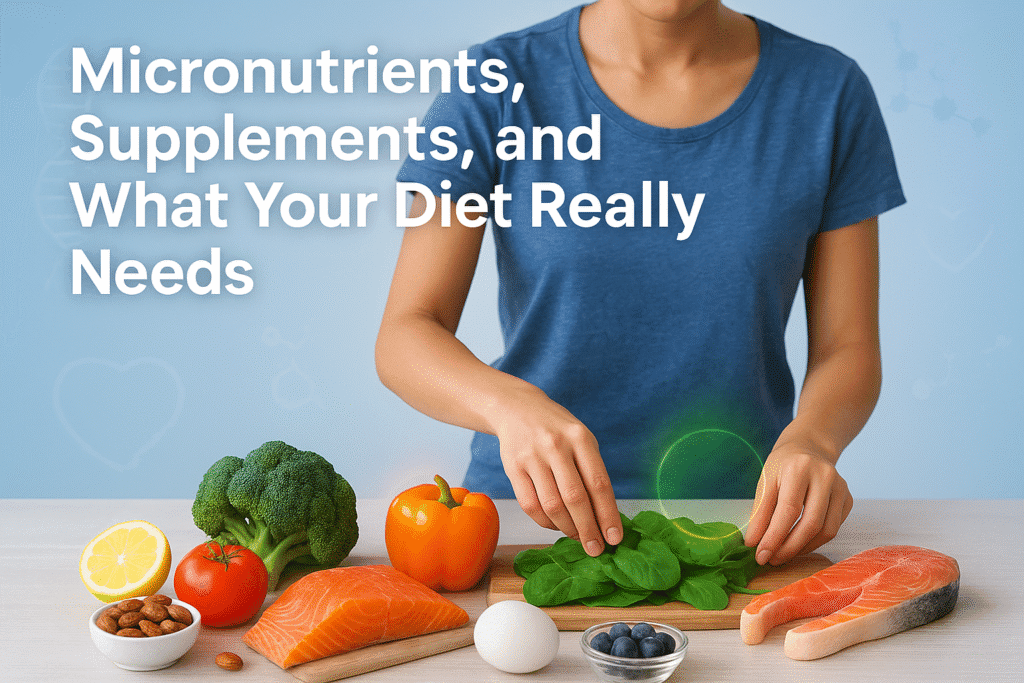
12 Powerful insights Into What Your Diet Really Needs (micronutrients and Supplements)
Most people focus on the big, obvious parts of nutrition, calories, carbs, protein, fat but step back for a moment, and you’ll notice something deeper: the body doesn’t run on macronutrients alone. The real engine behind energy, mood, metabolism, hormones, and long-term health is the silent network of micronutrients operating in the background.
These vitamins, minerals, and trace compounds are small but essential. They activate enzymes, regulate hormones, direct cell repair, stabilize neurotransmitters, support immunity, and keep your organs communicating correctly. When they’re missing even slightly, your biology shifts. You may not get sick immediately, but you will feel it.
That’s why so many people feel tired, inflamed, foggy, anxious, bloated, or not like themselves, even while eating three full meals a day. Modern diets often deliver volume without delivering the micronutrient density your cells need to function properly.
This guide pulls back the curtain on what your body truly requires and why deficiencies are more common than ever. You’ll learn:
- What your cells are actually hungry for
- Why deficiency rates keep rising
- The nutrients most people unknowingly fall short on
- When supplements genuinely help, and when they are a waste
- How to build a diet that ensures full micronutrient coverage
- Subtle, real-world signs you’re under-nourished
- A simple, evidence-based meal template you can use daily
By the end, you’ll understand how to nourish your body the way it was designed to operate consistently, efficiently, and resiliently.
Why Micronutrients Matter More Than People Realize
Most people think of macronutrients like carbs, fats, and protein as the foundation of nutrition. They are essential, yes, but they are just the fuel. Micronutrients are the operating system. They determine how well that fuel is converted, distributed, stored, and used.
If macronutrients are the gasoline, micronutrients are the spark plugs, sensors, wires, and circuitry that make the engine actually run.
Micronutrients control and regulate:
- Hormone production, conversion, and balance
- Mitochondrial function and cellular energy output
- Brain chemistry and neurotransmitter synthesis
- DNA repair, cell signaling, and longevity
- Immune response, inflammation control, and antioxidant defense
- Muscle contraction, tissue repair, and recovery
- Blood sugar regulation and insulin sensitivity
- Bone mineralization and skeletal strength
- Detoxification pathways (liver phases I & II)
- Skin elasticity, hair growth, and connective tissue integrity
These nutrients are not optional; they are biologically irreplaceable. Your body cannot manufacture most of them, yet it depends on them for every essential function.
Subtle Deficiencies Become Systemic Problems
When even one micronutrient is regularly low, the biological system it supports becomes strained. Symptoms often begin quietly:
- Midday fatigue
- Stubborn brain fog
- Poor concentration
- Restless or shallow sleep
- Mild hormonal fluctuations
- Digestive sensitivity
- Low mood or irritability
- Weakened immunity
Most people brush these off as stress, age, or life but the body is sending signals. Over time, months or years these small cracks widen:
- Persistent inflammation
- Hormonal imbalances
- Blood sugar instability
- Skin issues and slow wound healing
- Thyroid sluggishness
- Anxiety or mood swings
- Gut dysfunction
- Stubborn weight gain or loss
Micronutrients aren’t a luxury or an optional wellness add-on. They are the biochemical currency of life. When the body runs short, it doesn’t fail instantly, it slowly underperforms.
And the truth is, most people are running on low reserves without knowing it.
Why Nutrient Deficiencies Are Increasing (Even in Developed Countries)
There’s a common assumption that deficiencies only occur in impoverished regions or among people with extremely poor diets. The reality is more complicated even in wealthy nations like the US, Canada, and much of Europe, widespread micronutrient shortfalls are documented across multiple age groups.
Modern lifestyles create the perfect storm of “full stomachs but underfed cells.”
Here’s why.
a. Industrial Agriculture and Soil Depletion
The nutrient content of the soil determines the nutrient content of the food grown in it. Over the past several decades, industrial farming has prioritized yield, size, and speed over soil health.
This has resulted in:
- Lower magnesium, zinc, selenium, and iron in vegetables
- Weaker mineral density in fruits
- Reduced antioxidant compounds
- Faster-growing crops with lower nutrient storage
In simple terms, a bowl of spinach today does not deliver what a bowl of spinach did in 1970. Even someone who “eats clean” may still be consuming food that is nutritionally thinner than expected.
b. Highly Processed, Refined Foods
Modern diets are dominated by foods that are:
- Calorie-rich
- Fiber-poor
- Micro-poor
- Hyper-palatable
- Convenient, but biologically empty
These products fill the stomach but deliver almost no meaningful vitamins or minerals. The result is a paradox: many people are overfed and undernourished simultaneously.
This is one reason why fatigue, inflammation, and metabolic dysfunction are so widespread, despite abundant food availability.
c. Popular Restrictive Diets
Restrictive diets can be helpful for some goals, but they often create unintended micronutrient gaps, especially when followed long-term or without planning.
Common examples:
- Vegan/plant-based diets low in B12, choline, iron, zinc, omega-3 (EPA/DHA)
- Low-fat diets, results in low absorption of vitamins A, D, E, K
- Keto/low-carb diets, low in vitamin C, folate, magnesium, potassium
- Gluten-free diets causes reduced vitamin B and fiber due to lack of fortified grains
- Paleo diets causes potential shortage of calcium, iodine, vitamin D
Restriction isn’t the problem.
Uninformed restriction is, without strategic planning or supplementation, these diets leave critical gaps that affect energy, hormones, and overall stability.
d. Chronic Stress
Stress increases the body’s requirement for specific nutrients, especially:
- Magnesium
- Vitamin C
- Vitamins (B6, B9, B12)
- Antioxidants
When stress hormones remain elevated, the body burns through these nutrients at a faster-than-normal rate. Since most adults live in a state of ongoing stress, work deadlines, digital overload, financial pressure, sleep problems, depletion is continuous.
Many of the symptoms people associate with being “stressed” are actually symptoms of micronutrient depletion caused by stress.
e. Medications That Reduce Nutrient Absorption
Many widely prescribed medications interfere with nutrient absorption, storage, or metabolism.
Examples include:
- PPIs (acid blockers): reduce magnesium, iron, B12
- Metformin: lowers B12 and folate
- Hormonal birth control: depletes B6, B12, folate, magnesium, zinc
- Statins: lower CoQ10 (critical for mitochondrial energy)
This phenomenon is common but rarely acknowledged during routine checkups. Someone can be “eating well” and still develop deficiencies because the medications they take decrease absorption or increase excretion.
f. Aging
As the body ages, its ability to extract and utilize nutrients declines. This isn’t a minor shift, it’s a measurable physiological change. Stomach acid production decreases, digestive enzyme output slows, and absorption surfaces in the intestines become less efficient.
As a result, older adults are far more likely to experience deficits in:
- Vitamin B12: due to reduced stomach acid and intrinsic factor
- Vitamin D: due to lower skin synthesis and less sun exposure
- Magnesium: due to decreased absorption and increased urinary loss
- Protein: due to lower appetite and reduced muscle-protein synthesis
Even with a seemingly adequate diet, the aging body simply doesn’t pull in nutrients as effectively. This is why micronutrient insufficiency becomes increasingly common with age and why supplementation often matters more for older adults than for any other age group.
The Micronutrients Most People Are Missing
Deficiency patterns vary from person to person, but population-wide research consistently shows the same nutrients falling short. Modern diets, lifestyle stress, aging, environmental factors, and soil depletion all contribute to the same predictable gaps.
Below are the most commonly insufficient micronutrients and why they matter.
1. Magnesium
Magnesium is involved in more than 600 biochemical reactions, including energy production, nerve function, muscle relaxation, blood pressure regulation, and insulin sensitivity. It is one of the most chronically underconsumed minerals today.
Low magnesium often shows up as:
- Anxiety or restlessness
- Muscle tightness or cramps
- Constipation
- Insomnia or light sleep
- Heart palpitations
- Headaches or migraines
Why deficiency is common:
- Soil depletion
- High stress (which increases magnesium loss)
- Low intake of nuts, seeds, leafy greens, and legumes
- High intake of processed foods
Top sources: spinach, pumpkin seeds, almonds, cocoa, beans, whole grains.
2. Vitamin D
Vitamin D functions more like a hormone than a vitamin. It influences immunity, inflammation, bone density, mental health, and energy regulation.
Because it requires sunlight for synthesis, deficiency is widespread especially in northern climates.
Symptoms of low vitamin D:
- Low mood
- Frequent illness
- Fatigue
- Muscle weakness
- Bone or joint discomfort
Sources: sunlight, fatty fish, fortified foods, egg yolks. Many people cannot maintain optimal levels without supplementation, especially in fall/winter.
3. Omega-3 Fatty Acids (EPA/DHA)
Omega-3s are essential for brain health, hormone stability, cardiovascular support, and inflammation control.
Low omega-3 levels contribute to:
- Brain fog
- Dry skin
- Mood swings
- Joint stiffness
- Poor concentration
Sources: salmon, sardines, anchovies, mackerel, walnuts, flaxseed. Most people eating Western diets are significantly deficient, as plant-based omega-3 (ALA) does not efficiently convert to EPA/DHA.
4. Iron
Iron deficiency is one of the most common in the world, especially in women, adolescents, athletes, and anyone with low-meat intake.
Symptoms:
- Fatigue
- Weakness
- Cold extremities
- Brain fog
- Dizziness
- Shortness of breath
Sources: red meat, eggs, lentils, chickpeas, spinach, fortified grains.
Iron should not be supplemented blindly, as excess iron is harmful, testing is important.
5. Vitamins B (Especially B6, B9, B12)
Vitamins B are essential for metabolism, DNA synthesis, red blood cell formation, and nerve function.
Why deficiency is common:
- Vegan/vegetarian diets (B12 is only in animal foods)
- Aging (reduced absorption)
- Medications like metformin, PPIs, and birth control
Sources: eggs, dairy, fish, meat, legumes, leafy greens, fortified foods.
6. Zinc
Zinc is required for over 300 enzymatic reactions and is essential for immune health, thyroid hormones, wound healing, and reproductive function.
Sources: meat, shellfish, pumpkin seeds, beans. Deficiency often shows up as low immunity, slow recovery, hair thinning, or reduced appetite.
7. Potassium
Potassium is critical for hydration, muscle contraction, blood pressure control, and heart rhythm. Most people consume far too much sodium and far too little potassium, a major contributor to hypertension.
Sources: potatoes, bananas, avocados, beans, yogurt, oranges.
8. Vitamin K2
Vitamin K2 directs calcium into bones and teeth, away from arteries. It plays a starring role in long-term cardiovascular and skeletal health.
Sources: natto, fermented foods, egg yolks, grass-fed dairy.
Most Western diets contain very little K2.
9. Choline
Choline is essential for:
- Brain and memory function
- Cellular membrane health
- Liver detoxification
- Nervous system integrity
Most adults especially pregnant women do not get enough choline.
Sources: eggs, liver, fish, soybeans.
Eggs are the richest and most practical dietary source.
Should You Take Supplements? The Real Answer
Supplements are not magic. They are targeted tools. When used correctly, they fill gaps, support biological function, and correct deficiencies. When used incorrectly, they create confusion, waste money, and even worse introduce new imbalances.
The right supplements can be life-changing.
The wrong supplements can be useless or harmful.
The goal is intentional, not impulsive use.
When Supplements Make Sense
You may benefit from supplementation when:
- Blood tests confirm a deficiency
- You have limited sun exposure (vitamin D)
- You follow a restrictive diet (keto, vegan, low-fat, paleo)
- Stress levels are high (increasing demand for magnesium, B-vitamins)
- You take medications that reduce nutrient absorption
- You’re an athlete with increased cellular demand
- Appetite is low or protein intake is inadequate
- Digestive issues interfere with absorption
- You are aging and absorption naturally declines
In these cases, supplements become necessary, not optional.
When Supplements Do NOT Make Sense
Avoid or reduce supplementation when the motivation is:
- Trying to compensate for a poor diet
- Following influencer trends
- Boosting metabolism or vague detoxing
- Taking high doses without medical justification
- Using multiple multivitamins with overlapping nutrients
- Replacing whole foods with pills
- Trying to correct chronic fatigue with supplements alone
Supplements magnify what your diet already provides, they do not fix the foundational problem of low nutrient density.
A nutrient-poor diet with supplements is still a nutrient-poor diet.
The Supplements That Are Truly Worth Considering
Among the thousands of products available, only a few have strong scientific backing:
- Vitamin D3 and K2
- Magnesium Glycinate or Malate
- Omega-3 Fish Oil (EPA/DHA)
- Creatine Monohydrate
- A High-Quality Multivitamin
- Probiotics or Prebiotics
- Protein supplements (whey or plant-based)
- Fiber supplements (psyllium, inulin)
These have the most consistent evidence and the most real-world benefits.
Supplements That Are Overhyped or Unnecessary
Not everything sold in wellness marketing is useful or even grounded in solid science. Many products rely on buzzwords like detox, boost metabolism, or superfoods without delivering measurable benefits.
Be especially cautious with:
- Detox teas
- Fat burners
- Appetite suppressants
- High-dose multivitamins
- Collagen marketed for weight loss
- Proprietary “superfood” blends
- Greens powders promoted as vegetable replacements
- Trend-based antioxidant cocktails
These products tend to be expensive, poorly regulated, and supported more by marketing than meaningful evidence.
How to Build a Diet That Meets Your Micronutrient Needs Naturally
A nutrient-dense diet doesn’t require complexity, just consistency and coverage. Focus on building meals that supply a full spectrum of vitamins, minerals, and essential fats.
Step 1: Anchor Each Meal With Quality Protein
Protein-rich foods also deliver foundational micronutrients like vitamins- B, iron, zinc, and choline.
Great options include eggs, poultry, fish, beef, legumes, tofu, tempeh, and dairy.
Step 2: Eat at Least 5 Colors of Plants Daily
Each color supplies unique compounds your body can’t produce on its own:
- Red: lycopene, vitamin C
- Orange: beta-carotene
- Yellow: potassium, flavonoids
- Green: folate, magnesium, vitamin K
- Purple/Blue: anthocyanins
- White/Brown: allicin, prebiotics
The more colors on your plate, the broader your micronutrient coverage.
Step 3: Prioritize Mineral-Rich Foods
Magnesium, potassium, iron, and zinc are some of the most commonly missed minerals, and food sources are the most reliable way to obtain them.
Examples: nuts, seeds, leafy greens, beans, whole grains, bananas, yogurt.
Step 4: Include Healthy Fats
Certain vitamins require fat for absorption, especially A, D, E, and K.
Add foods like olive oil, avocados, nuts, egg yolks, and fatty fish.
Step 5: Include Fermented Foods and (Occasionally) Organ Meats
Fermented foods improve digestion, immunity, and nutrient absorption.
Organ meats even once a month deliver unmatched concentrations of vitamins B, choline, and essential minerals.
Step 6: Hydrate With Electrolyte Awareness
Proper hydration requires more than water.
Electrolytes such as sodium, potassium, and magnesium keep cells functioning optimally, and a plant-rich diet naturally supports healthy levels.
Real Signs You Might Be Low in Key Micronutrients
Deficiency symptoms often overlap, which is why many people overlook them.
Low magnesium: anxiety, muscle tightness, poor sleep
Low vitamin D: low mood, fatigue, frequent colds
Low B vitamins: brain fog, irritability, tingling
Low iron: weakness, breathlessness, cold extremities
Low zinc: slow wound healing, hair thinning, reduced appetite
If symptoms persist, lab testing provides clarity.
The Most Evidence-Based Rule: Food First, Supplements Second
Decades of nutritional research point to the same conclusion: supplements are supportive, not foundational.
- Whole foods provide nutrients in the ratios nature designed
- Fiber and polyphenols enhance absorption
- Supplements fill gaps, they do not replace dietary quality
- A varied diet naturally meets most of your micronutrient needs
- Targeted supplementation works best when based on symptoms, lifestyle, or lab data
The goal is not to rely on pills. The goal is to build a diet that consistently delivers what your biology requires.
What Actually Matters Most for Your Long-Term Health
Your body relies on a constant supply of:
- Vitamins
- Minerals
- Essential fats
- Amino acids
- Antioxidants
- Fiber
- Electrolytes
When these elements are present, energy becomes stable, hormones regulate themselves, metabolism runs efficiently, and your overall resilience increases.
When they’re chronically low, dysfunction slowly accumulates beneath the surface.
Feed your cells consistently and everything from mental clarity to mood, strength, immunity, and long-term health becomes easier and more predictable.
Final Thoughts: Supplements Are Tools, but Nutrition Is the Foundation
Supplements can be helpful. They can correct genuine deficiencies, support recovery when life gets demanding, and fill specific gaps but they can’t do the job that daily nutrition is meant to do.
Your everyday eating patterns are what shape:
- How clearly you think
- How resiliently you age
- How stable your mood feels
- How much energy you wake up with
- How well your hormones and metabolism stay balanced
You don’t need complexity to stay nourished.
You need steady coverage. You need real foods. You need a rotation of colors, minerals, healthy fats, and proteins that consistently give your cells what keeps them alive and functioning.
Honor those basics, and your entire body shifts.
Energy becomes steadier, digestion becomes smoother, mood becomes more reliable, and long-term health becomes something you build quietly meal by meal without stress or obsession.
When you feed your biology what it actually needs, everything else starts working the way it should.
👩⚕️ Need Personalized Health Advice?
Get expert guidance tailored to your unique health concerns through MuseCare Consult. Our licensed doctors are here to help you understand your symptoms, medications, and lab results—confidentially and affordably.
👉 Book a MuseCare Consult NowRelated Blog Post:
- 7 Powerful Benefits of Vitamin K2 for Your Metabolic Health
- 7 Critical Facts You Must Know: How to Choose the Right Multivitamin
- 10 Powerful Supplements for Diabetic Neuropathy That Actually Work
- Iron Supplement Side Effects: What You Need to Know Before You Start.
- Can Eating Too Much Fruit Daily Cause Blood Sugar Issues? 12 Surprising Facts

Dr. Ijasusi Bamidele, MBBS (Binzhou Medical University, China), is a medical doctor with 5 years of clinical experience and founder of MyMedicalMuse.com, a subsidiary of Delimann Limited. As a health content writer for audiences in the USA, Canada, and Europe, Dr. Ijasusi helps readers understand complex health conditions, recognize why they have certain symptoms, and apply practical lifestyle modifications to improve well-being