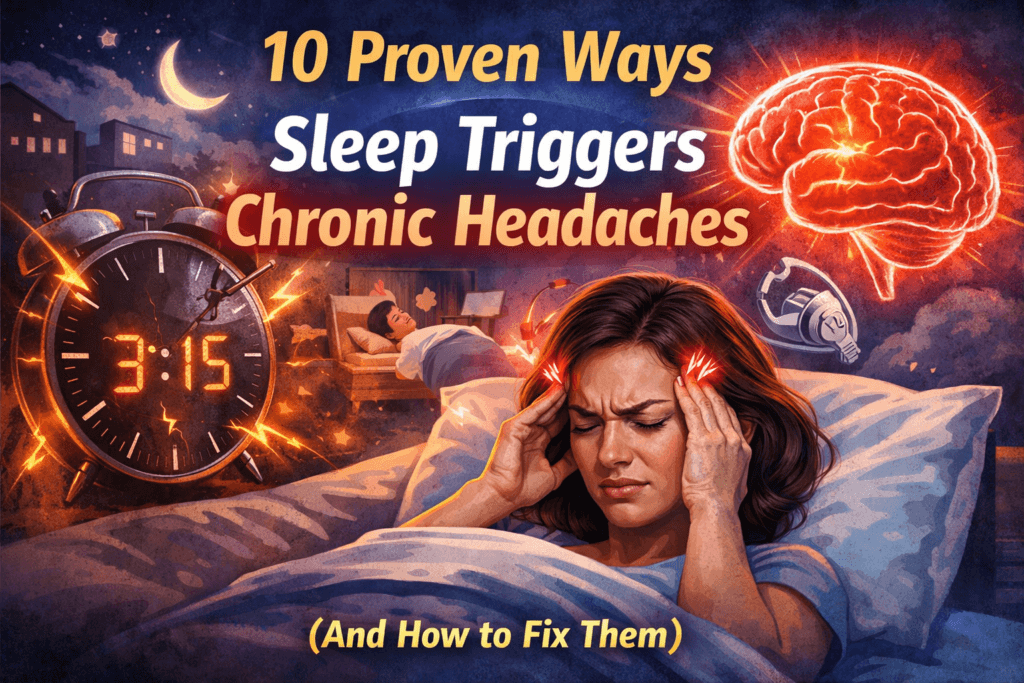
10 Proven Ways Sleep Triggers Chronic Headaches (And How to Fix Them)
Many people treat chronic headaches as isolated pain events, they are not. They are the predictable outcome of repeated strain on a nervous system that has lost its ability to regulate pain effectively. Sleep is one of the most decisive factors in this breakdown, yet it is consistently underestimated or ignored.
Sleep does not simply rest the body, it recalibrates pain pathways, stabilizes brain chemistry, and restores the systems that keep headache triggers under control. When sleep becomes irregular, insufficient, or poorly structured, those protective mechanisms weaken. For individuals prone to migraines, tension type headaches, or overlapping headache patterns, this breakdown often marks the shift from occasional attacks to a chronic condition.
This is not lifestyle advice dressed up as science, the connection between sleep and chronic headaches is grounded in neurobiology, hormonal regulation, and central pain processing. Disrupted sleep alters how the brain filters pain signals, how blood vessels respond to stress, and how inflammation is controlled.
This article breaks down how sleep disturbances directly trigger chronic headaches, why both sleep loss and excess sleep can provoke attacks, how hidden sleep disorders sustain long term pain, and which sleep focused changes actually reduce headache frequency rather than just sounding good on paper.
Understanding Chronic Headaches
A headache is classified as chronic when it occurs on 15 or more days per month for at least three consecutive months. This definition matters because chronic headaches behave very differently from occasional ones, the most common chronic headache types include:
- Chronic tension type headache, usually felt as persistent pressure or tightness
- Chronic migraine, marked by recurring neurological attacks that may include nausea, light sensitivity, and visual symptoms
- Medication overuse headache, which often develops on top of tension headaches or migraines after frequent painkiller use
Chronic headaches are not simply more frequent versions of episodic headaches. Repeated pain episodes gradually change how the brain processes pain, neural pathways become overactive, and the nervous system enters a state of sensitization. In this state, triggers that once caused little or no discomfort can now provoke significant pain.
Sleep plays a major role in this process, poor or irregular sleep accelerates sensitization, lowers pain tolerance, and makes the brain more reactive to everyday stressors.
Also Read: 12 Powerful Ways to Tell Tension Headache vs Migraine: Accurate Diagnosis Guide
Why Sleep and Headaches Are Biologically Connected
The connection between sleep and headaches is not accidental. Sleep and pain regulation rely on overlapping brain structures and chemical systems.
Several key mechanisms link sleep directly to headache development:
- The hypothalamus, which controls the sleep wake cycle, also helps initiate migraine attacks.
- The brainstem, responsible for regulating sleep stages, plays a central role in filtering pain signals.
- Neurotransmitters such as serotonin, dopamine, and orexin influence both sleep stability and headache susceptibility.
- Inflammatory mediators increase during sleep deprivation, making pain pathways more reactive
When sleep is disrupted, these systems lose coordination. Pain thresholds drop, triggers become more powerful, and the brain takes longer to recover after an attack. Simply put, poor sleep creates a brain environment that is primed for pain.
How Sleep Deprivation Triggers Chronic Headaches
Sleep deprivation is one of the most consistent and well documented headache triggers, particularly for migraines and tension type headaches.
1. Increased Pain Sensitivity
During healthy sleep, the brain actively suppresses pain signals. When sleep is reduced, this protective mechanism weakens. Minor muscle tension, light exposure, or stress can suddenly feel painful.
Research shows that even a single night of restricted sleep increases sensitivity to pressure, heat, and muscle discomfort. For people prone to headaches, this leads to:
- Headaches starting more easily
- Stronger pain intensity
- Attacks that last longer and are harder to relieve
2. Neurochemical Imbalance
Sleep loss disrupts serotonin balance. Serotonin helps regulate blood vessels and pain signaling in the brain. Low serotonin levels are closely linked to increased migraine frequency and severity, dopamine regulation is also affected.
This contributes to symptoms such as nausea, light sensitivity, mood changes, and restlessness that often accompany migraines.
3. Heightened Stress Response
Poor sleep activates the body’s stress system, known as the hypothalamic pituitary adrenal axis. Cortisol levels rise, increasing muscle tension and blood vessel reactivity. When this stress response stays elevated, it creates a feedback loop that sustains chronic headache patterns.
Why Oversleeping Can Also Trigger Headaches
It often surprises people to learn that sleeping too much can be just as problematic as sleeping too little.
Oversleeping disrupts circadian rhythms, the internal clock that regulates sleep, hormones, and pain sensitivity. Large variations in wake up times confuse this system, particularly the hypothalamus, which plays a key role in migraine regulation.
Headaches related to oversleeping commonly appear on weekends or holidays and are often referred to as weekend migraines, the issue is not rest itself, it is inconsistency.
Long sleep durations can also contribute to headaches through:
- Mild dehydration from prolonged sleep
- Delayed caffeine intake leading to withdrawal headaches
- Blood sugar fluctuations after long fasting periods
In people with a sensitive nervous system, these factors combine to increase the likelihood of a headache attack.
Sleep Fragmentation and Its Hidden Impact
Many people assume they sleep well simply because they spend enough hours in bed. This is a common and costly misunderstanding. Sleep quantity does not equal sleep quality.
Sleep fragmentation refers to repeated brief awakenings throughout the night that prevent the brain from reaching and maintaining deep, restorative sleep. These awakenings may be so short that the person does not remember them the next morning, yet their impact on the nervous system is significant.
Common causes of fragmented sleep include:
- Ongoing stress and anxiety
- Noisy, bright, or uncomfortable sleep environments
- Pain that causes nighttime awakenings
- Obstructive sleep apnea
- Restless legs syndrome
Fragmented sleep reduces time spent in slow wave sleep, the stage most responsible for pain regulation, immune balance, and physical recovery, without adequate slow wave sleep, the brain becomes less capable of dampening pain signals.
Over time, chronic sleep fragmentation leads to persistent fatigue, non refreshing sleep, morning headaches, and a much lower threshold for headache attacks during the day. Even minor triggers become enough to provoke pain.
The Role of REM Sleep in Headache Regulation
Rapid eye movement sleep is often associated with dreaming, but its role extends far beyond that. REM sleep is essential for emotional regulation, autonomic nervous system stability, and the brain’s ability to adapt to stress.
Disruption of REM sleep has been strongly linked to increased migraine frequency. REM sleep helps stabilize fluctuations in heart rate, blood pressure, and blood vessel tone. When REM sleep is reduced or irregular, these systems become unstable, increasing vulnerability to headaches.
Factors that commonly suppress REM sleep include:
- Alcohol, especially in the evening
- Certain medications
- Chronic stress
- Untreated sleep disorders
When REM sleep is consistently disrupted, the nervous system remains in a heightened, reactive state. For migraine prone individuals, this instability increases both attack frequency and symptom severity.
Sleep Disorders That Fuel Chronic Headaches
A large percentage of people with chronic headaches have an undiagnosed sleep disorder. Treating headaches alone, without addressing the underlying sleep issue, often leads to incomplete or temporary improvement.
Insomnia
Insomnia is one of the strongest predictors of headache chronicity, difficulty falling asleep, staying asleep, or waking too early creates ongoing sleep debt that the brain cannot compensate for.
Insomnia increases pain sensitivity, heightens emotional reactivity, and disrupts circadian rhythms. Over time, episodic headaches are more likely to become chronic as the nervous system remains in a state of constant hyperarousal.
Obstructive Sleep Apnea
Sleep apnea causes repeated pauses in breathing during sleep. These pauses lead to drops in oxygen levels and frequent micro awakenings that fragment sleep architecture.
Morning headaches are a classic symptom of sleep apnea. Contributing mechanisms include:
- Carbon dioxide retention
- Reduced oxygen delivery to the brain
- Increased pressure within the skull
- Persistent activation of the sympathetic nervous system
When sleep apnea remains untreated, migraine attacks often become more frequent, more severe, and more resistant to standard treatments.
Restless Legs Syndrome
Restless legs syndrome causes an uncomfortable urge to move the legs, especially in the evening and at night. This condition disrupts sleep continuity and significantly reduces time spent in deep sleep.
Restless legs syndrome is linked to dopamine dysfunction, a neurotransmitter imbalance that also plays a role in migraine development. The result is a combination of poor sleep quality and heightened headache susceptibility.
Circadian Rhythm Disruption and Headaches
Circadian rhythm disruption occurs when sleep and wake times are inconsistent or poorly aligned with natural light and dark cycles.
Common contributors include:
- Shift work
- Frequent late nights
- Excessive screen exposure in the evening
- Irregular sleep schedules
The hypothalamus depends on consistent light cues to regulate hormones that influence pain sensitivity, inflammation, and vascular tone. When these cues are inconsistent, headache patterns become more frequent and less predictable.
Migraines, in particular, show strong circadian tendencies. Many attacks occur at similar times of day, reflecting instability in the brain’s internal clock rather than random chance.
The Bidirectional Relationship Between Sleep and Headaches
Sleep problems increase headache frequency, but headaches also interfere with sleep. This creates a self reinforcing cycle that is difficult to break without direct intervention.
Pain makes it harder to fall asleep and stay asleep, poor sleep then increases pain sensitivity the following day. Over time, the brain adapts to this pattern and begins to expect pain, reinforcing chronic headache pathways.
Breaking this cycle requires treating sleep as a primary target, not an afterthought, managing pain without stabilizing sleep often leads to short lived improvement at best. Addressing sleep directly is not optional in chronic headache care, it is essential.
Medication Overuse and Sleep Disruption
Many medications used to treat headaches interfere with normal sleep architecture, often in ways that are not immediately obvious. While they may provide short term relief, their repeated or poorly timed use can quietly worsen sleep and, in turn, sustain chronic headaches.
Common medication related sleep disruptions include:
- Caffeine containing painkillers delaying sleep onset and reducing sleep depth
- Triptans altering REM sleep patterns in some individuals
- Frequent nighttime medication use causing repeated awakenings and fragmented sleep
- Withdrawal headaches, especially in the early morning, disrupting the final and most restorative part of sleep
Medication overuse headache frequently exists alongside severe sleep disruption. In these cases, attempting to reduce headache frequency without stabilizing sleep is rarely successful. The nervous system remains overstimulated, and pain pathways stay active despite treatment.
How Poor Sleep Reduces Headache Treatment Effectiveness
Untreated sleep problems significantly weaken the effectiveness of headache treatments.
Preventive medications work less reliably when sleep remains irregular or insufficient. Behavioral therapies lose impact if circadian rhythms are ignored, even physical therapy outcomes decline when sleep deprivation prevents proper muscle recovery and pain modulation.
Sleep is not a supporting factor in headache care. It is a foundation. When sleep is unstable, the brain cannot respond optimally to any form of treatment.
Practical Sleep Strategies That Actually Reduce Headaches
This section goes beyond generic sleep advice. These strategies are supported by clinical evidence and are particularly relevant for people with chronic headache disorders.
1. Consistent Wake Time
Wake up at the same time every day, including weekends. This single habit is one of the most effective ways to stabilize circadian rhythms and reduce weekend and morning headache attacks.
2. Sleep Opportunity, Not Sleep Pressure
Spending excessive time in bed trying to force sleep increases frustration and worsens insomnia. Match time in bed to actual sleep needs rather than ideal sleep duration.
3. Light Exposure Management
Expose yourself to bright natural light in the morning to anchor your internal clock. In the evening, reduce artificial lighting and limit screen exposure, especially blue light.
4. Caffeine Timing
Avoid caffeine after early afternoon. Even when it does not prevent falling asleep, late caffeine fragments sleep and reduces restorative sleep stages.
5. Address Underlying Sleep Disorders
Symptoms such as loud snoring, choking during sleep, persistent insomnia, or restless legs should not be ignored. Proper evaluation and treatment of sleep disorders often lead to meaningful headache improvement.
6. Pain Safe Sleep Environment
Optimize pillow height, mattress support, and sleep position to reduce strain on the neck, jaw, and upper back. Mechanical stress during sleep is a common trigger for tension type headaches.
When Improving Sleep Is Not Enough
Some individuals improve sleep quality yet continue to experience frequent headaches. This does not mean sleep is unimportant. It means central sensitization has already taken hold.
In these cases, sleep optimization must be combined with:
- Gradual and carefully managed medication adjustments
- Stress regulation and nervous system calming strategies
- Physical therapy to address musculoskeletal contributors
- Cognitive behavioral therapy focused on pain processing
Sleep remains a core pillar of recovery, even when it is not the only intervention required. Ignoring it undermines every other aspect of chronic headache management.
The Bottom Line
Chronic headaches are not just about pain, they reflect a nervous system that has been repeatedly stressed and poorly regulated. Sleep is a central factor in this process, it is not passive downtime, it actively regulates how the brain processes pain, restores balance, and maintains overall nervous system health.
Poor or inconsistent sleep lowers pain thresholds, disrupts headache control mechanisms, and accelerates the progression from occasional to chronic headaches, both insufficient and excessive sleep can trigger attacks, while fragmented sleep and untreated sleep disorders silently sustain the condition.
For anyone dealing with chronic headaches, sleep must be treated as a primary intervention, not an afterthought. Assessing, protecting, and optimizing sleep is as critical as medication, stress management, and lifestyle adjustments. Ignoring sleep doesn’t just delay improvement, it reinforces the headache cycle.
Improving sleep is not optional, it is a medical necessity for reducing attacks, improving quality of life, and regaining control over chronic headaches.
👩⚕️ Need Personalized Health Advice?
Get expert guidance tailored to your unique health concerns through MuseCare Consult. Our licensed doctors are here to help you understand your symptoms, medications, and lab results—confidentially and affordably.
👉 Book a MuseCare Consult NowRecommended Blog Post:
- The Complete Guide to Headache and Migraine: 7 Causes, Prevention & Treatment
- 12 Proven Ways Neck Pain Causes Headaches (and How to Stop Them)
- Headache Behind Eyes: 10 Powerful Causes and Everyday Fixes
- Dehydration Headache? 10 Proven Ways to Stop It Fast & Stay Pain-Free
- 7 Hidden Reasons Your Brain Feels Buzzing or Overactive and How to Calm It Fast

Dr. Ijasusi Bamidele, MBBS (Binzhou Medical University, China), is a medical doctor with 5 years of clinical experience and founder of MyMedicalMuse.com, a subsidiary of Delimann Limited. As a health content writer for audiences in the USA, Canada, and Europe, Dr. Ijasusi helps readers understand complex health conditions, recognize why they have certain symptoms, and apply practical lifestyle modifications to improve well-being