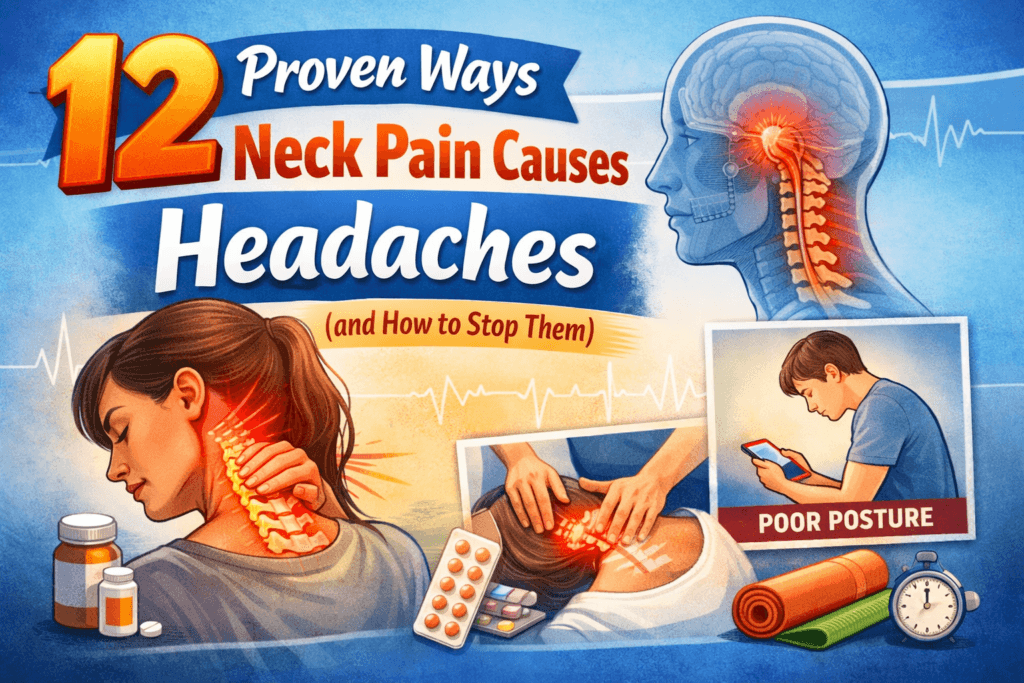
12 Proven Ways Neck Pain Causes Headaches (and How to Stop Them)
Ever notice how a stiff neck in the morning can turn into a pounding headache by midday? You’re not imagining it. Neck pain and headaches are more than just coincidental, they’re often linked in ways most people don’t realize. Many treat them as separate problems, assuming a headache starts in the head and neck pain starts in the spine. That assumption is often wrong.
In reality, a large percentage of headaches actually originate in the neck, understanding this connection changes how you approach treatment, prevention, and long term relief. Ignoring the neck while treating headaches usually provides only temporary fixes. Focusing on the real source, the cervical spine, leads to lasting improvement.
This article breaks down the anatomical link, the headache types caused by neck issues, how to identify the source, and what truly works to relieve pain.
The Anatomical Link Between the Neck and the Head
The neck, or cervical spine, is far more than a simple support structure for your head. It is a complex system of bones, muscles, nerves, and blood vessels designed to provide mobility, stability, and communication between your brain and body. Because of this intricate design, even minor dysfunction in the cervical spine can trigger pain that is felt not only in the neck but also in the head.
Key Structures Involved
- Cervical Vertebrae: The neck has seven vertebrae (C1-C7) that protect the spinal cord while allowing a wide range of motion.
- Intervertebral Discs: These act as cushions between vertebrae and absorb shock during movement.
- Facet Joints: Small joints between vertebrae that guide and limit motion.
- Muscles and Tendons: From the deep cervical flexors to the suboccipital muscles, these structures control posture and head movement.
- Cervical Nerves: Nerves exiting the cervical spine transmit sensory signals from the neck, shoulders, and upper back to the brain.
- Blood Vessels: Arteries in the neck supply oxygen-rich blood to the brain.
- Upper Spinal Cord: Carries nerve signals to and from the brain.
The upper cervical spine, especially the first three vertebrae (C1-C3), plays a critical role in headaches. These vertebrae share nerve pathways with pain centers in the head through a region called the trigeminocervical nucleus. When neck structures become irritated due to compression, inflammation, stiffness, or overuse, the brain may interpret these pain signals as originating in the head rather than the neck.
This explains why many people experience headaches even when their neck pain is mild or intermittent. Understanding this anatomical connection is the first step toward identifying the real source of head pain.
Cervicogenic Headaches: The Most Direct Connection
Cervicogenic headaches are a type of headache caused by dysfunction in the neck, unlike headaches that originate in the brain or blood vessels, these are secondary headaches meaning the root cause is structural or muscular.
Common Causes
- Poor Posture: Slouching or forward head posture increases stress on the upper cervical spine.
- Prolonged Screen Use: Hours spent on laptops, phones, or tablets puts the neck in sustained positions.
- Muscle Imbalance: Weak deep neck muscles and tight upper neck muscles create abnormal strain.
- Joint Stiffness or Degeneration: Aging or injury can reduce motion and irritate nerves.
- Previous Neck Injuries or Whiplash: Trauma can leave lingering dysfunction in joints and muscles.
Typical Symptoms
- Pain starting at the base of the skull and radiating toward the forehead, temples, or behind the eyes.
- Often one-sided pain.
- Headaches worsen with neck movement or sustained postures.
- Reduced neck range of motion.
- Tightness in the shoulders or upper back.
Unlike migraines, cervicogenic headaches generally do not cause nausea, light sensitivity, or visual disturbances. Over-the-counter painkillers may temporarily dull the symptoms, but the headache often returns until the neck issue is addressed.
Tension Headaches and Neck Muscle Overload
Tension-type headaches are the most common headache worldwide, and neck dysfunction is a frequent contributor. These headaches typically feel like a dull, constant pressure or a tight band around the head.
What Causes Tension Headaches
- Sustained Muscle Contraction: Holding the neck in one position for hours, such as working at a desk.
- Poor Ergonomics: Incorrect workstation setup strains the neck and shoulder muscles.
- Stress-Induced Muscle Guarding: Mental or emotional stress can cause involuntary neck tightening.
- Jaw Clenching or Teeth Grinding: Overloads neck and upper back muscles.
- Shallow Breathing Patterns: Limits oxygen delivery to muscles, increasing fatigue.
- Sleep Posture Problems: Using too high or too firm pillows can stress the cervical spine.
Key Muscles Involved
- Upper Trapezius: Runs from the neck to the shoulder, prone to tension.
- Levator Scapulae: Elevates the shoulder blade and contributes to neck stiffness.
- Suboccipital Muscles: Small muscles at the base of the skull, highly sensitive to tension.
- Sternocleidomastoid (SCM): Important for rotation and flexion of the neck, can refer pain to the head and eyes.
When these muscles remain tight for extended periods, blood flow is reduced, and pain metabolites accumulate. This creates the classic dull, pressing headache. Even subtle neck stiffness often accompanies tension headaches, making it easy to overlook the cervical component.
Migraines and the Neck: An Overlooked Trigger
Migraines are primarily neurological headaches, but research increasingly shows that the neck plays a significant role in triggering attacks. Many migraine sufferers notice neck pain before the headache phase begins.
How the Neck Contributes to Migraines
- Cervical Muscle Tension: Tight neck muscles sensitize pain pathways in the brainstem.
- Poor Posture: Forward head posture increases strain on cervical joints and muscles.
- Neck Joint Dysfunction: Limited or abnormal movement alters sensory input to the central nervous system.
- Stress-Related Neck Tightening: Emotional stress causes reflexive muscle contraction, which can trigger migraines.
In many cases, neck pain is not just a symptom but a trigger in the migraine cycle. Improving cervical mobility, balancing muscles, and correcting posture can reduce migraine frequency, severity, and duration for some patients.
The Role of Posture and Modern Lifestyle
Modern life is incredibly unfriendly to the cervical spine. Hours spent hunched over a laptop, scrolling on a phone, or leaning into a steering wheel create constant strain on the neck muscles, joints, and nerves. Over time, this stress doesn’t just cause neck stiffness, it can trigger headaches.
Common Posture-Related Contributors
- Forward Head Posture: When the head moves forward even an inch, the effective weight the neck muscles must support increases dramatically. Chronic forward head posture is one of the biggest culprits behind neck-related headaches.
- Slouched Sitting: Poor sitting posture at a desk or on a couch puts extra pressure on cervical joints and stretches deep stabilizing muscles.
- Laptop Use Without External Keyboard: Working on a laptop with the screen low causes sustained neck flexion.
- Phone Use at Chest or Lap Level: Texting or scrolling tech neck style strains the cervical muscles continuously.
- Sleeping With Excessive Pillows: High or firm pillows push the neck into unnatural positions during the night, perpetuating muscle tension.
- Unsupported Reading Posture: Holding books, tablets, or even knitting in unsupported positions can slowly overload neck muscles.
Every inch the head moves forward increases the mechanical load on the neck by approximately 10 pounds. Over time, this chronic overload causes muscle fatigue, joint compression, nerve irritation, and eventually headaches. The effect is not age-specific, it impacts teenagers, office workers, gamers, drivers, and remote workers alike.
How Neck Pain Triggers Head Pain
The connection between neck dysfunction and headaches is complex and often involves multiple mechanisms working together.
1. Nerve Convergence
Cervical nerves and cranial nerves share pathways in the trigeminocervical nucleus. Because of this overlap, the brain sometimes misinterprets neck pain as originating in the head, creating referred headache pain.
2. Muscle Referral Patterns
Tight neck muscles can refer pain into the temples, behind the eyes, or even the jaw. Suboccipital and trapezius muscles, in particular, are notorious for creating these referred headache patterns.
3. Joint Dysfunction
Facet joints in the upper cervical spine, when restricted or irritated, send signals that the brain perceives as head pain rather than neck pain. Even subtle joint stiffness can contribute to frequent headaches.
4. Vascular Influence
Chronic neck tension can compress or irritate surrounding blood vessels, reducing blood flow to the head and increasing sensitivity to pain. This mechanism is especially relevant for tension-type headaches.
5. Central Sensitization
When neck pain becomes chronic, the nervous system becomes more sensitive to pain stimuli. This central sensitization lowers the threshold for headache activation, meaning minor neck strain can trigger more severe headaches than it would in someone without chronic pain.
These mechanisms rarely occur in isolation, they often reinforce each other, creating a cycle of neck stiffness and recurring headaches.
Red Flags That Suggest a Neck-Related Headache
Not every headache originates in the neck, so it’s important to recognize when cervical involvement is likely. The following signs strongly suggest a neck-related cause:
- Headache worsens with neck movement or prolonged posture
- Neck stiffness is present most days
- Pain starts in the neck and spreads upward toward the head
- Temporary relief occurs when the neck is massaged or gently stretched
- Headaches are triggered by certain work positions or activities
- Pain improves with targeted physical therapy
If several of these warning signs apply, treating only the head with medication is unlikely to provide lasting relief. Addressing the neck is essential.
Diagnosis: How Doctors Identify the Connection
A proper diagnosis of neck-related headaches requires a careful clinical evaluation. Imaging alone often misses the functional causes, so the diagnosis is mostly clinical rather than purely radiological.
Evaluation Includes
- Detailed Symptom History: Timing, triggers, and patterns of headaches and neck discomfort
- Neck Range of Motion Testing: Identifying stiffness or movement restrictions
- Palpation of Cervical Muscles: Detecting tightness, trigger points, and tenderness
- Postural Assessment: Evaluating sitting, standing, and sleeping posture
- Neurological Screening: Ensuring no underlying nerve damage
- Imaging When Necessary: MRI or X-ray may be used to rule out structural issues, but most neck-related headaches occur without visible structural damage
This thorough assessment helps differentiate cervicogenic or tension-related headaches from migraines, vascular issues, or other secondary causes.
Treatment: What Actually Works
Quick fixes, like taking painkillers, rarely solve neck-related headaches long-term. Effective treatment targets the root cause: cervical dysfunction.
1. Physical Therapy
Physical therapy is one of the most evidence-based approaches for treating neck-related headaches. Key components include:
- Cervical Mobility Restoration: Gentle joint mobilizations to restore normal movement
- Deep Neck Flexor Strengthening: Strengthening postural muscles to support the cervical spine
- Postural Retraining: Correcting forward head posture and slouched shoulders
- Scapular Stability Exercises: Supporting proper upper back mechanics to reduce neck strain
2. Ergonomic Correction
Adjusting your work and living environments is essential to prevent recurrence:
- Position screens at eye level
- Use an external keyboard and mouse for laptops
- Ensure proper chair and desk alignment
- Take regular movement breaks to avoid prolonged static positions
Ignoring ergonomics guarantees that headaches will continue to return.
3. Manual Therapy
Targeted hands-on techniques can relieve tension and restore function:
- Soft tissue release to relax tight muscles
- Joint mobilization to improve range of motion
- Trigger point therapy to reduce referred pain
4. Exercise and Movement
Daily exercises maintain neck and upper back health:
- Neck mobility drills and stretches
- Upper back strengthening to improve posture
- Gentle stretching of tight muscles such as trapezius, levator scapulae, and suboccipital muscles
Consistency is far more important than intensity, small, daily movements outperform occasional aggressive workouts.
5. Stress Management
Stress directly contributes to neck tension and headaches, so incorporating stress reduction strategies is crucial:
- Breathing exercises to reduce muscle guarding
- Optimizing sleep quality and duration
- Adjusting workload or taking breaks to reduce mental strain
Stress and neck pain reinforce each other, creating a vicious cycle. Managing both simultaneously is necessary for lasting relief.
Medications: Helpful but Limited
Pain medications can provide temporary relief, but they do not address the underlying cause of neck-related headaches. They should be used as part of a broader treatment plan, not as a stand-alone solution.
Common Medication Options
- NSAIDs (Non-Steroidal Anti-Inflammatory Drugs): Reduce inflammation and ease mild to moderate pain.
- Muscle Relaxants: Help release tension in tight cervical muscles, especially for tension-type headaches.
- Migraine-Specific Medications: Useful if neck issues trigger migraine attacks, but these do not correct cervical dysfunction.
It’s important to use medications judiciously. Overuse can lead to rebound headaches, where the headache returns or worsens once the medication wears off. The goal of medication should be to support rehabilitation while physical therapy, posture correction, and lifestyle changes address the root cause.
When Imaging or Specialist Care Is Needed
Most neck-related headaches can be identified clinically and managed conservatively. However, certain symptoms should prompt immediate medical evaluation:
- Sudden, severe headache onset (worst headache of your life)
- Neurological deficits such as weakness, numbness, or tingling
- Vision changes like double vision or sudden vision loss
- Fever or other signs of infection
- Unexplained weight loss or systemic symptoms
- Progressive worsening of headaches despite treatment
These red flags may indicate a non-mechanical cause such as vascular issues, infections, or neurological disorders, and should not be ignored.
Prevention: Stopping the Cycle Before It Starts
Preventing neck-related headaches is far easier than treating chronic pain. Small, consistent changes can dramatically reduce the frequency and severity of headaches.
Practical Prevention Strategies
- Adjust Your Workstation: Keep your screen at eye level, chair at proper height, and keyboard positioned to avoid slouching.
- Avoid Prolonged Static Positions: Take frequent movement breaks, stretch, and reset posture throughout the day.
- Strengthen Postural Muscles: Focus on deep neck flexors, upper back muscles, and scapular stabilizers to support proper alignment.
- Limit Phone Use at Low Angles: Raise your phone to eye level to prevent tech neck.
- Use Appropriate Pillow Height: Avoid excessive pillows or overly firm options that strain the cervical spine.
- Maintain Regular Physical Activity: Exercise supports muscle health, circulation, and stress management.
Consistency is key. Small, daily habits are far more effective than occasional aggressive interventions or short-term fixes.
The Psychological Component
Pain perception is influenced not just by physical factors, but also by stress, anxiety, and mental fatigue. Chronic neck pain can heighten pain vigilance, making headaches feel more intense and more frequent.
Addressing the psychological and recovery aspects is an essential part of treatment:
- Mindset: Cognitive behavioral approaches can help manage the emotional impact of chronic pain.
- Sleep: Quality rest supports muscle recovery and reduces pain sensitivity.
- Stress Management: Mindful breathing, meditation, or relaxation exercises reduce involuntary neck muscle tension.
Ignoring these elements often prolongs pain and undermines physical treatment efforts. Treating the neck alone without considering psychological factors is incomplete care.
The Bottom Line
If your headaches keep coming back despite treatment, it’s time to look beyond the obvious. Most recurring headaches have roots in the neck,whether from muscle tension, joint dysfunction, or poor posture. Treating only the head provides temporary relief, but targeting the cervical spine addresses the source of the problem.
By improving neck mobility, correcting posture, strengthening stabilizing muscles, and managing stress, you can reduce headache frequency, intensity, and duration. Evidence shows that lasting relief comes from understanding the connection, not masking symptoms. Pay attention to your neck, treat the root, the head will follow.
👩⚕️ Need Personalized Health Advice?
Get expert guidance tailored to your unique health concerns through MuseCare Consult. Our licensed doctors are here to help you understand your symptoms, medications, and lab results—confidentially and affordably.
👉 Book a MuseCare Consult NowMust Read:
- Top 10 Proven Neck Pain Causes, Symptoms and Treatment Options That Actually Work
- 7 Proven Fixes for Neck Stiffness After Sleeping Wrong
- Does Physical Therapy Help with Neck Pain? 7 Powerful Research Backed Facts
- Best Back and Joint Pain Relief Devices You Can Use at Home: 17 Doctor‑Approved Solutions That Work
- Herniated Disc vs Bulging Disc: 13 Key Differences & Lower Back Pain Explained
- Evidence-Based Treatments for Chronic Back and Joint Pain: 21 Proven Options for Relief

Dr. Ijasusi Bamidele, MBBS (Binzhou Medical University, China), is a medical doctor with 5 years of clinical experience and founder of MyMedicalMuse.com, a subsidiary of Delimann Limited. As a health content writer for audiences in the USA, Canada, and Europe, Dr. Ijasusi helps readers understand complex health conditions, recognize why they have certain symptoms, and apply practical lifestyle modifications to improve well-being