
⚠️ Affiliate Disclaimer: This post may contain affiliate links, which means I may earn a small commission — at no extra cost to you — if you make a purchase through one of these links. I only recommend products or services I genuinely trust and believe can provide value. Thank you for supporting My Medical Muse!
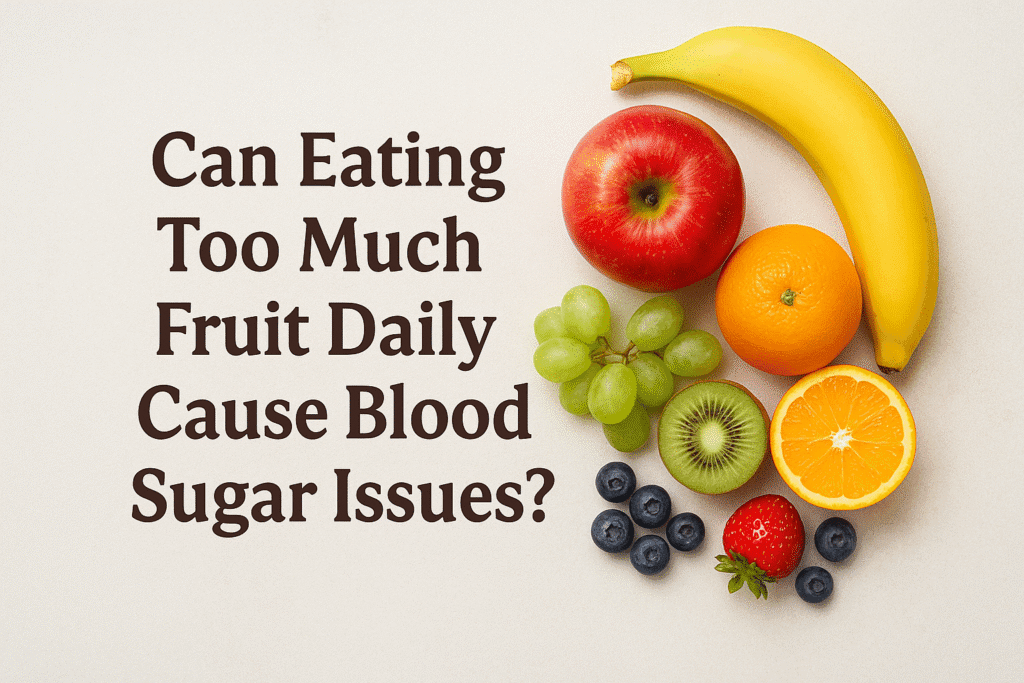
Can Eating Too Much Fruit Daily Cause Blood Sugar Issues? 12 Surprising Facts
Fruit is healthy, that is an undeniable fact. It is loaded with vitamins, minerals, antioxidants, fiber, and water. It helps boost immunity, strengthens digestion, supports hormonal balance, nourishes skin, and protects against chronic diseases. For decades, fruit has been marketed as the ultimate natural health food, clean, innocent, and safe.
But here is the question people rarely ask honestly, Can eating too much fruit every day cause blood sugar problems, weight gain, or even increase the risk of diabetes?
Most people assume that because something is natural, it is automatically harmless but nature is not always gentle. A ripe banana is natural but it still contains more than five teaspoons of sugar. Dates are natural but two tablespoons hold the sugar equivalent of a can of soda. Even grapes, often called a “healthy snack,” can raise blood sugar almost as fast as some desserts.
Fruit is beneficial but that does not mean it is risk-free for everyone. If you are metabolically healthy with good insulin sensitivity, your body may handle fruit comfortably but if you are insulin resistant, dealing with belly fat accumulation, prediabetes, PCOS, or fatty liver, your body does not process sugar the same way, even if it is “natural sugar.”
The honest answer, Yes. Eating too much fruit can lead to blood sugar imbalance especially when the quantity is excessive, the fruits are high in sugar, or when your metabolism is already compromised.
Whole fruits in reasonable amounts are safe and beneficial. They support gut health, supply antioxidants, and may even improve insulin sensitivity when eaten correctly but fruit is not magical. It still contains sugar, and your body still has to process that sugar. Whether that sugar becomes fuel, fat, or inflammation depends entirely on how much you eat, your metabolic health, and how you consume it.
This article uncovers how fruit affects your blood sugar and metabolism, why whole fruit behaves differently from fruit juice or dried fruit, when “too much fruit” becomes a problem, who needs to be careful, and how to enjoy fruit safely without causing blood sugar spikes or sabotaging your health.
Let’s go deeper with science and truth, not fear or exaggeration.
Why Fruit Doesn’t Always Behave Like “Healthy Food”
Fruit is often viewed as a guilt-free food, something you can eat without limits simply because it grows on trees, is rich in nutrients, and comes from nature but the reality is more complex. Fruit contains three key components that determine how it affects your metabolism, fructose, fiber, and micronutrients.
Fructose is a natural sugar found in fruit unlike glucose, which directly raises your blood sugar, fructose takes a different path. It doesn’t enter the bloodstream immediately, instead, it travels to the liver, where it is either converted into energy or stored as fat. The second component is fiber, which slows digestion, helps control blood sugar spikes, improves gut health, and keeps you full longer. The third component, micronutrients and antioxidants, helps reduce inflammation, protect cells, and support overall health. However, they do not prevent the metabolic consequences of consuming too much sugar from fruit.
The problem begins when fruit is eaten in excessive quantities, especially in forms that have lost their natural fiber, such as fruit juice, smoothies, or dried fruit. When fiber is removed or destroyed, sugar from fruit becomes rapidly available to the body, leading to high insulin release, sugar crashes, increased cravings, and potential fat storage. For people with metabolic issues like insulin resistance, high triglycerides, PCOS, prediabetes, or fatty liver, this effect is even stronger.
Understanding Fructose: A Key Player in Blood Sugar Issues
At first glance, fructose seems harmless. Since it does not directly raise blood glucose in the same way as table sugar or white rice, people often assume it is safer but what happens behind the scenes tells a different story.
When you consume fructose in normal amounts and with fiber, the liver manages it easily and converts it into usable energy but when you consume too much, especially through fruit juices, smoothies, or excessive fruit snacking, the liver becomes overloaded. Instead of turning fructose into energy, it begins converting it into fat. This fat accumulates inside the liver, blood, and around abdominal organs.
Over time, this leads to fatty liver, increased triglycerides, belly fat, insulin resistance, and eventually, higher risk of type 2 diabetes. People with these conditions may still show normal fasting blood sugar results, which is why the damage often goes unnoticed for years.
This is why frequent consumption of fruit juices, sugary smoothies, or large quantities of high-fructose fruits can silently contribute to metabolic issues, even when your diet appears “healthy.”
Whole Fruit vs Fruit Juice, Smoothies, and Dried Fruit
Whole fruit behaves very differently from its processed counterparts. When you bite into an apple or chew berries, your body slowly digests the sugar. Fiber acts like a natural shield, slowing sugar absorption, reducing insulin release, and giving your liver time to process fructose properly.
But when fruit is juiced, blended excessively, or dehydrated, fiber is reduced, destroyed, or completely removed. The sugar becomes more concentrated and is absorbed much faster. This triggers a stronger insulin response and increases the chance of liver overload.
One cup of orange juice can contain the sugar of three or four oranges, but none of the fiber. The same is true for smoothies made from multiple pieces of fruit. Dried fruit is even more concentrated, just a handful of raisins or dates can easily exceed the sugar content of a full meal.
You may think you are eating light, but your liver processes these forms almost the same way it processes refined sugar.
Signs You Might Be Eating Too Much Fruit
The tricky part is that many people overeat fruit thinking it is harmless. They replace snacks, desserts, or even meals with fruit, but end up unintentionally causing sugar-related issues.
Some warning signs include:
You feel tired, sluggish, or mentally foggy an hour or two after eating fruit.
You constantly crave sweets, especially after consuming fruit-based snacks or smoothies. You struggle to lose belly fat even though your diet seems clean.
You feel unusually hungry in the morning even when you ate fruit the night before.
Your blood test shows elevated triglycerides or signs of fatty liver despite a “healthy diet”.
You experience sugar crashes, dizziness, or irritability after eating sweet fruits.
You feel hungry again shortly after eating fruit, even if you ate a large amount.
These symptoms don’t mean fruit is harmful. They indicate that your body is struggling to handle the volume or type of fruit you are consuming.
Not All Fruits Impact Blood Sugar the Same Way
Fruits vary significantly in their sugar, fiber, and fructose content. Some fruits release sugar slowly, providing energy without overwhelming the liver or causing sharp insulin spikes. These include berries, apples, pears, kiwi, oranges, grapefruit, and avocado. These fruits tend to have more fiber and lower sugar density, making them more suitable for people with metabolic concerns.
On the other hand, some fruits deliver a heavy dose of natural sugar, especially when eaten in large amounts. These include ripe bananas, grapes, mangos, watermelon, pineapple, papaya, and most dried fruits like figs, raisins, and dates. These fruits are not unhealthy, but they release sugar more rapidly and can add up quickly, especially in juice or blended form.
Context matters. If you are active, insulin sensitive, and metabolically healthy, your body can handle moderate amounts of these fruits easily. But if you are overweight, insulin resistant, or trying to reduce belly fat, your fruit choices and portion sizes become more important.
Fruit isn’t the enemy. But it isn’t magic either. It is healthy within limits, and harmful only when consumed without awareness of quantity, type, and metabolic condition.
How Much Fruit Is Too Much?
There is no universal number that applies to everyone. Fruit tolerance depends on your metabolic health, activity level, and the types of fruits you eat. For most healthy adults with good insulin sensitivity, one to three whole fruits per day is generally safe, but this assumes those fruits are eaten in whole form and not as juice, smoothies, or dried fruit.
For people with insulin resistance, prediabetes, type 2 diabetes, PCOS, fatty liver, abdominal obesity, or high triglycerides, the body cannot process sugar as efficiently. In this case, daily intake may need to be limited to one to two fruits, preferably lower-sugar options such as berries, grapefruit, kiwi, apples, or pears.
What matters even more than how many fruits you eat is how often you eat them. Eating fruit once or twice a day with meals is very different from eating fruit constantly throughout the day. Snacking frequently on grapes, bananas, or sipping fruit smoothies keeps insulin elevated for hours, preventing fat burning and promoting fat storage. Fruit is healthy, but fruit grazing all day is not.
Does Fruit Cause Weight Gain?
Fruit itself does not automatically make you gain weight, but excessive consumption especially of high-sugar fruits, fruit juices, and smoothies can interfere with weight loss and metabolic balance.
Here is how the process works:
When you consume too much fructose, especially without fiber, it overwhelms the liver.
The liver converts excess fructose into fat in the form of triglycerides.
That fat is stored around organs, especially the liver and abdomen. This buildup of visceral fat increases insulin resistance.
Insulin resistance slows fat burning, increases hunger, and promotes more fat storage.
This cycle makes weight loss extremely hard, even if the rest of your diet is “clean”.
That is why some people exercise daily, eat healthy meals, limit junk food, yet still can’t lose belly fat. They are unknowingly overloading their body with high-sugar fruits, juices, or smoothies.
Fruit is not the villain but excess fructose in the wrong metabolic environment is.
Who Should Be Careful with Fruit Intake?
Fruit is beneficial, but some groups should be more intentional with type, timing, and portion sizes.
People who may need to monitor fruit intake include:
- Those with prediabetes or diabetes
People with insulin resistance or metabolic syndrome
Individuals with non-alcoholic fatty liver disease - People with PCOS or hormonal imbalances
- Those struggling with belly fat or obesity
Anyone with high triglycerides - People who experience frequent energy crashes, sugar cravings, or irritability after eating
These individuals can still enjoy fruit, but they must be selective and avoid frequent, large, or liquid forms of fruit.
Smart Strategies for Eating Fruit Without Blood Sugar Issues
Fruit can absolutely be part of a healthy diet, if consumed correctly. These simple strategies help you enjoy fruit safely without causing insulin spikes or fat storage:
- Prioritize whole fruit over juice or dried fruit.
Juiced or dehydrated fruits behave almost like refined sugar. They enter the bloodstream quickly and can overwhelm the liver. - Avoid eating fruit alone if you have blood sugar problems. Pair fruit with a protein or healthy fat such as nuts, yogurt, eggs, or cheese. This slows down sugar absorption and prevents spikes.
- The best time to eat fruit is with or after a meal.
Your body digests it more slowly when combined with other foods, which helps maintain stable blood sugar. - Be mindful of evening fruit consumption.
Large portions of high-sugar fruit at night can disrupt sleep, increase cravings, elevate insulin, and hinder fat burning during rest. - Smoothies are not always healthy.
A single homemade fruit smoothie often contains the sugar from three to five fruits. That’s fine occasionally, but not as a daily habit, especially for someone with insulin resistance, PCOS, or blood sugar challenges.
Eating fruit wisely keeps it beneficial. Eating fruit carelessly makes it behave more like a dessert.
Fruit Is Healthy, But Not Unlimited
Fruit is not junk food but it is not a free food either. It is a natural source of sugar. When eaten in natural, whole form, in sensible amounts, and in the right context, it supports health, digestion, and longevity.
When eaten excessively, especially in juiced, blended, or dried forms, it can raise blood sugar, overwhelm the liver, trigger cravings, encourage visceral fat accumulation, and contribute to metabolic imbalance.
Your body responds to fruit based on:
- How often you eat it
The form in which you consume it - Your current metabolic health
Whether you eat it with or without other foods - Your stress levels, sleep, and insulin sensitivity
Whole fruit, eaten with meals, in appropriate portions, is healthy for almost everyone but frequent fruit snacking, drinking juices, relying on smoothies, or consuming large amounts of high-fructose fruits can definitely disrupt blood sugar stability and fat metabolism.
Fruit should nourish you, not silently harm your metabolic health. The difference lies not in whether you eat fruit, but how you eat it.
Final Truth: A Smarter Way to Eat Fruit
Fruit supports health when it fits your metabolism, your lifestyle, and your goals. It offers fiber, antioxidants, vitamins, and hydration but too much of it, especially in liquid, dried, or constantly snacked form can quietly push your blood sugar higher, increase fat storage, and strain the liver. For people already dealing with insulin resistance, metabolic syndrome, PCOS, fatty liver, or diabetes risk, that impact becomes even more significant.
The point isn’t to fear fruit. The point is to understand how it works in your body and use it wisely.
The healthiest way to enjoy fruit is to:
- Choose whole, fiber-rich fruits rather than juices, purees, and dried options
• Limit portions instead of treating fruit like an unlimited free food
• Eat it with a meal or alongside protein or healthy fats, not alone on an empty stomach
• Avoid grazing on fruit all day, let your insulin levels rest
• Be mindful of high-sugar fruits if you already struggle with cravings, weight loss, or blood sugar control
• Adjust your intake based on your metabolic health, not just general nutrition advice
When fruit is eaten in thoughtful amounts, at the right time, and in the right form, it supports metabolic health instead of silently damaging it. Fruit is part of a healthy diet, fruit is not the diet.
👩⚕️ Need Personalized Health Advice?
Get expert guidance tailored to your unique health concerns through MuseCare Consult. Our licensed doctors are here to help you understand your symptoms, medications, and lab results—confidentially and affordably.
👉 Book a MuseCare Consult NowOther Blog Post You Might Like:
- 7 Surprising Health Benefits of Drinking Lemon Water Every Morning
- 10 Hidden Reasons You Feel Hot Inside Your Body (Even with Normal Temperature)
- Can Dehydration Raise Blood Sugar Levels? 7 Powerful Reasons Why
- 7 Surprising Reasons Why Your Blood Sugar Spikes After Eating Healthy Foods
- 7 Clear Reasons Why Your Blood Sugar Is High in the Morning but Normal Later
- 7 Surprising Reasons Why Your Blood Sugar Spikes After Eating Low-Carb Meals

Dr. Ijasusi Bamidele, MBBS (Binzhou Medical University, China), is a medical doctor with 5 years of clinical experience and founder of MyMedicalMuse.com, a subsidiary of Delimann Limited. As a health content writer for audiences in the USA, Canada, and Europe, Dr. Ijasusi helps readers understand complex health conditions, recognize why they have certain symptoms, and apply practical lifestyle modifications to improve well-being