
You swallow thousands of times a day without thinking about it, then one afternoon you notice it, a tiny click, a soft pop or a quick crack deep in your throat. It happens again the next morning and again when the room is quiet. Suddenly, something you never paid attention to becomes impossible to ignore.
Before panic sets in, here’s something important to understand:
A clicking sound when you swallow saliva is usually normal, extremely common and rarely a sign of anything dangerous. Most people experience it at some point in their lives, for many, it’s simply the sound of small throat structures moving exactly the way they’re supposed to but for others, the noise becomes frequent enough that they begin to wonder:
- Is something wrong with my throat?
- Is a bone or cartilage out of place?
- Why does it happen only with saliva but not with food?
- Could this be a serious medical problem?
The good news? In most cases, nothing is wrong but understanding why the click happens what structures are making the sound, what influences it and when it’s worth paying attention to, can give you clarity, reassurance and control.
This guide breaks everything down in simple, accurate language, what’s normal, what’s anatomical, what’s caused by tension or dryness and the rare times the clicking signal something more
Understanding What Actually Happens When You Swallow
Before you understand why your throat may click, you need to know what swallowing really involves. It’s a fast, complex action but the process is easy to visualize:
a. The tongue pushes saliva to the back of your mouth.
This triggers the swallowing reflex.
b. Your throat muscles contract in a wave-like motion.
This motion called peristalsis pulls saliva downward.
c. The hyoid bone rises and moves forward.
This tiny, horseshoe-shaped bone sits just above your larynx. It doesn’t connect to any other bone, which makes it extremely mobile.
d. The larynx (voice box) lifts upward.
This helps close the airway so the saliva goes into the esophagus, not the windpipe.
e. Everything drops back to its resting position.
All these movements happen in less than a second, and several parts can generate audible sounds under the right conditions.
The Most Common Causes of a Throat Click When Swallowing
There isn’t just one reason. In fact, most throat clicks fall into the following categories:
1. Hyoid Bone Movement (Most Common)
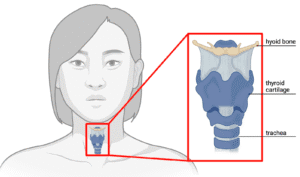
The hyoid bone is the number one source of clicking during swallowing.
Because it:
- floats in soft tissue
- moves forward and upward
- is connected to several muscles and cartilage structures
a small shift or friction during the swallowing motion can make a click.
Why it creates noise:
- The hyoid may briefly rub against the thyroid cartilage.
- If the area is tight or inflamed, movement becomes less smooth.
- If you’re thin, the movement can sound louder externally.
This is almost always harmless.
2. Tight or Overactive Neck Muscles
Your neck and throat contain many small muscles:
- digastric
- sternohyoid
- omohyoid
- thyrohyoid
- superior constrictor muscles
When they tense up (from stress, posture, or overuse), the smooth glide of structures is altered. That tension can produce:
- clicking
- popping
- a pulling sensation
- difficulty initiating a swallow
Common triggers:
- Anxiety or high stress
- Bruxism (jaw clenching)
- Poor posture from phone or computer use
- Sleeping with your neck bent awkwardly
This is extremely common in people with tech neck.
3. Saliva Consistency or Stickiness
Thick or sticky saliva can produce:
- a small separation “pop”
- suction-like noises
- clicking at the moment your tongue lifts or releases
This happens when saliva becomes more viscous due to:
- dehydration
- dry indoor air
- mouth breathing
- certain medications
- anxiety (which dries out the mouth)
This is one of the simplest, most benign explanations.
4. Temporomandibular Joint (TMJ) Involvement
Even though the TMJ is not inside the throat, its movement is tightly synchronized with swallowing.
If you have TMJ dysfunction, you may hear sounds like:
- clicks
- pops
- cracks
which you think are coming from the throat, even when they originate near the jaw.
TMJ-related swallowing clicks often occur:
- right when saliva is pushed backward
- when the jaw shifts slightly
- when the tongue contacts the palate
5. Lingual Tonsil Hypertrophy (Enlarged Tissue at Base of Tongue)
At the very back of the tongue, there are lymphoid tissues called the lingual tonsils. When these enlarge, they can cause:
- friction
- pressure
- clicking when the tongue or epiglottis moves
This is more common in:
- those with allergies
- frequent throat infections
- people who recently had their regular tonsils removed (compensation)
It’s usually not dangerous, but may cause a click and slight lump sensation.
6. Epiglottis/Hyoid Bone Interaction
In some individuals, the shapes or positions of the epiglottis and hyoid bone make contact during swallowing. This is sometimes called:
Hyoid bone syndrome or
Clicking larynx syndrome
This can create a distinct click or pop, though it sounds dramatic, the condition is benign in most cases.
7. Small Cartilage Irregularities
A slight cartilage variation in the:
- thyroid cartilage
- cricoid cartilage
- epiglottis
can create a mechanical click as the structures move. Most people never realize it’s been there their whole life until they start paying attention.
8. Post-Infection or Post-Inflammation Stiffness
After a cold, throat infection or bout of severe coughing, the tissues around the larynx may be temporarily inflamed or stiff. This changes how smoothly structures glide.
Results:
- clicking
- popping
- difficulty swallowing saliva
- feeling something is stuck temporarily
This usually resolves within a few weeks.
When a Throat Click Is Completely Normal
A throat click is considered normal when:
- it’s painless
- you can swallow normally
- the sound is soft or intermittent
- it only happens with saliva, not food
- it disappears after drinking water
- it’s worse only when your neck is in certain positions
- it’s more noticeable when you’re stressed, tired, dehydrated or anxious
Most people experience this at some point, the sound is just biomechanics not disease.
When a Throat Click May Be Related to Anxiety
Many people notice throat clicks for the first time during a period of high stress. Here’s why anxiety amplifies the sensation:
a. Hyper-awareness
Anxious people pay more attention to bodily sensations.
What has always been there suddenly becomes noticeable.
b. Muscle tension
Anxiety tightens the suprahyoid and infrahyoid muscles.
This changes the swallowing mechanics.
c. Dry mouth
Cortisol spikes reduce saliva production, sticky sounds.
d. Shallow breathing
Neck muscles overstimulate, increasing friction.
The result?
Clicks appear more frequent, louder or more concerning, even when nothing is wrong.
When a Throat Click Is Not Normal
Although rare, certain red flags indicate you should see a doctor or ENT:
Seek evaluation if you have:
- persistent pain when swallowing
- difficulty swallowing food or pills
- choking or aspiration episodes
- a visible neck bulge
- voice changes
- unexplained weight loss
- pain radiating to the ear
- a constantly worsening or very loud click
- a history of neck trauma
These symptoms may point to:
- structural abnormalities
- significant inflammation
- nerve involvement
- severe reflux
- large tonsils
- thyroid enlargement
- cartilage displacement
But remember these cases are the minority. A simple, painless click in an otherwise normal swallow almost never signals something dangerous.
Specific Conditions Sometimes Involved
1. Clicking Larynx Syndrome
Very rare, happens when the hyoid horn rubs against the thyroid cartilage. Main symptom includes a single loud click each swallow.
2. Eagle Syndrome
Elongated styloid process can irritate nearby tissues. Clicking is possible but not the main symptom.
3. Cricopharyngeal Spasm
Causes tightness and pressure.
Clicking may occur, but the primary feeling is a lump or difficulty swallowing.
4. Laryngopharyngeal Reflux (Silent Reflux)
Acid irritation stiffens tissues, changing how they move.
5. TMJ Dysfunction
Clicking may radiate and be perceived in the throat.
Why the Clicking Is Often Louder When Swallowing Saliva (Not Food)
Many people report:
I only hear it when swallowing saliva, not when eating.
Here’s why:
Food provides weight and lubrication.
Saliva swallowing is lighter, faster, and “dry”
Food slows the mechanics, creating smoother glide.
Thicker textures silence tiny movements.
When chewing or swallowing food, the swallowing structures move over a larger mass, not empty air.
You’re more aware when it’s quiet.
Saliva swallowing usually happens in silence, making the click more noticeable.
Can You Stop the Clicking? Yes, Here’s How
The good news is that throat clicking often improves with simple adjustments. Most solutions target three main issues:
- Lubrication (dry tissues create more friction and noise)
- Muscle tension (tight throat and neck muscles change how structures move)
- Swallowing mechanics (subtle posture shifts affect the hyoid and larynx)
Below are practical, easy-to-follow strategies that genuinely make a difference.
1. Hydrate Properly
A dry mouth makes every swallow louder and rougher. When saliva becomes thick, sticky, or stringy, it produces suction-like sounds and increases friction around the moving cartilage.
What to do:
- Aim for 1.5-2 liters of water daily.
- Sip consistently rather than drinking large amounts at once.
- Increase fluids on hot days, during workouts, or if you’re speaking a lot.
Hydration alone significantly reduces throat clicking for many people.
2. Correct Your Neck Posture
Your throat structures sit in a delicate biomechanical chain. When your head juts forward even slightly, the muscles have to work harder to lift the hyoid and larynx during swallowing.
That increased strain often creates clicking.
Improve your alignment by:
- Sitting with your ears directly over your shoulders, not in front of them.
- Keeping screens at eye level to avoid constant downward tilting.
- Taking breaks from phones and laptops to reset your posture.
- Avoiding long periods of looking down, especially while texting or scrolling.
Even a 10-15% improvement in posture can reduce the clicking noticeably.
3. Relax Your Throat and Neck Muscles
The swallowing mechanism relies on a network of small muscles. When these muscles tighten, from stress, posture, overuse or jaw tension they pull on the hyoid bone and alter its glide path.
This changes the sound of swallowing.
Try these simple relaxation stretches:
a. Chin-to-ceiling stretch
Tilt your head back gently and lift your chin toward the ceiling.
Hold 10-20 seconds, repeat 2-3 times.
b. Lateral neck stretch
Tilt your head to one side, bringing your ear toward your shoulder. Hold for 15 seconds, then switch sides.
c. Jaw relaxation release
Let your jaw hang loosely, dropping slightly open without force. Hold for 20 seconds to reduce tension across the floor of the mouth. Do these daily for best results.
4. Use a Warm Compress
Heat helps soften tight tissues and increase blood flow, reducing friction around the hyoid bone and larynx.
How to apply it:
- Use a warm towel or heating pad.
- Place it over the front and sides of your neck for 10-15 minutes.
- Do this once or twice daily during flare-ups.
Many people feel immediate relief afterward.
5. Reduce Stress-Driven Muscle Tension
Stress directly affects swallowing. When anxiety rises, the neck, jaw and tongue base tighten, altering how the hyoid bone moves and producing clicks. Calming the nervous system helps these muscles return to their normal resting tone.
Helpful techniques:
- Slow deep breathing (5-6 breaths per minute)
- Progressive muscle relaxation
- Mindfulness or grounding exercises
- Gentle yoga or stretching routines
Relieving stress isn’t just psychological, it physically relaxes the structures that click.
6. Improve Saliva Quality
Clicking is more noticeable when saliva is thick, sticky or reduced.
To improve lubrication:
- Sip water throughout the day.
- Chew sugar-free gum to boost saliva flow.
- Limit heavy caffeine intake, which dries the mouth.
- Use a humidifier if your room air is dry.
- Prioritize nasal breathing, mouth breathing dries tissues quickly.
Better-quality saliva creates smoother throat movement.
7. Stretch and Loosen the Tongue Base
The base of your tongue connects to the hyoid bone. When this area tightens, it interferes with normal swallowing mechanics and produces clicking sensations.
Simple exercise:
- Stick your tongue out gently.
- Hold for 5 seconds, relax.
- Repeat 5-10 times.
This helps release tension around the tongue root and the muscles supporting the hyoid.
8. Address Silent Reflux (If It’s Contributing)
Silent reflux can irritate the throat tissues, making movements feel rougher and more mechanical. If your clicking worsens at night, after eating or alongside throat clearing, reflux could be part of the issue.
Supportive habits:
- Avoid eating within 2-3 hours of bedtime.
- Reduce spicy, acidic or greasy foods.
- Elevate your upper body slightly while sleeping.
- Limit alcohol, caffeine, and carbonated drinks.
Improving throat comfort often reduces clicking.
9. Treat Allergies or Post-Nasal Drip
Mucus can coat the back of the throat, increasing friction and creating sticky or clicking sounds during swallowing.
What helps:
- Over-the-counter antihistamines (if appropriate for you)
- Saline nasal rinses to clear mucus
- Steam inhalation to loosen congestion
Reducing mucus often softens or eliminates the clicking.
10. Address TMJ Issues (If They Play a Role)
The jaw joint and swallowing mechanisms work together more than people realize. TMJ tension can radiate into the throat and mimic clicking in the neck.
Try:
- Cutting back on gum chewing.
- Applying heat to the jaw muscles.
- Using a night guard if your dentist recommends one.
- Performing gentle jaw stretches.
If the clicking is coming from the jaw but felt in the throat, TMJ care can make a dramatic difference.
What an ENT Might Do If You Visit
If you decide to get checked (especially if the click is painful), an ENT may:
1. Palpate the hyoid bone while you swallow:
This often instantly reveals the source of the click.
2. Do a flexible laryngoscopy:
A small camera examines movement inside your throat.
3. Order an ultrasound or CT scan:
Rarely needed, only if structural anomalies are suspected.
4. Provide solutions such as:
- physical therapy
- targeted massage
- anti-inflammatory treatment
- posture correction
- rarely, surgical smoothing of cartilage (only for severe cases)
Most people never need these steps.
Myths You Should Ignore
Myth 1: Clicking means something is seriously wrong.
- Reality: almost always normal.
Myth 2: Clicking means your throat is collapsing.
- Reality: No, It’s just soft tissue or cartilage movement.
Myth 3: Clicking means cancer.
- Reality: A painless, mechanical click is NOT a typical cancer symptom.
Myth 4: Clicking means acid reflux is damaging your throat.
- Reality: Reflux may contribute to irritation but rarely causes clicking alone.
Why the Clicking Seems to Come and Go
Swallowing mechanics change throughout the day.
You may notice clicking more when:
- you’re tired
- you’re dehydrated
- your muscles are tight
- you’re anxious
- your posture is poor
- your neck is cold or stiff
- your saliva is thicker
- you’re very aware of your body sensations
Clicks often disappear completely when:
- you’re well-hydrated
- you’re eating
- you’re relaxed
- your posture is good
This is why people experience waves of clicking over days or months.
Realistic Timeline for Improvement
If the clicking is caused by tension, posture or saliva consistency, most people improve within:
- 1-3 days for saliva hydration
- 3-7 days for muscle relaxation
- 2-4 weeks for posture correction
- 4-6 weeks for TMJ tension relief
Structural issues or enlarged tonsils may take longer.
Final Thoughts: Should You Worry?
If your throat makes a click when you swallow saliva and you’re not experiencing pain, trouble swallowing, choking or any other red flags, then what you’re hearing is simply the sound of normal structures doing their job. The throat is a system of cartilage, muscles, ligaments and a floating bone that moves in multiple directions every time you swallow. Small noises are not just common they’re expected.
There are practical steps that can make the clicking softer or less frequent like staying well-hydrated, easing tension in the neck and jaw, improving posture, reducing stress and addressing dryness or reflux if they’re part of the picture. For many people, these simple adjustments are enough to quiet the sound entirely.
But even if the click never disappears, a painless, effortless swallow paired with a harmless noise doesn’t point to danger. It simply reflects the mechanics of a living, moving throat, nothing more. Let the sound be what it is and trust your body’s natural rhythm.

Dr. Ijasusi Bamidele, MBBS (Binzhou Medical University, China), is a medical doctor with 5 years of clinical experience and founder of MyMedicalMuse.com, a subsidiary of Delimann Limited. As a health content writer for audiences in the USA, Canada, and Europe, Dr. Ijasusi helps readers understand complex health conditions, recognize why they have certain symptoms, and apply practical lifestyle modifications to improve well-being