⚠️ Affiliate Disclaimer: This post may contain affiliate links, which means I may earn a small commission at no extra cost to you, if you make a purchase through one of these links. I only recommend products or services I genuinely trust and believe can provide value. Thank you for supporting My Medical Muse!
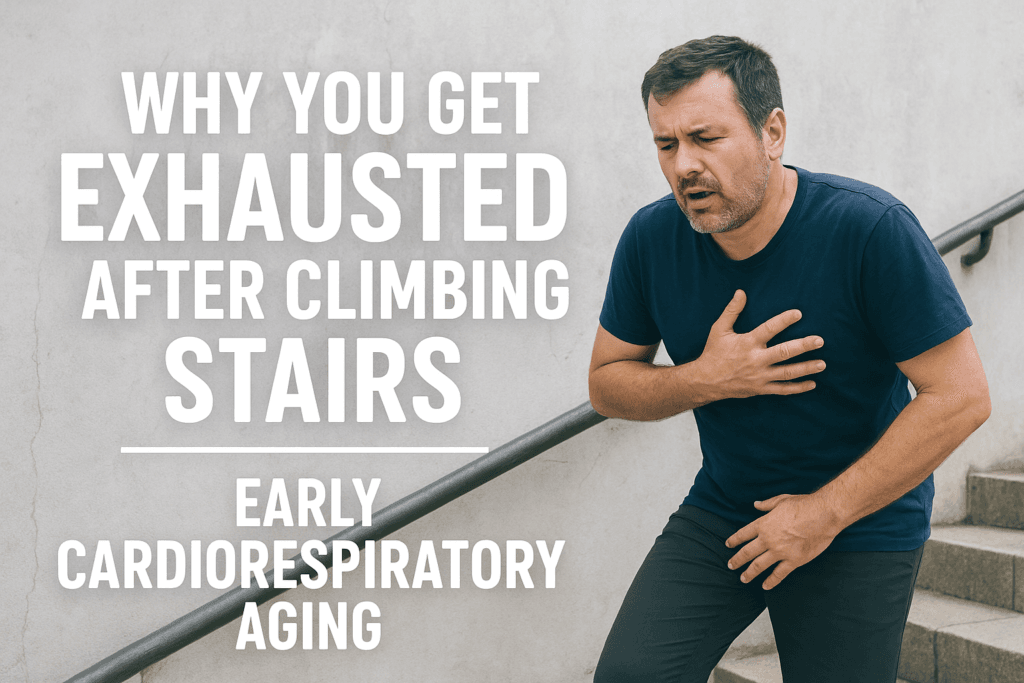
7 Alarming Reasons Stair Exhaustion Reveals Early Cardiorespiratory Aging”
Most people don’t think twice about getting winded on the stairs, they shrug it off, blame stress, lack of exercise, or age, and move on but the body is not careless with its signals. When something as basic as climbing a short flight of stairs consistently leaves you breathless, heavy-legged, or struggling to recover, it is rarely random.
Stairs are one of the simplest, most revealing stress tests of the human body, they demand rapid coordination between the heart, lungs, blood vessels, muscles, and cellular energy systems. When any part of that chain begins to lose efficiency, the weakness shows up fast, often long before routine tests or obvious disease.
This is where early cardiorespiratory aging enters the picture. It doesn’t announce itself with dramatic symptoms or hospital visits. It begins quietly, inside the systems responsible for oxygen delivery and energy production, years or even decades before a diagnosis is made.
Understanding why stair exhaustion happens and when it crosses the line from normal exertion into early physiological decline can reveal far more about your long-term health than most people realize.
Why Stairs Are a Powerful Stress Test
Stairs are not simply walking upward. They represent a sudden, high-demand metabolic challenge that forces multiple physiological systems to respond at once, without preparation.
The moment you start climbing stairs, the body is pushed into a rapid transition from rest to exertion. There is no gradual ramp-up, no time for slow adaptation. Within seconds, several critical processes must accelerate simultaneously:
- Oxygen demand rises sharply as working muscles require immediate fuel
- Heart rate must increase quickly to boost cardiac output
- Blood vessels must dilate efficiently to deliver oxygen-rich blood to the legs
- Muscles must generate repeated force against gravity
- Mitochondria must rapidly produce ATP to sustain contraction
- Carbon dioxide must be cleared efficiently to prevent early breathlessness
If even one of these responses is delayed or inefficient, the system compensates by increasing strain elsewhere, usually through a higher heart rate, heavier breathing, or faster fatigue.
Unlike jogging, cycling, or gym exercise, stair climbing offers no warm-up window. You cannot ease into it. This is precisely why stairs expose physiological weaknesses so reliably and so early.
For this reason, clinicians have long used stair performance as a quick functional screen. When cardiologists ask:
“Can you climb two flights of stairs without stopping?”
They are not making conversation. They are informally assessing cardiorespiratory reserve, the body’s ability to respond to sudden increases in demand. Poor performance here often precedes abnormalities on standard medical tests.
What Normal Stair Fatigue Actually Looks Like
Before labeling stair fatigue as a problem, it is important to distinguish normal exertion from early dysfunction.
Normal Responses
In a healthy individual, climbing stairs may cause:
- Mild breathlessness that resolves within 30-60 seconds
- A noticeable but controlled increase in heart rate
- Slight warmth or muscle effort in the legs
- Rapid recovery once the activity stops
Crucially, there should be:
- No chest tightness
- No dizziness or lightheadedness
- No leg weakness or burning
- No prolonged need to sit or rest
These responses can occur even in healthy people, particularly when:
- Carrying extra body weight
- Climbing quickly or rushing
- Temporarily deconditioned but otherwise metabolically healthy
In these cases, the body adapts quickly, and recovery is smooth.
Red Flags That Should Not Be Ignored
Stair climbing becomes concerning when the response is disproportionate to the effort. Warning signs include:
- Breathlessness that feels excessive or alarming
- The heart pounding aggressively or irregularly
- Needing to stop after one short flight
- Burning, heavy, or weak legs far beyond expected effort
- Lightheadedness or visual dimming
- Recovery that takes several minutes instead of seconds
- Gradual, unconscious avoidance of stairs over time
These are not signs of laziness or poor motivation.
They reflect a loss of physiological reserve, the body’s reduced ability to meet sudden energy and oxygen demands efficiently.
Early Cardiorespiratory Aging: What It Really Means
Early cardiorespiratory aging does not mean heart failure, lung disease, or a dramatic diagnosis. In most cases, it exists well below the threshold of disease.
It refers to the gradual loss of efficiency across the systems responsible for oxygen delivery, circulation, and energy use.
This process can involve subtle changes in:
- Heart pumping capacity, particularly during sudden exertion
- Blood vessel elasticity, reducing rapid blood flow adjustments
- Lung diffusion efficiency, impairing oxygen transfer
- Muscle capillary density, limiting oxygen delivery at the tissue level
- Mitochondrial energy production, slowing ATP generation
- Autonomic nervous system responsiveness, delaying coordination between systems
Individually, these changes may seem minor. Collectively, they create a noticeable decline in functional performance, especially during activities like stair climbing that demand fast, coordinated responses.
Importantly, these changes often begin decades before cardiovascular disease is diagnosed. Resting tests can remain normal, and outward appearance may suggest good health. Yet functional capacity quietly erodes.
This is why stair exhaustion is frequently one of the earliest observable signs of cardiorespiratory aging. It appears not because the body is failing, but because it is no longer adapting as efficiently as it once did.
The Heart: Subtle Declines in Cardiac Reserve
Your heart does not need to be diseased to be inefficient.
Long before blockages, arrhythmias, or heart failure appear, the heart can lose its ability to respond rapidly and flexibly to sudden demand.
This is known as a decline in cardiac reserve, the difference between what the heart can do at rest and what it can deliver under stress.
What Changes Early
In early cardiac aging, several subtle but important changes often occur:
- Reduced diastolic filling efficiency
The heart becomes slightly stiffer, filling less effectively between beats, especially when heart rate rises. - Slower heart rate acceleration
The signal to increase heart rate is delayed or blunted, forcing compensation later. - Reduced stroke volume during sudden exertion
Each beat pumps less blood than it should when demand spikes quickly.
Individually, these changes are small, together they mean the heart struggles to increase output fast enough when activity begins abruptly.
During Stair Climbing, the Heart Must:
- Increase heart rate rapidly
- Increase the volume of blood pumped per beat
- Maintain stable blood pressure while redirecting blood to the legs
Early cardiac aging compromises one or more of these responses.
The Result Is Often Felt As:
- Rapid or forceful heart pounding
- Disproportionate breathlessness
- A sense of strain or internal stress that feels too much for the effort
Critically, resting tests can remain completely normal. An ECG at rest, basic labs, and even standard imaging may show nothing abnormal because the problem only appears under sudden functional stress like stairs.
Blood Vessels: Stiffness You Can’t Feel Until You Climb
Healthy arteries are dynamic. With every heartbeat, they expand and recoil, helping move blood efficiently with minimal strain. Aging arteries lose this flexibility.
Early Vascular Aging Often Includes:
- Reduced nitric oxide availability, limiting vasodilation
- Endothelial dysfunction, impairing blood flow regulation
- Increased arterial stiffness, raising resistance
- Impaired microcirculation, reducing oxygen delivery at the tissue level
At rest, this may go unnoticed. But stair climbing exposes it immediately.
When You Climb Stairs:
- Working muscles demand a rapid surge of blood
- Blood vessels must dilate instantly to meet that demand
Stiff or dysfunctional vessels cannot respond fast enough. To compensate, the body is forced into less efficient strategies:
- Higher heart rate
- Higher blood pressure
- Greater cardiac workload
- Faster onset of fatigue
This is why stair exhaustion is common even when cholesterol levels and resting blood pressure appear normal. Vascular aging is often functional before it becomes measurable.
The Lungs: It’s Not About Lung Size, It’s About Transfer
Breathlessness is commonly blamed on “weak lungs,” but in early aging, lung capacity is rarely the problem. The issue is gas exchange efficiency, you can move air in and out of the lungs perfectly well and still fail to deliver oxygen efficiently to the bloodstream.
Subtle Pulmonary Changes May Include:
- Reduced alveolar elasticity, limiting effective surface area
- Impaired oxygen diffusion, slowing transfer into the blood
- Mild ventilation-perfusion mismatch, where airflow and blood flow are poorly synchronized
As a result, you may breathe adequately but still experience:
- Lagging oxygen delivery
- Slower carbon dioxide clearance
- Early breathlessness under sudden demand
This mismatch becomes especially apparent during stair climbing, where oxygen needs increase almost instantly.
Muscles: The Forgotten Player in Stair Fatigue
Muscles are not just mechanical structures.
They are metabolically active organs that determine how efficiently energy is produced and used.
Early Muscle Aging Often Involves:
- Loss of fast, powerful type II muscle fibers
- Reduced capillary density, limiting oxygen delivery
- Early insulin resistance
- Declining mitochondrial density and function
Stair climbing requires repeated concentric muscle contractions, particularly in the quadriceps and gluteal muscles. These contractions are energy-intensive and unforgiving of inefficiency.
If muscles:
- Receive less oxygen
- Produce ATP inefficiently
- Accumulate lactate more rapidly
Fatigue appears quickly, this explains why some people notice leg heaviness, burning, or weakness before breathlessness. In these cases, muscle metabolism, not the lungs is the limiting factor.
Mitochondria: The Real Energy Bottleneck
Mitochondria are where oxygen is turned into usable energy. They are central to stair performance.
Early mitochondrial dysfunction leads to:
- Slower ATP production
- Increased oxidative stress
- Faster lactate accumulation
- Reduced endurance and recovery capacity
The subjective experience often includes:
- Burning sensations in the legs
- Sudden exhaustion that feels disproportionate
- Prolonged recovery after minimal exertion
This is not a motivation problem, you cannot push through mitochondrial inefficiency. Increased effort only increases metabolic stress and symptom intensity.
The Autonomic Nervous System: Timing Matters
Stair climbing is not just about strength or oxygen, it is about timing.
The autonomic nervous system must coordinate, within seconds:
- Heart rate acceleration
- Blood vessel dilation
- Breathing rate and depth
Early autonomic dysregulation disrupts this coordination.
Common Manifestations Include:
- Delayed heart rate response at the start of exertion
- Overshooting heart rate once compensation kicks in
- Poor heart rate recovery after stopping
Many people describe this sensation as:
“My heart goes crazy for no reason.”
The reason exists, it is neural, not psychological. The system that should smoothly orchestrate effort and recovery is no longer as precise as it once was.
Why This Is Happening Earlier Than Ever
This is not just aging it is accelerated aging. Many people are experiencing physiological decline far earlier than previous generations not because biology has changed, but because daily exposures and behaviors have.
Major Contributors to Accelerated Cardiorespiratory Aging
Several forces work together to erode cardiorespiratory reserve prematurely:
- Chronic physical inactivity, reducing cardiac and vascular adaptability
- Prolonged sitting, which impairs blood flow, insulin sensitivity, and mitochondrial signaling
- Ultra-processed diets, promoting inflammation and metabolic dysfunction
- Poor sleep, disrupting autonomic balance and recovery
- Chronic psychological stress, driving sustained sympathetic activation
- Low-grade inflammation, damaging vessels and mitochondria over time
- Insulin resistance, impairing muscle energy utilization
- Environmental toxins, increasing oxidative and endothelial stress
None of these act in isolation. They compound quietly, year after year, degrading systems responsible for oxygen delivery and energy production.
The result is a growing population of adults who appear young but function metabolically older than their age. Stairs expose that reality brutally. They remove excuses, compress demand into seconds, and reveal the true state of physiological reserve.
The Myth of Just Being Out of Shape
Deconditioning is real. Lack of regular exercise does reduce stamina but deconditioning does not explain everything.
There are clear warning signs that suggest stair exhaustion reflects more than simple inactivity.
Red Flags That Go Beyond Deconditioning
- Symptoms that feel disproportionate to the effort involved
- Rapid onset of breathlessness or fatigue
- Progressive worsening over weeks or months
- Dizziness, lightheadedness, or palpitations with exertion
- A strong family history of cardiovascular disease or early cardiac events
When these are present, dismissing symptoms as “being out of shape” delays recognition of an underlying decline in physiological reserve. Ignoring early signs does not prevent disease.
It postpones intervention until damage is harder to reverse.
Why Doctors Often Miss This
Modern medicine excels at detecting established disease. It is far less effective at identifying early functional decline.
Most standard evaluations are performed at rest and look for structural abnormalities.
Common results include:
- Normal resting ECGs
- Unremarkable basic laboratory tests
- Clear chest X-rays
These findings are reassuring but often misleading, early cardiorespiratory aging is not primarily a structural problem, it is a functional problem. It reveals itself only when the system is stressed.
What Is Actually Needed to Detect It
Meaningful assessment often requires:
- Functional capacity testing
- Exercise tolerance evaluation
- Heart rate and blood pressure recovery metrics
- Longitudinal trend observation over time
Without alarming symptoms like chest pain, fainting, or abnormal imaging, many people are told everything is fine, even as functional capacity quietly declines.
What Stair Exhaustion Predicts Long-Term
Stair performance is not a trivial inconvenience. It is a validated predictor of long-term outcomes.
Research consistently shows that reduced functional capacity is associated with:
- Increased risk of future cardiovascular disease
- Higher all-cause mortality
- Earlier loss of physical independence
- Accelerated biological aging
The body’s ability to respond to sudden physical demand reflects the health of nearly every major system. Stairs are not dramatic but they are predictive.
When You Should Take This Seriously
Do not ignore stair exhaustion if you notice:
- Breathlessness that worsens over months
- Needing to stop after a single flight of stairs
- Palpitations triggered by minimal exertion
- Lightheadedness during or after climbing
- Chest pressure, even if mild or brief
- A general decline in overall exercise tolerance
These are not lifestyle nuisances, they are signals that warrant evaluation, not rationalization.
What You Can Do Without False Promises
There is no shortcut.
There is also no inevitability, early cardiorespiratory decline is often modifiable, especially when addressed before disease develops.
Evidence-Based Interventions
The most effective strategies are unglamorous but proven:
- Progressive aerobic conditioning to rebuild cardiovascular reserve
- Resistance training, especially targeting the legs
- Consistent improvement in sleep duration and quality
- Reducing inflammatory dietary patterns
- Actively addressing insulin resistance
- Managing chronic psychological stress
- Frequent low-level movement throughout the day
These changes do not produce dramatic overnight results but they produce measurable, durable improvements over time. The earlier intervention begins, the more reversible the decline tends to be.
What Not to Do
- Do not ignore persistent symptoms
- Do not rely on motivation or willpower alone
- Do not assume supplements can replace physiological adaptation
- Do not wait for a formal diagnosis to take action
Stair exhaustion is not a verdict, it is an early signal and early signals exist for one reason, to give you time to respond before the window narrows.
The Bottom Line
Getting winded after climbing stairs is not always harmless and it is not simply a matter of normal aging. For many people, it reflects early cardiorespiratory aging driven by subtle but meaningful changes in how the heart, blood vessels, lungs, muscles, mitochondria, and nervous system function together.
These changes rarely arrive with dramatic warnings. They do not announce themselves with emergencies or diagnoses. Instead, they show up quietly, through fatigue that feels excessive, breathlessness that lingers, and a shrinking margin between effort and exhaustion.
Ignoring these signals does not make them benign. It allows the underlying decline to continue unchecked, gradually narrowing physical capacity and resilience. Stairs are not the enemy, they are one of the body’s most honest messengers. They reveal how well your systems respond when demand rises suddenly and how much reserve you truly have.
When the body starts sending early signals, the most intelligent response is not denial or dismissal. It is recognition, followed by deliberate action, while change is still possible.
👩⚕️ Need Personalized Health Advice?
Get expert guidance tailored to your unique health concerns through MuseCare Consult. Our licensed doctors are here to help you understand your symptoms, medications, and lab results—confidentially and affordably.
👉 Book a MuseCare Consult NowOther Blog Post You Might Like:
- 13 Powerful Causes of Random Chest Tightness That Goes Away on Its Own
- 10 Everyday Causes & Fixes for Chest Tightness Without Pain
- 9 Subtle Skin Color Changes Linked to Organ Stress You Should Never Ignore
- Why You Urinate More at Night: 7 Early Cardiovascular Warning Signs You Must Know
- 15 Powerful Home Remedies to Improve Lung Health and Breathing Naturally
- Natural Ways to Reduce Water Retention in the Body: 15 Proven Tips That Work

Dr. Ijasusi Bamidele, MBBS (Binzhou Medical University, China), is a medical doctor with 5 years of clinical experience and founder of MyMedicalMuse.com, a subsidiary of Delimann Limited. As a health content writer for audiences in the USA, Canada, and Europe, Dr. Ijasusi helps readers understand complex health conditions, recognize why they have certain symptoms, and apply practical lifestyle modifications to improve well-being