⚠️ Affiliate Disclaimer: This post may contain affiliate links, which means I may earn a small commission — at no extra cost to you — if you make a purchase through one of these links. I only recommend products or services I genuinely trust and believe can provide value. Thank you for supporting My Medical Muse!
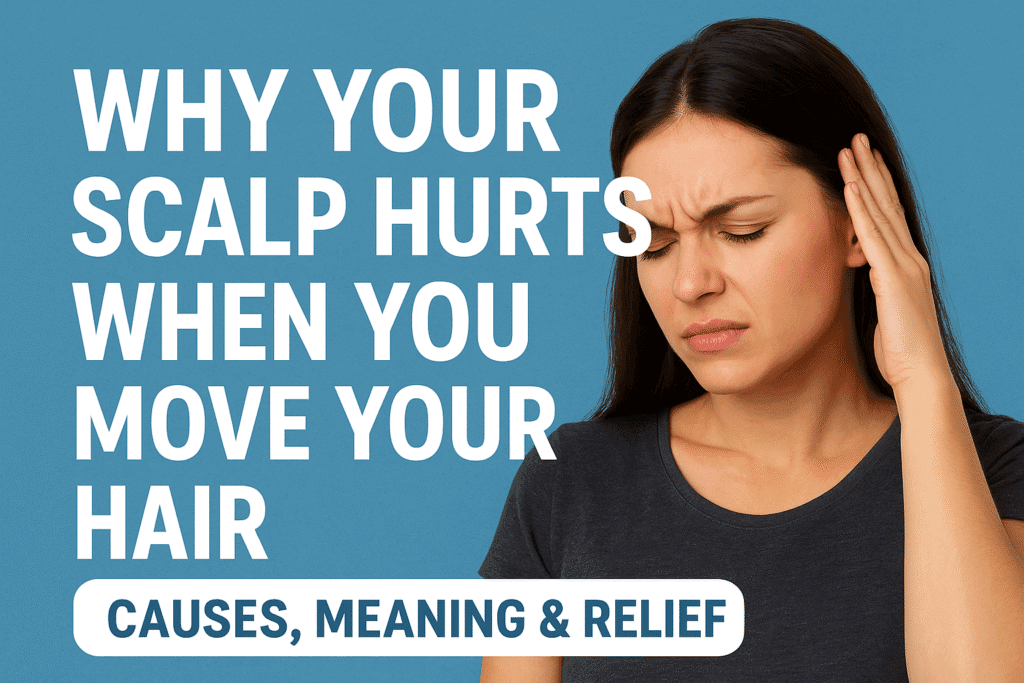
7 Proven Reasons Your Scalp Hurts When You Move Your Hair (And How to Relieve It)
You finally take your hair down after a long day, a ponytail, bun, wig, braids or just having it tucked behind your ears for hours. You gently run your fingers through your hair to loosen it, expecting relief.
But instead, you feel a sharp, surprising soreness, almost like your scalp is bruised. You pause. Why does it hurt to touch your hair, even though nothing is actually wrong with it?
It doesn’t feel like a headache, it’s not burning or itching and clearly, it’s not your hair itself because hair has no nerves, no blood supply and no pain receptors.
So why does it feel like the roots and scalp are sensitive, sore or even painful when you move your hair?
This discomfort is very common. In many cases, it’s harmless and temporary caused by irritated hair follicles, pressure on scalp nerves, inflammation in the skin, or even stress-related nerve sensitivity but in some cases, it can also be linked to underlying skin or nerve-related conditions that need attention.
Understanding what’s really happening helps you respond wisely not with panic, but with clarity and the right correction.
This deep-dive guide explains:
- Why your scalp hurts when you move or touch your hair
The science behind scalp tenderness (trichodynia) and nerve sensitivity - Common triggers, skin conditions, tension, and hormonal influences
- When it’s nothing serious and when it needs medical attention
- How to relieve it (with accurate, effective at-home and medical solutions)
Can Hair Itself Feel Pain?
No, hair cannot feel pain. Hair is made of keratin, a dead protein that contains no nerves, blood vessels, or pain receptors. That means when you feel pain while touching, moving or brushing your hair, the pain isn’t coming from the hair strands, it’s coming from the scalp, specifically from:
- Nerves responsible for detecting pain, touch and pressure
- Hair follicles surrounded by sensory nerves and tiny muscles
- Arrector pili muscles contract during cold or emotional stress
- Blood vessels can become inflamed or congested
- Skin layers where conditions like irritation, infection or inflammation occur
So even though it feels like your hair hurts, it’s actually the structures beneath the skin reacting to tension, pressure, inflammation or irritation.
This sensation has a medical name: trichodynia (also called scalp dysesthesia), and it may occur with or without visible symptoms such as redness, itching, flaking or hair loss.
What Exactly Causes Scalp Pain When You Move Your Hair?
There is no single reason scalp tenderness or pain can be triggered by:
- Mechanical stress (tight hairstyles, friction, pressure)
- Inflammation of hair follicles or skin
- Nerve sensitivity or irritation
- Hormonal fluctuations
- Scalp infections or skin disorders
- Psychological or stress-related factors
Understanding the root cause is key. Let’s break it down, one trigger at a time.
1. Hair Styling Habits: The Most Common Cause
Tight Hairstyles (Traction Pain)
Wearing tight ponytails, braids, cornrows, buns, weaves or glued-on wigs creates traction, which pulls on the hair follicles and stimulates surrounding nerve endings. When this tension is prolonged, the scalp becomes sore, sensitive and even painful to touch.
This pain often becomes more noticeable after undoing the style because previously compressed nerves and muscles regain sensitivity.
Typical symptoms include:
- Pain or tenderness when touching or moving the hair
- Scalp soreness when brushing
- A heavy or pulling sensation at the roots
- Sensitivity after removing wigs, extensions or braids
Important:
Prolonged traction can lead to traction alopecia, a form of gradual hair loss caused by chronic tension on the follicles.
Hats, Scarves, Helmets and Head Wraps
Even if your hairstyle isn’t tight, external pressure from helmets, hats, bandanas or scarves can compress the scalp, restrict blood flow, trap sweat and irritate the follicles.
This can lead to:
- Headband headache (pressure headache)
- Scalp tenderness
- Sweat-induced follicle irritation
- Increased sensitivity due to friction
Heavy or Wet Hair
Wet hair becomes 30-50% heavier, and if it’s tied up while wet, it exerts extra pulling force on scalp follicles. This strain can activate pain receptors and cause a burning or aching sensation along the scalp.
Most common triggers:
- Tight buns or ponytails on wet hair
- Sleeping with wet braids or extensions
- Heavy, long hair tied tightly
If your scalp is sore after wash days, this could be why.
2. Scalp Inflammation and Skin Conditions
When the scalp’s skin becomes irritated, inflamed or infected, it becomes more sensitive even to simple touch or hair movement.
Seborrheic Dermatitis (Dandruff)
Caused by an overgrowth of yeast (Malassezia) and inflammation, this common scalp condition leads to:
- White or yellowish flakes
- Redness and irritation
- Itching or burning
- Scalp tenderness when hair is moved or brushed
Flare-ups are often triggered by stress, oily scalp, weather change or harsh hair products.
Folliculitis (Inflamed Hair Follicles):
Folliculitis is basically tiny scalp pimples or infected follicles that become swollen, tender and painful especially when touched or when hair moves across them.
Common triggers include:
- Excess sweating
- Wearing wigs, helmets or caps for long hours
- Dirty pillowcases or hair tools
- Bacterial infections (like Staphylococcus)
Pain is usually felt as a sharp soreness or stinging sensation when brushing or shifting hair.
Scalp Psoriasis:
Psoriasis is an autoimmune skin condition that accelerates skin cell turnover, causing thick, scaly patches on the scalp.
Symptoms include:
- Thick white or silvery scales
- Tight, inflamed scalp
- Itching and burning
- Pain when touching or moving hair
Psoriasis affects scalp nerves and increases pain sensitivity, making even light hair movement feel uncomfortable.
Allergic Reactions (Contact Dermatitis):
Hair dyes, relaxers, bleaches, shampoos, oils, sprays and styling chemicals can trigger allergic or irritant reactions on the scalp.
Look out for these warning signs:
- Redness or swelling of the scalp
- Burning or tingling sensation
- Tenderness when moving hair
- Flaking or blistering (in severe cases)
People often blame the product, but in reality, it’s the chemical irritation or allergic response that causes the pain.
Products Most Likely to Trigger Scalp Pain
Product Type | Problem Ingredient | Possible Reaction |
Hair dye | PPD (paraphenylenediamine) | Severe allergic inflammation |
Relaxers | Sodium hydroxide, ammonium | Chemical burns, soreness |
Shampoos | Fragrance, sulfates | Dryness, irritation |
Hair oils | Essential oils, alcohol | Redness, burning |
When scalp skin is inflamed, whether from yeast, bacteria, autoimmune response or allergies, any movement of hair can cause pain.
3. Nerve-Related Causes
Sometimes, scalp pain isn’t caused by hair, skin or styling but by your nerves.
Occipital Neuralgia:
At the base of your skull, you have two major nerves called the occipital nerves. When these nerves become irritated, compressed or inflamed, they can trigger shooting pain or scalp tenderness especially when you move or touch your hair.
Common Symptoms:
- Pain begins at the back of the head and radiates forward
- Scalp feels sore, tender or sensitive to light touch
- Sudden electric shock-like sensations
- Pain worsens when brushing, tying, or flipping hair
People with poor posture, neck strain or previous head/neck injuries are more prone to this.
Migraines and Headache-Related Scalp Sensitivity:
If brushing or moving your hair hurts during a migraine, you’re not imagining it. This is called cutaneous allodynia, when pain nerves become overly sensitive, so even normal touch (like moving hair or wearing a hat) feels painful.
Typical signs:
- You dread brushing or massaging your scalp during headaches
- Hair movement feels like stinging or burning
- Sensitivity increases before or during a migraine
This scalp sensitivity usually eases once the headache resolves.
Stress & Nerve Sensitivity:
Stress doesn’t just affect your mind, it affects your nervous system.
High stress levels increase Substance P, a neurotransmitter that amplifies pain signals even from harmless sensations. This can make your scalp hurt without any real physical problem. Ever had a stressful week and suddenly your scalp feels tight, sore or painful?
That’s stress-related nerve sensitivity.
4. Hair Shedding & Telogen Effluvium
If your scalp hurts while your hair is falling out, it’s often linked to telogen effluvium, a condition where stress, illness, hormonal shifts or nutritional deficiencies push hair into a shedding phase.
When hair follicles begin to loosen and fall, they become slightly inflamed, making the scalp sensitive.
What you may notice:
- Scalp hurts when hair is moved
- Tenderness around hair roots
- Increased hair fall while combing or washing
- Painful “zing” feeling when touching hair in shedding areas
Triggers include childbirth, severe stress, fever, crash dieting, surgery or medications.
5. Poor Hygiene or Scalp Buildup
When sweat, dead skin, sebum, and product residue build up on the scalp, it can clog follicles, leading to micro-inflammation, irritation, or even fungal growth.
Warning signs of buildup-related scalp pain:
- Scalp feels sore or gritty when touched
- Itching, flakiness, or musty odor
- Pain increases after sweating
- Scalp feels tight, oily or dirty even after washing
In some cases, this buildup allows bacteria or fungus to multiply, causing infections like folliculitis, a painful, pimple-like inflammation of hair follicles.
6. Hormonal Factors
Hormones regulate blood flow, nerve sensitivity, oil production, and hair follicle health. So when hormones fluctuate, your scalp can become extra tender or sensitive.
Scalp pain is more common during:
- Menstrual cycle: Estrogen and progesterone shifts affect scalp nerves
- Pregnancy or postpartum: sudden hair shedding and sensitivity
- Menopause: thinning hair and reduced scalp moisture increase irritation
- Thyroid disorders: Slow thyroid (hypothyroidism) can trigger scalp pain, dryness and hair loss
Hormonal scalp pain is often paired with dryness, flakiness, hair thinning or shedding.
7. Cold Weather, Wind or Sunburn
Your scalp is skin and it reacts to weather changes just like your face.
Environmental triggers:
Trigger | What Happens |
Cold air | Scalp becomes dry, tight and painful when hair is moved |
Strong wind | Irritates nerve endings and causes scalp soreness |
Sunburn | Makes scalp extremely sensitive to touch, styling, or washing |
Dry climate | Causes rough, flaky scalp that hurts when hair is pulled |
Even wearing tight winter hats or keeping hair too dry during cold seasons can worsen sensitivity.
Is It Dangerous?
In most cases, no scalp pain from tight hairstyles, buildup, stress, or mild inflammation is usually harmless and temporary.
But you should take it seriously if the pain comes with:
Symptom | Possible Issue |
Patches of hair loss | Alopecia, fungal infection |
Open sores, pus, pimple-like bumps | Folliculitis or bacterial infection |
Intense redness, swelling | Dermatitis or skin infection |
Electric-shock-like pain | Nerve inflammation (neuralgia) |
Constant burning/tingling | Nerve hypersensitivity |
Thick scaling or silvery patches | Psoriasis, seborrheic dermatitis |
If you notice any of these, it’s best to see a dermatologist or healthcare provider. Scalp pain isn’t always dangerous, but persistent, worsening, or spreading pain should never be ignored.
How to Relieve Scalp Pain: Effective Fixes
If your scalp hurts when you move your hair, the good news is that there are multiple ways to relieve discomfort and prevent it from recurring. The key is to reduce tension, soothe inflammation, and protect sensitive nerve endings.
1. Stop Tight Hairstyles
Tension is the most common cause of scalp pain. Give your scalp a break from any hair style that pulls excessively on the roots:
- Tight braids or cornrows
- Ponytails or buns
- Weaves or extensions
- Wigs with glue or clips
- Heavy hair accessories
Switch to loose, pressure-free hairstyles and allow your hair to rest between styling sessions. Even a few days of minimal tension can significantly reduce soreness.
2. Gentle Scalp Massage
Massaging your scalp increases blood flow, relaxes muscles and stimulates nerve endings safely.
- Use fingertips, not nails, to avoid irritation.
- Massage in small circular motions for 3-5 minutes daily.
- Focus on sore spots and areas under tension (usually around the crown and hairline).
This improves lymphatic drainage, reduces muscle tightness, and may also encourage healthier hair growth.
3. Scalp Detox (Buildup Removal)
Product buildup, sweat, and dead skin can irritate follicles and trigger sensitivity.
- Use a clarifying shampoo once every 2-3 weeks to remove residues:
- Styling products
- Sweat and oil accumulation
- Dead skin cells
- Styling products
Overuse can strip your scalp’s natural oils, leading to dryness and increased pain. Stick to moderate cleansing.
4. Use Anti-Inflammatory Hair Products
Certain ingredients can calm irritation, reduce inflammation, and fight microbial growth on the scalp. Look for products containing:
Ingredient | Benefit |
Tea tree oil | Natural antifungal and antibacterial |
Aloe vera | Soothes redness and inflammation |
Salicylic acid | Exfoliates scalp and removes buildup |
Ketoconazole | Controls dandruff and fungal growth |
Zinc pyrithione | Reduces flakes, irritation, and microbial activity |
Regular use can improve scalp comfort and prevent recurring soreness.
5. Avoid Scratching or Picking
Even if your scalp itches, scratching worsens inflammation, damages nerve endings and may introduce infections. Instead:
- Gently pat or apply a soothing scalp oil
- Use a soft brush to relieve minor itching without pain
- Keep nails short to prevent accidental scratches
6. Manage Stress and Sleep
Stress directly increases scalp nerve sensitivity. Practicing relaxation techniques helps reduce pain:
- Deep breathing or box breathing exercises
- Meditation or mindfulness routines
- Adequate sleep (7-9 hours)
- Neck and shoulder stretches to release tension
Consistently managing stress improves scalp comfort and overall nerve health.
7. When to Use Medications
If home care doesn’t work, a doctor may prescribe targeted treatments:
- Topical steroids for dermatitis, psoriasis or inflammation
- Antibiotics for bacterial infections or folliculitis
- Antifungals for yeast or fungal-related issues
- Neuropathic medications for nerve-related scalp pain
Always follow medical advice; inappropriate use of these medications can worsen symptoms.
When to See a Doctor
Seek professional help if scalp pain:
- Lasts more than 2 weeks
- Is accompanied by bald patches or hair loss
- Includes hard, painful bumps or severe scaling
- Causes burning, tingling, or electric-shock sensations
- Appears with fever, pus, or swelling
These could indicate infection, autoimmune disorders, nerve dysfunction or advanced follicle damage. Early diagnosis ensures proper treatment and prevents long-term complications.
Final Takeaway
Cause | Is It Serious? | Fix |
Tight hairstyles | No | Remove tension, rest follicles |
Dandruff/dermatitis | Mostly mild | Anti-fungal, anti-dandruff care |
Folliculitis/infection | Sometimes | Doctor, medicated products |
Stress-related nerve pain | Temporary | Relaxation, massage |
Migraine-related | Manageable | Migraine treatment |
Hormonal changes | Temporary | Lifestyle or medical support |
Neuralgia | More serious | Medical diagnosis needed |
If the pain is linked to styling, buildup or tension, it’s usually temporary. If pain feels sharp, electric, burning or comes with hair loss, get it checked. Your scalp has thousands of nerve endings. Treat it gently, keep it clean, don’t overstrain the follicles and most cases of “hair pain” resolve on their own.
👩⚕️ Need Personalized Health Advice?
Get expert guidance tailored to your unique health concerns through MuseCare Consult. Our licensed doctors are here to help you understand your symptoms, medications, and lab results—confidentially and affordably.
👉 Book a MuseCare Consult NowMust Read Post:
- Why Does My Scalp Itch at Night? 7 Powerful Natural Fixes That Work
- Scalp Psoriasis vs Dandruff: 10 Expert Ways to Know the Difference Fast
- Why Do Men Lose Hair Earlier Than Women? 7 Powerful Reasons Explained
- 7 Surprising Causes Why Your Arms Feel Weak Only in the Morning
- Why Your Appetite Disappears for Hours and Comes Back: 7 Powerful Reasons

Dr. Ijasusi Bamidele, MBBS (Binzhou Medical University, China), is a medical doctor with 5 years of clinical experience and founder of MyMedicalMuse.com, a subsidiary of Delimann Limited. As a health content writer for audiences in the USA, Canada, and Europe, Dr. Ijasusi helps readers understand complex health conditions, recognize why they have certain symptoms, and apply practical lifestyle modifications to improve well-being