⚠️ Affiliate Disclaimer: This post may contain affiliate links, which means I may earn a small commission at no extra cost to you, if you make a purchase through one of these links. I only recommend products or services I genuinely trust and believe can provide value. Thank you for supporting My Medical Muse!
Essential Guide to Lower Back, Joint, and Bone Pain: Causes, Diagnosis, and Effective Treatments
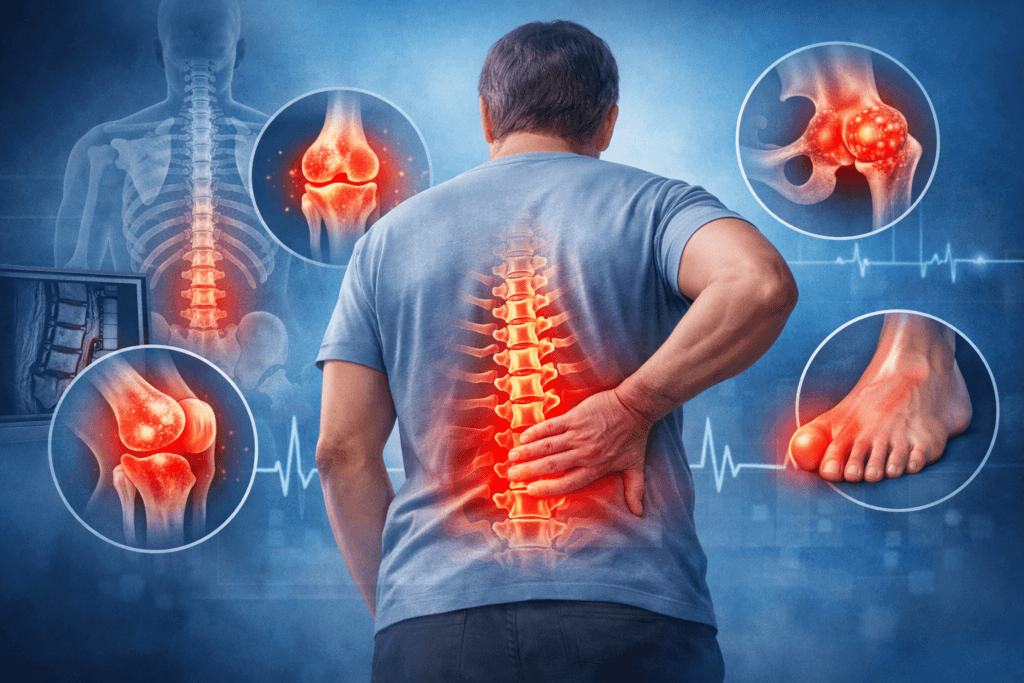
Lower back pain, joint pain, and bone pain are among the most common reasons people seek medical care worldwide. They affect people of all ages and backgrounds and are a leading cause of disability and reduced quality of life. Despite how frequently these symptoms occur, they are often approached in the wrong way.
Pain itself is not the disease, it is a symptom, a warning signal generated by the nervous system when tissues are stressed, inflamed, injured, or structurally compromised. Its purpose is protective, when pain is treated as the primary problem rather than a signal pointing to an underlying cause, the result is often delayed diagnosis, ineffective treatment, and progressive damage.
This misunderstanding is how short-term pain becomes chronic, it is how mobility declines, strength is lost, and degenerative conditions advance quietly over time. Masking pain without identifying its source does not stop disease progression, it allows it to continue unnoticed.
Lower back pain, joint pain, and bone pain do not arise from the same tissues and do not follow the same biological mechanisms. Each has distinct causes, risk factors, and patterns of progression. Managing them with generalized advice or one-size-fits-all solutions leads to poor outcomes and unnecessary suffering.
This article takes an evidence-based approach to musculoskeletal pain, it explains the underlying causes of lower back, joint, and bone pain, outlines how these conditions are accurately diagnosed, and reviews treatments supported by clinical research rather than trends or anecdotal claims. The focus is not on temporary relief, but on understanding pain well enough to prevent long-term damage and preserve function.
Pain is not random, and it is not meaningless. Interpreted correctly, it provides critical information, ignored or mismanaged, it becomes the starting point of chronic disease.
Understanding the Difference Between Back, Joint, and Bone Pain
Musculoskeletal pain is often treated as a single problem, but this is a fundamental error. Lower back pain, joint pain, and bone pain originate from different tissues, follow different biological mechanisms, and signal very different underlying conditions.
Lower Back Pain
Lower back pain most commonly arises from structures within or surrounding the spine, including muscles, ligaments, intervertebral discs, facet joints, and spinal nerve roots. In many cases, back pain is mechanical in nature, meaning it changes with posture, movement, or physical load. Pain that worsens with bending, lifting, or prolonged sitting often reflects a mechanical source rather than systemic disease. Persistence beyond a few weeks suggests that more than a simple strain is involved.
Joint Pain
Joint pain originates within or around synovial joints, involving articular cartilage, the synovial lining, ligaments, and surrounding tendons. It frequently presents with stiffness, swelling, reduced range of motion, and sometimes visible joint changes. These features point toward degenerative, inflammatory, or metabolic joint disease rather than isolated soft-tissue injury.
Bone Pain
Bone pain is less common but significantly more concerning. True bone pain is typically deep, aching, persistent, and poorly localized, it often does not improve with rest and may worsen at night. Unlike muscle or joint pain, bone pain is more likely to signal fractures, infections, metabolic bone disease, or malignancy. Bone pain should never be dismissed as a normal part of aging.
Common Causes of Lower Back Pain
Lower back pain is one of the leading reasons adults seek medical care. Understanding the underlying cause is crucial, as treatment and prognosis vary widely depending on the pathology.
1. Muscle Strain and Ligament Sprain
Muscle strains and ligament sprains are the most frequent causes of acute lower back pain and are often overdiagnosed. They typically occur due to sudden overload, improper lifting techniques, or prolonged poor posture. Patients usually experience localized pain that worsens with movement and improves with rest and conservative care. Most uncomplicated cases resolve within two to six weeks. If pain persists beyond this timeframe, clinicians must consider alternative or additional diagnoses.
2. Degenerative Disc Disease (DDD)
Despite its name, degenerative disc disease is not a pathological disease but an age-related process. Intervertebral discs gradually lose hydration and structural integrity, reducing their ability to absorb shock. This leads to micro-instability, chronic inflammation, and susceptibility to pain. Risk factors include aging, smoking, obesity, and a sedentary lifestyle. While DDD is often asymptomatic, it can contribute to chronic lower back discomfort and predispose individuals to disc herniation or spinal stenosis.
3.Herniated or Bulging Discs
A herniated disc occurs when disc material protrudes beyond its normal boundary and compresses adjacent nerve roots. Patients often report sharp, burning pain localized to the lower back, which may radiate down the leg in a pattern known as sciatica. Numbness, tingling, or muscle weakness may accompany the pain. Diagnosis relies on correlating MRI findings with clinical symptoms, as imaging alone may not indicate clinically significant disease.
4. Spinal Stenosis
Spinal stenosis is the narrowing of the spinal canal or nerve pathways, most commonly seen in adults over 50. Causes include disc degeneration, bone spur formation, and ligament thickening. Clinically, patients often experience pain or discomfort that worsens with walking or prolonged standing and improves when bending forward or sitting. This condition may lead to reduced mobility and a decreased ability to perform daily activities.
5. Spondylolisthesis
Spondylolisthesis occurs when one vertebra slips forward over the one below it, often due to degenerative changes, stress fractures, or congenital anomalies. This slippage can cause chronic instability, nerve compression, and persistent pain. Symptoms may include lower back discomfort, radiating leg pain, and neurological deficits if severe. Early recognition and management are essential to prevent progression and long-term disability.
Major Causes of Joint Pain
Joint pain is one of the most common musculoskeletal complaints and can result from a variety of biological and mechanical causes. Understanding the underlying mechanism is critical for effective management.
1.Osteoarthritis (OA)
Osteoarthritis is the most prevalent joint disorder worldwide. It is characterized by progressive cartilage degradation, bone remodeling, and chronic low-grade inflammation. Commonly affected joints include the knees, hips, spine, and hands. Despite being often labeled as wear and tear, osteoarthritis is an active, biologically driven process. Symptoms typically include joint stiffness, swelling, and reduced range of motion, often worsening with activity or at the end of the day. Management focuses on maintaining joint function through exercise, weight management, and targeted therapies to slow progression and reduce pain.
2.Rheumatoid Arthritis (RA)
Rheumatoid arthritis is an autoimmune condition in which the immune system mistakenly attacks the synovial lining of joints. This leads to inflammation, swelling, and gradual joint destruction. RA commonly presents with symmetrical joint involvement, prolonged morning stiffness lasting over an hour, and progressive functional impairment if untreated. Early diagnosis and aggressive treatment are essential to prevent irreversible disability, including the use of disease-modifying medications and lifestyle interventions to preserve joint health.
3.Gout
Gout results from the deposition of uric acid crystals within joints, triggering acute inflammation and intense, sudden pain. The most classic presentation is a single joint that becomes red, hot, and swollen, often affecting the big toe. While dietary factors can influence uric acid levels, gout is fundamentally a metabolic disorder. Effective management includes medications to control uric acid levels, lifestyle adjustments, and prompt treatment of acute flares to prevent recurrent attacks and long-term joint damage.
4.Tendinitis and Bursitis
Tendinitis refers to inflammation of the tendons, while bursitis involves inflammation of the small fluid-filled sacs (bursae) that cushion joints and reduce friction, both are commonly caused by repetitive movements, overuse, or poor biomechanics. Symptoms include localized pain, swelling, and stiffness that may limit joint mobility. Early identification, modification of aggravating activities, and structured rehabilitation are essential to prevent chronic pain and long-term functional impairment.
Causes of Bone Pain
Bone pain is less common than joint or back pain but often indicates serious underlying conditions. Persistent, unexplained, or worsening bone pain should never be ignored.
1.Osteoporosis
Osteoporosis is often silent until a fracture occurs. Bone density gradually decreases, making bones more susceptible to breaks, particularly in the spine, hip, and wrist. Pain typically manifests after microfractures develop, and failure to recognize early signs can lead to severe structural damage and lasting disability. Prevention through calcium and vitamin D optimization, weight-bearing exercises, and lifestyle modifications is essential.
2.Stress Fractures
Stress fractures are hairline cracks in bones caused by repetitive mechanical loading. They are especially common among runners, athletes, and military recruits. Pain is usually localized to the affected bone and worsens with activity. Early X-rays may appear normal, so MRI or other imaging is often necessary to confirm the diagnosis. Timely rest, activity modification, and rehabilitation are critical to prevent progression and complete fractures.
3.Bone Infections (Osteomyelitis)
Osteomyelitis is a rare but serious infection of the bone. Symptoms include persistent deep pain, localized swelling, redness, and sometimes fever. Prompt medical evaluation is required, and treatment often involves a combination of intravenous antibiotics and, in some cases, surgical intervention. Untreated infections can lead to permanent bone damage or systemic complications.
4.Bone Tumors or Metastasis
Primary bone tumors or metastatic cancer can produce deep, constant pain, often worsening at night. Additional symptoms may include unexplained weight loss, fatigue, or general malaise. Although uncommon, any persistent bone pain without a clear cause should be thoroughly evaluated with imaging and laboratory tests to rule out malignancy. Early detection is critical for effective treatment and prognosis.
How Pain Is Properly Diagnosed
Accurate diagnosis is the cornerstone of effective pain management. Treating pain without understanding its underlying cause often leads to temporary relief at best, and long-term complications at worst. A systematic approach ensures that treatment targets the true source of discomfort rather than simply masking symptoms.
1.Detailed History
A comprehensive patient history is the first and most critical step in diagnosis. Clinicians assess:
- Pain location and character: Is it sharp, dull, burning, or throbbing?
- Duration and pattern: Acute, recurrent, or chronic?
- Triggers and relieving factors: Movement, posture, or activity?
- Radiation: Does pain travel to the leg, arm, or other areas?
- Associated symptoms: Numbness, tingling, weakness, swelling, fever, or systemic signs.
This information helps narrow the differential diagnosis and identify red flags that require urgent intervention. Skipping or rushing this step is a leading cause of misdiagnosis and ineffective treatment.
2.Physical Examination
The physical exam provides objective insights into musculoskeletal and neurological function. Key components include:
- Range of motion testing: Detects stiffness, limitation, or pain with movement.
- Joint stability assessment: Evaluates ligaments and structural integrity.
- Muscle strength testing: Identifies weakness or asymmetry.
- Neurological examination: Checks reflexes, sensation, and motor function to detect nerve involvement.
Observation of how pain changes with different positions or activities offers essential clues, often guiding the need for further investigation.
3.Imaging (When Indicated)
Not every patient requires imaging; overuse can lead to unnecessary interventions and anxiety. The choice of imaging depends on suspected pathology:
- X-ray: Reveals bone structure, alignment, fractures, and degenerative changes.
- MRI: Provides detailed views of soft tissues, intervertebral discs, spinal nerves, and joint cartilage.
- CT scan: Offers high-resolution imaging of complex bone anatomy and subtle structural abnormalities.
Imaging should always be interpreted in conjunction with the patient’s history and physical findings, as abnormalities on scans may not always correlate with symptoms.
4.Laboratory Tests
Laboratory evaluation is indicated when inflammatory, metabolic, or systemic disease is suspected. Common tests include:
- ESR and CRP: Markers of inflammation, useful in autoimmune or infectious conditions.
- Rheumatoid factor and anti-CCP: Aid in the diagnosis of rheumatoid arthritis.
- Uric acid levels: Evaluate for gout or hyperuricemia.
- Calcium and vitamin D: Assess bone health and metabolic disorders contributing to bone pain.
Lab tests help confirm or rule out underlying causes, guiding targeted treatment rather than empirical therapy.
Evidence-Based Treatment: What Actually Works
Effectively managing lower back, joint, and bone pain requires approaches grounded in science, not trends or quick fixes. Evidence consistently shows that a combination of structured activity, rehabilitation, lifestyle modification, selective medical interventions, and, only when necessary, surgery provides the best outcomes.
- Activity Modification (Not Bed Rest)
Prolonged bed rest or inactivity often worsens musculoskeletal pain. When joints and muscles are immobilized, stiffness, weakness, and reduced circulation accelerate tissue deterioration. Structured, targeted movement, on the other hand, promotes blood flow, enhances tissue healing, lubricates joints, and maintains flexibility. Activity should be gradual, guided, and tailored to the individual’s condition, random exercise or overexertion can exacerbate injury. Simple daily movements, posture adjustments, and gentle strengthening exercises are often enough to reduce pain and restore function over time. - Physical Therapy
Physical therapy is one of the most powerful evidence-based interventions for musculoskeletal pain. Therapists assess muscle imbalances, joint stability, postural alignment, and movement mechanics to design a personalized rehabilitation plan. Exercises focus on strengthening supporting muscles, restoring mobility, and correcting faulty movement patterns. Passive treatments, such as massage or heat therapy alone, provide temporary relief but rarely address the root cause. When combined with active therapy, patients often experience reduced pain, improved function, and long-term prevention of recurrence. - Weight Management
Excess body weight places additional stress on joints and the spine, accelerates cartilage breakdown, and worsens systemic inflammation. Research shows that even modest weight loss of 5-10% can significantly reduce joint pain, improve mobility, and slow degenerative changes. Weight management should combine dietary adjustments with regular physical activity tailored to the patient’s abilities. This dual approach not only improves pain outcomes but also supports overall metabolic and cardiovascular health. - Medications (Used Strategically)
Medications can help control pain and inflammation but are not cures. Nonsteroidal anti-inflammatory drugs (NSAIDs) reduce swelling and provide short-term relief. Acetaminophen offers limited analgesic benefit for mild to moderate pain. For autoimmune or inflammatory conditions, disease-modifying medications are essential to prevent progressive joint damage. Chronic opioid use is discouraged due to lack of long-term effectiveness and high risk of dependency, tolerance, and adverse effects. Medications should always be used as part of a broader, multi-modal treatment plan rather than as a standalone solution. - Injections
Targeted injections, such as corticosteroids or hyaluronic acid, can temporarily reduce inflammation and improve joint function in select cases. They are most effective for localized joint pain or acute flare-ups when conservative measures are insufficient. Injections are adjunctive tools, intended to complement active therapies such as physical therapy, activity modification, and lifestyle changes, they do not provide permanent solutions or address the underlying cause of pain. - Surgery (Last Resort)
Surgical intervention is indicated only when conservative treatments fail, neurological deficits are worsening, or structural instability threatens function. Procedures may include spinal decompression, joint replacement, or fracture repair, depending on the underlying pathology. However, most lower back, joint, and bone pain can be successfully managed without surgery. Surgery should be viewed as a final option, reserved for cases where evidence-based, non-invasive therapies are insufficient to restore function or prevent permanent damage.
7. Chronic Pain, Why It Persists
Chronic pain is not simply a reflection of ongoing tissue damage. Over time, the nervous system can become sensitized, amplifying pain signals even in the absence of significant structural injury. This process, known as central sensitization, alters the way the brain and spinal cord perceive and process pain, making even minor stimuli feel intense.
Psychological factors such as stress, anxiety, and depression can interact with these physiological changes, further worsening the perception of pain. As a result, simply treating the tissue, for example, through surgery or short-term medications is often insufficient.
Multidisciplinary approaches that combine physical therapy, pain education, psychological support, and lifestyle modification are the most effective strategies for breaking the cycle of chronic pain. Ignoring the complex interplay between mind, body, and nervous system is a leading reason why many patients fail to improve.
Prevention Is More Effective Than Treatment
Preventing musculoskeletal pain is far more effective than trying to reverse established chronic conditions. Evidence-based strategies focus on maintaining strength, mobility, and bone health while reducing mechanical and lifestyle risk factors:
- Regular strength training: Builds muscle support around joints and spine, reducing stress on bones and ligaments.
- Mobility and flexibility work: Maintains joint range of motion, reduces stiffness, and prevents overuse injuries.
- Proper ergonomics: Correct posture at work, proper lifting techniques, and supportive seating help prevent cumulative mechanical stress.
- Adequate calcium and vitamin D: Supports bone density and reduces fracture risk.
- Smoking cessation: Smoking accelerates bone loss, slows healing, and worsens inflammation.
Prevention is not passive, it requires consistent, intentional habits. Incorporating these strategies into daily life reduces the likelihood of developing chronic pain and limits the progression of degenerative conditions.
When to Seek Immediate Medical Attention
Certain symptoms are considered medical emergencies and should never be ignored. Seek urgent care if pain is accompanied by:
- Sudden weakness or paralysis: This may indicate nerve compression or spinal cord injury.
- Loss of bowel or bladder control: Could signal serious spinal pathology such as cauda equina syndrome.
- Fever with unexplained pain: Suggests infection such as osteomyelitis or septic arthritis.
- Night pain with weight loss: Could be a sign of malignancy or systemic disease.
These red flag symptoms require prompt evaluation, waiting or self-managing in these cases can result in irreversible damage or serious complications.
Final Truth
Lower back, joint, and bone pain are never random, they follow predictable biological, mechanical, and lifestyle-driven rules. Every ache, twinge, or stiffness carries a message from your body, a signal that tissues are stressed, inflamed, or structurally compromised. Ignoring this signal is not harmless. Pain left untreated does not disappear, it evolves into damage. Masking pain with temporary fixes may bring comfort, but it does not prevent degeneration. Over time, what was once mild discomfort can become chronic disease, limiting function and quality of life.
Understanding pain changes the game. When approached scientifically, with accurate diagnosis and evidence-based interventions, pain becomes manageable. The goal is not simply comfort, it is restoring function, preserving tissue integrity, and preventing irreversible harm. Structured movement, targeted therapy, weight management, lifestyle adjustments, and selective medical interventions allow the body to recover and maintain durability.
The ultimate lesson is simple, treat the cause, not the symptom. Addressing the underlying source of pain prevents recurrence and stops minor issues from becoming debilitating conditions. Ignoring it, or settling for temporary relief, guarantees that pain will return , often worse than before.
Pain is a signal. Respect it, understand it, and act on it, because your future mobility, independence, and quality of life depend on it.

Dr. Ijasusi Bamidele, MBBS (Binzhou Medical University, China), is a medical doctor with 5 years of clinical experience and founder of MyMedicalMuse.com, a subsidiary of Delimann Limited. As a health content writer for audiences in the USA, Canada, and Europe, Dr. Ijasusi helps readers understand complex health conditions, recognize why they have certain symptoms, and apply practical lifestyle modifications to improve well-being