
⚠️ Affiliate Disclaimer: This post may contain affiliate links, which means I may earn a small commission — at no extra cost to you — if you make a purchase through one of these links. I only recommend products or services I genuinely trust and believe can provide value. Thank you for supporting My Medical Muse!
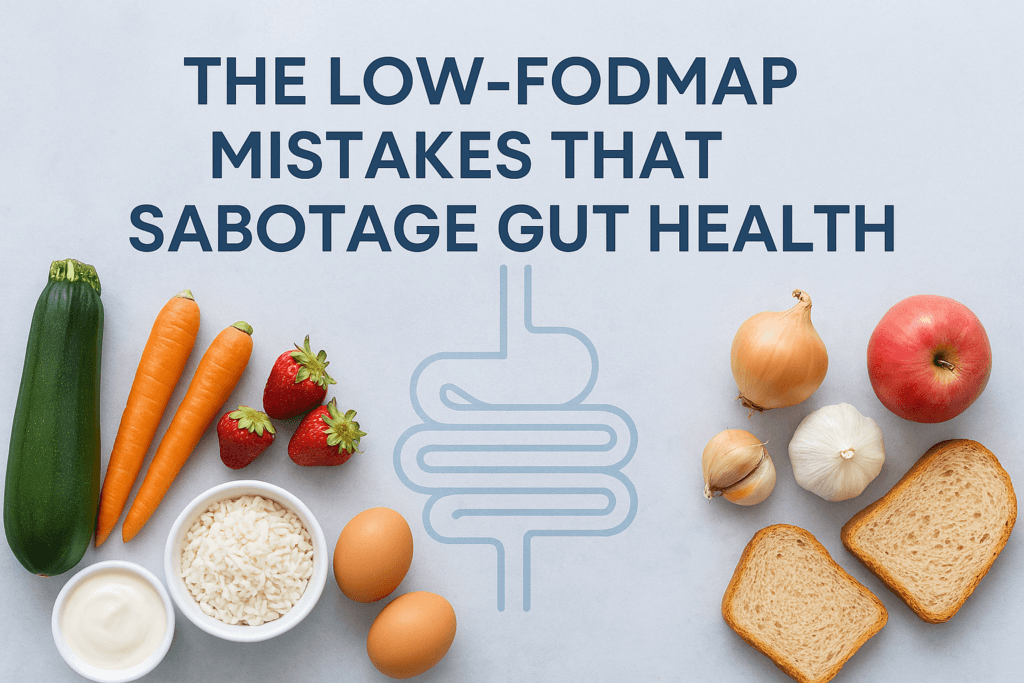
The Low-FODMAP Mistakes That Sabotage Gut Health (and How to Avoid Them)
Some people turn to the low-FODMAP diet after months, sometimes years of unexplained bloating, cramping, or unpredictable bathroom habits. There’s a sense of hope that finally something might bring clarity. The first few days often feel promising, meals are cleaner, symptoms seem quieter, and the structure feels reassuring but then confusion creeps in. A safe food causes discomfort, a well-planned meal leads to bloating, reading labels becomes stressful before long, the diet that was supposed to bring relief starts to feel overwhelming.
This experience is more common than most people admit, it rarely happens because the diet is ineffective. It happens because the approach, though well-intentioned is slightly off. Small misunderstandings can make the gut more sensitive, restrict too many foods, and delay real progress.
Digestive health improves dramatically when the diet is done correctly. Below are the most common mistakes people make, explained in a clear, grounded way, so you can avoid the traps that sabotage results.
1.Staying in the Elimination Phase Too Long
The elimination phase is intentionally short. It’s designed to calm the gut just long enough to create a clean slate, not to become a long-term eating pattern. Staying in this phase beyond a few weeks starves the very bacteria that protect digestion. These microbes feed on fermentable fibers; when they’re removed for too long, their populations shrink. As microbial diversity declines, the gut becomes more reactive, not less, which makes you more sensitive to foods you previously tolerated.
Many people experience early relief and assume extending the phase will yield even better results but the opposite happens, the longer you stay restricted, the harder it becomes to digest foods when you try to reintroduce them. The low-FODMAP diet isn’t meant to be a comfort zone. Its purpose is to move you into the reintroduction phase, not trap you in avoidance.
2.Cutting Out Entire Food Groups Instead of Identifying Specific Triggers
A common misunderstanding is thinking that all high-FODMAP foods must disappear forever. Instead of evaluating individual triggers, many people eliminate whole categories, fruits, vegetables, grains, dairy, and legumes without any evidence they cause problems.
This over-restriction drains the diet of variety and nutrients. It also deprives beneficial gut bacteria of the fibers and compounds they need to thrive. When you pull out entire groups, the diet becomes unbalanced and unnecessarily rigid.
The goal is to identify which FODMAP subtypes cause symptoms, not to fear every food containing them. Most people tolerate many foods on the list, they just don’t know it because they never test them separately. Precision, not broad avoidance, leads to clarity and long-term success.
3.Relying Too Heavily on Low-FODMAP Packaged Foods
The surge in “low-FODMAP approved” snacks, bars, breads, and cereals is convenient, but convenience isn’t the same as nourishment. These products often contain refined starches, gums, sweeteners, stabilizers, and oils that lack the natural fibers and nutrients required for a healthy gut.
While these items do help during the transition, they’re not meant to anchor the diet. Over-reliance on processed foods prolongs the elimination feeling, keeps the diet artificially narrow, and does little to rebuild the microbiome. A low-FODMAP label only means the product avoids certain fermentable carbs, not that it supports gut healing or overall health.
Whole foods should be the default, packaged foods are occasional add-ons, not the foundation.
4.Skipping the Structured Reintroduction Phase
The reintroduction phase is the heart of the low-FODMAP diet. It’s the stage that transforms a simple elimination diet into a personalized map of what your gut tolerates but many people enter this phase casually or avoid it entirely.
Some test high-FODMAP foods randomly, without tracking or consistency. Others test too many foods close together, making it impossible to identify which one caused a reaction and a large number skip the process out of fear, thinking reintroducing dangerous foods will undo progress.
Without structured reintroduction, the diet loses its purpose. You never learn your thresholds, you remain unnecessarily restrictive, and your confidence in food declines. A slow, systematic process one FODMAP subtype at a time is what reveals the difference between temporary sensitivity and true intolerance.
5.Replacing Removed Foods With Heavy, High-Fat Alternatives
When high-FODMAP foods disappear from the plate, many people fill the gaps with rich, fatty, or overly creamy substitutes. Lactose-free yogurts with heavy stabilizers, coconut-based meals, fried foods, or high-fat snacks can quickly dominate the diet.
Although these replacements are technically low-FODMAP, they’re harder to digest, especially for people prone to IBS-D or IBS-C. Fat slows gastric emptying, increases intestinal contractions, and can trigger bloating, nausea, or urgency. A diet overloaded with fat can feel just as uncomfortable as one high in FODMAPs.
The goal is balance, replace removed foods with lighter, whole, nutrient-dense options rather than leaning on heavy comfort substitutes.
6. Misunderstanding Portions and Trigger Thresholds
FODMAPs are dose-sensitive. Many foods are perfectly tolerated at small amounts but become problematic once the portion increases. This nuance often gets lost, leading people to assume a food is completely off-limits when the actual issue is quantity.
Blueberries, for example, are low-FODMAP at around 40 grams but high in larger servings. Almonds are fine at a small handful but become high-FODMAP quickly. Even vegetables like zucchini or carrots can exceed low-FODMAP limits if eaten in large amounts or paired with multiple moderate-FODMAP foods in the same meal.
Portion precision matters. Understanding thresholds helps you keep more foods in your diet and avoid unnecessary restriction.
7. Blaming Every Symptom on Food While Ignoring Lifestyle Factors
It’s natural to assume symptoms always come from something you ate, but the gut is influenced by far more than food. Stress activates the gut-brain axis, making the digestive system hypersensitive. Poor sleep slows motility, inadequate hydration alters stool consistency, eating too fast introduces excess air, skipping meals disrupts rhythm. All of these can mirror FODMAP reactions.
When symptoms arise, it’s easy to panic and cut out more foods, but this often masks the real issue. The low-FODMAP diet works best when paired with steady routines, stress reduction, and mindful eating habits. Ignoring these factors can lead to false assumptions and misplaced blame.
8.Expecting the Diet to Fix Conditions It Was Not Designed For
A low-FODMAP diet targets one thing: the reduction of fermentable carbohydrates that trigger symptoms in IBS. It does not treat infections, enzyme deficiencies, inflammatory disorders, or motility problems.
If strict adherence doesn’t bring meaningful improvement, something else may be contributing. SIBO, celiac disease, gallbladder issues, bile acid malabsorption, pancreatic enzyme insufficiency, and dysbiosis can all cause similar symptoms but require entirely different approaches.
Continuing to restrict food when the underlying issue is unrelated only delays proper treatment. When improvements stall, medical evaluation is often the missing piece, not more elimination.
9.Becoming Increasingly Afraid of Food
Perhaps the most damaging mistake is developing fear around food. Relief during the elimination phase can create a fragile sense of safety. One flare-up, even if caused by stress, sleep loss, overeating, or hormones can make people believe certain foods must be avoided indefinitely.
Over time, this creates a shrinking diet and growing anxiety but long-term restriction weakens the microbiome, lowers resilience, and makes the gut more reactive. To truly heal, you need gradual reintroduction, tolerance-building, and variety.
The long-term goal is freedom, eating with confidence, not fear. The low-FODMAP diet is a tool for understanding your gut, not a lifetime of avoidance.
10.Forgetting to Include Prebiotic Fiber in Safe Amounts
A common oversight during the elimination phase is reducing prebiotic fiber so drastically that the microbiome begins to shrink. Many high-prebiotic foods like onions, garlic, beans, wheat, and certain fruits are restricted early on, which unintentionally lowers the supply of fuel that good bacteria need to survive.
But the gut doesn’t stop needing prebiotics just because the diet changes. Even small amounts of low-FODMAP fibers help maintain microbial strength and keep digestion moving. Foods like firm bananas, kiwi, canned lentils, oats, chia seeds, and certain greens can be included in controlled servings without crossing the FODMAP threshold.
When prebiotic intake drops too low, digestion slows, stool becomes irregular, inflammation increases, and tolerance to foods declines. Keeping fiber in the mix, even gently helps the gut adapt, not collapse. The goal is never to starve the microbiome, it’s to quiet it long enough to understand what it needs.
11.Combining Too Many Restrictive Diet Rules at Once
It’s easy to panic when symptoms are unpredictable. In that panic, many people stack multiple diets on top of each other, low-FODMAP, gluten-free, dairy-free, low-carb and sugar-free hoping the combination will finally calm everything down. Instead, it usually makes things worse.
Layering restrictions creates a diet so narrow that it becomes nutritionally lopsided and psychologically exhausting. The microbiome loses diversity, meals lose pleasure, and anxiety around eating skyrockets. Most importantly, stacking diets makes it impossible to identify what’s helping and what’s harming. You lose the ability to see patterns because everything is restricted at once.
Unless you have medically diagnosed conditions requiring additional limits like celiac disease or lactose intolerance, the low-FODMAP framework should stand alone. Simplicity is not only easier; it’s scientifically more reliable for identifying triggers.
12.Assuming a Food Reaction Means Permanent Intolerance
One of the most harmful misconceptions is treating any negative reaction as a lifelong ban but gut sensitivity is dynamic. It changes with stress levels, sleep quality, hormones, hydration, microbiome balance, and overall inflammation.
A food that causes discomfort during a flare may be perfectly tolerable months later when the gut is calmer. This is why reintroduction is not a “one and done” experiment. Foods can be revisited as the digestive system strengthens. In fact, they should be revisited, regular testing helps rebuild tolerance and resilience.
Long-term avoidance sends the wrong message to the gut, “This food is dangerous.” Gradual re-exposure says the opposite: “This food is normal and safe.” Healing often requires this repeated dialogue.
Permanent intolerance is rare, temporary sensitivity is common. Understanding the difference keeps your diet flexible rather than fearful.
A More Sustainable Way to Use the Low-FODMAP Diet
The low-FODMAP diet works best when you remember its purpose: it’s not a lifelong eating pattern, but a short-term tool that brings clarity. When used correctly, it helps you understand your digestive triggers, quiet inflammation, and return to a diverse, enjoyable diet that supports long-term health.
A successful outcome includes several key elements:
- A broad variety of foods, not a shrinking list.
• Slow, deliberate reintroduction to rebuild tolerance.
• Recognition of personal triggers without assuming universal intolerance.
• Support for the microbiome through plants, fibers, and gradual exposure to fermentable foods.
• Awareness of lifestyle factors like stress, sleep, hydration, meal timing that influence digestion as strongly as food choices.
When you avoid the mistakes outlined above, the low-FODMAP plan becomes what it was always designed to be, a temporary strategy that reduces confusion, strengthens the gut, and leads to lasting comfort and freedom.
👩⚕️ Need Personalized Health Advice?
Get expert guidance tailored to your unique health concerns through MuseCare Consult. Our licensed doctors are here to help you understand your symptoms, medications, and lab results—confidentially and affordably.
👉 Book a MuseCare Consult NowRelated Post:
- Why Do I Feel Movement in My Stomach? 8 Powerful Causes Explained
- Why Do I Get Diarrhea After Eating Salad? 10 Shocking Reasons You Must Know
- Why Does Salad Make My Stomach Hurt? 10 Powerful Everyday Fixes That Work
- 15+ Worst Offenders: What Foods to Avoid with IBS Flare-Ups
- 10 Serious Signs: When Is Bloating a Sign of Something Serious?

Dr. Ijasusi Bamidele, MBBS (Binzhou Medical University, China), is a medical doctor with 5 years of clinical experience and founder of MyMedicalMuse.com, a subsidiary of Delimann Limited. As a health content writer for audiences in the USA, Canada, and Europe, Dr. Ijasusi helps readers understand complex health conditions, recognize why they have certain symptoms, and apply practical lifestyle modifications to improve well-being