⚠️ Affiliate Disclaimer: This post may contain affiliate links, which means I may earn a small commission — at no extra cost to you — if you make a purchase through one of these links. I only recommend products or services I genuinely trust and believe can provide value. Thank you for supporting My Medical Muse!
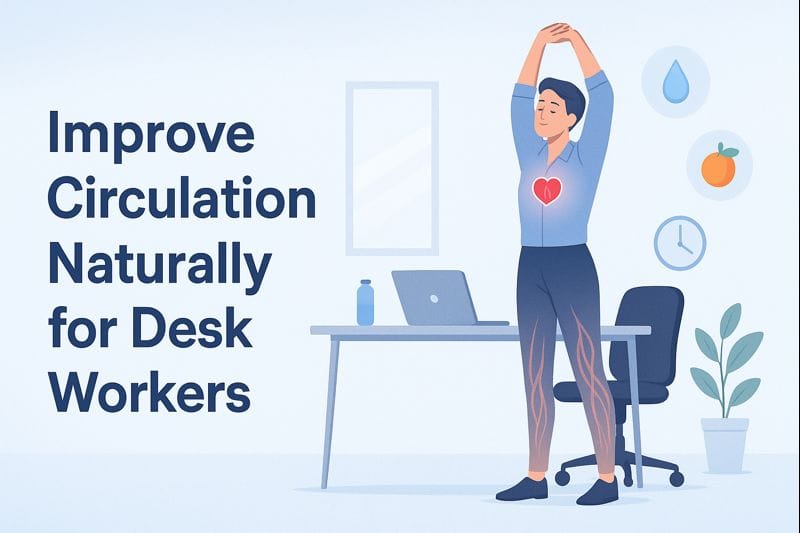
12 Proven Ways to Improve Circulation Naturally for Desk Workers (Ultimate Guide)
Long hours at a desk can quietly chip away at your circulation, even before the symptoms become obvious. The stiffness, the cold feet, the tingling in your legs, the mid-day fog, they’re all early signs that your blood flow isn’t keeping up with your workload. What most people dismiss as normal desk fatigue is often your body warning you that something needs to change.
The good part? You don’t need complicated routines or extreme lifestyle overhauls to turn things around, with the right habits, tiny movement patterns, and simple workstation improvements, you can restore healthy circulation and protect your long-term energy, focus, and cardiovascular health. This guide breaks everything down into practical, easy-to-apply steps that fit naturally into even the busiest workday.
Why Sitting Weakens Circulation
The human body was built to move, not to stay locked in the same position for hours. When you sit for extended periods, blood flow naturally slows, especially in the legs where gravity pulls it downward. The muscles that normally act as pumps become inactive, so veins must work harder to push blood back up toward the heart. Lymphatic flow also decreases, which leads to fluid retention and swelling.
Reduced movement means less oxygen circulating throughout the body and brain, this contributes to fatigue, mental fog, slower metabolism, stiff joints, and that heavy feeling in the legs that many desk workers know too well. Over time, these effects increase the risk of varicose veins, deep vein thrombosis (DVT), swollen ankles, leg cramps, lower-back stiffness, poor posture, and even reduced cardiovascular performance.
The good news is that most of these circulation problems can be prevented with small, consistent habits that keep the body active throughout the day.
1. Micro-Movements: The Most Powerful Fix
Frequent small movements are far more effective for circulation than one workout at the end of the day. Micro-movements activate the muscles that help pump blood through the veins and prevent it from pooling in the legs.
Simple actions every 30-40 minutes, standing briefly, stretching your arms overhead, rolling your shoulders, shaking out your legs, or rotating your ankles and wrists can instantly boost blood flow. These movements take only seconds but make a noticeable difference by interrupting long sitting periods.
Every 1-2 hours, slightly longer resets help even more. A two-minute walk, climbing a flight of stairs, doing a quick round of calf raises, or marching in place keeps circulation strong and prevents stiffness. These short, regular bursts of activity maintain energy, reduce muscle tension, and support healthy blood flow throughout the day.
2. Desk-Friendly Exercises for Better Circulation
Several circulation-boosting exercises can be done right at your desk with no equipment. They are discreet, effective, and easy to repeat multiple times daily.
Seated calf raises help activate the calf muscles, which play a major role in pumping blood upward. Ankle circles keep blood moving around the feet and prevent swelling. Seated leg extensions stimulate the thigh muscles and relieve stiffness from long hours of sitting. Glute squeezes support stronger posture and increase circulation in the pelvic region. Stretching the wrists and forearms boosts blood flow to the hands and arms strained by typing. Gentle spinal twists loosen the back and improve blood flow through the torso.
Repeating a combination of these movements throughout the day helps counteract the circulatory slowdown caused by prolonged sitting and keeps your body feeling lighter and more comfortable.
3. Improve Posture to Keep Blood Flowing Freely
Poor posture has a direct impact on circulation. When you slump, twist, lean forward, or round your shoulders, you compress blood vessels and restrict the smooth flow of oxygenated blood through the body. This doesn’t just affect your legs, it influences brain function, energy levels, and even heart performance.
Good posture keeps vessels open, supports muscle engagement, and allows blood to move without obstruction. The ideal setup is simple, feet flat on the floor, knees at a comfortable 90 degrees, hips slightly higher than the knees, lower back supported, shoulders relaxed, elbows tucked naturally by your sides, and your screen at eye level so your head remains aligned with your spine. Even a slight forward tilt of the head can reduce blood flow to the brain by up to 30%, which is why many desk workers experience fatigue and brain fog by midday.
When your spine is properly aligned, circulation improves naturally. Oxygen travels more efficiently, muscles stay engaged, and your body uses less energy to maintain balance. Small adjustments in posture repeated consistently throughout the day create a significant impact on overall circulation.
4. Set Up a Circulation-Friendly Workstation
Your environment determines how you sit, move, and feel throughout the day. A well-designed workstation encourages natural movement and reduces the circulation problems that come from staying locked in one position.
An ergonomic chair is one of the most important elements. It should support your lower back, keep your hips slightly above knee height, and allow your spine to remain upright without strain. A sit-stand desk adds even more flexibility, alternating between sitting and standing roughly 30 minutes sitting, 20 minutes standing, and 10 minutes moving keeps the body active and prevents blood from pooling in the legs. Standing alone isn’t enough, it’s the switching that brings the real benefit.
A footrest can improve leg angles and prevent circulation from slowing. If you stand often, an anti-fatigue mat reduces pressure on the legs and encourages small, natural shifts in weight that stimulate blood flow. Even the layout of your desk matters. Keeping items slightly out of arm’s reach encourages occasional stretching and reaching, which breaks up stillness and keeps your body moving.
Together, these elements create a workspace that supports circulation rather than restricting it.
5. Breathing Techniques to Enhance Blood Oxygenation
Circulation isn’t only about moving the body, it’s also about delivering oxygen efficiently. Many desk workers breathe shallowly without realizing it, especially under stress, which limits oxygen intake and reduces the amount transported through the bloodstream. Conscious breathing helps reopen the lungs, increase oxygen delivery, improve heart rhythm, and reduce tension in the vessels.
Diaphragmatic breathing, drawing air deeply into the belly helps expand the lungs fully and boosts oxygenation. Slow patterns like inhaling for four seconds, holding briefly, and exhaling for a longer duration relax the nervous system and improve blood flow. Box breathing is particularly effective during transitions like meetings or intense focus periods, the equal four-second pattern steadies the heart rate and sharpens concentration. The 4-7-8 technique goes even deeper, lowering cortisol levels and encouraging better vascular relaxation so blood can circulate more freely.
Practicing these techniques a few times a day improves energy, mental clarity, and circulatory efficiency.
6. Stay Hydrated to Support Fluid Circulation
Hydration plays a major role in circulation because blood is largely composed of water. When you’re dehydrated, blood becomes thicker and harder to move through the vessels. This forces the heart to work harder and slows down nutrient and oxygen delivery throughout the body.
Most people do well with 2-3 liters of water daily, adjusting for climate, activity levels, or caffeine intake. Keeping a large water bottle at your desk makes it easier to sip consistently. Small habits like drinking a glass of water before meals, adding natural flavoring like lemon or mint, or setting reminders can help maintain steady hydration.
Even mild dehydration, just 1-2% can reduce circulation efficiency by 10-15%. Staying hydrated keeps your blood fluid, your heart supported, and your circulation performing the way it should.
7. Eat Circulation-Boosting Foods
Your daily diet has a major impact on blood flow, inflammation, and overall vascular health. Certain foods improve the elasticity of blood vessels, increase nitric oxide, reduce blood thickness, and support healthy arteries.
Top Foods That Improve Circulation
- Omega-3 Rich Foods:
Salmon
Mackerel
Sardines
Chia seeds
Walnuts
These help reduce blood viscosity and support cardiovascular health. - Antioxidant-Rich Fruits:
Berries
Oranges
Grapes
Pomegranates
These improve vessel flexibility and reduce inflammation. - Nitrate-Rich Vegetables:
Beets
Spinach
Arugula
These increase nitric oxide production, which relaxes and widens blood vessels. - Spices:
Turmeric
Ginger
Cayenne
These act as natural vasodilators and enhance circulation. - Hydrating Snacks:
Cucumbers
Watermelon
Coconut water - Dark Chocolate:
Contains flavonoids that support vascular function.
8. Reduce Salt, Sugar, and Processed Foods
Certain ingredients negatively affect blood flow by stiffening blood vessels and increasing inflammation. Excess salt can lead to water retention and swelling, high sugar increases inflammation and thickens the blood, processed fats can clog arteries and reduce oxygen flow.
Fast Circulation-Friendly Improvements
- Minimize processed snacks.
- Replace sugary drinks with water or herbal tea.
- Choose whole foods more frequently.
9. Wear Compression Socks or Leg Sleeves
Compression is helpful for desk workers who sit for long hours or experience swelling, heaviness, or early signs of varicose veins.
Who Benefits
- People sitting 8-12 hours daily
- Those with swollen feet or ankles
- Frequent travelers
- Individuals with leg heaviness or visible veins
Benefits
- Prevents blood pooling
- Reduces swelling
- Improves venous circulation
- Decreases leg fatigue
Compression wear is affordable, comfortable, and easy to use throughout the workday.
10. Manage Stress to Improve Circulation
Chronic stress narrows blood vessels, increases blood pressure, and restricts oxygen delivery. Reducing stress improves vascular function and overall circulation.
Techniques That Help
- Meditation for 5-10 minutes
- Short outdoor walks
- Breathing exercises
- Listening to calming music
- Journaling
- Aromatherapy such as lavender or eucalyptus
Even a two-minute relaxation break can improve blood vessel response.
11. Upgrade Your Evening Routine to Support Circulation
What you do in the evening affects how well your blood flows the next day. Night habits help restore balance after long hours of sitting.
- Elevate Your Legs
Raise your legs above heart level for 15-20 minutes to reduce swelling and drain pooled blood. - Light Stretching
Focus on calves, hamstrings, hip flexors, and the lower back. - Warm Baths
Heat helps relax arteries and boost blood flow. - Avoid Heavy Meals Before Bed
Large meals demand more blood flow to the digestive system, reducing circulation to the brain and extremities.
12. Weekend Habits to Restore Circulation
If you sit most of the week, weekends are your best opportunity to restore circulation and undo stiffness.
Activities That Improve Circulation
Brisk walking
Cycling
Swimming
Dancing
Yoga or Pilates
Strength training
Key Areas to Strengthen
Calves
Hamstrings
Glutes
Core
Upper back
Strengthening these areas reduces the negative impact of long sitting hours and supports better posture and blood flow.
Signs Your Circulation Is Improving
Once you start applying these habits consistently, your body will give you clear signals that blood flow is getting better. Improved circulation doesn’t just affect your limbs, it enhances your overall energy and cognitive performance.
Common positive changes include:
- Warmer hands and feet
- Less swelling in the legs or ankles
- Reduced stiffness after sitting
- Higher and more stable energy levels
- Improved concentration and mental clarity
- Fewer leg cramps or muscle tightness
- More stable mood
- Better posture and less slouching
- Enhanced sleep quality
Most people begin noticing small but meaningful changes within seven to fourteen days when they remain consistent.
When Poor Circulation May Be a Warning Sign
Although poor circulation is often related to long periods of sitting, sometimes it indicates an underlying medical condition that needs proper evaluation. Do not ignore symptoms that seem unusual, severe, or persistent.
Seek medical attention if you experience:
- Severe swelling in the legs or feet
- Sudden one-sided leg pain
- Skin turning blue, purple, or unusually pale
- Coldness in your hands or feet that doesn’t improve
- Chest pain, shortness of breath, or dizziness
- Wounds on the legs that take a long time to heal
- Persistent numbness, tingling, or burning sensations
These signs can point to more serious conditions, including:
- Deep vein thrombosis
Peripheral artery disease - Diabetic neuropathy
- Heart or vascular problems
- Complications from varicose veins
It’s important to rule out medical causes, especially if symptoms escalate or do not improve with lifestyle changes.
Final Thoughts
Improving circulation as a desk worker doesn’t require drastic changes or intense routines. It’s the small, consistent habits, the micro-movements, posture adjustments, standing breaks, hydration, circulation-friendly foods, and daily stretches that quietly but powerfully transform your body over time.
When circulation is optimized, your energy rises, focus sharpens, metabolism runs more efficiently, discomfort fades, and heart health strengthens. The benefits ripple across your entire body and even influence longevity.
Your desk job doesn’t have to come at the cost of your health. By weaving movement, proper nutrition, and mindful routines into your workday, you actively support your circulatory system. The result is a body that feels lighter, energized, and ready to perform at its best every single day.
👩⚕️ Need Personalized Health Advice?
Get expert guidance tailored to your unique health concerns through MuseCare Consult. Our licensed doctors are here to help you understand your symptoms, medications, and lab results—confidentially and affordably.
👉 Book a MuseCare Consult NowOther Blog Post You Might Like:
- 9 Early Warning Signs of Chronic Insomnia in Shift Workers (And How to Stop It Fast)
- 9 Proven Ways Micro-Stress Disrupts Cortisol Rhythm and How to Fix It
- Is Sitting Cross-Legged Bad for Circulation? 7 Real Truth Backed by Science
- 7 Powerful Reasons Why Business Travel Is Hurting Your Metabolism (And How to Fix It)
- Natural Ways to Reduce Water Retention in the Body: 15 Proven Tips That Work

Dr. Ijasusi Bamidele, MBBS (Binzhou Medical University, China), is a medical doctor with 5 years of clinical experience and founder of MyMedicalMuse.com, a subsidiary of Delimann Limited. As a health content writer for audiences in the USA, Canada, and Europe, Dr. Ijasusi helps readers understand complex health conditions, recognize why they have certain symptoms, and apply practical lifestyle modifications to improve well-being