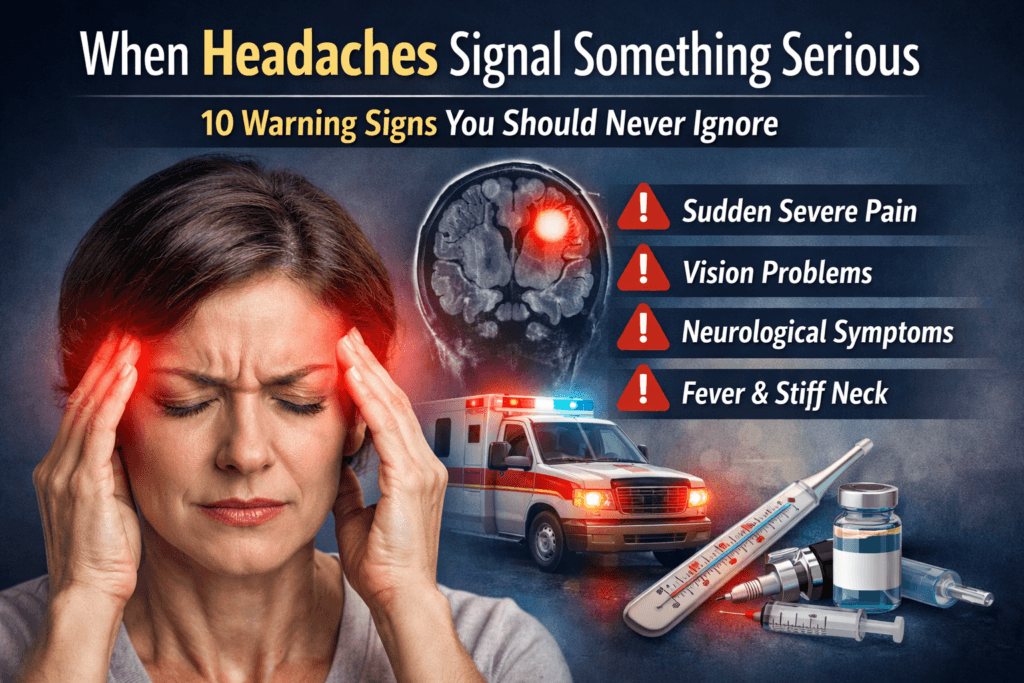
When Headaches Signal Something Serious: 10 Warning Signs You Should Never Ignore
A headache is one of the easiest symptoms to dismiss, it feels familiar, manageable, and often temporary. Many people push through the pain, take a pill, and move on with their day without a second thought.
That approach is usually harmless, sometimes it is not. There are moments when a headache is the body’s warning signal, not background noise, in those cases, the pain is not the problem. It is the message. Serious neurological, vascular, or infectious conditions can begin with nothing more than a headache that feels slightly different, slightly stronger, or slightly wrong.
The danger is not that people experience headaches, the danger is that they ignore the ones that matter. This article breaks down when headaches signal something serious, the red flags doctors take seriously, and how to recognize when medical evaluation is urgent rather than optional. The goal is not fear, the goal is awareness, accuracy, and timely action.
Understanding the Difference Between Common and Dangerous Headaches
Before red flags make sense, it is important to understand how headaches are classified medically. Doctors do not judge headaches only by how painful they feel, they look at cause, pattern, and associated symptoms. Broadly, headaches fall into two categories.
Primary Headaches
Primary headaches are conditions in themselves. The headache is the disorder, not a signal of another disease. Common examples include tension headaches, migraines, and cluster headaches.
These headaches can be intense, frequent, and even disabling. Migraines, in particular, can cause severe pain, nausea, light sensitivity, and functional impairment. However, despite how severe they feel, primary headaches are not caused by tumors, bleeding, infections, or structural damage in the brain.
They are driven by functional changes in pain pathways, nerve signaling, and blood vessel behavior, not by tissue destruction.
This distinction matters because primary headaches are treated by managing triggers, lifestyle factors, and neurological sensitivity rather than searching for hidden disease.
Secondary Headaches
Secondary headaches are different, in these cases, the headache is a symptom of another medical problem. Examples include headaches caused by:
- Bleeding in or around the brain
- Brain tumors or masses
- Infections affecting the brain or its coverings
- Blood vessel disorders such as clots or inflammation
- Severe spikes in blood pressure
These headaches are not random, they reflect a process that is physically affecting brain structures, blood flow, or pressure.
Red flags exist specifically to help clinicians identify secondary headaches, early, before irreversible damage occurs.
Why Red Flags Matter
The brain has very limited ways to communicate distress. Unlike other organs, it cannot produce pain in many different forms. When something is wrong, headache is often the first and sometimes the only early signal.
Serious conditions may produce a headache long before more obvious symptoms appear. A small bleed, early infection, or slow-growing mass may initially cause nothing but pain, waiting for dramatic symptoms can mean waiting too long.
Red flags help doctors decide three critical things:
- Who needs brain imaging
- Who needs urgent specialist evaluation
- Who needs immediate emergency care
Ignoring red flags increases the risk of delayed diagnosis, complications, and permanent damage. At the same time, treating every headache as an emergency creates unnecessary fear and testing. The goal is not panic, the goal is evidence based judgment.
The Most Important Headache Red Flags
1. Sudden, Explosive Headache
The Worst Headache of My Life, a headache that reaches peak intensity within seconds or minutes is a medical emergency until proven otherwise.
This type of pain is often described as a thunderclap, a sudden explosion, or an instant overwhelming headache with no gradual buildup.
Possible causes include:
- Subarachnoid hemorrhage
- Ruptured brain aneurysm
- Cerebral venous thrombosis
Why this matters, bleeding in or around the brain causes a rapid rise in intracranial pressure. Brain tissue is extremely sensitive to pressure changes, and damage can occur quickly.
Emergency medical care is required immediately, do not wait for the pain to pass, do not try to sleep it off, do not self-medicate.
2. Headache With Neurological Symptoms
Any headache accompanied by changes in brain function is concerning.
Warning signs include:
- Weakness or paralysis on one side of the body
- Numbness or abnormal sensations
- Difficulty speaking or understanding speech
- Vision loss, blurred vision, or double vision
- Confusion or altered awareness
- Loss of coordination or balance
Possible causes include:
- Stroke or transient ischemic attack
- Brain tumors or space occupying lesions
- Brain abscesses
- Severe or atypical migraine syndromes
Neurological symptoms indicate involvement of brain tissue, blood vessels, or pressure pathways, this is not typical of simple headaches.
Urgent medical evaluation is necessary in conditions like stroke, minutes matter, delayed treatment can mean permanent disability.
3. Headache With Fever and Neck Stiffness
A headache accompanied by fever and difficulty bending the neck forward is a classic medical red flag.
Possible causes include:
- Meningitis
- Encephalitis
- Other serious brain or central nervous system infections
Additional symptoms may include:
- Sensitivity to light
- Nausea or vomiting
- Extreme fatigue
- Altered mental state or confusion
Infections involving the brain or its protective coverings can progress rapidly without prompt treatment, they can lead to brain damage, organ failure, or death.
This situation requires emergency medical care, early antibiotics or antiviral treatment can be lifesaving and should never be delayed.
4. New Headache After Age 50
A new headache or a clear change in headache pattern after the age of 50 should never be brushed off as normal aging. While younger individuals are far more likely to experience primary headache disorders, new headaches later in life raise concern for secondary causes.
Possible causes include:
- Temporal arteritis
- Brain tumors
- Vascular disease affecting cerebral blood flow
Temporal arteritis, also called giant cell arteritis, is particularly dangerous. It involves inflammation of medium and large arteries supplying the head and eyes. If untreated, it can lead to permanent vision loss, sometimes suddenly and without warning.
Warning signs of temporal arteritis include:
- Scalp tenderness, especially when brushing hair
- Jaw pain or fatigue while chewing
- Visual disturbances such as blurring or transient vision loss
- Elevated inflammatory markers on blood tests
Prompt medical evaluation is essential, blood tests and sometimes imaging or biopsy are required. Early treatment can prevent irreversible complications.
5. Headache That Progressively Worsens Over Time
A headache that gradually intensifies over days or weeks is concerning, particularly when it fails to respond to usual medications or rest, this pattern suggests a process that is slowly increasing pressure or irritation inside the skull.
Possible causes include:
- Brain tumors
- Increased intracranial pressure
- Chronic or slow bleeding within the brain
Additional red flags include:
- Headaches that are worse in the morning
- Pain triggered or worsened by coughing, sneezing, or bending forward
- Vomiting that occurs without preceding nausea
Slowly growing lesions may initially produce subtle symptoms that are easy to ignore. As pressure builds, brain function becomes increasingly compromised, medical evaluation is required. Brain imaging is often necessary to identify the underlying cause.
6. Headache After Head Injury
Any new headache following a head injury should be taken seriously, even if the injury appeared minor at the time, symptoms do not always appear immediately. Some dangerous complications develop hours or days later.
Warning signs include:
- Persistent or worsening headache
- Repeated vomiting
- Increasing drowsiness or difficulty staying awake
- Confusion or behavioral changes
- Seizures
Possible causes include:
- Concussion
- Subdural hematoma
- Brain swelling
Bleeding inside the skull can progress slowly and silently, older adults and people on blood thinners are especially vulnerable. Seek medical care promptly, especially if symptoms worsen or new symptoms appear.
7. Headache That Wakes You From Sleep
Headaches that interrupt sleep or are present immediately upon waking are concerning, particularly when they occur repeatedly.
Possible causes include:
- Increased intracranial pressure
- Brain tumors
- Oxygen deprivation related to sleep apnea
Most benign headaches improve with sleep, pain that worsens during the night suggests abnormal pressure regulation or blood flow changes. Medical evaluation is recommended, especially if the pattern persists or intensifies.
8. Headache With Seizures
A headache associated with a seizure is always considered a red flag.
Possible causes include:
- Brain tumors
- Brain infections
- Stroke
- Metabolic or electrolyte disturbances
Seizures reflect abnormal electrical activity in the brain, often triggered by structural, infectious, or metabolic problems. Urgent neurological assessment is required, delaying evaluation increases the risk of recurrence and permanent injury.
9. Headache in Immunocompromised Individuals
People with weakened immune systems face a higher risk of serious causes when headaches occur.
This includes individuals with:
- HIV infection
- Cancer or ongoing chemotherapy
- Organ transplants
- Long term use of immunosuppressive or steroid medications
Possible causes include:
- Opportunistic brain infections
- Brain abscesses
- Fungal or parasitic infections
Infections that are rare in healthy individuals can become aggressive and life threatening in immunocompromised patients. Doctors maintain a lower threshold for imaging, blood tests, and specialist referral in these cases. Early investigation is critical.
10. Headache During Pregnancy or Postpartum
Headaches that occur during pregnancy or after delivery require special attention, even in individuals without prior headache history.
Possible causes include:
- Preeclampsia
- Eclampsia
- Cerebral venous thrombosis
Warning signs include:
- Elevated blood pressure
- Visual disturbances
- Sudden swelling of the face, hands, or feet
- Seizures
These conditions can progress rapidly and pose serious risks to both mother and baby if not treated promptly, immediate medical evaluation is essential. Headaches in pregnancy should never be dismissed as stress or fatigue alone.
Less Obvious but Still Serious Warning Signs
Not all dangerous headaches arrive dramatically, some develop quietly, accompanied by subtle changes that are easy to rationalize or ignore.
Warning signs that deserve attention include:
- Personality or behavior changes such as irritability, apathy, or unusual emotional responses
- Memory difficulties, trouble concentrating, or confusion
- Unexplained weight loss or loss of appetite
- Persistent nausea that is not linked to food or stomach illness
- Vision changes such as blurred vision, blind spots, or difficulty focusing
When these symptoms occur alongside headaches, they suggest possible involvement of brain tissue, pressure regulation, or systemic disease. Individually, they may seem mild, together, they warrant medical evaluation.
When Imaging Is Necessary
Not every headache requires brain imaging, most do not. However, the presence of red flags changes the decision entirely.
Doctors consider imaging when:
- Neurological deficits are present on examination
- Headache patterns change significantly in intensity, frequency, or character
- Multiple red flags are present simultaneously
- The patient belongs to a high risk group, such as older adults or immunocompromised individuals
The most common imaging tools include:
- CT scans, which are fast and effective for detecting acute bleeding
- MRI scans, which provide detailed images for tumors, infections, inflammation, and vascular abnormalities
Imaging is not done for reassurance alone, its purpose is to rule out conditions that cannot be identified through symptoms or examination alone.
Why Self Diagnosis Is Risky
Searching symptoms online often creates more confusion than clarity. The same symptom can represent vastly different conditions, a headache with nausea could be a benign tension headache or a life threatening hemorrhage, without context, pattern, and clinical examination, the distinction cannot be made reliably.
Self-diagnosis leads to two common problems, either people panic unnecessarily, or they downplay symptoms that should not be ignored.
Self-treatment can also delay diagnosis, especially when painkillers temporarily mask worsening symptoms. In serious cases, time lost can translate into permanent damage.
When to Seek Emergency Care Immediately
Emergency care is required when a headache:
- Begins suddenly and reaches severe intensity quickly
- Is accompanied by weakness, confusion, speech difficulty, or vision loss
- Occurs alongside fever and neck stiffness
- Follows a head injury
- Is associated with seizures
If symptoms are severe, do not drive yourself. Emergency medical services exist for a reason.
When to Schedule a Doctor Visit Promptly
Not every concerning headache requires emergency care, but some should not wait.
A prompt medical appointment is advised when a headache:
- Appears for the first time after age 50
- Worsens progressively over time
- Feels different from previous or usual headaches
- Does not respond to standard treatment
- Occurs with unexplained or systemic symptoms
Waiting weeks in these situations increases the risk of delayed diagnosis.
The Role of Chronic Headache Disorders
It is important to be realistic, most people who experience headaches have primary headache disorders. Migraines and tension headaches are far more common than brain tumors or bleeding.
However, having a history of migraines does not provide immunity from secondary headaches, new symptoms still matter. Changes in pattern, intensity, or associated features still matter. Assuming that every headache is just another migraine can be dangerous when the presentation shifts.
How Doctors Evaluate Serious Headaches
Medical evaluation is systematic and structured.
It typically includes:
- A detailed history focusing on onset, pattern, and associated symptoms
- A focused neurological examination
- Blood tests when infection, inflammation, or systemic disease is suspected
- Brain imaging when red flags are present
Doctors are trained to recognize patterns that patients often overlook, especially subtle combinations of symptoms that point toward serious causes.
Red Flags Are About Probability, Not Panic
A red flag does not mean a catastrophic diagnosis is inevitable, it means the likelihood of a serious cause is higher than average, it means evaluation is justified, it means delay could be harmful.
Ignoring red flags carries far greater risk than investigating them. In medicine, caution in the face of uncertainty is not fear, it is sound judgment.
The Bottom Line
Most headaches are harmless and resolve without consequence. That reality is important but it is not the whole truth.
Headaches become dangerous when their pattern changes, when they arrive suddenly and violently, when they worsen instead of improve, or when they appear alongside neurological, infectious, or systemic warning signs. In those situations, pain is not random, it is information.
The brain does not have many ways to signal distress, when something is seriously wrong, it often speaks through a headache long before obvious damage is visible.
Ignoring that signal is a gamble, paying attention to it is not fear, it is judgment, if a headache feels unfamiliar, more intense, or wrong in a way you cannot rationalize, do not minimize it. Seek medical evaluation, acting early is not overreacting it is how serious conditions are caught while they are still treatable. Caution is not weakness, it is awareness and awareness saves lives.
👩⚕️ Need Personalized Health Advice?
Get expert guidance tailored to your unique health concerns through MuseCare Consult. Our licensed doctors are here to help you understand your symptoms, medications, and lab results—confidentially and affordably.
👉 Book a MuseCare Consult NowRelated Blog Post:
- The Complete Guide to Headache and Migraine: 7 Causes, Prevention & Treatment
- 12 Powerful Ways to Tell Tension Headache vs Migraine: Accurate Diagnosis Guide
- 10 Proven Ways Sleep Triggers Chronic Headaches (And How to Fix Them)
- 12 Proven Ways Neck Pain Causes Headaches (and How to Stop Them)
- Dehydration Headache? 10 Proven Ways to Stop It Fast & Stay Pain-Free
- 17 Powerful Foods That Trigger Migraines and How to Avoid Them Naturally

Dr. Ijasusi Bamidele, MBBS (Binzhou Medical University, China), is a medical doctor with 5 years of clinical experience and founder of MyMedicalMuse.com, a subsidiary of Delimann Limited. As a health content writer for audiences in the USA, Canada, and Europe, Dr. Ijasusi helps readers understand complex health conditions, recognize why they have certain symptoms, and apply practical lifestyle modifications to improve well-being