Frequent Fever in Children: 9 Hidden Causes Parents Must Not Ignore
Fever is one of the most common reasons parents worry about their child’s health. A warm forehead, a high thermometer reading and immediate concern but here is the truth many parents miss.
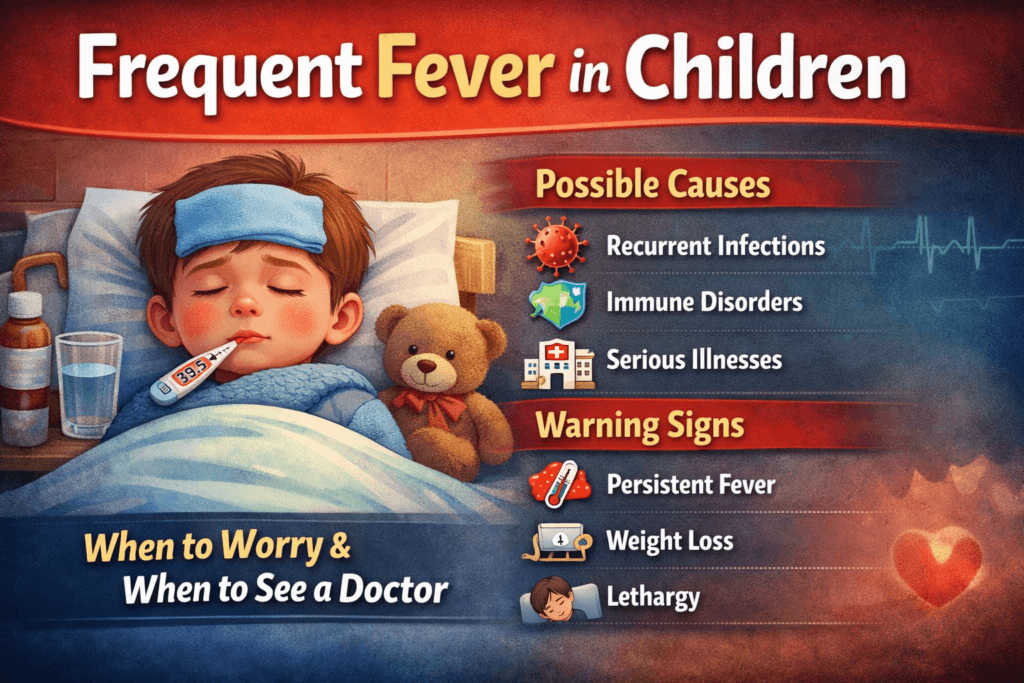
Fever itself is not a disease, it is a sign that the body is responding to something. A single fever episode is usually not a problem, children get infections often, especially in early life. What raises concern is frequent fever.
When a child keeps developing fever repeatedly, the issue is no longer the temperature alone. The real question becomes why the fever keeps coming back.
Some causes are harmless and expected in childhood, others may signal infections, immune problems, or conditions that require medical attention. This article explains what frequent fever in children really means, the possible causes, the warning signs parents should never ignore, and what steps to take next.
What Is Considered Frequent Fever in Children?
A fever is defined as a body temperature of 38°C (100.4°F) or higher when measured accurately.
Frequent fever generally means:
Repeated episodes of fever over weeks or months.
Fever that returns after seeming to resolve.
Fever without a clear cause.
Fever that follows a predictable pattern
Children, especially under five years, get sick often. That alone does not mean something is wrong. However, pattern matters. A child with fever every few weeks, or fever that lasts longer than expected, deserves closer evaluation.
Why Children Get Fever More Often Than Adults
Children are not small adults, their immune systems are still developing, and that alone explains why fever is more common in childhood.
When a child encounters germs for the first time, the immune system reacts more aggressively. Fever is part of that reaction. Adults, on the other hand, have already built immunity to many common viruses and bacteria, so they get sick less often and with milder symptoms.
Several factors make children more prone to frequent fever:
Immature immune response: A child’s immune system is still learning how to fight infections efficiently.
First-time exposure to common viruses: Many childhood infections occur only once. Each new exposure can trigger fever.
Close contact in schools and daycare: Germs spread easily where children play, eat, and touch shared surfaces.
Poor hand hygiene habits: Children touch their face frequently and forget to wash their hands properly.
Incomplete vaccination in early life: Full protection against some infections develops over time.
According to the World Health Organization, young children can experience six to eight viral infections per year, especially in early childhood.
This means fever can appear repeatedly without indicating serious disease. However, frequency alone does not tell the whole story, pattern, duration, and associated symptoms matter.
Common Causes of Frequent Fever in Children
1. Recurrent Viral Infections
This is the most common cause of frequent fever in children. Viruses trigger fever by activating the immune system, common examples include:
Common cold viruses
Influenza
Adenovirus
Enteroviruses
Respiratory syncytial virus
Children in daycare or school settings often recover from one viral infection only to catch another within days or weeks.
A key point to remember is that viral fevers usually resolve within three to five days. The child typically looks well, active, and playful between episodes.
If your child fully recovers and appears healthy between fevers, repeated viral infections are the most likely explanation.
2. Bacterial Infections That Are Missed or Partially Treated
Some bacterial infections can persist or recur if they are not properly diagnosed or completely treated.
Common examples include:
Ear infections
Sinus infections
Pneumonia
A child with repeated fever plus symptoms such as pain, foul-smelling urine, persistent cough, ear discharge, or breathing difficulty needs careful medical evaluation.
Incomplete antibiotic treatment, wrong antibiotic choice, or delayed diagnosis can allow infection to linger and cause recurrent fever.
3. Malaria in Endemic Areas
In malaria-endemic regions, recurrent fever should always raise suspicion for malaria.
Malaria commonly causes:
Cyclical fever
Chills followed by sweating
Weakness
Poor appetite
Failing to test for malaria in a child with repeated fever in endemic areas is a serious mistake. Early diagnosis and treatment are critical to prevent complications.
4. Parasitic and Chronic Infections
Some infections cause long-lasting or intermittent fever rather than short episodes.
These include:
Typhoid fever
Chronic parasitic infections
These conditions are more likely when fever lasts longer than two weeks or is accompanied by weight loss, night sweats, or persistent fatigue.
Chronic infections often require targeted testing and should not be dismissed as “just another fever.”
5. Inflammatory and Autoimmune Conditions
Not all fevers are caused by infections, some children have immune system disorders that cause ongoing inflammation and repeated fever.
Examples include:
These conditions often present with fever alongside joint pain, swelling, skin rashes, prolonged fatigue, or poor growth. Fever in these cases is a symptom of inflammation, not infection.
6. Periodic Fever Syndromes
Some children experience fever in predictable, repeating patterns.
A well-known example is PFAPA syndrome, which typically includes:
Periodic fever
Mouth ulcers
Sore throat
Swollen lymph nodes
Children with periodic fever syndromes usually appear completely healthy between episodes. Recognizing this pattern is important to avoid unnecessary antibiotics and repeated testing.
7. Cancer and Blood Disorders
This cause is rare but serious. Persistent or unexplained fever can sometimes be an early sign of:
Leukemia
Lymphoma
Bone marrow disorders
Warning signs include unexplained weight loss, night sweats, pale skin, easy bruising, frequent infections, or bone pain.
Most children with fever do not have cancer, still, persistent unexplained fever should never be ignored.
When Frequent Fever Is Normal
Frequent fever may be normal when:
The child is under five years of age
Each fever episode lasts less than five days
The child is active and well between episodes
Growth and development are normal
No warning signs are present
Children in daycare often fall into this category due to repeated exposure to infections. Normal does not mean careless, it means observation with awareness.
Red Flags Parents Must Never Ignore
While many fevers in children are harmless, some situations require urgent medical attention. Repeated fever becomes dangerous when it is accompanied by warning signs that suggest serious infection, dehydration, inflammation, or systemic illness.
Seek medical care immediately if a child with frequent fever has any of the following:
Fever lasting more than five days
Fever in a baby younger than three months
Poor feeding or refusal to drink fluids
Lethargy, extreme sleepiness, or confusion
Persistent vomiting or inability to keep fluids down
Difficulty breathing or fast, labored breathing
Seizures
A rash that does not fade when pressed
Unexplained weight loss or night sweats
According to the Centers for Disease Control and Prevention, prolonged or unexplained fever in children should always be medically evaluated.
Delaying care in these situations increases the risk of complications. Fever is often the earliest visible sign that something more serious may be developing.
How Doctors Evaluate Frequent Fever in Children
There is no single test that explains frequent fever. Diagnosis depends on careful assessment, not guesswork.
1. Detailed Medical History
Doctors begin by listening. The history often provides the biggest clues.
They will ask about:
How often the fever occurs
How long each episode lasts
Whether the fever follows a pattern
Symptoms that appear with the fever
Recent travel or exposure to sick contacts
Family history of immune or inflammatory disorders
Vaccination status
Recognizing patterns is critical. Random fever is different from cyclical or persistent fever.
2. Physical Examination
A thorough physical exam helps narrow down possible causes.
Doctors assess:
Growth and weight changes
Lymph node enlargement
Skin rashes or bruising
Joint swelling or pain
Abdominal organs such as the liver and spleen
Chest sounds and throat appearance
Small findings often guide major decisions. What looks normal to parents may be significant to a trained clinician.
3. Laboratory and Imaging Tests
Tests are ordered based on clinical suspicion, not routinely.
Depending on findings, doctors may request:
Complete blood count
ESR or CRP to assess inflammation
Blood cultures
Urine analysis and culture
Malaria testing in endemic regions
Chest X-ray
Stool or parasite tests
Unnecessary testing is avoided, but missing the right test can delay diagnosis. The goal is targeted evaluation.
Common Mistakes Parents Make
1. Treating Fever Without Finding the Cause
Paracetamol lowers temperature, but it does not treat disease. Repeatedly suppressing fever without understanding why it keeps returning can delay diagnosis and mask worsening illness. Fever control is supportive, not curative.
2. Overusing Antibiotics
Antibiotics do not treat viral infections, unnecessary antibiotic use:
Does not prevent future fever
Promotes antibiotic resistance
Causes side effects such as diarrhea and rashes
Frequent fever alone is not a reason to start antibiotics.
3. Ignoring Growth and Behavior Changes
A child who looks sick between fevers is different from a child who fully recovers.
Warning signs include:
Poor weight gain
Reduced activity
Persistent fatigue
Loss of appetite
Parents should observe the whole child, not just the temperature reading.
4. Delaying Medical Review
Watching a fever for a short time is reasonable, watching it endlessly is not.
Persistent or recurring fever deserves evaluation, early review often prevents unnecessary tests, hospital visits, and complications.
What Parents Can Do at Home
1. Monitor, Do Not Panic
Parents play a vital role in diagnosis.
Helpful steps include:
Recording fever dates and duration
Noting symptoms that appear with fever
Tracking appetite, activity, and weight
A simple fever diary provides valuable information for doctors.
2. Support the Immune System
Healthy habits reduce infection frequency and severity.
Focus on:
Adequate sleep
Balanced nutrition
Proper hydration
Keeping vaccinations up to date
A well-supported immune system handles infections more efficiently.
3. Use Fever Medicine Correctly
Fever medicine should improve comfort, not eliminate fever completely.
Key points:
Use the correct dose for the child’s weight
Avoid combining medications unnecessarily
Do not wake a sleeping child just to give fever medicine
Comfort matters more than the number on the thermometer.
When Frequent Fever Requires Specialist Care
Referral to a pediatric specialist is needed when:
Fever patterns are unusual or cyclical
Initial tests are abnormal
The child is not growing or thriving
Autoimmune, inflammatory, or genetic conditions are suspected
Specialist care does not mean the situation is hopeless. It means the problem requires deeper investigation.
The Truth About Fever
Fever is a defense mechanism, not an enemy. The real problem is not fever itself, the real problem is frequent fever without explanation.
Children are resilient, most frequent fevers are harmless. Some are not. The role of parents is not to panic or dismiss symptoms, but to observe carefully, ask questions, and act when necessary.
That balance protects children better than fear or neglect ever could.
Final Thoughts
Frequent fever in children is not random, it is a message.
Sometimes the message is simple, a developing immune system reacting to common infections, especially in early childhood or daycare settings. In these cases, reassurance and observation are often enough.
Other times, the message is more complex, recurrent infections, chronic illness, immune disorders, or inflammatory conditions may be involved. These situations require careful evaluation, not assumptions.
Ignoring repeated fever is risky, panicking over every fever is unnecessary. The balance lies in awareness, pattern recognition, and timely medical care.
Parents who pay attention to frequency, duration, and how their child behaves between episodes provide doctors with the most valuable information. That awareness leads to faster answers and better outcomes.
A child who keeps getting fever is not “just unlucky.”
Their body is communicating, listen carefully act thoughtfully.
👩⚕️ Need Personalized Health Advice?
Get expert guidance tailored to your unique health concerns through MuseCare Consult. Our licensed doctors are here to help you understand your symptoms, medications, and lab results—confidentially and affordably.
👉 Book a MuseCare Consult Now
Dr. Ijasusi Bamidele, MBBS (Binzhou Medical University, China), is a medical doctor with 5 years of clinical experience and founder of MyMedicalMuse.com, a subsidiary of Delimann Limited. As a health content writer for audiences in the USA, Canada, and Europe, Dr. Ijasusi helps readers understand complex health conditions, recognize why they have certain symptoms, and apply practical lifestyle modifications to improve well-being