7 Surprising Reasons Emotional Conversations Drain Energy
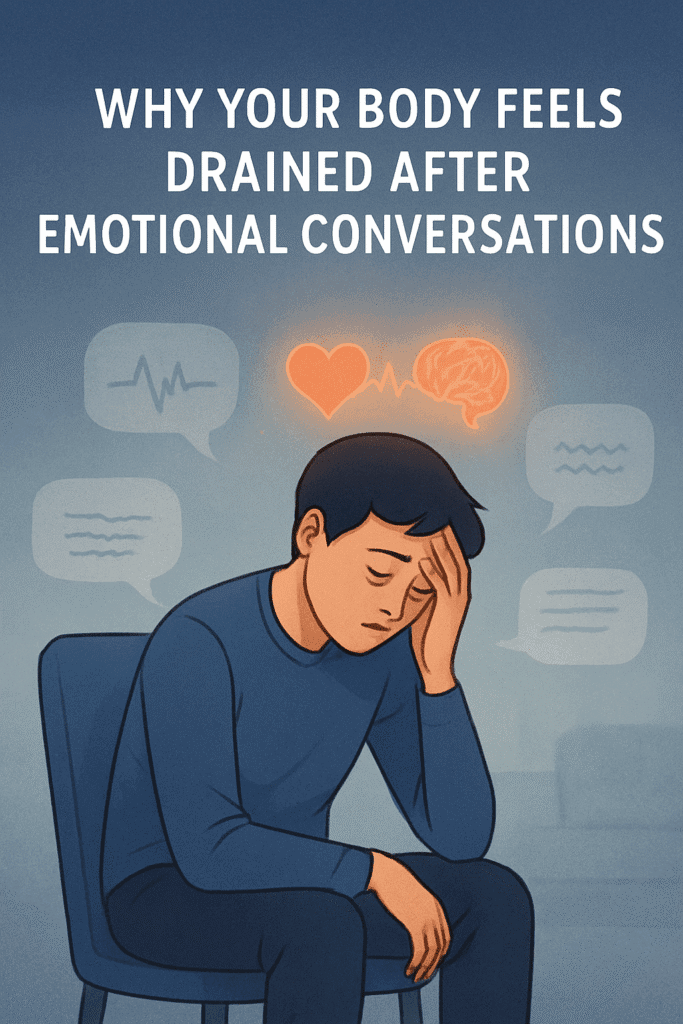
Some conversations leave you smiling, lighter and strangely recharged, like a weight has been lifted but others? They feel like they’ve drained every ounce of strength from you. You hang up the phone, step out of the room, or close the chat window and feel an instant heaviness. Your chest tightens, your mind fogs, and your body aches with a fatigue that no nap seems to cure. It’s as if a simple exchange of words has emptied your internal battery.
If you’ve ever felt that strange, hollow exhaustion after a difficult talk, maybe a heart-to-heart about a relationship, a tense discussion with family or an emotionally loaded work meeting, you’re far from alone. These moments aren’t just mentally taxing, they set off a physical chain reaction that ripples through your entire body.
During emotional conversations, your brain interprets vulnerability, conflict or confrontation as a form of stress. In response, it activates ancient biological pathways designed to protect you, the same ones your ancestors used to survive danger. Hormones surge, muscles tense, and your heart rate climbs as your nervous system shifts into high alert. Even if you’re sitting still and speaking calmly, your body is burning through energy as if it were bracing for impact.
And once it’s over, all that physiological effort catches up with you. The adrenaline drops, your emotional circuits cool down and what’s left is a wave of exhaustion that feels both mental and physical.
You’re not imagining it, emotional conversations genuinely drain energy at a biological level. In the sections that follow, we’ll explore why this happens, how your brain and body respond to emotional stress and most importantly, how to recover and protect your energy the next time your feelings take center stage.
1. The Science of Emotional Fatigue
Emotional fatigue isn’t just a feeling, it’s a full-body physiological reaction that can be traced, measured and explained by neuroscience. When you step into a conversation loaded with tension, sadness or vulnerability, your brain doesn’t treat it as a simple exchange of words. It interprets it as social stress, the same kind of internal alarm that would go off if you sensed physical danger.
Here’s what’s happening beneath the surface:
The Amygdala Sounds the Alarm
Deep in your brain sits the amygdala, a tiny, almond-shaped structure that acts as your emotional watchdog. The moment it detects threat, conflict, or potential rejection, it triggers the body’s ancient defense system. Even a raised voice or disappointed tone can be enough to set it off, because to your brain, emotional safety is just as vital as physical safety.
The Stress Hormones Surge
Once the amygdala fires, your body releases cortisol and adrenaline, the primary stress hormones. These chemicals sharpen your senses, quicken your heartbeat and raise your blood pressure. You might not notice it, but your body is bracing for a fight, flight, or freeze response, preparing to handle perceived danger or protect your emotional boundaries.
Energy Reallocation Begins
In this heightened state, your body reroutes blood flow away from nonessential systems like digestion and immune repair, and toward your muscles, heart, and brain’s alertness centers. Even though you’re just sitting there, maybe on a couch or at a desk, your body behaves as if it’s preparing to run or defend itself. This internal shift consumes a surprising amount of energy.
And once the conversation finally ends, those hormone levels begin to drop fast. That sudden decline in adrenaline and cortisol creates a biochemical “crash.” It’s the same drop you feel after an adrenaline-filled moment, like narrowly avoiding an accident or giving a nerve-wracking presentation. The result? You feel spent, foggy, and emotionally hollow.
In simple terms, emotional fatigue is your body’s recovery phase after an internal storm. You’ve just experienced an invisible battle between stress chemistry and self-control and the exhaustion that follows is proof of how hard your mind and body were working to keep you steady.
2. Why Emotional Conversations Demand So Much Energy
Unlike small talk or casual exchanges, emotionally charged conversations demand far more from the brain. They require you to think deeply, regulate feelings, and stay socially attuned, three mental systems that consume enormous energy. Even if the discussion seems calm on the outside, your brain is performing countless invisible calculations inside.
A. Cognitive Load
When emotions run high, your brain’s prefrontal cortex, the control center for reasoning and decision-making is under pressure. You’re analyzing every word, tone and facial expression while trying to phrase your response carefully enough to prevent escalation. That mental balancing act is what psychologists call cognitive load.
Each second of restraint or careful word choice taxes your brain’s working memory and burns glucose, your main mental fuel source. The more emotionally intense the topic, the heavier that cognitive strain becomes.
B. Emotional Regulation
Trying to stay composed during a charged exchange, resisting the urge to cry, lash out or shut down is another major energy drain. To do that, your brain suppresses instinctive emotional responses triggered by the amygdala, and reroutes them through logical processing circuits.
This process, called top-down regulation, takes significant effort. It’s like driving uphill while holding your breath. If the topic touches old wounds or unresolved feelings, the strain doubles, you’re managing both present emotion and echoes from the past.
C. Social Awareness
Humans are social creatures built to read one another. During an intense talk, your brain constantly tracks subtle cues, micro-expressions, shifts in tone, body language, even pauses in speech, to gauge how the other person feels.
This rapid-fire social decoding involves your temporal and frontal lobes, which require steady glucose flow. The more emotionally complex the exchange, the more energy these brain regions consume to maintain empathy and understanding.
In short, emotional conversations are a high-intensity mental workout. Your brain burns fuel, your hormones surge and your muscles tighten all while you’re sitting still. It’s no wonder you feel drained afterward, your nervous system has just completed a marathon.
3. The Role of the Nervous System
Every emotional conversation activates the push-and-pull of your body’s two main control systems: the sympathetic (fight-or-flight) and the parasympathetic (rest-and-digest) nervous systems. Together, they orchestrate the physiological roller coaster that makes emotional fatigue feel so real.
Sympathetic Overdrive
The sympathetic system prepares you for challenge or threat. During a heated discussion, it floods your bloodstream with adrenaline and cortisol, making your heart race and your breathing quicken. You might notice:
A pounding or irregular heartbeat
Shallow, rapid breathing
Tight shoulders, clenched jaw, or sweaty palms
Dry mouth or an uneasy stomach
Restlessness or the urge to pace
These are primal survival responses meant to protect you in danger. The problem? Emotional stress keeps this system engaged far longer than it’s designed for. A conversation that lasts 30 minutes can feel like hours of combat to your body.
Parasympathetic Rebound
Once the talk ends and the perceived threat passes, your parasympathetic system steps in to calm things down. Heart rate slows, blood pressure drops and your muscles finally begin to release tension. That rebound, however, often feels like a wave of exhaustion, you might yawn repeatedly, feel dizzy or experience sudden heaviness in your limbs.
This fatigue isn’t weakness; it’s your body’s way of recalibrating after burning through stress energy. The nervous system must swing back toward balance, and that swing can feel like a crash.
4. Emotional Empathy and Energy Drain
If you’re someone who naturally absorbs other people’s emotions, you probably notice that difficult conversations leave you more tired than they do others. That’s because empathy has a biological footprint.
Your brain contains mirror neurons, specialized cells that simulate the emotions and actions you observe in others. When someone cries, your mirror neurons partially recreate that sadness inside your own neural circuits. This mechanism is what allows humans to connect deeply but it also means you’re borrowing someone else’s stress chemistry.
For empaths and highly sensitive individuals, this mirroring can be intense. Your body releases the same stress hormones, cortisol, adrenaline and norepinephrine as if the problem were your own. You literally feel the emotional weight of others at a chemical level.
The result? Double the internal workload, managing your own reaction while unconsciously processing theirs.
Empathy is one of humanity’s greatest strengths, but it comes with a cost without recovery time, repeated emotional absorption can lead to compassion fatigue, the quiet exhaustion that builds from caring too deeply for too long.
5. The Hidden Role of Breath and Body Tension
One of the most overlooked energy drains during emotional conversations is something deceptively simple: your breathing pattern and muscle tension.
Most people unconsciously hold their breath or take shallow sips of air when emotions intensify. This subtle breath-holding reduces oxygen flow to the brain and muscles, forcing your body to work harder for the same level of alertness. At the same time, your muscles, especially in the neck, shoulders, jaw and chest tighten instinctively. That tension consumes stored energy and restricts circulation, much like running a motor in high gear.
When the conversation finally ends and you release that built-up tension, your body experiences a rebound fatigue, a wave of heaviness and relaxation similar to how you feel after physical exertion. It’s the nervous system’s way of saying, “We can rest now”.
The next time you feel drained after a deep talk, pay attention to your body. Notice whether you’ve been holding your breath or clenching muscles without realizing it. Sometimes, what feels like emotional exhaustion is partly a signal from your body that it’s been running on high alert for too long.
6. Emotional Suppression vs. Expression
How you handle emotions during the conversation also determines how drained you’ll feel afterward.
Suppressing Feelings
Bottling emotions may help you stay composed in the moment, but it backfires later. Suppression activates internal stress circuits for longer periods, keeping cortisol elevated and delaying recovery.
Expressing Constructively
Openly communicating, crying, speaking calmly or acknowledging your feelings, helps your nervous system complete its stress cycle faster. While expression can feel intense, it’s less likely to leave you exhausted hours later.
7. The “Social Hangover” Effect
After emotional exchanges, many people describe feeling foggy, numb or detached. Psychologists call this the social hangover, a temporary energy slump following deep emotional or interpersonal engagement.
This state reflects neurotransmitter depletion (especially dopamine and serotonin) combined with reduced glucose availability. Essentially, your brain has run a marathon of emotional processing.
Symptoms may include:
- Mental fog
- Muscle heaviness
- Difficulty concentrating
- Desire to withdraw
- Heightened sensitivity to noise or light
The more personal or confrontational the discussion, the stronger the “hangover.”
8. The Impact of Past Experiences
Not all emotional conversations are equally draining, your history shapes your physiological reaction.
If similar topics in the past caused rejection, shame or loss, your brain tags them as threats. When the subject reappears, even in a calm discussion, your body reactivates old defense pathways.
This phenomenon, known as emotional conditioning, explains why certain conversations exhaust you disproportionately, your body isn’t reacting only to this moment, but to every painful echo that came before it.
9. Hormones and Energy Depletion
Beyond cortisol and adrenaline, other hormones influence post-conversation fatigue:
- Oxytocin: Released during emotional sharing, it enhances bonding but also induces calm drowsiness once levels drop.
- Serotonin: Involved in emotional balance. Prolonged stress temporarily suppresses it, leading to irritability or low mood.
- Norepinephrine: Heightens alertness but crashes after tension resolves, causing the familiar “energy dump.”
In essence, emotional talks are biochemical roller coasters, energy spikes followed by deep valleys.
10. Sleep and Recovery Connection
If you’ve ever needed a nap after an emotional argument, it’s not weakness, it’s biology.
Sleep helps clear out excess stress hormones and restores neurotransmitter balance. During REM sleep, your brain replays and reorganizes emotional memories, integrating them in less painful ways.
Without rest, that integration doesn’t complete, leaving you moody and mentally fogged the next day.
11. The Gut-Brain Connection
Emotional stress affects not just your mind, but also your gut.
Your digestive system contains its own neural network, the enteric nervous system often called the “second brain.”
During emotional strain, stress hormones slow digestion, alter gut bacteria activity and redirect blood flow away from the stomach. Afterward, this disruption contributes to fatigue, bloating or nausea.
So that “drained” feeling isn’t just mental. it’s a full-body imbalance between the brain and gut.
12. Why Introverts Feel It More
Introverts are more likely to feel depleted after intense emotional exchanges because they rely heavily on internal energy to process interactions.
While extroverts often recharge through social connection, introverts recharge through solitude.
After emotionally charged talks, an introvert’s nervous system needs quiet and downtime to reset, making the exhaustion especially pronounced.
13. Digital Conversations Can Drain You Too
Interestingly, you don’t need to be face-to-face for this to happen. Text arguments, long voice notes or emotionally heavy video calls can cause similar exhaustion.
Why? Because your brain still interprets tone, word choice and emotional context as social stress even through screens. The mental simulation of human interaction activates the same circuits as in-person discussions.
14. The Physical Signs You’re Emotionally Depleted
You might recognize emotional depletion through:
- Sudden body heaviness or muscle aches
- Head pressure or mild headaches
- Difficulty focusing
- Emotional numbness
- Desire to isolate
- Shortness of breath or sighing more than usual
These signs mean your body is asking for restoration not weakness, but recovery time.
How to Recover After Emotional Conversations
Recovery isn’t about ignoring the emotions; it’s about helping your body and mind reset.
Here are effective science-based strategies:
A. Deep, Slow Breathing
Activates the parasympathetic system. Try 4-7-8 breathing: inhale for 4 seconds, hold for 7, exhale for 8.
B. Grounding Techniques
Press your feet into the floor, stretch your shoulders, or name five things you see. This helps re-anchor your nervous system.
C. Hydration and Light Movement
Stress depletes fluids and glucose. Water and a short walk help restore circulation and oxygen flow.
D. Journaling or Voice Notes
Expressing leftover emotions externally allows your brain to stop replaying the conversation internally.
E. Rest or Mindful Downtime
Listen to calming music, meditate, or take a nap. Give your nervous system permission to shut down the “fight-or-flight” mode fully.
Preventing Emotional Drain in the Future
While you can’t avoid all tough talks, you can minimize their impact.
- Set Boundaries: You don’t need to solve every issue in one sitting. Take breaks when overwhelmed.
- Recognize Triggers: If certain topics drain you, prepare mentally or schedule them when rested.
- Practice Emotional Regulation Skills: Mindfulness and therapy techniques like cognitive reframing or breathing control improve resilience.
- Strengthen Physical Health: Regular sleep, nutrition, and exercise enhance stress tolerance.
With practice, you can face emotional conversations without losing as much energy afterward.
When Fatigue Signals Something Deeper
Occasional tiredness is normal, but constant exhaustion after small emotional exchanges might indicate:
- Chronic stress or burnout
- Anxiety or depressive disorders
- Unresolved trauma
- Hormonal imbalances (thyroid, adrenal fatigue, etc.)
If this fatigue persists despite rest and self-care, professional evaluation is important. Sometimes emotional depletion is the body’s way of signaling deeper imbalance.
Conclusion
When you walk away from a tough conversation feeling completely wiped out, it’s not “all in your head”. What you’re experiencing is your body coming down from a full-blown stress response, a cascade of hormones, muscle tension and mental overdrive that took real energy to sustain. During emotional exchanges, your heart rate, breathing and brain activity all spike as your system shifts into survival mode. When that wave finally passes, it leaves you momentarily depleted, much like the calm fatigue that follows a storm.
Recognizing this process is powerful. It allows you to view post-conversation exhaustion not as a personal flaw or weakness, but as evidence of your body’s sensitivity and your mind’s effort to stay grounded under emotional load. Every sigh, every droop of your shoulders, every urge to lie down, these are physiological signs that your nervous system is asking for repair time.
So instead of pushing through or labeling yourself “too sensitive,” honor what your body is telling you. Give yourself permission to recover: step outside for fresh air, hydrate, stretch, journal or simply rest in silence for a few minutes. Those small acts help complete the stress cycle and restore equilibrium to your brain and hormones.
Emotional labor burns real fuel mental, physical and biochemical. The more compassion you show yourself afterward, the stronger and more resilient you become for the next hard conversation. Rest, breathe deeply and reset. Your body isn’t betraying you, it’s protecting you, guiding you back to balance.
👩⚕️ Need Personalized Health Advice?
Get expert guidance tailored to your unique health concerns through MuseCare Consult. Our licensed doctors are here to help you understand your symptoms, medications, and lab results—confidentially and affordably.
👉 Book a MuseCare Consult NowRelated Post:
- 7 Hidden Reasons You Feel “Wired but Tired” at Night and How to Fix It
- Why Do I Feel Internal Shaking After Emotional Stress? 9 Signs & Powerful Recovery Steps
- Managing Stress During IVF: 10 Powerful Tips for Emotional Well-being
- 7 Fascinating Reasons Why Your Body Shakes After Stretching or Yawning
- 7 Hidden Reasons Your Brain Feels Buzzing or Overactive and How to Calm It Fast

Dr. Ijasusi Bamidele, MBBS (Binzhou Medical University, China), is a medical doctor with 5 years of clinical experience and founder of MyMedicalMuse.com, a subsidiary of Delimann Limited. As a health content writer for audiences in the USA, Canada, and Europe, Dr. Ijasusi helps readers understand complex health conditions, recognize why they have certain symptoms, and apply practical lifestyle modifications to improve well-being