⚠️ Affiliate Disclaimer: This post may contain affiliate links, which means I may earn a small commission at no extra cost to you, if you make a purchase through one of these links. I only recommend products or services I genuinely trust and believe can provide value. Thank you for supporting My Medical Muse!
Delayed Growth in Children: 9 Shocking Causes Parents Must Never Ignore
Growth is one of the clearest markers of a child’s overall health, when a child grows steadily, it usually means their body systems are functioning well. When growth slows down or falls behind expected patterns, it often signals that something is wrong. Delayed growth in children is not a cosmetic issue, it is a medical concern that deserves careful evaluation.
Many parents are told not to worry because “children grow at different rates.” While this is partly true, it is also one of the most common reasons serious conditions are missed. True growth delay is not about being short compared to peers. it is about a child failing to grow at the expected rate for their age, sex, and genetic potential.
This article explains what delayed growth really means, the common and uncommon causes, how doctors evaluate it, and what treatment options exist. It also clarifies when waiting is reasonable and when waiting is dangerous.
What Is Delayed Growth in Children?
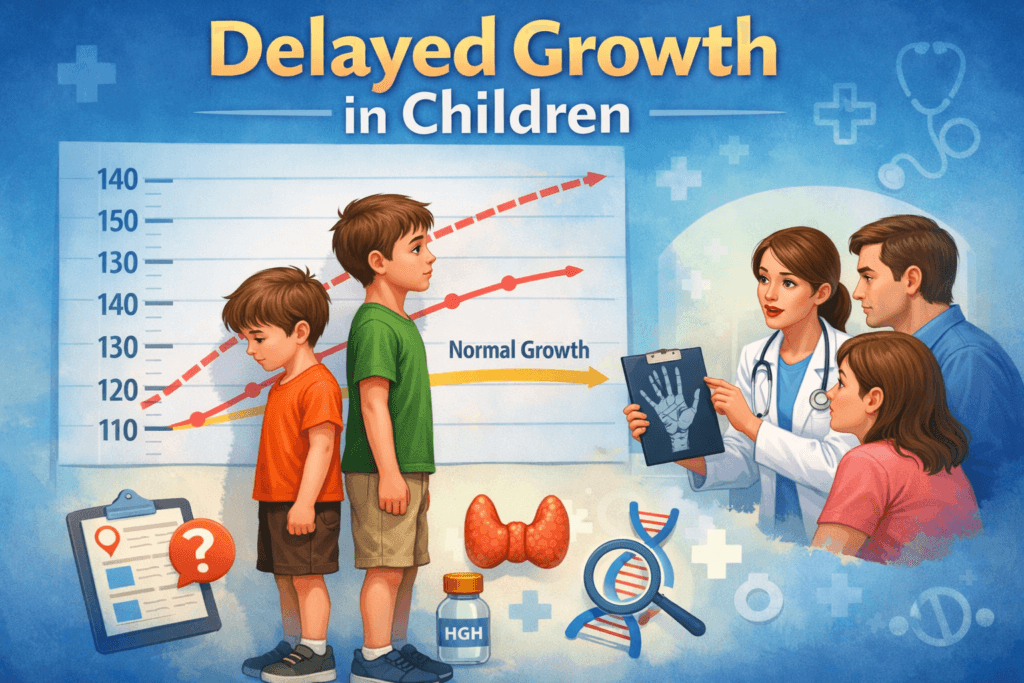
Delayed growth means a child is growing more slowly than expected for their age over a period of time. Doctors do not judge this by how tall a child looks compared to classmates, they rely on growth charts that track height, weight, and body mass index as a child gets older.
These charts help doctors see whether a child is following a healthy growth pattern or gradually falling behind. A child may be considered to have delayed growth when one or more of the following happens:
The child’s height falls below the 3rd percentile for their age and sex
The child grows fewer centimeters per year than expected
The child drops downward across growth percentiles instead of staying on the same curve
The child’s height is far below what would be expected based on the parents’ heights
It is important to understand that one single measurement does not diagnose delayed growth. Children grow in spurts, what matters most is the pattern of growth over months and years, not one clinic visit.
When growth slows consistently or stops following the child’s usual curve, it becomes a medical concern that needs evaluation.
Normal Variations vs True Growth Delay
Not every short child has a growth problem, some children are naturally smaller than others and are completely healthy.
Normal Growth Variations
Some growth patterns are considered normal and do not require treatment.
1. Familial short stature
This occurs when both parents are short and the child grows along a low percentile consistently. The child is small but healthy, and growth does not slow down unexpectedly.
2. Constitutional growth delay
These children grow more slowly in early childhood and often look younger than their peers. Puberty starts later than average, but once it begins, they experience a growth spurt and usually reach a normal adult height.
In both cases, the key feature is steady and predictable growth, even if the child is smaller than average.
True Growth Delay
True growth delay is different. It involves a change in the child’s growth pattern rather than lifelong small size.
Signs of true growth delay include:
A clear slowing of growth velocity
Dropping off the child’s previous growth curve
Delayed bone maturation seen on X ray
Abnormal laboratory test results suggesting illness or hormone imbalance
Children with true growth delay are not just short, their bodies are failing to grow at the expected rate, which often points to an underlying medical issue.
Why Growth Matters More Than Height
Growth is not just about how tall a child becomes. It is a reflection of how well the body is functioning overall.
Normal growth requires:
Adequate nutrition
Proper hormone balance
Healthy organs
A stable physical and emotional environment
When growth slows down, it may be an early warning sign of deeper problems such as:
Chronic medical illness
Hormonal disorders
Genetic conditions
Nutritional deficiencies
Ongoing emotional stress or neglect
In many children, poor growth appears before other symptoms become obvious. A child may seem active and generally well, yet their growth chart quietly shows something is wrong.
That is why delayed growth should never be ignored or dismissed without proper evaluation. Growth is one of the body’s most sensitive indicators of long-term health.
Common Causes of Delayed Growth in Children
Delayed growth rarely happens without a reason, in most cases, the body is responding to an underlying problem by slowing or stopping normal growth. Identifying the cause is essential because treatment works only when it targets the real issue.
1. Nutritional Deficiency
Inadequate nutrition is one of the most common causes of delayed growth worldwide.
Children need enough calories and the right balance of nutrients to support bone growth, muscle development, and hormone production. When nutrition is lacking, the body conserves energy by slowing growth.
Nutritional causes include:
Insufficient calorie intake
Protein deficiency
Iron deficiency
Zinc deficiency
Vitamin D deficiency
A child may appear to eat well yet still be malnourished. This often happens when diets are heavy in processed foods, sugary snacks, or refined carbohydrates but low in protein, fruits, vegetables, and healthy fats.
Restrictive diets, picky eating, food allergies, and feeding difficulties can also contribute. In some cases, children absorb nutrients poorly due to underlying digestive conditions, even when intake seems adequate.
2. Chronic Medical Conditions
Chronic illnesses commonly affect growth long before other symptoms become obvious.
When the body is under ongoing stress, energy is diverted away from growth and toward maintaining vital functions.
Examples include:
Chronic kidney disease
Congenital heart disease
Poorly controlled asthma
Chronic or recurrent infections
Gastrointestinal disorders causing malabsorption
Children with chronic disease may look relatively well at first but slowly fall behind on growth charts. This gradual decline is often one of the earliest signs that something is wrong.
3. Hormonal Disorders
Hormones play a central role in regulating growth and development. Disruption in hormone production or action can significantly slow growth even when nutrition is adequate.
Key hormonal causes include:
Growth hormone deficiency
Excess cortisol levels
Poorly controlled diabetes
Children with hormonal growth problems often have normal body proportions but grow very slowly year after year. They may appear younger than their age and lack the expected growth spurts seen in peers.
Hormonal disorders are often treatable, which makes early detection especially important.
4. Genetic and Chromosomal Conditions
Some children are born with genetic conditions that limit growth potential.
Examples include:
Skeletal dysplasias
Other rare chromosomal abnormalities
These conditions may cause distinctive physical features, developmental differences, or organ abnormalities. However, in some children, short stature or slow growth may be the only noticeable sign early on.
Genetic causes are usually suspected when growth delay is severe, persistent, or associated with other physical or developmental findings.
5. Delayed Puberty
Puberty is a major driver of growth, a significant portion of height gain occurs during pubertal growth spurts.
Children who enter puberty later than average may appear short compared to peers, even though they still have growth potential remaining. This pattern is common in constitutional growth delay, particularly in boys.
However, delayed puberty can also indicate underlying hormonal or systemic disease. Evaluation is necessary when puberty is extremely delayed or when poor growth is accompanied by other symptoms such as fatigue or weight loss.
6. Psychosocial Factors
Severe emotional stress, neglect, or unstable living environments can impair growth.
This condition, sometimes called psychosocial growth failure, occurs because chronic stress disrupts hormone release, appetite regulation, and sleep patterns.
Children in these situations may eat poorly, have behavioral changes, or show signs of emotional distress. Growth often improves significantly once the child is placed in a safe, supportive, and nurturing environment.
Warning Signs Parents Should Not Ignore
Parents should seek medical evaluation if a child:
Is significantly shorter than peers and continues to fall further behind
Has not grown noticeably over six to twelve months
Shows delayed puberty compared to peers
Has poor weight gain or unexplained weight loss
Appears fatigued, weak, or chronically unwell
Has developmental delays alongside poor growth
Growth delay combined with general symptoms such as tiredness, poor appetite, or frequent illness increases the likelihood of an underlying medical condition and should never be ignored.
How Doctors Evaluate Delayed Growth
1. Detailed Growth History
Doctors carefully review past height and weight measurements to assess growth velocity over time. This step is critical and often reveals patterns that point to the cause.
2. Family History
Parental heights, timing of puberty, and any inherited medical conditions help determine whether a child’s growth pattern may be familial or abnormal.
3. Physical Examination
The physical exam focuses on body proportions, signs of chronic illness, pubertal development, and any unusual physical features that may suggest a genetic condition.
4. Bone Age X Ray
A bone age X ray assesses skeletal maturity compared to the child’s actual age. Delayed bone age often suggests delayed puberty or hormonal deficiency, while normal bone age may point toward other causes.
5. Laboratory Tests
Depending on the findings, doctors may order targeted tests such as:
Complete blood count
Thyroid function tests
Growth hormone screening
Inflammatory markers
Kidney and liver function tests
Celiac disease screening
Testing is guided by clinical judgment, not done randomly.
Treatment Depends on the Cause
There is no single treatment for delayed growth. Management focuses on correcting the underlying problem.
1. Nutritional Intervention
When poor nutrition is the cause, improving calorie and nutrient intake can lead to significant catch up growth.
This may involve:
Adjusting diet composition
Nutritional supplementation
Treating conditions that impair nutrient absorption
2. Treating Chronic Illness
Proper management of chronic disease often restores normal growth patterns.
Examples include:
Improved asthma control
Treatment of kidney disease
Managing inflammatory or autoimmune conditions
3. Hormone Therapy
In selected cases, hormone replacement therapy is appropriate and effective.
This may include:
Growth hormone therapy
Thyroid hormone replacement
Puberty induction when medically indicated
Hormone therapy is not cosmetic. It is used only when a clear deficiency is diagnosed and is closely monitored by specialists.
4. Psychological and Environmental Support
A child’s emotional and living environment plays a powerful role in growth.
Chronic emotional stress, family instability, neglect, or lack of consistent caregiving can interfere with normal growth patterns. When a child is under constant stress, the body releases stress hormones that suppress appetite, disrupt sleep, and interfere with growth hormone release.
Children affected by psychological or environmental stress may eat poorly, have behavioral changes, or show delayed development alongside poor growth. Addressing these factors can lead to significant catch up growth. Improving family stability, ensuring emotional safety, establishing consistent routines, and providing psychological support often results in noticeable improvement, sometimes without the need for medical treatment.
Can Delayed Growth Be Reversed?
In many cases, delayed growth can be partially or fully reversed once the underlying cause is identified and treated.
Children often experience catch up growth when:
Nutritional deficiencies are corrected
Chronic illnesses are properly managed
Hormonal imbalances are treated
Emotional and environmental stressors are resolved
The best outcomes occur when intervention happens early. The longer growth delay goes untreated, the more growth potential may be permanently lost.
Timing matters because growth plates eventually close. Once this happens, lost height cannot be recovered.
Long Term Outcomes of Untreated Growth Delay
When delayed growth is not evaluated or treated, it can lead to lasting consequences beyond height.
Possible long term outcomes include:
Short adult stature below genetic potential
Delayed or incomplete sexual development
Reduced bone density and increased fracture risk
Psychological distress, low self esteem, and social difficulties
Early diagnosis and appropriate treatment significantly improve both physical health and emotional well being.
Common Myths About Delayed Growth
1. They will grow out of it
Some children do, especially those with constitutional growth delay, many do not. Assuming growth will normalize without monitoring is how serious conditions are missed. Growth patterns must be tracked, not guessed.
2. Short parents always have short children
Genetics influence height, but they do not protect against disease. Children from short families can still have hormonal disorders, chronic illness, or nutritional deficiencies that require treatment.
3. Growth hormone is dangerous
When prescribed appropriately and monitored by specialists, growth hormone therapy is generally safe and effective. Problems arise when it is used without proper diagnosis or follow up, not when used correctly.
When to Seek Specialist Care
Referral to a pediatric endocrinologist is appropriate when:
Growth velocity is clearly abnormal
Bone age is significantly delayed or advanced
Hormonal abnormalities are suspected
Growth failure remains unexplained after initial evaluation
Waiting without investigation risks missing conditions that are treatable only within a limited window of time.
Final Thoughts
Delayed growth in children is not simply about height or appearance, it is one of the most important indicators of a child’s overall health and development.
While some children naturally grow later than others, true growth delay follows a consistent and measurable pattern. When growth slows, stops, or falls off a child’s usual curve, it should never be ignored or explained away without proper evaluation. Careful tracking over time, early medical assessment, and treatment targeted at the underlying cause can change a child’s entire life trajectory.
Parents do not need to panic, but they do need to stay attentive. Growth charts are not paperwork, they are tools designed to detect problems early, often before a child looks visibly unwell. A change in growth pattern is the body’s way of signaling that something may be wrong beneath the surface.
When there is doubt, investigation is the safer choice. An extra clinic visit or test carries little risk. Missing a diagnosis carries consequences that may last a lifetime. Early attention protects growth, development, and long term well being.
👩⚕️ Need Personalized Health Advice?
Get expert guidance tailored to your unique health concerns through MuseCare Consult. Our licensed doctors are here to help you understand your symptoms, medications, and lab results—confidentially and affordably.
👉 Book a MuseCare Consult NowOther Blog Post you Might Like:
- 15 Real Causes of Stomach Pain in Children Every Parent Must Know
- 10 Powerful Reasons a Child Complains of Leg Pain + When to See a Doctor
- Frequent Fever in Children: 9 Hidden Causes Parents Must Not Ignore
- 10 Powerful Reasons Your Child Is Tired All the Time (And What to Do)
- Child Not Eating Properly: 17 Doctor-Backed Reasons Parents Must Know
- 15 Common Childhood Symptoms Explained: What’s Normal and When to Worry

Dr. Ijasusi Bamidele, MBBS (Binzhou Medical University, China), is a medical doctor with 5 years of clinical experience and founder of MyMedicalMuse.com, a subsidiary of Delimann Limited. As a health content writer for audiences in the USA, Canada, and Europe, Dr. Ijasusi helps readers understand complex health conditions, recognize why they have certain symptoms, and apply practical lifestyle modifications to improve well-being