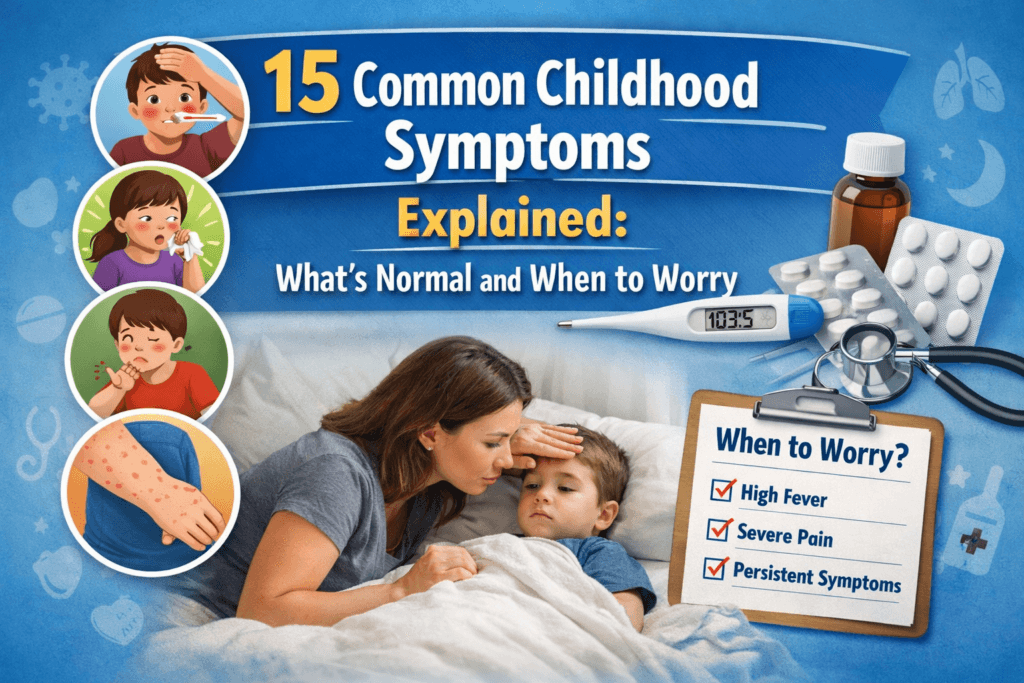
15 Common Childhood Symptoms Explained: What’s Normal and When to Worry
Common childhood symptoms can feel relentless, especially in the early years, when it seems like one illness barely ends before another begins. Runny noses, fevers, rashes, coughs, stomach aches, unusual behaviors, and disrupted sleep are all part of everyday life for many families, and even experienced parents can find themselves second guessing what they are seeing.
Is this just another normal phase of childhood, or is it a sign that something more serious is going on? The confusion is understandable, because children’s bodies respond differently from adults, and their symptoms can look dramatic even when the cause is mild. Many of these changes are simply the immune system learning how to recognize and fight new infections, especially as children are exposed to more people and environments.
At the same time, some symptoms are not meant to be watched and waited out, and ignoring them can delay needed care. The key is not trying to diagnose every cough or fever, but learning how to recognize patterns, understand what is typically normal at different ages, and spot the warning signs that deserve attention. This guide walks through the most common childhood symptoms in a clear, practical way, explaining what usually falls within the range of normal development and what should prompt concern, so parents can respond with confidence, reduce unnecessary worry, and know when it is truly time to seek medical help.
Why Children Get Sick So Often
Children are not just tiny adults, their immune systems are still developing, especially during the first five to seven years of life, which means they are more exposed to infections and react differently than grown-ups. Young children may experience six to ten viral infections per year, often have more frequent fevers than adults, show stronger reactions to mild illnesses, and display symptoms that can change quickly. This does not mean their immune system is weak, it is actively learning to recognize and fight a wide variety of germs. The challenge for parents is knowing which symptoms are a normal part of this learning process and which might indicate something more serious.
1. Understanding Fever in Children
Fever is one of the most common childhood symptoms, yet it is often misunderstood. A fever is generally defined as a rectal temperature of 38°C (100.4°F) or higher, or an oral temperature of 37.8°C (100°F) or higher. In most cases, fevers are caused by viral infections such as colds, influenza, or stomach viruses. Fever is the body’s natural defense mechanism, signaling that the immune system is working to fight off infection.
Typical patterns of normal childhood fever include lasting one to three days, responding well to fluids or fever reducers, and occurring in a child who is still able to play, drink, and interact between spikes. Fever itself is rarely dangerous, the child’s overall behavior and responsiveness are more important indicators of how well they are coping.
When to Worry
While most fevers are harmless, there are clear warning signs that require medical attention. Seek care if:
A baby under three months has any fever
Fever lasts more than three days
Temperature exceeds 40°C (104°F)
Child is lethargic, unresponsive, or difficult to wake
Fever is accompanied by stiff neck, severe headache, or confusion
Fever occurs with a rash that does not fade when pressed
Signs of dehydration appear, such as little or no urine for eight hours or dry lips and mouth
Fever is a symptom, not a diagnosis. Observing your child’s behavior, energy, and hydration levels often provides more insight than the thermometer alone. A child with a mild fever who is still alert, drinking fluids, and playing is usually coping well, while changes in behavior or prolonged symptoms should always prompt a call to your healthcare provider.
2. Coughs and Runny Noses
Coughs and runny noses are almost constant in childhood, especially once children start daycare or school and are exposed to other kids. For many parents, it can feel like their child is always sick, but most of the time, these symptoms are part of normal immune system development.
What Is Normal
Typical signs of a harmless cough or runny nose include clear or slightly yellow nasal discharge, a mild cough that may worsen at night, symptoms lasting up to 10 days, and recurrent colds throughout the year. It is completely normal for children to experience frequent respiratory symptoms, particularly during seasonal changes, as their bodies learn to fight off viruses.
When to Worry
While most colds resolve on their own, contact a healthcare provider if you notice:
A cough lasting longer than three weeks
Fast, labored, or noisy breathing
Bluish lips or fingertips
Wheezing or struggling to breathe
Persistent high fever accompanying the cough
Thick green nasal discharge lasting longer than 10 days with fever
Cough that triggers repeated vomiting
These warning signs may indicate conditions such as pneumonia, asthma, bronchitis, or sinus infections and should be addressed promptly.
3. Vomiting and Diarrhea
Stomach bugs are extremely common in children and are easily spread through schools, daycares, and playgrounds. Most cases are viral and usually resolve with rest and hydration, but it’s important to recognize when symptoms may be more serious.
What Is Normal
Common mild gastrointestinal symptoms include vomiting that lasts 24 to 48 hours, diarrhea for up to 5 to 7 days, mild abdominal cramps, and sometimes a low-grade fever. Children often recover quickly if they stay hydrated and get rest.
When to Worry
Seek medical attention if you notice:
Signs of dehydration, such as decreased urination, dry lips, or lethargy
Vomiting that persists beyond 48 hours
Blood or mucus in the stool
Severe abdominal pain
Inability to keep fluids down
Diarrhea lasting longer than 10 days
Green or yellow vomit
Infants and toddlers can dehydrate quickly, so monitoring fluid intake and being alert for early warning signs is crucial.
4. Rashes and Skin Changes
Children’s skin is sensitive and reacts to a wide range of triggers, from heat and friction to mild viral infections. Most rashes are harmless, temporary, and part of normal development.
What Is Normal
Common, non-threatening rashes include diaper rash, heat rash, mild eczema, viral rashes following a fever, and reactions to insect bites. Rashes that fade when pressed and do not cause significant discomfort are usually benign.
When to Worry
Seek urgent medical care if:
The rash does not fade when pressed
It is accompanied by high fever
It spreads rapidly or becomes painful
Purple or bruise-like spots appear
Swelling of the lips or face occurs
Rash appears after starting a new medication
Certain rashes can indicate serious infections or allergic reactions, so prompt evaluation is important.
5. Abdominal Pain
Children frequently complain of stomach pain, but most causes are minor and self-limiting. Normal abdominal pain can stem from gas, constipation, mild viral infections, stress, anxiety, or eating too quickly. Pain that comes and goes and does not interfere with play is usually not concerning.
When to Worry
Medical attention is warranted if:
Pain is severe or persistent
Pain is localized to the lower right abdomen
The child refuses to walk or move
Abdominal pain occurs with fever and vomiting
The abdomen is swollen or rigid
Blood appears in the stool
These symptoms could indicate appendicitis, bowel obstruction, or other urgent medical conditions.
6. Headaches
Occasional headaches are common in children and are often caused by dehydration, poor sleep, eye strain, or mild infections. Headaches that resolve with rest, hydration, or light treatment are usually harmless.
When to Worry
Consult a doctor if:
Headaches wake the child from sleep
Headaches worsen over time
Headaches follow a head injury
Vomiting occurs without nausea
Vision changes, weakness, or neurological symptoms develop
Headache is severe and sudden
These warning signs may require further evaluation to rule out more serious conditions.
7. Behavioral and Developmental Changes
Children go through emotional and behavioral phases as they grow. Temporary tantrums, separation anxiety, mood swings during growth spurts, and brief regression during stress or illness are generally normal and resolve over time with reassurance and support.
When to Worry
Seek professional advice if you notice:
Loss of previously learned skills
Lack of eye contact or social engagement
Delayed speech or movement milestones
Persistent aggression or withdrawal
Sudden, drastic changes in personality or behavior
Early evaluation of developmental or behavioral concerns can make a significant difference in a child’s long-term well-being.
8. Sleep Issues
Sleep patterns in children can vary widely, and occasional disruptions are often a normal part of growth. Night waking during growth phases, nightmares, resistance to bedtime, or changes in sleep habits during illness or routine shifts are all common and usually resolve as children mature. These experiences are often temporary and reflect natural developmental changes rather than underlying medical problems.
When to Worry
While most sleep disturbances are harmless, certain signs may indicate a more serious issue and warrant discussion with a healthcare provider. Seek professional advice if your child:
Snores loudly or has pauses in breathing during sleep
Experiences persistent insomnia that prevents adequate rest
Suffers night terrors that put them at risk of injury
Exhibits excessive daytime sleepiness or unusual fatigue
Shows sleep problems that affect growth, mood, or behavior
Untreated sleep disorders can impact both physical and cognitive development, so addressing persistent or severe problems early is important.
When to Trust Your Instincts
Parents often notice subtle changes before they become obvious symptoms. Your instincts are a valuable tool in protecting your child’s health. Always seek medical care if:
Your child appears very ill or unusually lethargic
Their behavior is not typical for them
Symptoms are worsening rather than improving
You simply feel that something is not right
Trusting your judgment is not overreacting, it is paying attention. Observing your child carefully, asking questions, and acting when something seems off are some of the most effective ways to ensure timely care.
Final Thoughts
Most childhood symptoms are part of normal growth, immune system development, and everyday exposure to germs. While it can be alarming to see a child with a fever, rash, cough, or stomach upset, the majority of these signs are the body’s way of learning to respond to its environment. The real skill for parents is pattern recognition, paying attention not just to the symptom itself, but to how severe it is, how long it lasts, and how your child is behaving overall.
A child who is eating well, staying hydrated, playing, and interacting with their surroundings is usually coping just fine, even if symptoms look dramatic. Conversely, a child who is unusually quiet, withdrawn, unresponsive, or whose condition is worsening requires attention, regardless of how mild the symptom may appear. Observing these patterns closely allows you to respond appropriately without unnecessary panic.
Knowledge and careful observation are your most powerful tools. You do not need to diagnose every cough, rash, or headache, your role is to notice changes, respond when needed, and advocate for your child’s health.
Trusting your instincts and seeking medical guidance when something feels wrong is not overreacting, it is responsible parenting. By staying informed, calm, and attentive, you can navigate childhood illnesses with confidence, you can distinguish between normal developmental symptoms and those that require medical attention, reduce unnecessary worry, and ensure your child receives timely care when it matters most.
Paying attention, asking questions, and acting early is more than enough because children thrive best when their caregivers are alert, informed, and responsive.

Dr. Ijasusi Bamidele, MBBS (Binzhou Medical University, China), is a medical doctor with 5 years of clinical experience and founder of MyMedicalMuse.com, a subsidiary of Delimann Limited. As a health content writer for audiences in the USA, Canada, and Europe, Dr. Ijasusi helps readers understand complex health conditions, recognize why they have certain symptoms, and apply practical lifestyle modifications to improve well-being