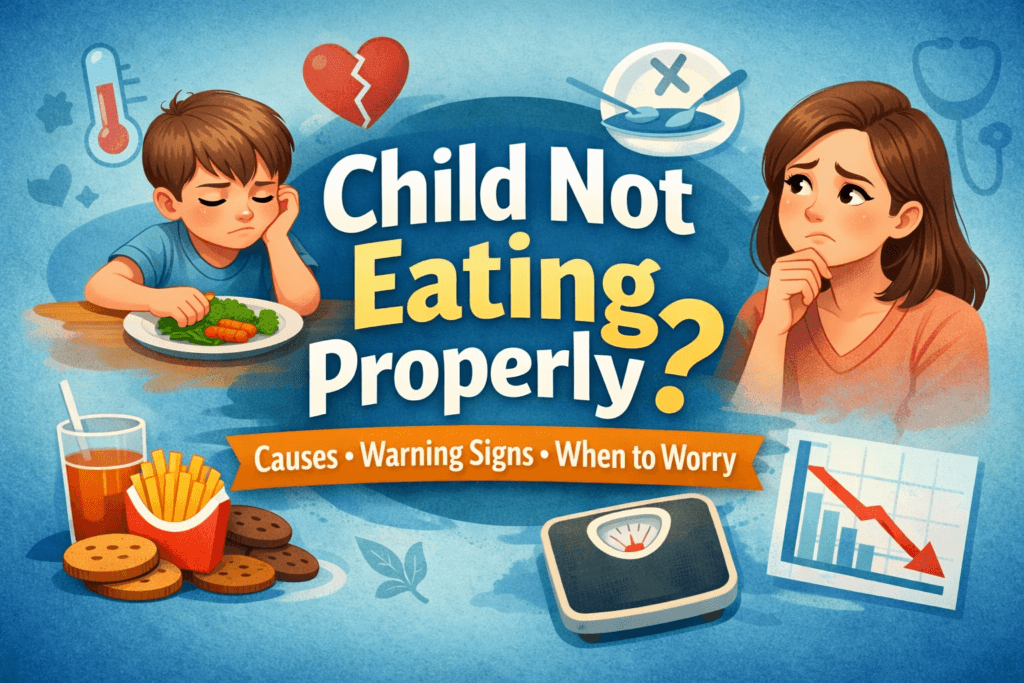
Child Not Eating Properly: 17 Doctor-Backed Reasons Parents Must Know
Few situations unsettle parents more than a child who refuses food, one skipped meal turns into daily concern. Plates come back untouched, snacks quietly replace proper meals and before long, eating stops feeling routine and starts feeling personal.
If you are worried that your child is not eating properly, you are far from alone. This is one of the most common reasons parents seek pediatric advice across the world, yet it is also one of the most misunderstood. Poor appetite in children is often judged emotionally rather than medically, which leads to unnecessary fear, pressure, and frustration at the table.
Here is the truth many parents are not told early enough, not every child who eats poorly has a problem. Appetite naturally rises and falls with growth, development, illness, and emotional changes. Some eating patterns are part of normal childhood, others are learned behaviors shaped by routine, pressure, or environment and a smaller portion genuinely signals an underlying issue that should not be ignored.
The challenge is knowing the difference, this guide is designed to replace panic with clarity. It explains what “not eating properly” actually means in medical terms, why children commonly lose interest in food, how appetite changes with age, and which signs deserve attention versus reassurance. Most importantly, it shows how to respond in a way that supports your child’s health without turning every meal into a struggle for control.
Understanding this properly does more than improve eating, it protects your child’s relationship with food for years to come.
What Does “Not Eating Properly” Really Mean?
Most parents use the phrase “not eating properly” emotionally, not medically. It usually reflects worry, frustration, or fear rather than a true health problem.
In everyday terms, a child who is not eating properly may:
Eat very small portions
Skip meals regularly
Refuse entire food groups
Eat only snacks or a narrow list of favorite foods
Suddenly lose interest in food
Take a very long time to eat but consume little
These behaviors look alarming on the surface, but by themselves they do not automatically signal a problem.
From a medical standpoint, eating becomes a concern only when it starts to affect a child’s overall health. Doctors look beyond the plate and focus on outcomes.
A child who eats less than expected but is growing steadily, has good energy, plays normally, sleeps well, and meets developmental milestones is usually doing fine, even if their eating habits seem odd or inconsistent.
On the other hand, a child who eats very little and shows signs such as weight loss, poor growth, low energy, frequent illness, or falling off their growth curve needs closer attention.
That distinction is critical, the goal is not to raise a child who eats “a lot,” but a child who is healthy.
Normal Appetite Changes by Age
Appetite is not stable throughout childhood, it rises and falls as the body grows, slows, fights illness, and adapts to new stages of development. Knowing what is normal for each age group removes a huge amount of unnecessary worry.
Infants (0 to 12 months)
Infants generally regulate their intake well. They eat when hungry and stop when full. Appetite naturally increases during growth spurts and decreases during illness or teething.
Problems often arise when adults try to control how much a baby eats rather than responding to hunger and fullness cues.
Red flags in infants include:
Poor or slowed weight gain
Persistent feeding refusal
Frequent vomiting
Choking or difficulty swallowing
If these are present, evaluation is needed. Otherwise, day-to-day variation in intake is normal.
Toddlers (1 to 3 years)
This is the peak age for picky eating and parental anxiety.
After the first year of life, growth slows dramatically. Appetite drops to match it. Many parents expect their toddler to eat like they did as a baby and assume something is wrong when that does not happen.
Toddlers are also discovering independence, food becomes one of the easiest ways to assert control.
Common and normal toddler behaviors include:
Eating very well one day and barely eating the next
Refusing foods they happily ate last week
Preferring simple, repetitive meals
Saying “no” to food as a form of independence
This is not a phase that needs fixing. It is a stage that needs structure and patience.
Preschool and School-Age Children (4 to 10 years)
At this stage, appetite becomes more predictable, but preferences take center stage. School routines, peer influence, screen time, and snacking habits strongly affect how much and how well children eat. Many children eat lightly at one meal and compensate later in the day. What matters is total intake over time, not perfection at each meal.
A child who eats inconsistently but maintains growth and energy is usually meeting their needs.
Adolescents (11 to 18 years)
Adolescence brings another major shift. Hormones, rapid growth, changing sleep patterns, emotional stress, and body image concerns all influence appetite. Some teenagers seem constantly hungry. Others skip meals regularly.
Occasional irregular eating is common. However, persistent restriction, rigid food rules, fear of weight gain, or unexplained weight loss deserve attention and support.
Common Reasons Children Do Not Eat Properly
Most eating difficulties fall into predictable, manageable categories.
1. Too Many Snacks and Drinks
This is the most common reason children refuse meals. Juice, milk, crackers, biscuits, and flavored drinks reduce hunger, a child who snacks frequently is simply not hungry when it is time to eat.
Liquid calories are especially misleading. Milk and juice can make a child feel full without providing balanced nutrition.
If your child drinks milk or juice close to mealtime, expect food refusal, this is not stubbornness, it is physiology.
2. Developmental Control and Autonomy
Food is one of the few areas children can fully control, refusing food is often about independence, not taste. The more pressure, persuasion, or emotional energy placed on eating, the more resistance builds.
This creates a power struggle that has nothing to do with nutrition and everything to do with control.
3. Illness or the Recovery Phase
Children naturally eat less when they are sick. Appetite often remains low during recovery as the body redirects energy toward healing.
This is temporary and normal, appetite returns as the body stabilizes. Forcing food during illness usually backfires and can create lasting food aversions.
4. Constipation
Constipation is a common and overlooked cause of poor appetite.
A child with a full, uncomfortable digestive system does not feel hungry, they may eat very little, feel bloated, or complain of stomach pain. Addressing constipation often improves appetite without any other intervention.
5. Iron Deficiency or Micronutrient Deficits
Iron deficiency can reduce appetite, energy, and interest in food. Zinc deficiency may alter taste and reduce hunger.
These deficiencies are common but should not be guessed,use blood tests t confirm them, supplements should only be used when deficiency is proven.
6. Sensory Sensitivities
Some children are highly sensitive to food textures, smells, temperatures, or combinations.
This is common in neurodivergent children but also occurs in many neurotypical children. These children are not being difficult or manipulative, their nervous systems genuinely experience food differently.
7. Emotional Stress
Stress affects appetite at any age, including childhood. School pressure, bullying, family conflict, changes at home, anxiety, or major transitions can suppress hunger.
Children rarely say, “I am stressed.” instead, they show it through behavior, including changes in eating.
When appetite changes suddenly, emotional factors should always be considered.
What Is NOT a Problem (But Often Feels Like One)
Many eating behaviors look alarming to parents but are harmless in a healthy child. Understanding what is normal prevents unnecessary pressure and power struggles.
1. Eating Small Portions
Children do not need adult-sized portions, their stomachs are small, and their energy needs change daily based on growth, activity, and health. A child may eat very little at one meal and more at another, this evens out over time.
Judging intake by how full the plate looks often leads to unnecessary worry, hunger cues are far more reliable than portion size. If a child is growing, active, and developing well, small portions are rarely a problem.
2. Food Jags
Food jags refer to eating the same food repeatedly for days or even weeks. This is extremely common, especially in toddlers and preschoolers, it reflects comfort and predictability, not nutritional deficiency.
Variety almost always returns on its own when pressure is removed, pushing new foods aggressively tends to extend the phase rather than shorten it.
Exposure without expectation works better than force.
3. Skipping Meals Occasionally
Missing a meal does not cause malnutrition. Children are very good at compensating, they often eat more at the next meal or later in the day without conscious planning.
Occasional skipped meals due to distraction, mood, or schedule changes are normal. Concern arises only when missed meals become frequent and affect growth or energy.
Signs That Eating Issues Need Attention
These signs matter far more than picky behavior or inconsistent intake.
Growth Concerns
Unintentional weight loss
Little or no weight gain over several months
A noticeable drop across growth chart percentiles
Growth patterns tell a clearer story than daily food intake.
Energy and Behavior Changes
Persistent fatigue
Increased irritability or mood changes
Poor concentration or school performance
Reduced interest in play or physical activity
Low energy often signals inadequate intake or an underlying issue.
Physical Symptoms
Hair thinning or excessive hair shedding
Pale skin
Frequent infections or slow recovery from illness
Ongoing constipation or abdominal pain
These signs suggest the body may not be getting what it needs.
Emotional Red Flags
Fear or distress around eating
Avoidance of meals or family eating situations
Anxiety linked to food or body image
Extreme restriction or rigid food rules
When eating becomes emotionally charged, support is essential. If several of these signs are present, professional evaluation is appropriate.
How Parental Behavior Affects Eating
This is uncomfortable but important, pressure does not improve eating, it reliably makes it worse.
Common well-intentioned mistakes include:
Forcing bites or “one more spoon” rules
Bargaining with dessert or screen time
Threats or punishment around food
Preparing multiple meals to avoid refusal
Commenting on how much or how little a child eats
These approaches teach children to ignore hunger cues and associate meals with stress or conflict. Over time, this undermines self-regulation and enjoyment of food. Calm consistency is more effective than control.
The Division of Responsibility in Feeding
This approach works because it aligns with how children develop autonomy.
Parents are responsible for:
What food is offered
When meals and snacks occur
Where eating happens
Children are responsible for:
Whether they eat
How much they eat
When parents respect this division, pressure decreases, trust increases, and most eating struggles gradually resolve.
Practical Strategies That Actually Help
1. Structure Meals and Snacks
Offer meals and snacks every 3 to 4 hours. Avoid constant grazing, hunger helps children approach meals with interest.
Water is appropriate between meals, milk and juice are not, as they reduce appetite.
2. Serve Balanced Meals Without Pressure
Each meal should include:
One familiar food
One protein source
One carbohydrate
One fruit or vegetable
Even if a child eats only the familiar item, exposure to other foods still counts. Repeated exposure builds acceptance over time.
3. Stop Commenting on Intake
Silence is powerful, avoid praising a child for eating more or showing disappointment when they eat less, both create pressure.
A neutral, calm presence helps children trust their own hunger signals.
4. Eat Together When Possible
Children learn more from observation than instruction. Shared meals model balanced eating, social connection, and routine. This often improves intake without any direct intervention.
5. Limit Mealtime Length
Twenty to thirty minutes is sufficient, when mealtime ends, remove the plate calmly and without commentary. Avoid chasing bites or offering replacement foods shortly after. This teaches structure without punishment.
6. Address Constipation Proactively
Constipation significantly suppresses appetite. Adequate fiber, fluids, physical activity, and routine toileting habits matter. Ignoring constipation often prolongs poor eating.
Supplements and Appetite Stimulants
This is where misinformation spreads quickly, multivitamins do not fix eating behavior.
Appetite syrups rarely address the underlying cause and can create reliance. Iron or zinc supplementation should only follow confirmed deficiency through testing.
There is no supplement that replaces healthy structure, patience, and routine.
When to See a Pediatrician or Specialist
Professional input is recommended if:
Growth is affected
Eating problems persist for several months
There is unexplained weight loss
Eating causes pain, choking, or gagging
Anxiety around food is intense or worsening
Depending on the situation, a pediatrician may involve a dietitian, feeding therapist, or mental health professional.
Cultural and Social Pressure Around Eating
Many cultures equate eating with health, obedience, and good parenting, this creates intense pressure and guilt.
A child refusing food is not rejecting your care or love, food struggles are not moral failures, they are a form of communication. Understanding this reduces blame and opens the door to healthier solutions.
What to Do During Illness or Recovery
During illness:
Offer small, frequent meals
Prioritize hydration
Accept reduced intake temporarily
Forcing food during illness often creates aversions that last longer than the illness itself. Appetite returns as recovery completes.
Long-Term Perspective
Healthy eating habits are built over years, not individual meals.
Children raised without pressure:
Learn to trust hunger and fullness
Develop healthier relationships with food
Are less likely to develop disordered eating patterns later
Short-term compliance may look successful, but it often causes long-term problems.
Frequently Asked Questions
Should I let my child go hungry?
No.
Your role is to offer food regularly and reliably. The child decides how much to eat. Hunger between meals teaches regulation, not deprivation.
What if my child only eats junk food?
Control availability, not consumption, do not keep constant access to junk foods. Serve balanced meals calmly and consistently. Children adapt to what is routinely available.
How long does picky eating last?
For most children, picky eating peaks between ages 2 and 6 and improves naturally. When it persists beyond that or worsens, an underlying issue is often present and worth exploring.
Final Thoughts
A child not eating properly does not automatically mean something is wrong. In many cases, it reflects normal development, shifting appetite, or temporary life changes rather than illness or neglect.
Most eating challenges in childhood are manageable when approached with structure, patience, and consistency. They rarely require force, special tricks, or constant intervention, what matters far more than how much a child eats at a single meal is how they grow, how they feel, and how they function day to day.
Growth patterns, energy levels, mood, and overall well-being provide clearer answers than clean plates ever will, your role as a parent is not to control intake or monitor every bite. It is to provide regular meals, balanced options, and a calm environment where food is available without pressure or judgment.
When eating feels safe, predictable, and free of conflict, most children naturally regulate their intake over time. They learn to listen to hunger, stop when full, and meet their needs without being forced.
Healthy eating is not built through fear or control, it is built through trust, routine, and time.

Dr. Ijasusi Bamidele, MBBS (Binzhou Medical University, China), is a medical doctor with 5 years of clinical experience and founder of MyMedicalMuse.com, a subsidiary of Delimann Limited. As a health content writer for audiences in the USA, Canada, and Europe, Dr. Ijasusi helps readers understand complex health conditions, recognize why they have certain symptoms, and apply practical lifestyle modifications to improve well-being