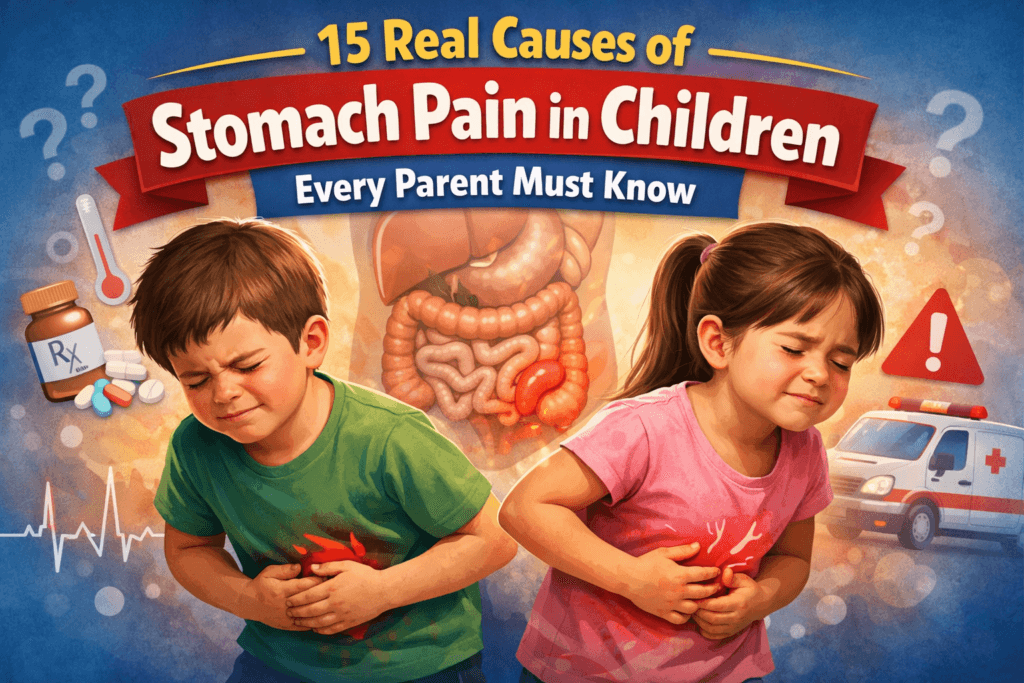
15 Real Causes of Stomach Pain in Children Every Parent Must Know
Stomach pain in children is so common that many parents are tempted to ignore it. After all, kids complain about their tummy all the time, sometimes it is gas, sometimes it is constipation, sometimes it disappears as quickly as it came but sometimes, it does not.
In a small but critical number of cases, stomach pain is the body’s early warning system. It can be the first sign of infection, inflammation, or a condition that worsens rapidly if missed. The problem is not that parents don’t care, the problem is that harmless and dangerous causes often look the same at the beginning. This is where most mistakes happen.
This guide breaks down stomach pain in children in a clear, practical way. You will learn the real causes, how pain behaves at different ages, the warning signs that should never be ignored, and how to decide when home care is enough versus when a doctor must be involved, the goal is not to scare you, the goal is to help you recognize the difference before it becomes costly.
Why Stomach Pain Is So Common in Children
Stomach pain is extremely common in children because their bodies are still learning how to function smoothly. The digestive system is not fully mature, the nerves in the gut are more sensitive, and the immune system is still developing. This makes children more reactive to changes that adults may barely notice.
Eating habits also play a role, children often eat irregularly, skip meals, overeat certain foods, or consume things that irritate the stomach. These patterns can easily trigger discomfort, another major factor is stress.
Children process stress physically more than adults. A child may not have the words to say “I feel anxious” or “I am overwhelmed.” Instead, the body sends the signal through the stomach. This is why emotional stress often shows up as abdominal pain rather than verbal complaints.
Most stomach pain in children is not dangerous and resolves on its own. However, a small but important number of cases are linked to infections, inflammation, or conditions that worsen if ignored.
Recognizing patterns is what separates harmless pain from pain that needs attention.
How Children Describe Stomach Pain
Children rarely describe pain accurately, and this matters more than many parents realize. A child may say their “stomach hurts” but point to the chest, sides, lower abdomen, or even the lower back.
Younger children may not understand location at all, instead of describing pain, they may cry, refuse food, curl up, become unusually quiet, or cling to caregivers.
The way pain is expressed changes with age.
Toddlers and Preschoolers
Young children often show pain rather than explain it, they may cry excessively, pull their legs toward their chest, vomit, or refuse to eat. They usually cannot describe how bad the pain is or exactly where it hurts. Behavior changes are often the biggest clue.
School Age Children
Children in this age group can usually point to where it hurts but may exaggerate or downplay symptoms. Fear of doctors, school avoidance, or desire for attention can influence how pain is described. This does not mean the pain is fake. It means interpretation requires context.
Teenagers
Teenagers can usually describe pain clearly but may hide symptoms due to embarrassment, fear of tests, or not wanting to appear weak. Some may delay reporting pain until it becomes severe.
Pain should never be dismissed based on how calm, dramatic, or quiet a child appears. Behavior does not reliably reflect severity.
Common Causes of Stomach Pain in Children
1. Indigestion and Gas
Indigestion and gas are the most common causes of stomach pain in children.
Eating too quickly, overeating, drinking carbonated beverages, or consuming spicy and fatty foods can lead to bloating and discomfort. The pain often comes and goes and may improve after burping or passing gas.
This type of pain is usually mild, short lived, and not associated with fever, persistent vomiting, or serious illness.
2. Constipation
Constipation is one of the most frequent causes of chronic or recurring stomach pain in children and is often missed.
Common signs include:
Infrequent bowel movements
Hard, dry, or painful stools
Large stools that may clog the toilet
Belly pain that improves after passing stool
Constipation can cause daily discomfort, reduced appetite, irritability, and vomiting when severe. Some children appear to have diarrhea but are actually constipated, with loose stool leaking around hard stool.
Many children are constipated without parents realizing it.
3. Gastroenteritis (Stomach Flu)
Gastroenteritis is caused by viral or bacterial infections of the digestive tract.
Typical symptoms include:
Crampy abdominal pain
Vomiting
Diarrhea
Fever
Fatigue
The pain is usually spread across the abdomen rather than localized to one spot. Vomiting and diarrhea often occur within hours of the pain starting. The biggest danger is dehydration, especially in younger children. The pain itself is usually not the main threat.
4. Food Intolerance or Allergy
Some children have difficulty digesting certain foods such as lactose or gluten.
Symptoms may include:
Stomach pain after eating
Bloating
Diarrhea
Nausea
Food intolerance causes discomfort but is not immediately life threatening. Food allergies, however, can cause rashes, swelling of the lips or face, breathing difficulty, or sudden vomiting, these symptoms require urgent medical care.
Food related pain is often recurring and closely linked to meals or specific foods.
5. Anxiety and Stress Related Pain
Stress related stomach pain is real and physical. It is not imagined.
School pressure, bullying, exams, family conflict, or fear can trigger abdominal pain. This type of pain is often referred to as functional abdominal pain.
Common clues include:
Pain occurring mostly on school days
Normal physical exams and test results
Pain that improves on weekends or during holidays
The gut and brain are closely connected through the nervous system. Emotional distress can change gut movement, increase sensitivity, and cause genuine pain without visible disease.
Addressing stress is as important as addressing diet or digestion.
6. Appendicitis
Appendicitis is a medical emergency and one of the most important causes of stomach pain parents must recognize early.
The pain usually follows a predictable pattern:
It often starts around the belly button
Within hours, it shifts to the lower right side of the abdomen
The pain becomes sharper and more intense over time
Movement, coughing, or jumping makes it worse
Other symptoms commonly appear alongside the pain, including fever, nausea, vomiting, and loss of appetite. Children with appendicitis often refuse to walk, jump, or stand up straight, they may lie still because movement increases the pain.
Unlike gas or indigestion, appendicitis pain does not come and go, it steadily worsens. Waiting it out is dangerous and can lead to rupture, infection, and serious complications.
7. Urinary Tract Infection
Urinary tract infections can cause stomach pain, especially in younger children who cannot clearly describe urinary symptoms.
The pain is often felt in the lower abdomen and may be accompanied by:
Pain or burning during urination
Frequent urination or accidents in toilet trained children
Fever
Strong or foul smelling urine
Infants and toddlers may show only fever, irritability, or poor feeding. Girls are affected more often than boys due to anatomy. UTIs require medical treatment, ignoring them can lead to kidney infection and long term complications.
8. Intestinal Worms
Intestinal worms remain a common cause of stomach pain in many parts of the world.
Symptoms may include:
Recurrent or persistent stomach pain
Poor weight gain or slow growth
Itching around the anus, especially at night
Restless sleep or teeth grinding
Some children have few symptoms, while others experience daily discomfort and fatigue.
Diagnosis is usually straightforward, and treatment is simple and effective. The key is considering it as a possibility, especially in areas where worms are common.
9. Acid Reflux
Children can experience acid reflux just like adults, and it often goes unrecognized.
Symptoms may include:
Burning or aching pain in the upper abdomen or chest
Pain after meals
Sour or bitter taste in the mouth
Nausea or frequent burping
Reflux pain often worsens when lying down or bending forward. Some children avoid eating because they associate meals with discomfort.
Diet changes and medical treatment usually bring significant relief once reflux is identified.
10. Serious but Less Common Causes
Some causes of stomach pain are less common but potentially serious.
These include:
Inflammatory bowel disease
Pancreatitis
These conditions often cause severe or persistent pain and are usually accompanied by additional warning signs such as repeated vomiting, blood in the stool, poor growth, or extreme fatigue.
These are not conditions to manage at home. Prompt medical evaluation is essential.
Location of Pain and What It Can Mean
The location of stomach pain can offer helpful clues, although it is not always exact in children.
Upper abdomen: reflux, gastritis, indigestion
Around the belly button: gas, constipation, early appendicitis
Lower right side: appendicitis
Lower abdomen: constipation, urinary tract infection
Left side: constipation, gas
Pain that shifts location, becomes localized, or steadily intensifies deserves closer attention.
Red Flags You Must Not Ignore
Seek medical care immediately if a child has:
Severe or worsening pain
Pain that wakes them from sleep
Persistent vomiting
Green or bloody vomit
Blood in stool
High or persistent fever
A rigid or swollen abdomen
Pain that worsens with walking or jumping
Unexplained weight loss
Yellowing of the eyes or skin
These are not symptoms to watch and wait. They require prompt evaluation.
When Stomach Pain Is Likely Not Serious
Stomach pain is more likely to be benign when:
The child remains active and playful
The pain comes and goes rather than steadily worsening
There is no fever or ongoing vomiting
Appetite is mostly normal or only mildly reduced
Pain improves after a bowel movement
Even then, repeated or long lasting pain should not be dismissed.
What Parents Can Do at Home
Observe Carefully
Pay attention to when the pain starts, where it is felt, what makes it better or worse, and any accompanying symptoms. Patterns are often more informative than single episodes.
1. Encourage Fluids
Dehydration can worsen stomach pain. Offer small, frequent sips of water or oral rehydration solutions.
2. Do Not Force Food
Let the child’s appetite guide eating. Forcing food can worsen nausea and discomfort.
3. Address Constipation
Ensure adequate fiber intake, proper hydration, and regular toilet routines. Constipation rarely fixes itself without attention.
4. Avoid Random Medications
Do not repeatedly give painkillers without understanding the cause. Avoid aspirin in children.
5. Comfort Without Panic
Calm reassurance helps reduce anxiety related pain and allows clearer observation of symptoms.
What Doctors Look For
When evaluating stomach pain, doctors consider:
The pattern and progression of pain
Location and severity
Presence of fever or vomiting
Growth, weight, and overall development
Stool and urine habits
Depending on findings, tests may include:
Blood tests
Urine tests
Stool tests
Ultrasound or other imaging
Not every child needs testing. Careful clinical judgment is often more valuable than excessive investigations.
Chronic or Recurrent Stomach Pain
If stomach pain lasts longer than two months or keeps returning, it requires proper evaluation.
Common causes include:
Constipation
Functional abdominal pain
Food intolerance
Stress related pain
Chronic pain is rarely life threatening, but it can significantly affect school performance, sleep, mood, and overall quality of life. Ignoring it is not the solution.
The Role of Diet
Diet plays a larger role in childhood stomach pain than many parents realize.
Helpful habits include:
Regular, balanced meals
Adequate fiber intake
Limiting sugary drinks
Reducing ultra processed foods
Keeping a simple food and symptom diary can help identify triggers and patterns that are otherwise easy to miss.
Emotional Health and the Gut
The gut has its own complex nervous system that communicates constantly with the brain.
Stress can slow digestion, increase sensitivity, and cause real physical pain. Addressing emotional stressors is just as important as treating physical symptoms. This does not mean the pain is imagined. It means the cause is multifactorial.
When to Trust Your Instincts
Parents know their children better than anyone else, if something feels wrong, seek medical care even if symptoms seem mild. Many serious conditions begin subtly before becoming obvious.
Doctors would always prefer to see a child early rather than after complications have developed.
Final Thoughts
Stomach pain in children is common, but it should never be brushed aside or normalized without thought. While many episodes are harmless and resolve with time, observation, and simple home care, a small but important number are early signals of serious illness.
The difference is not luck, it is awareness. Paying attention to patterns, recognizing red flags, and noticing changes in behavior make all the difference. A child who looks different, acts different, or hurts in a way that does not fit the usual pattern deserves closer attention. Parents do not need to panic at every complaint, but they do need to stay alert and engaged.
Trusting your instincts matters, you see your child every day. You know when something is off, even if you cannot explain it perfectly. Seeking medical care early is never a failure or an overreaction, it is prevention.
When in doubt, have the child evaluated, the cost of an extra doctor visit is small, the cost of missing a serious diagnosis can be life changing.
👩⚕️ Need Personalized Health Advice?
Get expert guidance tailored to your unique health concerns through MuseCare Consult. Our licensed doctors are here to help you understand your symptoms, medications, and lab results—confidentially and affordably.
👉 Book a MuseCare Consult NowMust Read:
- 15 Common Childhood Symptoms Explained: What’s Normal and When to Worry
- Child Not Eating Properly: 17 Doctor-Backed Reasons Parents Must Know
- 10 Powerful Reasons Your Child Is Tired All the Time (And What to Do)
- Frequent Fever in Children: 9 Hidden Causes Parents Must Not Ignore
- 10 Powerful Reasons a Child Complains of Leg Pain + When to See a Doctor

Dr. Ijasusi Bamidele, MBBS (Binzhou Medical University, China), is a medical doctor with 5 years of clinical experience and founder of MyMedicalMuse.com, a subsidiary of Delimann Limited. As a health content writer for audiences in the USA, Canada, and Europe, Dr. Ijasusi helps readers understand complex health conditions, recognize why they have certain symptoms, and apply practical lifestyle modifications to improve well-being