⚠️ Affiliate Disclaimer: This post may contain affiliate links, which means I may earn a small commission at no extra cost to you, if you make a purchase through one of these links. I only recommend products or services I genuinely trust and believe can provide value. Thank you for supporting My Medical Muse!
Night Sweating in Children: Causes, Red Flags, and When to Worry
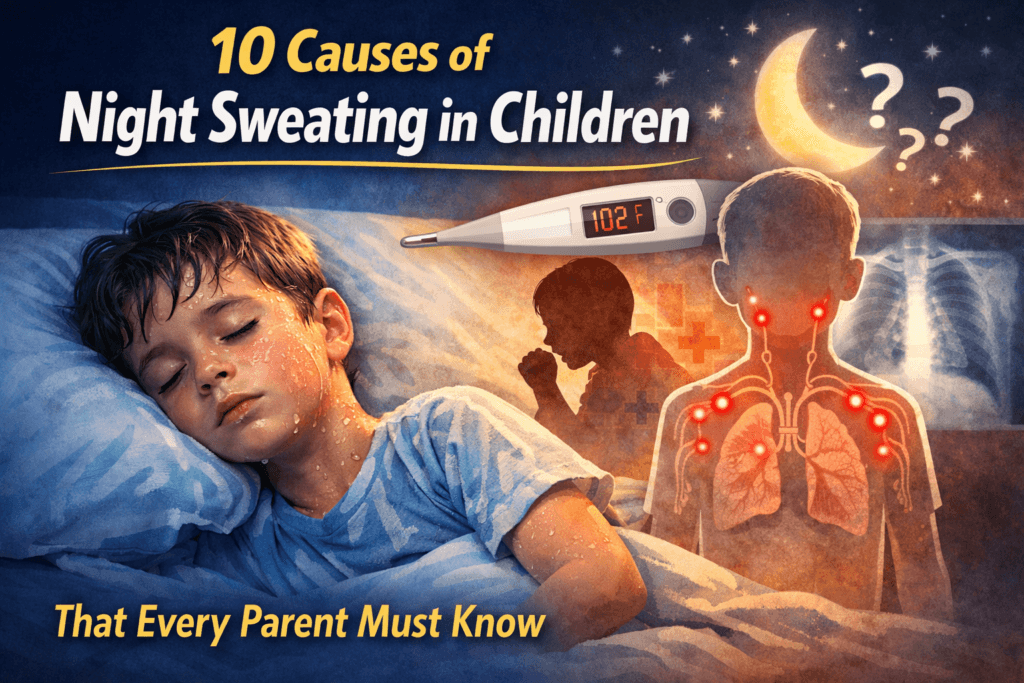
Night sweating in children is a common complaint, but it is also one of the most misunderstood. Many parents panic when they find their child soaked in sweat at night, while others dismiss it as normal and ignore warning signs that deserve attention.
The truth sits in the middle, night sweats can be completely harmless, they can also be an early signal of infection, hormonal imbalance, sleep disorder, or in rare cases, serious disease. The key is not fear, the key is pattern recognition.
This guide breaks down everything parents need to know about night sweating in children, including what is normal, what is not, why it happens, and when medical evaluation is necessary.
What Is Night Sweating?
Night sweating refers to excessive sweating during sleep that soaks clothing, bed sheets, or pillows and is not explained by a hot environment or heavy blankets.
This is different from mild sweating, all humans sweat during sleep children included. Night sweats become clinically relevant when they are:
Recurrent
Profuse
Disruptive
Associated with other symptoms
A child waking up slightly damp is normal, achild waking up drenched night after night is not something to ignore.
Why Children Sweat More at Night
Children are not small adults, their bodies regulate temperature differently.
Several factors make children more prone to night sweating:
Immature nervous system
Higher metabolic rate
Active deep sleep cycles
Smaller body surface area
Developing sweat gland regulation
In many cases, night sweating reflects normal physiology rather than disease but context matters.
Common Harmless Causes of Night Sweats in Children
Not all night sweating signals illness infact, most cases in children are harmless and related to normal physiology or environmental factors. Understanding these common causes helps parents avoid unnecessary anxiety while staying alert to real warning signs.
1. Warm Sleeping Environment
This is the most common and most overlooked cause of night sweats in children.
Children often sleep in conditions that trap heat, including:
Heavy blankets
Thick or non-breathable pajamas
Poor room ventilation
High room temperatures, especially in tropical climates
Children also generate more heat during sleep than adults relative to their body size. When excess heat cannot escape, the body responds by sweating to cool itself.
A simple test is environmental adjustment. If night sweating stops when the room is cooler, bedding is lighter, or clothing is breathable, the cause is environmental and not medical.
This type of night sweating is harmless and does not require treatment beyond optimizing sleep conditions.
2. Deep Sleep and Night Sweats
Children spend a large proportion of their sleep in deep slow-wave sleep. This stage of sleep is more intense in younger children than in adolescents or adults.
During deep sleep:
The nervous system is highly active
Temperature regulation fluctuates
Sweat glands may activate even when body temperature is normal
This phenomenon is especially common in:
Toddlers
Preschool-aged children
Early school-age children
These children may sweat heavily during the night but wake up in the morning appearing well, active, and energetic. They have no fever, no weight loss, and no daytime symptoms.
This pattern is considered benign and reflects normal neurological development rather than disease.
3. Fever Recovery
Night sweats commonly occur during recovery from illness. After a fever, the body works to restore normal temperature regulation. Sweating is one of the mechanisms used to release excess heat, particularly during sleep when temperature control shifts.
Night sweating may be seen:
During recovery from viral infections
After bacterial infections treated with antibiotics
When a fever breaks while the child is asleep
As long as the child’s overall condition is improving, appetite is returning, and energy levels are normalizing, post-illness night sweating is expected and self-limiting.
This type of sweating usually resolves completely within days to weeks without intervention.
4. Overactive Sweat Glands
Some children naturally sweat more than others. This tendency may be noticeable both day and night.
Common areas include:
Palms
Soles of the feet
Armpits
Scalp
If excessive sweating occurs during the day as well as at night, and the child is otherwise healthy, this may represent primary hyperhidrosis.
Primary hyperhidrosis is a benign condition related to increased sweat gland activity rather than underlying disease. It does not affect growth, development, or long-term health.
Medical Causes of Night Sweating in Children
When night sweats are persistent, unexplained, or accompanied by other symptoms, medical causes must be considered. These cases require careful evaluation rather than reassurance alone.
1. Infections
Infections are the most important category to rule out in children with ongoing night sweats.
- Tuberculosis
Although uncommon in many regions, tuberculosis remains a critical diagnosis to consider, particularly in high-risk settings.
Red flags include:
Persistent night sweats
Unexplained weight loss
Chronic cough
Prolonged fever
Fatigue or reduced activity
Risk is higher with known exposure or living in areas where tuberculosis is prevalent. Night sweats in isolation do not diagnose tuberculosis, but their presence alongside these symptoms warrants urgent evaluation.
- Chronic Bacterial Infections
Certain bacterial infections can cause sustained inflammation, leading to night sweats.
Examples include:
Osteomyelitis
Deep-seated abscesses
These conditions are usually accompanied by additional signs such as fever, pain, poor appetite, or failure to thrive. Persistent night sweats without improvement should never be ignored in these cases.
- Viral Infections
Some viral illnesses can lead to prolonged sweating, especially during the recovery phase.
Notable examples include:
Epstein-Barr virus
Cytomegalovirus
These infections are often associated with fatigue, enlarged lymph nodes, and prolonged weakness. Night sweats typically resolve as recovery progresses.
2. Hormonal and Endocrine Causes
- Hyperthyroidism
An overactive thyroid increases metabolic activity and heat production throughout the body.
Possible signs include:
Night sweats
Weight loss despite a good appetite
Palpitations
Anxiety or irritability
Tremors
Heat intolerance
Hyperthyroidism is uncommon in children but potentially serious. Early recognition is essential.
- Early Puberty
Hormonal changes during early puberty can trigger increased sweating, including at night.
This is more common in preteens and is often accompanied by:
Breast development in girls
Body odor changes
Growth spurts
Mood changes
When night sweats coincide with normal pubertal development and no other concerning symptoms, they are usually physiological.
3. Sleep Disorders
- Obstructive Sleep Apnea
Children with obstructive sleep apnea may sweat excessively at night due to increased effort required to breathe during sleep.
Common risk factors include:
Enlarged tonsils or adenoids
Obesity
Chronic mouth breathing
Loud snoring
Restless or fragmented sleep
Night sweats associated with snoring, breathing pauses, or gasping during sleep should always prompt medical assessment. Sleep-disordered breathing is treatable, and early intervention improves long-term outcomes.
4. Gastroesophageal Reflux Disease
Some children experience night sweats related to gastroesophageal reflux episodes that occur during sleep.
When stomach contents flow back into the esophagus, especially while lying flat, the body may respond with autonomic activation. This response can include sweating, restlessness, and sleep disruption.
Clues that point toward reflux-related night sweats include:
Night coughing
Regurgitation or sour-smelling breath
Chest or upper abdominal discomfort
Frequent waking from sleep
Poor overall sleep quality
This pattern is more common in infants and young children, whose lower esophageal sphincter is still developing. In older children, reflux-related night sweats are usually accompanied by other clear reflux symptoms.
Night sweats alone do not diagnose reflux, but when combined with these features, reflux should be considered.
5. Anxiety and Stress
Children experience stress differently from adults, and they often express emotional distress through physical symptoms rather than words.
Night sweats may occur in children who:
Are anxious or highly sensitive
Experience frequent nightmares or night terrors
Have separation anxiety
Are under academic, social, or family-related pressure
In these cases, sweating is part of a broader autonomic nervous system response. The body enters a heightened state of arousal during sleep, triggering sweating even in the absence of fever or illness.
Stress-related night sweats are often accompanied by restless sleep, frequent waking, or difficulty falling asleep. During the day, the child may appear tense, irritable, or emotionally overwhelmed.
Identifying and addressing the source of stress often leads to resolution of symptoms.
Rare but Serious Causes
These causes are uncommon, but they must be discussed honestly to ensure early detection when present.
1. Malignancy
Certain cancers, particularly lymphomas, can cause night sweats in children. This occurs due to sustained inflammatory and metabolic activity within the body.
Red flags that raise concern include:
Persistent, painless lymph node swelling
Unexplained weight loss
Ongoing fatigue
Recurrent or persistent fever
Bone pain or unexplained aches
It is important to be clear. Night sweats alone do not indicate cancer, many healthy children sweat at night. Concern arises only when night sweats occur alongside these additional warning signs.
When these features are present, urgent medical evaluation is required.
Red Flags Parents Must Never Ignore
Night sweating becomes concerning when it is associated with any of the following:
Unexplained weight loss
Persistent or recurrent fever
Chronic cough
Breathing difficulty
Loud snoring with breathing pauses
Poor growth or faltering height and weight gain
Fatigue or weakness
Enlarged or persistent lymph nodes
Recurrent or unusual infections
Behavioral or personality changes
When these signs appear, reassurance alone is not appropriate, medical investigation is necessary.
How Doctors Evaluate Night Sweats in Children
Medical evaluation focuses on patterns and associated symptoms, not just the presence of sweating.
Key Questions Doctors Ask
Doctors aim to understand the full context by asking:
How often does the night sweating occur?
How severe is it?
Does it soak clothes and bedding?
When did it start?
Are there fevers, even low-grade ones?
Has the child lost weight or stopped gaining weight?
Are there symptoms such as cough, pain, or breathing problems?
Is there a family history of thyroid disease or chronic infections?
These questions help separate benign causes from conditions that require further investigation.
Physical Examination
A careful physical examination provides essential clues. Doctors assess:
Growth patterns and growth charts
Lymph node size and location
Tonsil and adenoid size
Signs of infection or inflammation
Thyroid enlargement
Heart and lung function
Often, the examination alone provides reassurance.
Tests That May Be Ordered
Tests are ordered only when clinically indicated. Not every child with night sweats needs investigations.
Possible tests include:
Complete blood count
Inflammatory markers
Chest X-ray
Tuberculosis screening
Thyroid function tests
Sleep study if obstructive sleep apnea is suspected
Unnecessary testing increases anxiety and rarely provides useful answers. Targeted testing, guided by clinical findings, prevents missed diagnoses.
What Parents Can Do at Home
Before assuming illness, parents should optimize basic factors that commonly contribute to night sweats.
1. Improve the Sleep Environment
Dress the child in light, breathable cotton pajamas
Avoid heavy or layered blankets
Keep the bedroom cool and well ventilated
Avoid overheating at bedtime
Simple environmental changes often resolve symptoms completely.
2. Observe Patterns
Parents should pay attention to trends rather than isolated events.
Track:
How often night sweats occur
How severe they are
Any associated symptoms
Daytime energy and behavior
Weight and growth changes
Patterns matter far more than single episodes.
3. Avoid Self-Diagnosis
Internet searches often jump straight to worst-case scenarios. Night sweats are a symptom, not a diagnosis.
Interpreting them without context leads to unnecessary fear.
When to See a Doctor
Medical advice should be sought if:
Night sweats occur most nights
Sweating is profuse and persistent
The child appears unwell
Red flag symptoms are present
A parent feels something is not right
Parental intuition is valuable and should not be dismissed.
What Night Sweats Are Not
Night sweats are not:
Always an infection
Always cancer
Always hormonal
Always psychological
Most cases are benign, some are not. The difference lies in consistency, associated symptoms, and overall child wellbeing.
Final Thoughts
Night sweating in children is common, but it should never be dismissed without thought.
In most cases, the cause is harmless. Simple factors like sleep environment, deep sleep patterns, or recovery from minor illness explain the symptoms, and they resolve without treatment. At the same time, a small but important number of cases represent early warning signs of underlying medical conditions that require attention.
The goal is not panic, panic clouds judgment. The goal is awareness.
Children often lack the language to describe what they feel, their bodies communicate through patterns instead. Parents and caregivers are the first interpreters of those signals. Paying attention to frequency, severity, and associated symptoms matters more than reacting to a single episode.
When night sweats are isolated and the child is thriving, reassurance is appropriate. When night sweats are persistent, worsening, or accompanied by red flags, evaluation is not optional. It is responsible.
Good care lives in balance, avoid over-medicalizing what is normal. Do not ignore what is abnormal, use observation, logic, and timely medical input when needed.
That balance protects children, prevents delayed diagnoses, and spares families unnecessary fear.m Awareness, not alarm, keeps children safe.
👩⚕️ Need Personalized Health Advice?
Get expert guidance tailored to your unique health concerns through MuseCare Consult. Our licensed doctors are here to help you understand your symptoms, medications, and lab results—confidentially and affordably.
👉 Book a MuseCare Consult NowMust Read:
- Headaches in Children: 11 Powerful Causes Every Parent Must Know
- Delayed Growth in Children: 9 Shocking Causes Parents Must Never Ignore
- 15 Real Causes of Stomach Pain in Children Every Parent Must Know
- 10 Powerful Reasons a Child Complains of Leg Pain + When to See a Doctor
- Frequent Fever in Children: 9 Hidden Causes Parents Must Not Ignore
- 15 Common Childhood Symptoms Explained: What’s Normal and When to Worry

Dr. Ijasusi Bamidele, MBBS (Binzhou Medical University, China), is a medical doctor with 5 years of clinical experience and founder of MyMedicalMuse.com, a subsidiary of Delimann Limited. As a health content writer for audiences in the USA, Canada, and Europe, Dr. Ijasusi helps readers understand complex health conditions, recognize why they have certain symptoms, and apply practical lifestyle modifications to improve well-being