
👩⚕️ Need Personalized Health Advice?
Get expert guidance tailored to your unique health concerns through MuseCare Consult. Our licensed doctors are here to help you understand your symptoms, medications, and lab results—confidentially and affordably.
👉 Book a MuseCare Consult Now7 Game‑Changing Benefits of Vitamin K2 for Your Metabolic Health
Have you ever thought that one nutrient could quietly shape your energy, blood sugar, and heart health without you even noticing? Most people focus on protein, fiber, omega-3s, or vitamin D when thinking about metabolism but vitamin K2 operates behind the scenes, fine-tuning your hormones, regulating calcium, and influencing glucose control. Unlike vitamin K1, which mainly supports blood clotting, K2 travels throughout your body, reaching bones, arteries, and other tissues to activate proteins essential for metabolic health.
In this post, we’ll explore the science behind K2, uncover its surprising role in metabolic health, and explain how you can get enough from your diet or supplements to support your metabolism and overall well-being.
What is Vitamin K2?
Vitamin K is a fat-soluble vitamin that plays critical roles in blood clotting, bone health, cardiovascular function, and metabolism. It exists in two primary forms:
- Vitamin K1 (phylloquinone): Predominantly found in leafy green vegetables such as kale, spinach, and broccoli. Its main function is to support blood clotting, helping your body respond to injury.
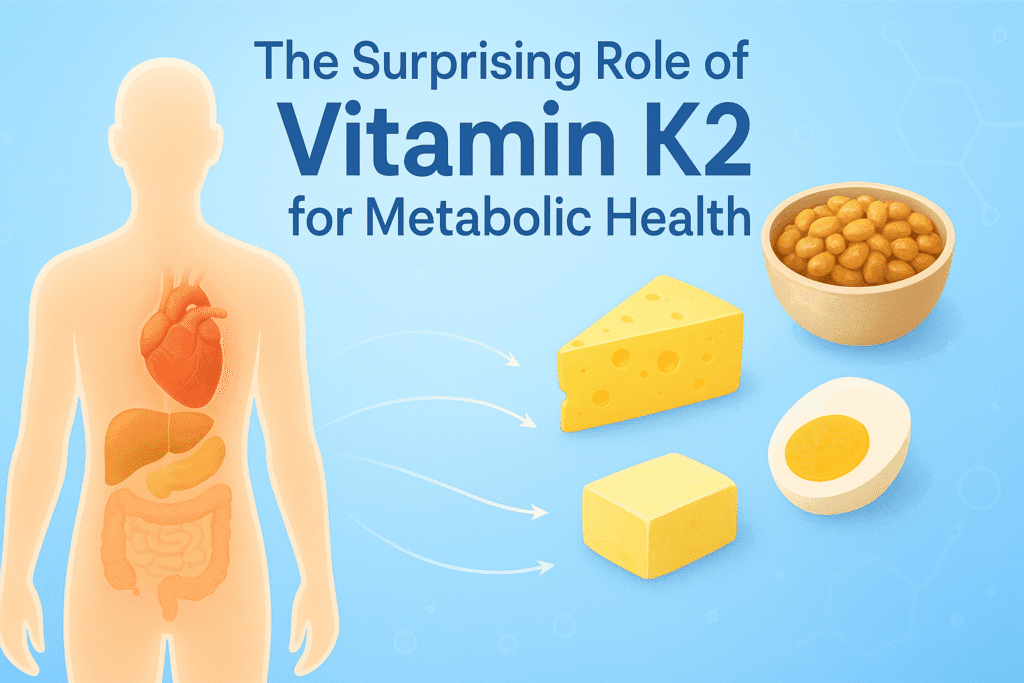
- Vitamin K2 (menaquinone): Found in fermented foods, certain cheeses, and animal products like eggs and liver. K2 is more specialized, it directs calcium to where it’s needed, supports strong bones, protects arteries, and influences metabolic processes such as glucose control and fat metabolism.
Unlike K1, which is mostly absorbed by the liver, K2 circulates throughout the body, reaching bones, arteries, and other tissues. There, it activates critical proteins that regulate calcium deposition and energy metabolism, making it a key player in overall metabolic health.
Vitamin K2 Subtypes
Vitamin K2 is not a single compound but a family of related compounds known as menaquinones, designated as MK-4 through MK-13 based on the length of their side chains. The two most researched forms are:
- MK-4: Found primarily in animal products such as egg yolks, butter, and liver. It has a short half-life in the body but is believed to have potent effects on bone density and cardiovascular health. MK-4 is also produced in small amounts by the body from vitamin K1.
- MK-7: Found in fermented foods like natto (fermented soy) and some hard cheeses. MK-7 has a longer half-life, which allows it to circulate in the bloodstream longer and exert systemic effects throughout the body.
Both MK-4 and MK-7 influence metabolic pathways, including insulin sensitivity, fat metabolism, and energy regulation, but MK-7 is often highlighted in research due to its stability and bioavailability.
How Vitamin K2 Supports Metabolic Health
Metabolic health is a broad term that includes blood sugar control, insulin sensitivity, fat storage, energy production, and cardiovascular function. Vitamin K2 impacts multiple aspects of metabolism, sometimes in subtle but powerful ways.
1. Vitamin K2 and Insulin Sensitivity
Insulin is the hormone that allows your body to transport glucose from the bloodstream into cells to produce energy. When cells become resistant to insulin, blood sugar rises, fat accumulates, and the risk of type 2 diabetes increases.
Vitamin K2 plays a critical role in enhancing insulin sensitivity through the activation of a protein called osteocalcin, which is primarily produced in bones. In its active form, osteocalcin functions as a hormone that:
- Stimulates insulin secretion from the pancreas.
- Enhances glucose uptake in muscle and fat tissue.
- Improves overall energy metabolism.
Research Evidence:
- A 2014 study in Diabetes Care found that supplementation with menaquinone (K2) improved insulin sensitivity in adults with prediabetes.
- Animal studies suggest that MK-4 can increase insulin production and enhance glucose uptake in tissues, supporting better blood sugar regulation.
By improving insulin sensitivity, K2 helps prevent blood sugar spikes, reduce fat accumulation, and maintain overall metabolic efficiency.
2. Vitamin K2 and Fat Metabolism
Fat accumulation isn’t just a matter of calories, it’s closely tied to hormonal regulation. Vitamin K2 contributes to healthy fat metabolism through its influence on osteocalcin, which in turn increases levels of adiponectin, a hormone with several metabolic benefits:
- Promotes fatty acid breakdown.
- Supports energy expenditure.
- Reduces inflammation.
- Improves insulin sensitivity.
Higher adiponectin levels are associated with lower body fat, reduced risk of insulin resistance, and improved metabolic health overall.
Another way K2 affects fat metabolism is through calcium signaling in fat cells. Proper calcium distribution is essential:
- K2 ensures calcium is directed to bones rather than soft tissues.
- Mismanaged calcium in fat cells may impair metabolic function, contribute to fat storage, and promote the development of fatty liver disease.
In simpler terms, vitamin K2 helps your body store and utilize fat properly, preventing metabolic disturbances that can lead to obesity, liver issues, and insulin resistance.
3. Synergy With Other Metabolic Hormones
Vitamin K2 doesn’t work in isolation, by regulating osteocalcin and adiponectin, it indirectly interacts with other hormones involved in metabolism:
- Leptin: K2’s effect on fat metabolism can support leptin function, helping regulate appetite and energy balance.
- Cortisol: By reducing inflammation and supporting metabolic efficiency, K2 may help modulate stress hormone activity, which otherwise disrupts blood sugar and fat metabolism.
This hormonal synergy makes K2 a subtle yet essential regulator of whole-body energy balance.
4. Practical Takeaways
- Incorporate K2-rich foods like natto, hard cheeses, egg yolks, and liver to support metabolism.
- Consider MK-7 supplementation if dietary intake is insufficient.
- Pair K2 with healthy fats for optimal absorption.
- Track metabolic markers like blood sugar, lipid profile, and body composition to monitor benefits over time.
3. Vitamin K2 Protects Cardiovascular Health
Cardiovascular disease (CVD) is often considered separate from metabolism, but in reality, insulin resistance, chronic inflammation, and impaired fat metabolism all contribute to arterial calcification, a major risk factor for heart disease. Vitamin K2 plays a protective role in several key ways:
- Prevents arterial calcification: K2 activates matrix Gla protein (MGP), a natural inhibitor of calcium deposits in blood vessels. Without adequate K2, calcium can accumulate in arteries, increasing stiffness and cardiovascular risk.
- Reduces arterial stiffness: Clinical studies have linked higher K2 intake to more flexible arteries, which helps lower blood pressure and reduces strain on the heart.
- Supports healthy lipid metabolism: By improving insulin sensitivity and fat utilization, K2 indirectly supports balanced cholesterol and triglyceride levels, contributing to overall cardiovascular health.
Long-term observational studies reinforce these benefits. For instance, a Dutch study spanning 7-10 years found that individuals with higher K2 intake had a significantly lower risk of developing heart disease, highlighting its systemic effects beyond just bone support.
In essence, K2 acts as a metabolic and cardiovascular regulator, ensuring that calcium and fats are properly managed within the body.
4. Vitamin K2 and Inflammation
Chronic low-grade inflammation is a silent driver of metabolic dysfunction. Conditions such as insulin resistance, obesity, and cardiovascular disease all share inflammation as a common root cause. Vitamin K2 helps counteract these effects through multiple mechanisms:
- Reduces pro-inflammatory cytokines: K2 lowers the levels of IL-6 and TNF-alpha, key signaling molecules that drive systemic inflammation.
- Supports mitochondrial health: Healthy mitochondria produce energy efficiently while minimizing oxidative stress, which otherwise contributes to inflammation and metabolic disruption.
- Enhances endothelial function: By improving the health of blood vessel linings, K2 reduces vascular inflammation and protects arterial integrity.
These combined effects not only protect the heart and arteries but also enhance metabolic flexibility, allowing your body to respond effectively to fluctuations in energy demand, insulin, and nutrient availability.
5. Vitamin K2 and Bone Health: A Metabolic Connection
Bone is not just a structural framework, it is an active metabolic organ. The protein osteocalcin, activated by K2, does more than maintain bone density; it also has far-reaching metabolic effects:
- Enhances insulin secretion: Active osteocalcin signals the pancreas to release insulin, improving blood sugar control.
- Promotes fat breakdown: Osteocalcin increases adiponectin, supporting healthy fat metabolism.
- Regulates energy expenditure: By influencing energy balance at the cellular level, bones indirectly contribute to overall metabolic efficiency.
In other words, maintaining healthy bones through adequate K2 intake may ripple outward, improving metabolism and reinforcing the connection between skeletal and metabolic health.
Dietary Sources of Vitamin K2
Unlike vitamin K1, which is abundant in leafy vegetables, K2 is relatively rare in the modern diet, especially in highly processed meals. Traditional diets rich in fermented foods and animal products naturally provide higher K2 intake.
Top sources of vitamin K2 include:
Food | Vitamin K2 Type | Notes |
Natto (fermented soy) | MK-7 | Highest natural source of K2; strong evidence for cardiovascular benefits |
Hard cheeses (Gouda, Edam) | MK-7 | Fermentation increases K2 content |
Egg yolk | MK-4 | Amount depends on the chicken’s diet |
Liver (beef, chicken) | MK-4 | Highly potent but often underutilized |
Butter (grass-fed) | MK-4 | Contributes small amounts daily |
K2 is fat-soluble, meaning it is best absorbed when eaten with dietary fat. Individuals on low-fat or highly processed diets may be at risk of insufficient K2 intake.
K2 Supplements: What You Need to Know
For those unable to meet requirements through diet alone, supplementation can be a practical option. Key considerations include:
Forms
- MK-4 supplements: Typically taken in higher doses but require multiple daily intakes due to a short half-life.
- MK-7 supplements: Preferred for convenience; taken once daily and more stable in the bloodstream, offering consistent benefits.
Dosage
- Research studies generally use 100-200 mcg/day for MK-7 and several mg/day for MK-4.
- Safety data suggests MK-7 up to 400 mcg/day is well-tolerated with minimal side effects.
Safety Considerations
- Vitamin K2 is generally safe and has a very low toxicity profile.
- Individuals taking anticoagulant medications (e.g., warfarin) should consult a physician before supplementation, as K2 can influence blood clotting.
How Vitamin K2 Fits Into a Holistic Metabolic Health Strategy
Vitamin K2 is powerful, but it is not a miracle nutrient on its own. Its benefits are amplified when combined with a balanced diet, lifestyle habits, and other supportive nutrients. Here’s how to make the most of K2:
- Combine with vitamin D3: Vitamin D enhances calcium absorption, while K2 directs calcium to bones instead of arteries. Together, they synergistically support bone strength and cardiovascular health.
- Support with magnesium: Magnesium is a cofactor in numerous metabolic enzymes and plays a crucial role in calcium balance. Adequate magnesium ensures that K2 can function optimally.
- Maintain consistent physical activity: Regular exercise complements K2’s effects by improving insulin sensitivity, fat metabolism, and energy expenditure.
- Eat a nutrient-dense diet: Protein, healthy fats, and essential micronutrients create the right environment for K2 to act efficiently throughout the body.
- Manage stress and sleep: Hormones like cortisol, along with circadian rhythm, heavily influence insulin sensitivity, fat storage, and metabolic flexibility. Prioritizing stress management and restorative sleep enhances K2’s benefits.
By embedding K2 into a holistic lifestyle, you support not only bones and heart health but also the underlying metabolic machinery that governs energy, weight, and hormonal balance.
Emerging Research and Future Directions
Scientific interest in vitamin K2 is expanding rapidly, particularly in its metabolic and hormonal roles. Some of the key areas under investigation include:
- Obesity prevention: Researchers are exploring whether K2 supplementation can improve body composition, reduce fat accumulation, and enhance metabolic efficiency in humans.
- Type 2 diabetes management: Early studies suggest K2 may support insulin secretion and glucose control, offering a potential complementary strategy for managing blood sugar.
- Neurodegenerative diseases: By supporting mitochondrial function and reducing oxidative stress, K2 may have implications for brain health and cognitive function, though research is still in early stages.
- Longevity research: Observational studies link higher K2 intake with longer life expectancy and reduced age-related disease risk, highlighting its potential role in healthy aging.
While large-scale clinical trials are still needed, these findings position K2 as a nutrient worthy of attention for anyone focused on metabolic health, longevity, and disease prevention.
Practical Tips for Incorporating Vitamin K2
Implementing K2 into your daily routine can be simple with small, consistent steps:
- Start small: Add a serving of hard cheese or an egg yolk to your meals each day.
- Explore fermented foods: Natto, kefir, or certain cheeses are rich in MK-7. Even modest portions provide significant K2.
- Consider supplements: If dietary sources are insufficient, an MK-7 supplement can provide steady, convenient support.
- Pair with healthy fats: K2 is fat-soluble, so combining it with olive oil, avocado, eggs, or nuts improves absorption.
- Track your metabolic markers: Monitor fasting glucose, lipid profile, blood pressure, and body composition to assess the benefits over time.
Incorporating K2 consistently through food or supplementation alongside a balanced lifestyle ensures that your metabolism, bones, and cardiovascular system all receive the support they need.
Conclusion: Why Vitamin K2 Deserves a Second Look
Could one overlooked vitamin quietly be shaping your metabolism, blood sugar, and heart health every day? Vitamin K2 is far more than a nutrient for bones or cardiovascular protection. Its influence on insulin sensitivity, fat metabolism, arterial health, and inflammation makes it a critical yet often neglected player in metabolic health.
While K2 won’t replace a balanced diet, regular exercise, or quality sleep, ensuring adequate intake, through foods like natto, grass-fed dairy, and eggs, or a well-formulated MK-7 supplement can help optimize your metabolism, support healthy aging, and protect your cardiovascular system.
Paying attention to this underrated nutrient isn’t just about bone strength; it’s about empowering your whole metabolic network to function efficiently. The question is: are you giving your body the K2 it needs to perform at its best?
⚠️ Affiliate Disclaimer: This post may contain affiliate links, which means I may earn a small commission — at no extra cost to you — if you make a purchase through one of these links. I only recommend products or services I genuinely trust and believe can provide value. Thank you for supporting My Medical Muse!
Blog Post To Read:
- 12 Shocking Ways Detox Teas Are Actually Harmful for Digestion and Hormones
- 7 Critical Facts You Must Know: How to Choose the Right Multivitamin
- Sweet Taste in Mouth: Shocking Signs It’s a Vitamin Deficiency
- Can Vitamin B12 Shots Help with Tingling Feet? Proven Facts
- 7 Alarming Signs of Vitamin D Deficiency Fatigue and Joint Pain
- 10 Early Signs of Vitamin D Deficiency You Might Be Ignoring

Dr. Ijasusi Bamidele, MBBS (Binzhou Medical University, China), is a medical doctor with 5 years of clinical experience and founder of MyMedicalMuse.com, a subsidiary of Delimann Limited. As a health content writer for audiences in the USA, Canada, and Europe, Dr. Ijasusi helps readers understand complex health conditions, recognize why they have certain symptoms, and apply practical lifestyle modifications to improve well-being