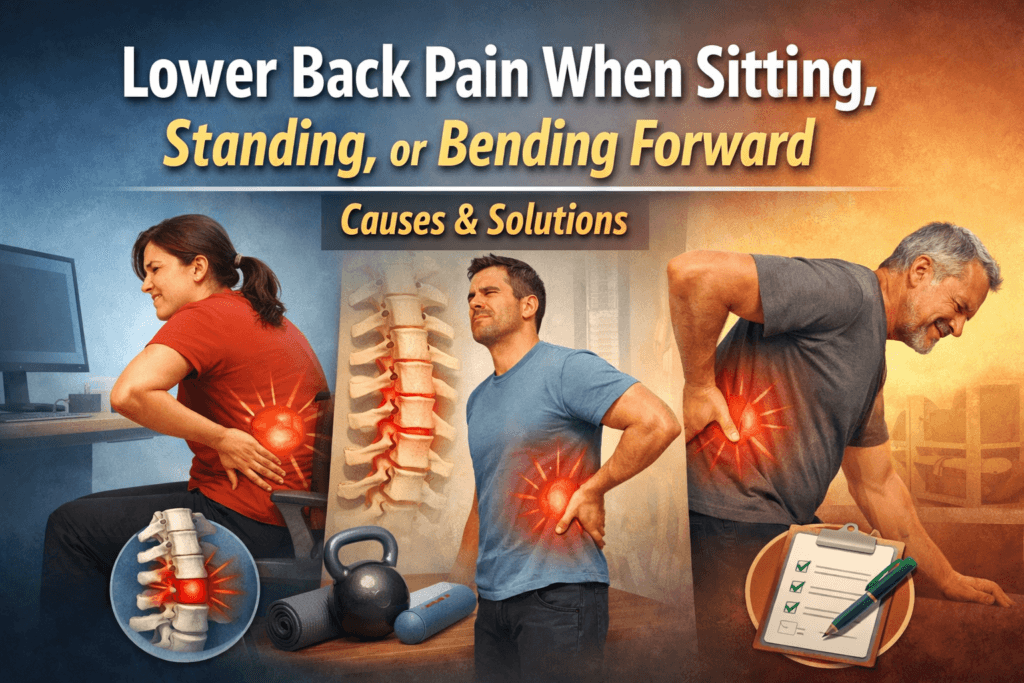
Lower Back Pain When Sitting, Standing, or Bending Forward: 7 Proven Ways to Find Relief
Lower back pain is one of the most common physical problems in the world, affecting people of all ages and lifestyles, yet one detail often gets overlooked, the position that triggers the pain.
If your lower back hurts when you sit, worsens when you stand, or flares up when you bend forward, that is not random or just bad posture. These patterns are important diagnostic clues, the body doesn’t create pain arbitrarily, pain is a response to stress, overload, or dysfunction in specific structures.
When pain changes with posture or movement, it tells us which tissues are under pressure, which joints are being compressed, which muscles are failing to support the spine, or whether nerves are being irritated. Sitting, standing, and bending each place very different demands on the lower back, and pain in each position points to different underlying problems.
Understanding these differences is critical, treating all lower back pain as the same leads to temporary fixes at best and chronic pain at worst. Real improvement comes from identifying why a certain position hurts and addressing that cause directly.
In this guide, you’ll learn why lower back pain behaves differently depending on how you move or hold your body, what these patterns usually mean from a medical and biomechanical standpoint, and most importantly what actually helps based on anatomy, biomechanics, and clinical evidence, not guesswork or generic advice.
This isn’t about quick relief tricks, it’s about understanding your back well enough to fix the problem instead of managing it forever.
Why Position-Based Back Pain Matters
The lower back, also called the lumbar spine, is a load-bearing system, not just a stack of bones. Its job is to support body weight, absorb shock, allow movement, and protect the spinal nerves all at the same time.
This system is made up of several interconnected parts:
- Vertebrae, which provide structural support
- Intervertebral discs, which act as shock absorbers
- Facet joints, which guide and limit movement
- Ligaments, which stabilize the spine
- Muscles, which control motion and maintain posture
- Nerve roots, which transmit signals to the legs and lower body
- Fascia, the connective tissue that links everything together
Each of these structures responds differently to stress. Sitting, standing, and bending forward all place very different mechanical demands on the lumbar spine. Some positions increase disc pressure, others compress joints, while some stretch nerves or overload muscles.
That’s why position-based pain matters so much. When pain changes depending on how you move or hold your body, it sharply narrows down which structure is being irritated. Instead of guessing, these patterns help point toward the real source of the problem and that’s what makes effective treatment possible.
Lower Back Pain When Sitting
Why Sitting Is Hard on the Lower Back
Despite how normal it feels, prolonged sitting is one of the most stressful positions for the lower back especially when posture is poor.
When you sit, particularly in a slouched or unsupported position:
- Lumbar discs are compressed forward, increasing internal pressure
- Core muscles relax, reducing spinal stability
- Hip flexors shorten, pulling the pelvis out of alignment
- Blood flow decreases, slowing tissue recovery
- Postural muscles fatigue, leading to compensation and strain
Over time, this combination creates the perfect environment for disc irritation, muscle imbalance, and nerve sensitivity. The damage usually builds gradually, which is why sitting-related back pain often starts as stiffness and slowly progresses into persistent discomfort.
Common Causes of Sitting-Related Lower Back Pain
1. Lumbar Disc Bulge or Herniation
Sitting increases pressure inside the spinal discs and pushes them backward. If a disc is already weakened or degenerated, this pressure can worsen symptoms significantly.
Typical signs include:
- A deep ache or sharp pain that worsens after sitting
- Pain that improves when standing or walking
- Possible tingling, numbness, or pain radiating into the leg
Importantly, this does not mean surgery is unavoidable. Most disc-related pain improves with proper load management, posture correction, and structured rehabilitation.
2. Poor Sitting Posture
Slouching flattens the natural curve of the lower back, placing excessive stress on structures that are not designed for constant load.
Over time, poor posture:
- Overstretches spinal ligaments
- Overloads the discs
- Weakens the muscles responsible for spinal stability
This type of pain usually develops slowly, making it easy to ignore until it becomes chronic.
3. Tight Hip Flexors (Iliopsoas)
Long hours of sitting cause the hip flexor muscles to shorten. These muscles attach directly to the lumbar spine and pelvis.
When they become tight, they:
- Pull the spine into an exaggerated arch when standing
- Increase compressive forces in the lower back
- Create ongoing tension even when you’re not sitting
This is one of the most common and most overlooked contributors to lower back pain.
4. Weak Core Muscles
The deep core muscles are meant to actively support the spine. When they are weak or poorly coordinated, sitting shifts stress onto passive structures like discs and ligaments.
Those tissues are not built for constant load, which is why pain develops over time rather than all at once.
What Helps Sitting-Related Lower Back Pain
Relief doesn’t come from avoiding sitting entirely, it comes from reducing stress on the spine and restoring support.
What actually helps:
- Using lumbar support to maintain a neutral spine (not rigid posture)
- Standing up and moving every 30-45 minutes
- Strengthening deep core muscles for active spinal support
- Stretching tight hip flexors regularly
- Sitting with a disc-friendly, neutral posture rather than slouching
Small, consistent changes here often make a bigger difference than medications or short-term fixes.
Red Flags That Need Medical Evaluation
Most lower back pain is mechanical and improves over time with proper care. However, some symptoms may signal a more serious underlying problem and should never be ignored. Recognizing these red flags early can make a critical difference in preventing permanent damage and ensuring timely treatment.
Seek urgent medical evaluation if you experience any of the following:
Loss of bladder or bowel control: This can indicate spinal cord or severe nerve compression and requires immediate attention.
Progressive leg weakness: Worsening weakness over days or weeks may signal nerve involvement that needs prompt assessment.
Numbness in the groin or saddle area: Often referred to as “saddle anesthesia,” this is a classic warning sign of severe nerve compression.
Severe pain at night: Pain that persists or worsens during rest, unaffected by position changes, may point to underlying structural or systemic issues.
Unexplained weight loss: Significant weight loss combined with persistent back pain could indicate systemic illness, including infection or malignancy.
History of cancer or serious infection: New or worsening back pain in individuals with these histories warrants urgent evaluation.
While these situations are uncommon, they are medically significant. Prompt evaluation by a healthcare professional can identify the cause, prevent complications, and guide effective treatment.
What Actually Works Long-Term
Long-term relief from lower back pain comes from restoring function, strength, and movement capacity, not just masking symptoms. Research consistently shows that targeted, structured strategies produce the best outcomes.
1. Movement, Not Prolonged Rest
Contrary to old advice, extended bed rest weakens muscles, reduces circulation, and slows recovery. It can actually prolong pain rather than relieve it.
Gentle, guided movement helps by:
Maintaining muscle strength around the spine
Improving blood flow to tissues for healing
Reducing stiffness and joint immobility
Encouraging tissue repair and flexibility
The key is controlled activity, moving within safe limits rather than avoiding all motion or pushing through severe pain.
2. Targeted Strength Training
Random exercises are rarely effective. The most impactful programs focus on specific stabilization and support, particularly targeting:
Deep core muscles: These muscles provide internal support to the spine, improving stability during daily movements.
Glutes: Strong glutes reduce lower back strain by sharing load during standing, walking, and lifting.
Hip stabilizers: Proper hip function helps maintain spinal alignment and evenly distribute forces across the lower back.
Targeted training strengthens the body’s natural support system, reduces the likelihood of recurrence, and improves overall spinal resilience.
3. Posture Awareness Without Obsession
Good posture is dynamic, not rigid. Holding yourself stiffly or attempting perfect alignment all day can actually worsen pain.
Healthy posture emphasizes:
Frequent position changes, avoiding prolonged static sitting or standing
Allowing the spine to move naturally, rather than forcing a fixed stance
Maintaining alignment only as a guide, not a strict rule
Movement variety and awareness are far more protective than perfection.
4. Load Management
Back pain flare-ups often occur not because the spine is fragile, but because it is overloaded suddenly.
Gradually increasing physical activity helps:
Build tissue tolerance
Prevent reinjury
Allow muscles, ligaments, and discs to adapt progressively
Consistency is more important than intensity. Sudden spikes in activity, even if moderate, can trigger a setback.
5. Addressing Psychosocial Factors
Pain is not purely physical, it is also processed through the nervous system, meaning stress, fear, and negative thought patterns can amplify pain.
Stress and anxiety increase muscle tension and sensitivity
Fear of movement can reduce activity, weakening muscles and prolonging stiffness
Catastrophizing: expecting the worst can heighten perceived pain and delay recovery
Addressing these factors does not imply the pain is imaginary, it acknowledges that the nervous system is a powerful modulator of how pain is felt and maintained. Combining physical rehabilitation with strategies to reduce fear and stress significantly improves long-term outcomes.
Why Painkillers Alone Are Not the Solution
Medications can play a role in short-term relief, but they are not a substitute for restoring the spine’s strength and function. Painkillers may help by:
Reducing inflammation, which can temporarily ease irritation in muscles or joints
Dulling discomfort, making it easier to perform daily tasks
However, relying on medication alone has significant limitations. Painkillers do not:
Restore spinal strength or support structures.
Improve movement quality, flexibility, or coordination
Increase the spine’s long-term resilience to everyday stresses
In fact, depending solely on medication can delay recovery, because it masks symptoms without addressing the underlying cause without corrective exercises, posture improvements, or load management, the spine remains vulnerable to reinjury.
How Long Does Recovery Take?
Recovery from lower back pain is highly individual and depends on the type of injury, severity, and consistency of care. Approximate timelines include:
Muscle strain: 2-6 weeks, with gradual return to normal activity
Disc irritation or minor herniation: 6-12 weeks, often improving with targeted exercises and load management
Chronic or complex back pain: Several months, requiring structured rehabilitation, strength training, and movement retraining
It’s important to understand that there is no instant fix. Recovery requires patience, but it is realistic with the right approach including movement, strength building, posture correction, and psychosocial support, most people regain:
Full spinal function and mobility
Confidence in their ability to move safely
Long-term control over pain, reducing the likelihood of recurrence
The key is combining short-term symptom relief with long-term functional improvement to achieve durable results.
Final Thoughts
Lower back pain that changes with sitting, standing, or bending forward is not mysterious, it is mechanical and meaningful. The body is responding to stress, load, and movement patterns, not acting randomly or without reason.
The position that triggers pain tells an important story about:
- Which tissues are being overloaded beyond their current tolerance
- Which muscles are underperforming or failing to support the spine
- How movement and posture have adapted over time, often in ways that increase strain
When these signals are ignored, pain tends to persist and become chronic. When they are understood, they become guides, pointing toward what needs to change.
Lower back pain is rarely a sign of permanent damage. In most cases, it reflects a mismatch between what the spine is being asked to do and what it is currently capable of handling. This is not a life sentence, it is a capacity problem and capacity can be rebuilt with the right combination of movement, strength, load management, and patience, the lower back adapts. Tissues regain tolerance, confidence returns, pain loses its grip.
Recovery does not come from fear, rest alone, or chasing temporary relief. It comes from understanding the message behind the pain and responding with the right strategy, consistently, intelligently, and over time.
👩⚕️ Need Personalized Health Advice?
Get expert guidance tailored to your unique health concerns through MuseCare Consult. Our licensed doctors are here to help you understand your symptoms, medications, and lab results—confidentially and affordably.
👉 Book a MuseCare Consult NowRelated Blog Post:
- Essential Guide to Lower Back, Joint, and Bone Pain: Causes, Diagnosis, and Effective Treatments
- 15 Proven Natural Ways to Improve Joint Stiffness Without Medication
- 7 Surprising Causes of Joints Cracking Loudly and How to Stop It
- 7 Alarming Signs of Vitamin D Deficiency Fatigue and Joint Pain
- Lower Back Pain Radiates to the Leg: 7 Key Causes, Diagnosis & Treatments
- 7 Hidden Causes of Chronic Lower Back Pain That Don’t Show on X-Rays

Dr. Ijasusi Bamidele, MBBS (Binzhou Medical University, China), is a medical doctor with 5 years of clinical experience and founder of MyMedicalMuse.com, a subsidiary of Delimann Limited. As a health content writer for audiences in the USA, Canada, and Europe, Dr. Ijasusi helps readers understand complex health conditions, recognize why they have certain symptoms, and apply practical lifestyle modifications to improve well-being