
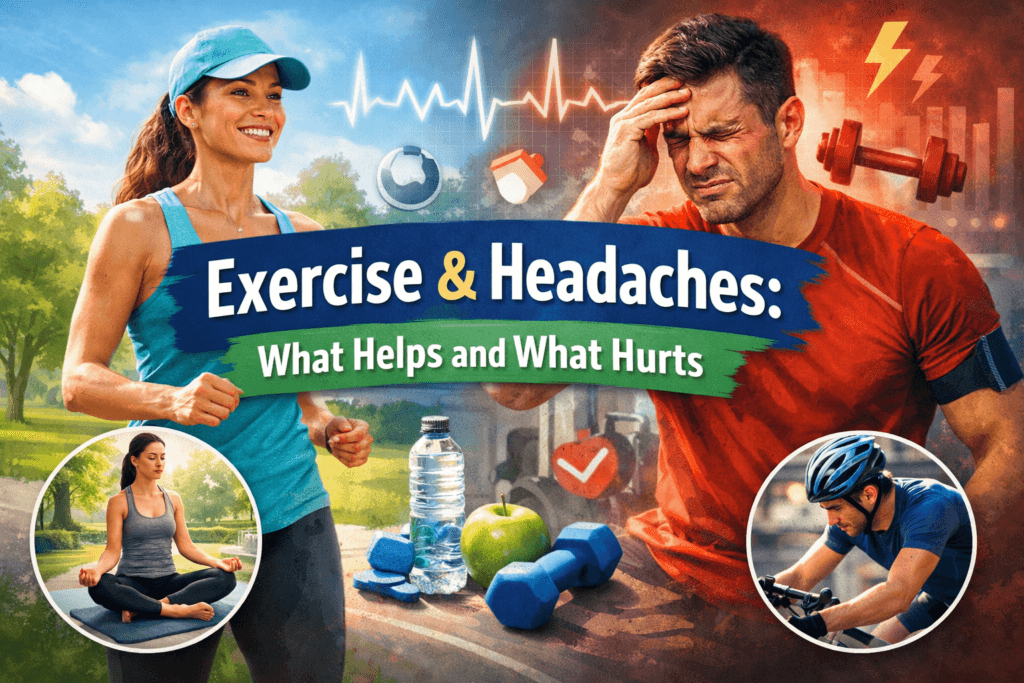
10 Proven Exercise and Headache Solutions That Help, Not Hurt
Exercise is often recommended as a natural remedy for headaches, yet for many people, movement is exactly what makes the pain worse. One person finishes a walk feeling clearer and lighter, another stops midway through a workout with a pounding head and nausea. The contradiction is frustrating, but it is not random, and it is not a sign of weakness or damage.
The truth is that exercise acts as a stressor, whether that stress becomes therapeutic or harmful depends on how the nervous system, blood vessels, muscles, hormones, hydration, and breathing patterns respond to it. When the body adapts well, movement reduces headache frequency and intensity. When it does not, the same activity can trigger or amplify pain.
Understanding this difference is critical, not all exercise helps, not all exercise hurts, the outcome depends on the type of activity, how it is performed, and the underlying headache mechanism involved.
This article explains how exercise interacts with headache pathways, which activities tend to reduce symptoms, which ones commonly provoke pain, and how to move in a way that supports your brain rather than overwhelming it.
Understanding the Link Between Exercise and Headaches
Exercise influences nearly every physiological system involved in headache generation. Movement is not neutral to the brain, it changes blood flow, nerve signaling, muscle tone, and metabolic demand in real time. Whether those changes reduce pain or trigger it depends on how well the body adapts.
During physical activity, several predictable shifts occur, blood pressure rises temporarily to meet increased circulatory demand. Heart rate accelerates to deliver oxygen and nutrients to working muscles, oxygen consumption increases throughout the body, including the brain. Stress hormones such as adrenaline and cortisol fluctuate to support energy production, muscles repeatedly contract and relax, altering tension patterns in the neck, shoulders, and spine. Breathing patterns change, often becoming faster or shallower, blood flow is redistributed toward active muscles and away from less essential systems.
In a well regulated nervous system, these changes are smooth and coordinated, blood vessels adapt without spasm, breathing remains efficient, and muscle tension resolves after exertion. In this context, exercise strengthens the systems that protect against headaches.
In a sensitized or dysregulated nervous system, the same changes can overshoot, blood vessels may constrict or dilate too abruptly, breathing patterns may disrupt carbon dioxide balance, muscles may remain tense rather than release. These responses increase the likelihood of pain during or after activity.
Most exercise related headaches fall into identifiable categories, migraine headaches are driven by abnormal sensory processing and vascular reactivity. Exercise can help when intensity is controlled but trigger attacks when demands rise too quickly.
Tension type headaches are linked to sustained muscle tension and stress, they usually improve with regular movement and posture correction.
Cervicogenic headaches originate from the neck and upper spine. Exercise helps when it restores stability and mobility and worsens symptoms when form or load is poor.
Primary exertional headaches occur specifically during or after intense physical effort, they are usually benign but closely tied to pressure and blood flow changes. Secondary headaches are caused by factors such as dehydration, electrolyte loss, low blood sugar, or prolonged poor posture during activity.
Identifying which category applies is more important than the specific exercise chosen, the same workout can help one person and harm another depending on the underlying mechanism.
How Exercise Can Help Prevent Headaches
When performed with appropriate intensity and recovery, regular physical activity lowers headache frequency for many people by improving core regulatory systems rather than masking symptoms.
- Improves Blood Vessel Regulation
Migraines are strongly associated with unstable blood vessel responses. Moderate aerobic exercise trains blood vessels to dilate and constrict gradually instead of reacting abruptly. This improved flexibility reduces sudden pressure changes that commonly initiate migraine pain. - Reduces Stress and Cortisol Load
Chronic stress keeps the nervous system in a heightened state of alert, lowering the threshold for headaches. Regular exercise reduces baseline cortisol levels over time and improves stress resilience. The brain becomes less likely to convert emotional or physical stress into head pain. - Releases Endorphins
Endorphins modulate pain perception within the central nervous system. Consistent movement increases their availability, raising pain thresholds and reducing overall sensitivity in people prone to headaches. - Improves Sleep Quality
Sleep disruption and headaches reinforce each other through shared neurological pathways. Exercise improves sleep depth, stabilizes circadian rhythms, and reduces nighttime arousal, indirectly lowering headache risk. - Reduces Muscle Tension
Tight muscles in the neck, shoulders, and upper back contribute directly to tension and cervicogenic headaches. Controlled movement restores blood flow, improves coordination, and reduces protective muscle guarding that perpetuates pain.
When Exercise Makes Headaches Worse
Exercise is a physiological stressor. When the load exceeds the body’s ability to adapt, headache risk increases rather than decreases.
- High Intensity Too Soon
Rapid spikes in heart rate and blood pressure are common headache triggers, particularly for migraine and exertional headaches. This often occurs when individuals move from inactivity to intense workouts without a gradual progression. - Poor Breathing Patterns
Shallow or rapid chest breathing during exercise disrupts carbon dioxide balance. Reduced carbon dioxide causes cerebral blood vessels to constrict, which can provoke headaches, lightheadedness, and pressure sensations. - Dehydration and Electrolyte Loss
Fluid loss through sweating reduces blood volume and alters nerve signaling. Without adequate replacement of water and electrolytes, even moderate exercise can trigger headaches. - Low Blood Sugar
Exercising without sufficient fuel leads to glucose drops that the brain interprets as a threat. This stress response commonly produces throbbing or diffuse headaches during or after activity. - Neck and Posture Strain
Exercises that overload the neck, jaw, or upper spine increase stress on cervical joints and nerves. Poor lifting technique, prolonged forward head posture during cycling, or excessive upper body tension are frequent contributors.
In these situations, the problem is rarely movement itself. It is the mismatch between exercise demands and the body’s current capacity to regulate them.
Headache Types and Exercise Response
Headaches do not share a single mechanism, so their response to exercise varies widely. Understanding how each headache type reacts to physical stress helps determine which activities are supportive and which are more likely to provoke symptoms.
1. Migraines
Migraines involve abnormal sensory processing, altered pain thresholds, and unstable blood vessel responses. Because of this sensitivity, exercise must be consistent and controlled to be helpful.
Regular moderate activity improves vascular regulation, stress tolerance, and nervous system stability, which can reduce migraine frequency over time. Problems arise when exercise intensity rises too quickly or becomes unpredictable.
Activities that tend to help include walking, swimming, cycling at low to moderate intensity, yoga, and Pilates. These maintain steady heart rate patterns and avoid abrupt pressure changes. Activities that commonly trigger migraines include sprinting, heavy weightlifting, high intensity interval training, and competitive sports performed without adequate recovery. These create rapid cardiovascular and hormonal shifts that can overwhelm a migraine sensitive system.
For migraines, predictability matters more than performance, gradual progression and consistent pacing reduce the likelihood of exercise becoming a trigger.
2. Tension Type Headaches
Tension type headaches are closely linked to muscle tension, postural strain, and stress accumulation. They generally respond very well to movement.
Stretching, strength training performed with good posture, yoga, mobility exercises, and low impact cardiovascular activity all reduce muscle tightness and improve circulation. These activities address the underlying mechanical contributors rather than masking pain. Sedentary behavior consistently worsens tension headaches. Prolonged sitting allows muscle tension to accumulate and limits blood flow, making movement one of the most effective preventive strategies.
3. Cervicogenic Headaches
Cervicogenic headaches originate from dysfunction in the neck and upper spine. Exercise can either resolve symptoms or intensify them depending on execution.
Helpful activities focus on restoring stability and controlled mobility, physical therapy guided exercises, deep neck flexor strengthening, scapular stability work, and gentle range of motion movements improve joint control and reduce nerve irritation.
Harmful activities include poorly performed overhead lifts, long cycling sessions with sustained forward head posture, and high impact movements performed without adequate neck stability. These increase cervical load and perpetuate the source of pain.
For cervicogenic headaches, technique matters more than intensity. Poor form can trigger pain even at low effort levels.
4. Primary Exertional Headaches
Primary exertional headaches occur specifically during or shortly after strenuous activity. They are linked to sudden changes in blood flow and intracranial pressure rather than structural disease.
Common triggers include heavy lifting, sprinting, sexual activity, and exercise at high altitude. These activities rapidly increase cardiovascular demand and pressure, while these headaches are usually benign, medical evaluation is necessary if the pain is severe, sudden, progressively worsening, or accompanied by neurological symptoms such as weakness, vision changes, or confusion.
Exercises That Commonly Help Headaches
Certain forms of movement consistently reduce headache frequency by supporting vascular stability, muscle balance, and nervous system regulation.
1. Walking
Walking is one of the safest and most effective headache reducing activities across all headache types. It promotes steady blood flow without sharp cardiovascular spikes, lowers stress hormone levels, improves posture awareness, and supports sleep quality. The rhythmic nature of walking also calms the nervous system.
Outdoor walking adds visual variation, fresh air, and sensory input that further reduce stress and headache risk.
2. Swimming
Swimming provides full body engagement with minimal joint stress. The buoyancy of water reduces mechanical load on the spine while encouraging symmetrical muscle activation.
It promotes controlled breathing, improves neck mobility when performed gently, and reduces overall muscle tension. Aggressive strokes or excessive neck rotation should be avoided in individuals with neck related headaches.
3. Yoga
Yoga integrates movement, breath control, and nervous system regulation. This combination directly targets multiple headache pathways.
It reduces muscle tension, improves circulation, enhances parasympathetic activity, and reinforces postural awareness, slower, restorative styles are generally more beneficial than fast paced or competitive forms for people prone to headaches.
4. Pilates
Pilates focuses on controlled movement and deep stabilizing muscle activation. It improves alignment of the neck and spine, reduces postural strain, and increases body awareness.
By building endurance without abrupt intensity changes, Pilates lowers headache risk while strengthening the structures that support the head and neck.
5. Light Resistance Training
Strength training can reduce headaches when performed with appropriate load and technique. Using moderate weights, maintaining controlled movement tempo, prioritizing posture, and avoiding breath holding minimizes pressure spikes and muscle strain. When headaches occur with strength training, poor technique or excessive load is almost always the cause rather than the activity itself. When exercise supports stability rather than overload, it becomes a preventive tool rather than a trigger.
Exercises That Commonly Trigger Headaches
Some forms of exercise place rapid or excessive demands on the cardiovascular, respiratory, and musculoskeletal systems. When the nervous system cannot adapt smoothly, these activities are more likely to provoke headaches.
1. High Intensity Interval Training
High intensity interval training produces sharp fluctuations in heart rate, blood pressure, and stress hormones within short time frames. These abrupt changes challenge vascular regulation and nervous system stability.
Common contributors to headache during HIIT include sudden blood pressure spikes, unconscious breath holding during exertion, fluid loss without adequate replacement, and insufficient recovery between sessions. For people prone to migraines, these factors often combine to exceed the brain’s tolerance threshold. HIIT is not inherently harmful, but it is frequently poorly tolerated by individuals with migraine sensitivity or low exercise conditioning.
2. Heavy Weightlifting
Heavy lifting, particularly compound movements, significantly increases intracranial pressure when straining occurs. This effect is amplified when breath is held or loads exceed the body’s ability to stabilize.
Key risk factors include holding the breath during lifts, excessive weight relative to strength capacity, sustained neck tension, and inadequate warm up. These factors make heavy lifting a common trigger for exertional headaches.
Proper technique, controlled breathing, and conservative loading reduce risk, but this style of training remains challenging for headache prone individuals.
3. Long Distance Running
Extended running sessions place prolonged metabolic and mechanical stress on the body. Over time, this can lead to dehydration, electrolyte imbalance, declining blood sugar levels, and accumulated tension in the neck and jaw.
Without appropriate fueling, hydration, and pacing, these factors often result in headaches during or after runs. Long distance running is not problematic by default, but it requires careful preparation to avoid triggering symptoms.
4. Cycling with Poor Fit
Cycling places the body in a sustained forward position. When bike fit is suboptimal, this posture overloads cervical muscles and compresses sensitive nerves.
Headache risk increases with low handlebars that force excessive neck extension, long static riding positions without posture variation, and chronic tension in the shoulders and upper back. In cycling, equipment setup and posture matter more than speed or intensity.
The Role of Breathing in Exercise Headaches
Breathing patterns directly influence cerebral blood flow and nervous system balance. Many exercise related headaches stem from breathing dysfunction rather than the activity itself.
Common mistakes include exclusive mouth breathing, shallow chest breathing, and breath holding during exertion. These patterns reduce carbon dioxide levels too rapidly, leading to cerebral vasoconstriction and headache onset.
Helpful strategies include nasal breathing during warm ups to stabilize breathing rhythm, slow controlled exhalation during exertion, and avoiding Valsalva maneuvers unless specifically required and medically appropriate. For many individuals, correcting breathing mechanics alone is enough to eliminate exercise induced headaches.
Hydration and Nutrition Considerations
A significant number of exercise related headaches are metabolic rather than neurological in origin. Fluid and fuel availability play a central role.
1. Hydration
Dehydration reduces blood volume and alters nerve signaling, increasing headache risk. Common signs include headache following sweating, persistent thirst, dark urine, and unexplained fatigue.
Water alone may not be sufficient, sodium, potassium, and magnesium are essential for maintaining fluid balance and normal nerve function, particularly during prolonged or intense activity.
2. Nutrition
Exercising without adequate energy availability increases stress signaling in the brain. Skipping meals before workouts often leads to blood sugar drops that provoke headaches.
Helpful guidelines include eating a balanced meal two to three hours before exercise, ensuring sufficient carbohydrate and protein intake, and avoiding fasted workouts if prone to migraines. Post exercise nutrition is equally important for stabilizing blood sugar and supporting recovery.
Warm Up and Cool Down Matter More Than You Think
The nervous system responds poorly to sudden transitions. Abrupt changes in activity level are a common but overlooked headache trigger.
A proper warm up gradually increases heart rate, prepares blood vessels for increased demand, and activates stabilizing muscles to reduce strain, this allows physiological systems to adjust without shock.
A proper cool down prevents abrupt drops in blood pressure, supports nervous system recalibration, and reduces the likelihood of post exercise headaches. Skipping either phase significantly increases risk.
When to Stop Exercising and Seek Medical Care
Most exercise related headaches are benign, but certain warning signs require prompt medical evaluation. Seek professional assessment if a headache is sudden and explosive, represents the worst headache of your life, occurs alongside weakness, numbness, or vision loss, worsens with coughing or straining, or follows head or neck trauma.
These features may indicate secondary causes that require investigation rather than exercise modification.
Building a Headache Safe Exercise Routine
When it comes to headaches, consistency matters more than intensity. A safe approach involves starting with low impact activities, increasing duration before intensity, tracking how different exercises affect symptoms, and adjusting strategies rather than abandoning movement altogether.
Exercise should reinforce nervous system stability and resilience, when it overwhelms that system, the signal is not to stop moving, but to change how movement is approached.
Final Thoughts
Exercise does not fit neatly into a good or bad category when it comes to headaches. Its impact depends entirely on how your body processes physical stress. When movement is matched to your nervous system’s capacity, it becomes a regulator, blood flow stabilizes, stress signaling quiets down, muscle tension eases, and headache thresholds rise. Over time, this creates resilience rather than fragility.
When exercise is pushed too hard, too fast, or without attention to breathing, fueling, posture, and recovery, it stops being therapeutic. It becomes another form of overload that a sensitive system cannot absorb, and pain is the result.
The answer is not rest without movement, and it is not forcing yourself through pain, the answer is precision. Choosing activities your body can adapt to, progressing gradually, and respecting the signals that appear along the way. Your body is not malfunctioning, it is responding logically to the demands placed on it, learning how to work with that response, rather than against it, is what allows exercise to become a long term ally in headache control rather than a recurring trigger.
👩⚕️ Need Personalized Health Advice?
Get expert guidance tailored to your unique health concerns through MuseCare Consult. Our licensed doctors are here to help you understand your symptoms, medications, and lab results—confidentially and affordably.
👉 Book a MuseCare Consult NowRelated Blog Post:
- The Complete Guide to Headache and Migraine: 7 Causes, Prevention & Treatment
- 7 Ways Hormones Affect Headaches in Women and How to Stop Them
- 7 Proven Non-Medication Techniques for Migraine Relief That Actually Work
- 7 Powerful Ways Stress Causes Headaches and How to Stop Them
- When Headaches Signal Something Serious: 10 Warning Signs You Should Never Ignore
- 17 Powerful Foods That Trigger Migraines and How to Avoid Them Naturally

Dr. Ijasusi Bamidele, MBBS (Binzhou Medical University, China), is a medical doctor with 5 years of clinical experience and founder of MyMedicalMuse.com, a subsidiary of Delimann Limited. As a health content writer for audiences in the USA, Canada, and Europe, Dr. Ijasusi helps readers understand complex health conditions, recognize why they have certain symptoms, and apply practical lifestyle modifications to improve well-being