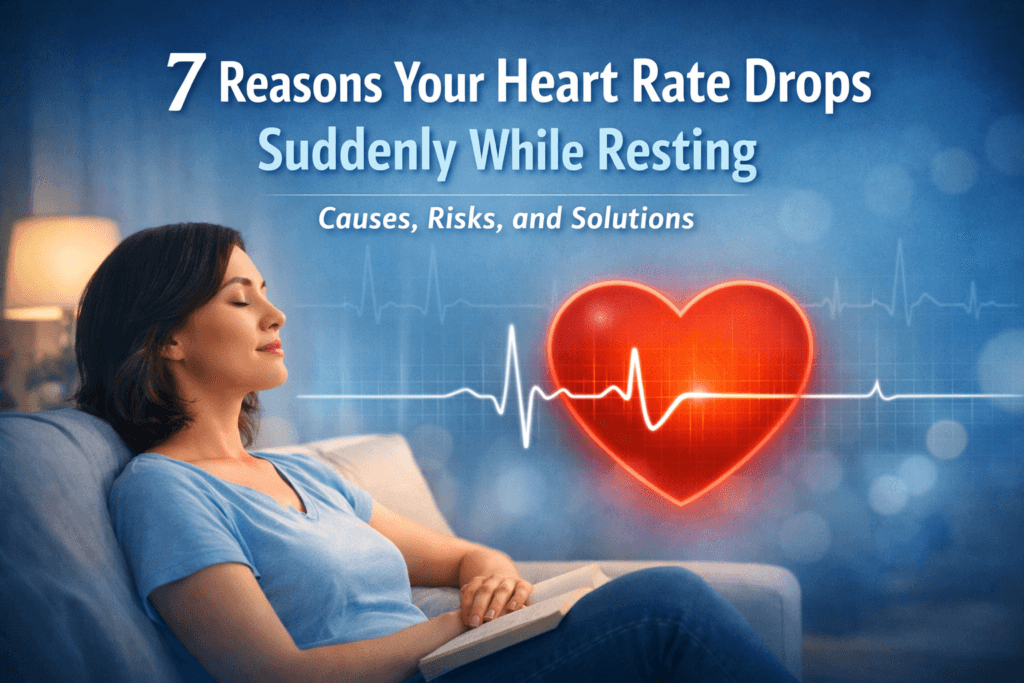
7 Reasons Your Heart Rate Drops Suddenly While Resting :Causes, Risks, and Solutions
It often happens quietly, you are sitting still in the evening, maybe reading or scrolling on your phone. Your body is relaxed, your breathing slow, then suddenly, you feel it. Your heartbeat slows sharply, it may feel like a pause, a skipped beat, or a brief dip that makes you uneasy.
For a few seconds, you might feel lightheaded, aware of your chest, or mildly anxious, then your heart settles back into a normal rhythm as if nothing happened.
That moment can be unsettling, the heart is expected to beat steadily, predictably, without interruption. When it suddenly slows while you are doing nothing at all, it raises an obvious question, why does your heart rate drop suddenly while resting? And more importantly, when is this normal and when is it a warning sign?
To answer that, you need to understand how heart rate is controlled, what causes sudden slowing at rest, and how to distinguish harmless nervous system responses from true electrical heart problems.
How Heart Rate Is Controlled at Rest
Your heart rate is not random, it is governed by a specialized group of cells called the sinoatrial node, often referred to as the heart’s natural pacemaker. This node generates electrical impulses that initiate each heartbeat.
The sinoatrial node is constantly influenced by your autonomic nervous system, which has two opposing branches. The sympathetic nervous system increases heart rate and force of contraction, this is the system responsible for fight or flight responses. The parasympathetic nervous system slows the heart rate, its primary pathway is the vagus nerve, which promotes rest, digestion, and recovery.
At rest, the parasympathetic system normally dominates, this lowers heart rate, conserves energy, and stabilizes blood pressure. A slower heart rate during rest is not only expected but often healthy. Problems arise when this slowing is sudden, exaggerated, or associated with symptoms.
What Is a Normal Heart Rate at Rest
For most adults, a normal resting heart rate falls between 60 and 100 beats per minute. Well-trained athletes and physically fit individuals often have resting heart rates between 40 and 55 beats per minute due to increased stroke volume and cardiac efficiency.
During deep non-REM sleep, heart rate may briefly drop below 50 beats per minute even in non-athletes, numbers alone do not define danger. The most important factor is how well your brain and body are being perfused, a low heart rate without symptoms is often harmless. A modest drop with dizziness, confusion, or shortness of breath is not.
Common Benign Reasons Heart Rate Drops While Resting
Many sudden heart rate drops are physiological, temporary, and non-dangerous.
1. Vagal Activation and Reflex Slowing
The vagus nerve plays a major role in heart rate regulation at rest, when vagal tone increases suddenly, heart rate can slow abruptly.
This can happen during relaxation, after eating, during emotional stress, pain, or straining, this reflex is often referred to as a vagal response. In some people, the response is strong enough to cause brief dizziness or fainting, known as vasovagal syncope.
Common triggers include standing up too quickly, emotional shock, fear, heat exposure, pain, and bowel movements. Although the sensation can be alarming, the mechanism itself is benign in healthy individuals.
2. High Cardiovascular Fitness
Regular endurance training strengthens the heart muscle. Each beat pumps more blood, reducing the need for frequent contractions, as a result, athletes often experience sudden heart rate drops during rest without symptoms. This reflects high vagal tone and efficient cardiac output rather than disease.
3. Sleep and Deep Relaxation States
During deep sleep, metabolic demand drops and parasympathetic activity peaks. Heart rate commonly slows into the 40s during these phases. Smartwatches often flag this as low heart rate, but in the absence of daytime symptoms, it is usually normal. Meditation, controlled breathing, and deep relaxation can produce similar effects while awake.
4. Normal Beat-to-Beat Variability
Heart rate is not constant, it fluctuates naturally with breathing. Heart rate increases slightly during inhalation and slows during exhalation. This phenomenon, called respiratory sinus arrhythmia, is a sign of a healthy and adaptable nervous system. Slow breathing can exaggerate this effect and make the slowing more noticeable.
Medical Causes of Sudden Heart Rate Drops
Not all sudden slowing is benign, some causes involve structural or electrical heart abnormalities.
- Bradycardia and Electrical Conduction Disorders
Bradycardia refers to a heart rate below 60 beats per minute. In isolation, it is not a diagnosis, context matters. Types include sinus bradycardia, sinus pauses, and atrioventricular block.
If pauses are prolonged or frequent, blood flow to the brain may drop, causing dizziness, fainting, fatigue, confusion, chest discomfort, or shortness of breath. Common underlying causes include aging-related fibrosis of cardiac tissue, ischemic heart disease, hypothyroidism, electrolyte abnormalities, and medication effects.
- Sick Sinus Syndrome
Sick sinus syndrome occurs when the sinoatrial node fails to regulate heart rhythm appropriately. The heart may alternate between slow rhythms, pauses, and episodes of rapid heart rate. Symptoms often include fatigue, lightheadedness, palpitations, or syncope. Symptomatic cases often require pacemaker implantation. - Heart Block
Electrical signals normally travel from the atria to the ventricles through the atrioventricular node. When this conduction is delayed or interrupted, heart block occurs.
First-degree block is usually benign. Second-degree block causes intermittent dropped beats. Third-degree block prevents signal transmission entirely and is dangerous. High-grade block can cause heart rates to fall into the 30s or 40s with significant symptoms, pacemaker therapy is often required.
- Medication Effects
Several medications intentionally or unintentionally slow heart rate. Common examples include beta blockers, certain calcium channel blockers, digoxin, and sedatives. If heart rate drops noticeably after starting or adjusting a medication, medical review is essential, abrupt discontinuation can be dangerous. - Electrolyte and Hormonal Imbalances
Cardiac electrical activity depends on balanced electrolytes. High potassium levels slow conduction, low thyroid hormone reduces metabolic demand and heart rate. These conditions can cause unpredictable slowing, especially during rest. - Sleep Apnea
Obstructive sleep apnea causes repeated breathing pauses during sleep, each pause triggers vagal surges that slow heart rate, followed by sympathetic spikes. Over time, this increases the risk of arrhythmias and heart disease, loud snoring, gasping during sleep, and daytime fatigue are key warning signs.
When a Sudden Heart Rate Drop Is Concerning
Heart rate alone does not determine risk, symptoms do. Medical evaluation is warranted if heart rate repeatedly drops below 50 beats per minute without athletic conditioning, or if slowing is accompanied by dizziness, weakness, fainting, chest discomfort, or confusion.
Emergency evaluation is required for loss of consciousness, chest pain, severe shortness of breath, bluish discoloration of lips, heart rates below 40 beats per minute, or prolonged pauses.
How Doctors Evaluate Sudden Heart Rate Drops
Evaluation begins with a detailed history and physical examination. Electrocardiography identifies rhythm abnormalities, holter or event monitors capture intermittent episodes. Blood tests assess thyroid function and electrolytes. Echocardiography evaluates structural heart disease. Tilt table testing helps diagnose reflex-mediated causes.
Treatment Based on Cause
Benign vagal or fitness-related slowing requires no treatment beyond reassurance and hydration. Medication-induced bradycardia may require dose adjustment, conduction system disease often requires pacemaker implantation, metabolic causes resolve with correction of underlying abnormalities. Sleep apnea treatment significantly reduces nocturnal heart rate instability.
Lifestyle Measures That Support Stable Heart Rhythm
Adequate hydration maintains blood volume and pressure, balanced electrolytes support conduction.
Consistent sleep reduces autonomic instability, regular moderate exercise strengthens cardiac efficiency. Stress management prevents exaggerated autonomic swings, limiting caffeine and alcohol reduces rhythm disruption.
Interpreting Smartwatch Heart Rate Alerts
Wearable devices detect trends, not diagnoses. Low heart rate alerts below 40 beats per minute, prolonged pauses, or recurrent bradycardia should prompt medical review, especially if symptoms are present. Sharing device data with a clinician can aid diagnosis.
Key Causes at a Glance
Vagal response is usually benign and occurs during rest or relaxation. Athletic conditioning is normal in fit individuals, medication effects are potentially reversible, hypothyroidism and electrolyte imbalance require treatment, heart block and sick sinus syndrome are serious and often require pacing. Sleep apnea causes nighttime drops and needs evaluation.
Final Perspective
A sudden drop in heart rate while resting often reflects normal autonomic regulation. In many cases, it is a sign that your nervous system is doing exactly what it should.
However, when slowing is extreme, frequent, or accompanied by symptoms, it becomes a signal worth investigating. The most reliable rule is simple, if you feel well, observe and document. If you feel unwell, do not ignore it.
Your heart responds continuously to posture, breathing, sleep, stress, hormones, and electrical signals. Understanding the pattern matters far more than reacting to a single number. When in doubt, context and symptoms always come first.
👩⚕️ Need Personalized Health Advice?
Get expert guidance tailored to your unique health concerns through MuseCare Consult. Our licensed doctors are here to help you understand your symptoms, medications, and lab results—confidentially and affordably.
👉 Book a MuseCare Consult NowOther Blog Post You Might Like:
- Why Your Heartbeat Slows Down Suddenly While Walking: 7 powerful Reasons Explained
- Why Your Heartbeat Feels Loud in Your Ears : 10 Surprising Reasons And When to Worry
- 10 Everyday Reasons Why Does My Heart Race After Eating (and Fixes That Work)
- 7 Shocking Reasons Your Heart Races When You Dream And How to Calm It
- 7 Alarming Ways Heart Disease and Diabetes Are Secretly Linked

Dr. Ijasusi Bamidele, MBBS (Binzhou Medical University, China), is a medical doctor with 5 years of clinical experience and founder of MyMedicalMuse.com, a subsidiary of Delimann Limited. As a health content writer for audiences in the USA, Canada, and Europe, Dr. Ijasusi helps readers understand complex health conditions, recognize why they have certain symptoms, and apply practical lifestyle modifications to improve well-being