
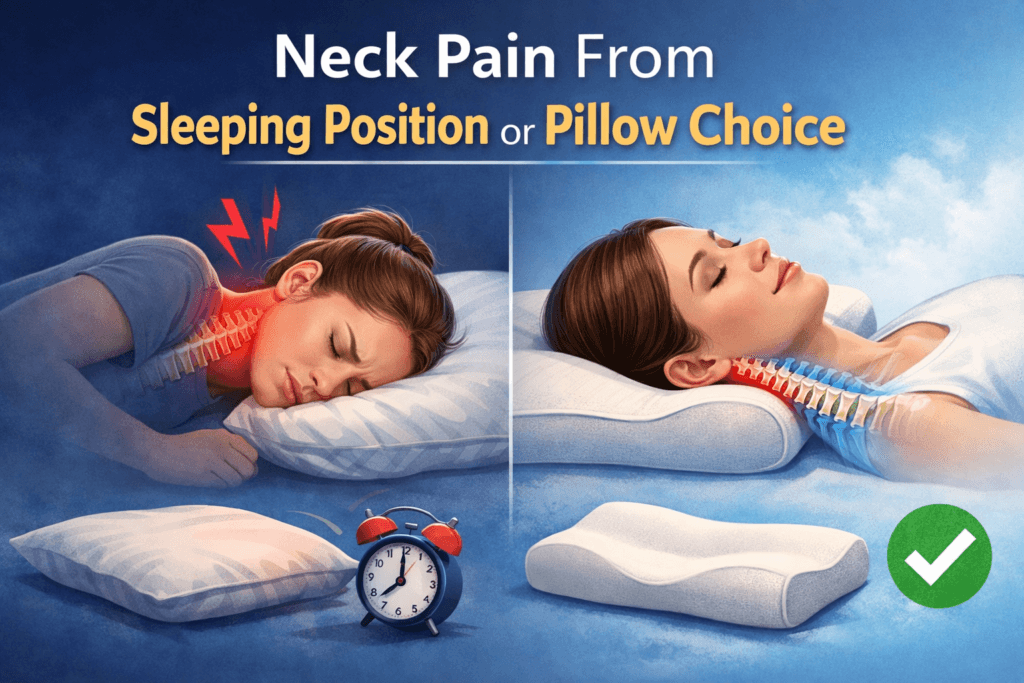
Neck Pain From Sleeping Position or Pillow Choice: 13 Proven Solutions for Morning Pain Relief
Waking up with neck pain is one of the clearest signs that something is wrong with how your body is supported at night. When pain starts in the morning, eases slightly with movement, or keeps returning despite daytime posture fixes, sleep mechanics are usually involved.
Your neck spends six to eight hours in a fixed position every night, during that time, muscles relax and joints rely entirely on external support. If your sleeping position or pillow places the cervical spine in a strained angle, stress builds silently, over weeks or months, that stress turns into stiffness, pain, and reduced mobility.
This post breaks down how sleeping position and pillow choice contribute to neck pain, why common recommendations often fail, and what actually works when you want long term relief.
Why Neck Pain Often Starts During Sleep
The cervical spine is naturally curved in a gentle forward arc called lordosis. This curve is essential because it distributes mechanical load evenly across the vertebrae, intervertebral discs, ligaments, and surrounding muscles. When the spine maintains this alignment, the neck can support the head with minimal strain.
During sleep, however, muscle activity drops significantly, your neck is almost entirely reliant on external support from the pillow and mattress, without proper support, the cervical spine can drift into unnatural positions such as flexion (chin toward chest), extension (head tilted back), rotation (head turned to the side), or lateral bending (head tilted sideways). Maintaining these positions for several hours can trigger a cascade of issues:
- Muscle ischemia and stiffness: Prolonged pressure reduces blood flow to neck muscles, causing tightness and soreness.
- Joint capsule irritation: Sustained awkward angles place stress on facet joints, leading to discomfort and inflammation.
- Disc pressure imbalance: Uneven loading can compress certain parts of intervertebral discs, potentially aggravating bulges or degenerative changes.
- Nerve root compression: Misalignment may irritate cervical nerve roots, causing tingling, numbness, or radiating pain into the shoulders and arms.
- Trigger point formation: Muscles held under tension for long periods can develop painful knots that refer pain across the neck and upper back.
Neck pain from sleep often does not appear immediately, it can show up hours after waking as stiffness, reduced range of motion, headaches, or radiating shoulder and arm discomfort.
The Myth That Sleep Is Passive for the Neck
Many people assume that sleep is “neutral time” for the spine, but research in biomechanics and rehabilitation medicine proves otherwise. Even mild rotation, flexion, or lateral tilt maintained for several hours can generate more cumulative strain than brief periods of poor posture during the day.
The body is much better at handling movement than prolonged immobility in a poor position, that is why neck pain associated with sleep often feels deep, stiff, and resistant to simple stretching or self-massage. Morning discomfort is not a random event, it is the result of hours of sustained mechanical stress.
How Sleeping Position Affects the Neck
Your sleeping position determines how your cervical spine is loaded. Even small deviations from neutral alignment, held for hours, can lead to discomfort and long-term issues.
Back Sleeping:
Back sleeping is frequently recommended as the optimal position for spinal health, but its benefits depend entirely on correct neck support. Poor support can exacerbate pain rather than prevent it.
Common problems include:
- Pillow too high: This pushes the head forward, flexing the neck and increasing pressure on posterior muscles.
- Pillow too flat: The head falls backward, extending the neck excessively and compressing the facet joints.
- Mattress too soft: The upper back may sink too deeply, causing the cervical curve to flatten or exaggerate.
A properly positioned pillow for back sleeping should fill the natural curve of the neck, supporting the cervical lordosis rather than just the back of the head. When alignment is correct, back sleeping can relieve pressure, improve blood flow, and reduce morning stiffness.
Side Sleeping:
Side sleeping is the most common position, but it is often misunderstood and performed incorrectly. The neck must remain aligned with the thoracic spine to prevent strain.
Common mistakes include:
- Pillow too low: The neck tilts downward, creating sustained lateral flexion.
- Pillow too high: The neck tilts upward, forcing muscles to remain contracted all night.
- Shoulder under the head: This compresses the cervical spine and misaligns the neck.
- Chin rotated downward toward the chest: This rotation twists cervical joints and muscles for hours.
When executed correctly, side sleeping can be excellent for spinal health. The key is matching pillow height to shoulder width so the neck and head remain in a neutral, straight line with the spine.
Stomach Sleeping:
Stomach sleeping is the most damaging position for neck health. It forces the cervical spine into prolonged rotation and lateral bending while placing asymmetric strain on muscles and joints.
Effects include:
- Prolonged cervical rotation: Muscles on one side of the neck remain contracted all night.
- Asymmetric muscle shortening: Muscles on one side adaptively shorten, leading to stiffness and imbalance.
- Facet joint compression: Continuous pressure irritates small joints between vertebrae.
- Disc torsion: Rotation under load can stress intervertebral discs, particularly in the mid-cervical spine.
Even thin pillows cannot fully correct the mechanics of stomach sleeping. The head must turn to one side to breathe, keeping the neck in a compromised position for hours. People who wake with neck pain and sleep on their stomach are usually experiencing direct consequences of this position, not just incidental discomfort.
Why Pillow Choice Matters More Than Most People Think
Pillows are not merely comfort items. Whether designed as orthopedic devices or not, they serve a critical role in spinal alignment, load distribution, and muscle support during sleep. The right pillow maintains the natural curve of the neck, reduces stress on joints and discs, and allows muscles to rest in a neutral position. The wrong pillow, used night after night, is like wearing a poorly fitted shoe all day, damage accumulates gradually, often without immediate awareness.
A pillow influences four major factors:
- Neck angle: How flexed, extended, or rotated the cervical spine rests overnight.
- Head position: Whether the head is centered over the spine or pushed forward/sideways.
- Load distribution: How weight is shared between muscles, discs, and joints.
- Muscle resting length: Whether muscles remain shortened or neutral during prolonged inactivity.
Pillow Height and Neck Alignment
Pillow height is the single most important factor in supporting the neck. The wrong height can create sustained stress on muscles, joints, and discs.
Too high:
- Pushes the neck into flexion, increasing strain on posterior muscles.
- Elevates disc pressure in the cervical spine.
- May exaggerate forward head posture over time.
Too low:
- Allows excessive extension, placing stress on anterior structures.
- Compresses facet joints at the back of the neck.
- Can trigger tension headaches from prolonged joint irritation.
The ideal pillow height is individualized, depending on sleeping position, shoulder width, and mattress firmness. A side sleeper with broad shoulders needs a thicker pillow than a back sleeper, while a softer mattress may require additional support to maintain neutral alignment.
Pillow Firmness and Support
Pillow firmness is just as important as height.
- Too soft: Collapses under the weight of the head, failing to maintain cervical curvature.
- Too firm: Resists the natural contour of the neck, creating pressure points and discomfort.
The goal is controlled support, not extreme softness or hardness. Materials like memory foam, latex, or specialized contour pillows can work well, but only when the dimensions match your anatomy and sleeping style.
Cervical Contour Pillows: Helpful or Hype
Cervical contour pillows feature a raised neck roll with a recessed area for the head. When fitted correctly, they can:
- Maintain cervical lordosis
- Reduce pressure on facet joints
- Support proper head and neck alignment
However, problems arise when:
- One-size-fits-all designs are used without regard to body type
- Neck roll height is excessive, forcing unnatural alignment
- Users try to adapt to the pillow rather than finding the right fit
Contour pillows are tools, not universal solutions. Choosing one requires attention to your shoulder width, sleeping position, and neck curve.
Mattress Interaction With Pillow Choice
Pillow effectiveness cannot be considered in isolation. Mattress firmness directly affects how the neck is supported:
- Soft mattress: Shoulders sink deeper, increasing the effective height needed for the pillow in side sleepers.
- Firm mattress: Keeps the body elevated, so a slightly thinner pillow may be sufficient.
Many people repeatedly switch pillows without considering mattress interaction, which often leads to persistent neck pain.
Neck Pain Patterns Linked to Sleep Issues
Understanding the type of neck pain can help identify whether pillow or sleep position is the cause:
- Morning stiffness that improves with movement: Suggests mechanical joint stiffness and muscle guarding from prolonged positioning.
- Pain on one side of the neck: Often linked to side sleeping with improper pillow height or habitual head rotation.
- Neck pain with headaches: Upper cervical joint irritation can refer pain to the head.
- Pain radiating to the shoulder or arm: May indicate cervical nerve root irritation from sustained rotation or misalignment.
How Long-Term Poor Sleep Position Affects the Neck
Chronic exposure to improper support can lead to:
- Loss of cervical lordosis
- Degenerative disc changes
- Facet joint arthropathy
- Myofascial pain syndromes
These changes do not occur overnight, but repetitive strain over years increases the risk, particularly as we age. Preventing these problems early is far easier than reversing structural changes later.
How to Identify If Your Pillow Is Causing Neck Pain
Ask yourself:
- Does pain start or worsen after waking?
- Does changing sleep position affect symptoms?
- Does using a different pillow while traveling improve or worsen pain?
- Does pain decrease as the day goes on?
If the answer is yes to any of these, pillow choice is likely contributing to your neck pain. Correcting it, combined with proper sleep posture, is often the first step toward long-term relief.
How to Choose the Right Pillow Based on Sleeping Position
Choosing the right pillow depends on how you sleep. The goal is to maintain neutral cervical alignment, support muscles, and reduce pressure on joints.
For Back Sleepers:
Back sleepers need a pillow that maintains the natural curve of the neck without lifting the head too high:
- Medium height: Supports the neck without pushing the chin forward.
- Neck contour: A slight curve under the neck helps preserve lordosis.
- Avoid thick head elevation: Excessively tall pillows can flex the neck and strain posterior muscles.
A well-chosen pillow for back sleepers reduces tension and prevents stiffness in the morning.
For Side Sleepers:
Side sleepers place uneven load on the neck because the shoulder pushes into the mattress. Pillow selection should aim to fill this gap:
- Height equal to shoulder width: Keeps the spine straight and the neck level.
- Firmness: The pillow should resist collapsing under the head.
- Alignment: Ensure the head and neck form a straight line with the thoracic spine.
Proper support prevents lateral bending and muscle fatigue over hours of sleep.
For Combination Sleepers:
Combination sleepers move between positions, requiring a pillow that adapts to multiple angles:
- Responsive materials: Memory foam or latex that conforms quickly to head and neck changes.
- Moderate contour: Avoid extreme shaping that can cause discomfort in certain positions.
A flexible pillow helps maintain alignment through the night without forcing the body into one position.
Strategies to Transition Away From Stomach Sleeping
Stomach sleeping is the most stressful position for the neck, but habits can change with consistent effort. Strategies include:
- Pillow under one shoulder: Encourages the body to rotate and reduces neck rotation.
- Body pillow: Helps stabilize side sleeping and prevents rolling onto the stomach.
- Remove or reduce pillows: Makes stomach sleeping less comfortable, encouraging side or back positions.
Changing sleep habits takes time, but the long-term benefits for neck health are significant.
When Neck Pain Is Not Just About Sleep
Sleep-related neck pain often coexists with daytime issues. Even the best pillow cannot fully fix the problem if other factors are present:
- Poor daytime posture: Forward head posture or rounded shoulders increase nighttime stress.
- Weak deep neck flexors: These muscles stabilize the cervical spine; weakness allows sagging or rotation.
- Thoracic stiffness: Reduced mobility in the upper back increases cervical strain.
- Stress-related muscle tension: Emotional or physical stress keeps neck muscles contracted.
Addressing these factors alongside sleep optimization produces the best results.
Exercises That Support Better Sleep Posture
Strengthening and mobility exercises complement proper pillow and mattress selection:
- Deep cervical flexor exercises: Improve neck stability and alignment.
- Scapular stabilizers: Maintain shoulder and upper back support.
- Thoracic extensors: Enhance upper back mobility to reduce cervical compensations.
- Upper back mobility drills: Encourage proper posture and decrease neck strain during sleep.
Even short daily sessions can improve tissue tolerance and reduce morning stiffness.
When to Seek Medical Evaluation
Not all neck pain can be solved with pillow changes and posture correction. Seek professional assessment if:
- Pain persists despite proper pillow and sleep adjustments
- Symptoms include numbness, tingling, or weakness
- Pain radiates below the elbow
- Headaches are severe, worsening, or frequent
These signs suggest nerve involvement or structural issues that require medical intervention.
Evidence-Based Perspective on Neck Pain and Sleep
Research consistently shows that sustained poor positioning contributes to musculoskeletal pain. Pillows alone are not magic fixes, but they play an important role in reducing mechanical stress. Pain improves when:
- Mechanical stress is minimized through proper alignment
- Tissue capacity is enhanced via strengthening and stretching
- Movement patterns are optimized during the day
Sleep optimization is one component of a broader, comprehensive approach to neck health.
Common Mistakes People Make
- Buying expensive pillows without considering alignment
- Switching pillows too frequently
- Ignoring mattress quality
- Forcing adaptation to uncomfortable designs
- Expecting instant results
Neck tissues require time to adapt. Even the best pillow will not produce immediate relief if tissues are already tight or irritated.
How Long It Takes to Notice Improvement
Most people notice reduced morning stiffness within one to two weeks after correcting sleep mechanics. Chronic pain may take longer as muscles, ligaments, and joints gradually recover.
Consistency matters more than brand or price, regular use of a properly selected pillow, combined with attention to daytime posture and strengthening exercises, yields the best long-term results.
The Bottom Line
Neck pain caused by sleeping position or pillow choice is common, yet often overlooked. Sleep is not neutral time for the spine. When the neck is unsupported or misaligned, joints, discs, and muscles endure sustained stress. Over time, this leads to stiffness, pain, and even degenerative changes.
The right pillow does more than cradle the head, it preserves cervical alignment and supports the natural curve of the neck. Sleeping position is equally important. Stomach sleeping remains the most harmful, while side and back sleeping can protect the neck when properly supported.
If you consistently wake with neck discomfort, it is a signal to address sleep mechanics. Correcting your pillow, mattress, and position early reduces the risk of chronic problems later. The spine is adaptable, but it responds to how you treat it every night.
👩⚕️ Need Personalized Health Advice?
Get expert guidance tailored to your unique health concerns through MuseCare Consult. Our licensed doctors are here to help you understand your symptoms, medications, and lab results—confidentially and affordably.
👉 Book a MuseCare Consult NowRelated Blog Post:
- Top 10 Proven Neck Pain Causes, Symptoms and Treatment Options That Actually Work
- 12 Proven Ways Neck Pain Causes Headaches (and How to Stop Them)
- 14 Proven Causes of Neck Pain That Comes and Goes (What to Do About It)
- Neck Pain From Sleeping Position or Pillow Choice: 13 Proven Solutions for Morning Pain Relief
- Best Back and Joint Pain Relief Devices You Can Use at Home: 17 Doctor‑Approved Solutions That Work
- Herniated Disc vs Bulging Disc: 13 Key Differences & Lower Back Pain Explained

Dr. Ijasusi Bamidele, MBBS (Binzhou Medical University, China), is a medical doctor with 5 years of clinical experience and founder of MyMedicalMuse.com, a subsidiary of Delimann Limited. As a health content writer for audiences in the USA, Canada, and Europe, Dr. Ijasusi helps readers understand complex health conditions, recognize why they have certain symptoms, and apply practical lifestyle modifications to improve well-being