14 Proven Causes of Neck Pain That Comes and Goes (What to Do About It)
Neck pain that appears, fades, and then returns can be confusing and frustrating. One day everything feels normal, the next day, turning your head is uncomfortable or your neck feels stiff without an obvious reason because the pain is not constant, many people dismiss it as temporary or insignificant, delaying proper attention until episodes become more frequent, more intense, or harder to ignore.
Intermittent neck pain is extremely common and, in most cases, it is not random. It is usually linked to mechanical factors such as poor posture, prolonged screen use, muscle tension, joint irritation, or repetitive daily habits that quietly overload the cervical spine. In fewer cases, recurring neck pain may point to an underlying medical issue that requires professional evaluation. The challenge is knowing when the pain is benign and when it is a signal that something deeper is wrong.
Understanding why neck pain comes and goes is critical. Temporary relief does not always mean the problem has resolved. It often means the trigger has been removed briefly, only for symptoms to return when the same stress is reintroduced. This article breaks down the most common causes of recurring neck pain, explains how to recognize warning signs that should not be ignored, and outlines what actually works to prevent neck pain from becoming a chronic, limiting problem.
Why Neck Pain Can Be Intermittent
The neck, also called the cervical spine, is a highly complex and mobile structure. It is made up of seven vertebrae, intervertebral discs, muscles, ligaments, joints, and a network of nerves that connect the brain to the rest of the body. Its job is demanding, it must support the weight of the head, allow precise movement in multiple directions, and protect critical neurological structures at the same time because of this complexity, even minor dysfunctions can trigger pain that flares up and then settles down.
Neck pain often comes and goes because the underlying trigger is usually related to posture, movement, or activity rather than constant structural damage. When the neck is placed under stress, symptoms appear. When that stress is reduced or removed, pain improves, sometimes giving the false impression that the issue has resolved. In reality, the problem is often still present, waiting to be reactivated.
Common reasons neck pain may be intermittent include:
- Muscle overuse followed by periods of rest
- Joint irritation that calms down but returns with movement
- Disc related issues that worsen in certain positions
- Nerve compression that changes with posture or head position
- Inflammation that fluctuates depending on activity and load
Intermittent pain should not be dismissed as harmless. Repeated flare ups usually mean the underlying cause has not been corrected. Over time, these cycles can lead to more frequent pain episodes, reduced mobility, and chronic discomfort.
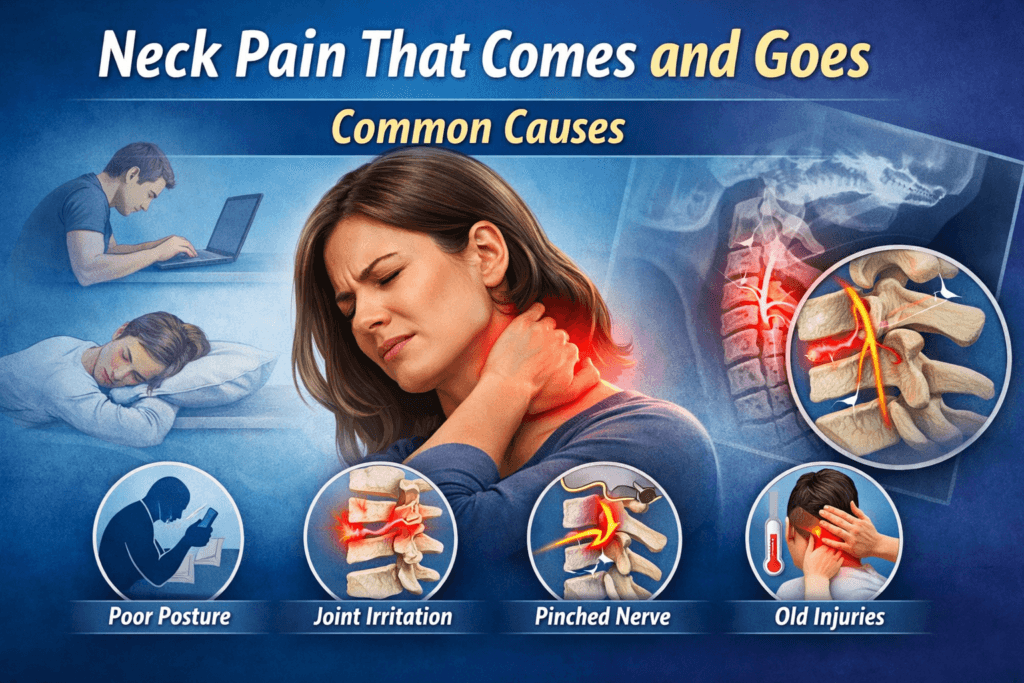
Poor Posture and Tech Neck
How Posture Causes Recurring Neck Pain
Poor posture is the most common cause of neck pain that comes and goes. Forward head posture places excessive strain on the cervical spine and surrounding muscles. This problem has become increasingly widespread due to prolonged phone use, laptop work, and long hours spent sitting at desks.
When the head moves forward even slightly, the mechanical load on the neck increases dramatically. Muscles in the back of the neck must work harder to support the head, while the deep stabilizing muscles in the front become weak and inhibited. Over time, this imbalance leads to fatigue, stiffness, and pain.
Postural neck pain often follows a predictable pattern, pain develops after hours of screen time, eases with rest or sleep, and then returns the next day when the same habits resume.
Typical Symptoms
Common features of posture related neck pain include:
- Stiffness or aching at the base of the skull
- A dull, heavy pain that worsens as the day progresses
- Tightness in the shoulders and upper back
- Relief when lying down or changing position
Because posture is a daily, repetitive stress, symptoms tend to recur unless habits are changed.
Why It Keeps Coming Back
Postural neck pain returns because the behaviors causing it remain unchanged. Temporary relief from rest, massage, or pain medication does not address the underlying muscle imbalance and joint stress, without correcting posture and strengthening supportive muscles, flare ups are likely to continue.
Muscle Strain and Tension
Acute and Repetitive Muscle Strain
Neck muscles are vulnerable to both sudden strain and repetitive overload. Quick movements, awkward sleeping positions, or unaccustomed activities can strain muscles and trigger pain. Repetitive habits such as carrying heavy bags on one shoulder, cradling a phone between the ear and shoulder, or using poor pillow support at night also place ongoing stress on the neck.
Muscle related neck pain often improves with rest, heat, gentle stretching, or massage. However, when the muscle is stressed again, symptoms frequently return. This cycle creates the pattern of pain that comes and goes.
Stress and Emotional Tension
Emotional and psychological stress play a major role in recurring neck pain. Stress causes involuntary tightening of muscles, particularly in the neck, shoulders, and upper back. This constant low level contraction reduces blood flow, increases muscle fatigue, and leads to stiffness and discomfort.
Stress related neck pain commonly:
- Appears during periods of high workload or emotional strain
- Improves during weekends, holidays, or vacations
- Feels tight, heavy, or achy rather than sharp
Unless stress and tension patterns are addressed, the pain often returns repeatedly, even when there is no obvious physical injury.
Cervical Joint Dysfunction
Facet Joint Irritation
Facet joints are small stabilizing joints located at the back of the spine that guide and limit movement between vertebrae. In the cervical spine, these joints play a critical role in allowing smooth rotation, bending, and extension of the neck because they are heavily involved in movement, they are particularly vulnerable to irritation.
Facet joints can become irritated due to poor posture, prolonged sitting, repetitive neck movements, arthritis, or sudden twisting or extension of the neck. When irritated, these joints may become inflamed, leading to pain that is closely tied to movement and position.
Facet joint pain often comes and goes because it is mechanically driven. Certain head positions or activities provoke symptoms, while others feel completely normal. This fluctuation can make the condition seem unpredictable, even though it follows clear mechanical patterns.
Common Features
Facet joint related neck pain often presents with:
- Pain concentrated on one side of the neck
- Discomfort when turning, tilting, or extending the head
- Localized tenderness near the spine
- Improvement with rest or neutral neck positioning
Cervical joint dysfunction is especially common in people who sit for long periods, work at computers, or perform repetitive neck movements as part of their job or daily routine.
Cervical Disc Problems
Bulging or Degenerating Discs
Intervertebral discs sit between the vertebrae and function as shock absorbers, allowing the spine to move while distributing load. Over time, discs naturally lose hydration and elasticity, a process known as disc degeneration. Mild disc bulges are also common and often develop gradually.
Disc related neck pain frequently fluctuates because disc pressure changes depending on posture, movement, and spinal alignment. Certain positions increase pressure on the disc, triggering pain, while others reduce it and provide relief.
Symptoms May Include
Disc related neck pain may present with:
- Neck pain that worsens with prolonged sitting, bending, or looking down
- Partial relief when lying down or changing position
- Occasional stiffness or reduced range of motion
- Pain that returns after sustained activity or poor posture
It is important to note that not all disc problems cause constant pain. Many cause intermittent flare ups that become more frequent or intense if the underlying stress on the spine is not addressed.
Pinched Nerves and Cervical Radiculopathy
Why Nerve Pain Comes and Goes
A pinched nerve in the neck, medically referred to as cervical radiculopathy, occurs when a nerve root is compressed or irritated by a disc bulge, bone spur, or inflamed surrounding tissue. Unlike muscle pain, nerve pain often changes dramatically with posture.
Nerve compression can increase or decrease depending on head and neck position. Looking down at a phone, extending the neck, or holding the head in one position for too long may worsen symptoms. Neutral or supported positions often reduce discomfort.
Typical Signs
Symptoms of nerve involvement may include:
- Sharp, burning, or electric like neck pain
- Pain radiating into the shoulder, arm, or hand
- Tingling, numbness, or pins and needles sensations in the fingers
- Weakness that may appear and disappear
Intermittent nerve pain should be taken seriously. Ongoing compression can lead to persistent nerve damage, loss of strength, and sensory changes if left untreated.
Poor Sleeping Position and Pillow Issues
How Sleep Affects Neck Pain
Sleeping posture has a major influence on neck health because the cervical spine remains in one position for several hours. Pillows that are too high, too flat, or worn out fail to support the natural curve of the neck, placing sustained stress on muscles and joints.
Neck pain caused by sleep related issues often follows a consistent pattern.
It commonly:
- Appears or worsens in the morning
- Improves gradually throughout the day
- Returns after the next period of sleep
Side sleepers and stomach sleepers are particularly prone to neck strain due to increased rotation and side bending of the cervical spine.
Why the Pain Repeats
If the pillow or sleeping position does not change, the neck is stressed night after night. Temporary improvement during the day does not correct the underlying mechanical problem, allowing symptoms to recur.
Osteoarthritis of the Cervical Spine
Age Related Wear and Tear
Cervical osteoarthritis develops as cartilage between the joints wears down and bone spurs form over time. This condition is common with aging and is more likely in individuals with a history of neck injuries or long term mechanical stress.
Pain associated with cervical arthritis often fluctuates. Inflammation levels, activity patterns, posture, and even weather changes can influence symptom severity.
Common Characteristics
Cervical osteoarthritis may present with:
- Stiffness that is worse in the morning or after inactivity
- Pain that increases with prolonged use or certain movements
- Reduced neck mobility
- Periodic flare ups rather than constant pain
Although osteoarthritis cannot be reversed, symptoms can usually be managed effectively with proper movement, posture correction, and targeted treatment strategies.
Whiplash and Old Neck Injuries
Delayed and Recurring Symptoms
Previous neck injuries can continue to cause problems long after the initial event has healed. Whiplash injuries, commonly caused by car accidents or contact sports, often damage muscles, ligaments, joints, and supporting soft tissues. Even when early symptoms improve, subtle instability or poor movement patterns may remain.
Because of this, pain from an old neck injury may appear months or even years later, flare ups are often triggered by physical stress, prolonged poor posture, sudden movements, or exposure to cold weather. The pain pattern is typically intermittent, which leads many people to underestimate the significance of the injury.
Signs of Old Injury Related Pain
Neck pain related to past injury often includes:
- A history of car accidents, falls, or sports related trauma
- Pain that returns without a clear or recent cause
- Increased sensitivity to quick or unexpected movements
Old injuries rarely resolve fully with rest or pain medication alone. They often require targeted rehabilitation to restore strength, stability, and normal movement patterns.
Less Common but Serious Causes
While most cases of intermittent neck pain are mechanical and not dangerous, there are situations where recurring pain may indicate a more serious underlying condition. These cases are less common but should not be overlooked.
Conditions to Be Aware Of
Potentially serious causes of neck pain include:
- Inflammatory arthritis, such as rheumatoid arthritis
- Infections affecting the spine or surrounding tissues
- Tumors involving the cervical spine or spinal cord
- Referred pain from heart or lung conditions
These conditions often present with additional symptoms beyond simple neck stiffness or soreness.
Red Flags That Need Medical Attention
Immediate medical evaluation is necessary if neck pain is accompanied by:
- Fever or unexplained weight loss
- Severe pain that does not improve with rest or position changes
- Progressive weakness, numbness, or loss of sensation
- Problems with balance, coordination, or walking
- Neck pain following significant trauma
If any of these signs are present, delaying evaluation can lead to serious complications.
Why Ignoring Intermittent Neck Pain Is a Mistake
Many people ignore neck pain because it comes and goes, assuming it is minor or self limiting. This is often a mistake. Recurrent pain usually indicates an unresolved mechanical or structural issue that continues to place stress on the cervical spine.
Without addressing the root cause, intermittent neck pain can gradually progress to:
- Chronic, daily neck pain
- Reduced neck mobility and stiffness
- Nerve irritation or long term nerve damage
- Frequent headaches and shoulder pain
- Decline in overall quality of life
Early intervention is typically simpler, more effective, and less invasive than treatment required after pain becomes chronic.
What Actually Helps Prevent Neck Pain From Returning
Posture Correction
Improving posture is one of the most effective ways to reduce recurring neck pain. Proper alignment decreases stress on cervical joints, discs, and muscles.
Key posture strategies include:
- Keeping screens at eye level to avoid looking down
- Sitting with the back supported and shoulders relaxed
- Avoiding prolonged forward head posture
- Taking regular breaks from screen based tasks
For many people, posture correction alone leads to significant symptom improvement.
Targeted Exercise and Physical Therapy
Exercise programs designed for neck pain focus on restoring balance, strength, and mobility. These exercises address the underlying causes rather than just masking symptoms.
Effective programs typically include:
- Strengthening of the deep neck flexor muscles
- Upper back and shoulder stability training
- Gentle neck mobility exercises
- Postural endurance training
Physical therapy remains one of the most evidence based treatments for recurrent neck pain.
Sleep Optimization
Sleep posture plays a critical role in neck health. A supportive pillow that maintains a neutral neck position helps reduce overnight strain. Side sleepers should ensure the neck stays aligned with the spine, while back sleepers benefit from gentle cervical support.
Sleeping on the stomach places excessive stress on the neck and should be avoided whenever possible.
Stress Management
Reducing stress helps decrease involuntary muscle tension in the neck and shoulders. Effective stress management strategies include:
- Regular physical activity
- Controlled breathing exercises
- Stretching or relaxation routines
- Adequate and consistent sleep
When stress levels improve, stress related neck pain often becomes less frequent and less intense.
Ergonomic Adjustments
Proper workstation ergonomics are essential for long term neck health, correct desk height, supportive seating, appropriate screen positioning, and well placed keyboards reduce daily strain and prevent repeated flare ups.
Treatment Options When Pain Persists
If neck pain continues despite consistent lifestyle and ergonomic changes, additional treatment may be necessary.
Conservative Treatments
Common first line treatments include:
- Structured physical therapy programs
- Manual therapy techniques
- Heat or cold therapy for symptom relief
- Short term use of pain relievers when appropriate
Medical Interventions
In selected cases, medical treatment may involve:
- Imaging studies to clarify diagnosis
- Prescription medications when indicated
- Injections to reduce inflammation or nerve related pain
Surgery is rarely required for intermittent neck pain and is reserved for specific conditions involving significant neurological compromise or structural instability.
Final Thoughts
Neck pain that comes and goes is rarely accidental. In most cases, it reflects an ongoing mechanical issue such as poor posture, muscle imbalance, joint stress, or early degenerative changes that have not been fully addressed. Temporary relief does not mean the problem is gone, it usually means the trigger has paused, not resolved.
The encouraging reality is that intermittent neck pain is highly responsive to the right approach. Evidence based care focused on posture correction, proper movement, supportive sleep habits, and stress reduction can dramatically reduce flare ups and prevent progression into chronic pain. Small, consistent changes often produce the most lasting results. If your neck pain is becoming more frequent, more intense, or begins to involve symptoms like numbness, tingling, weakness, or arm pain, professional evaluation is essential. Ignoring recurring symptoms allows minor problems to evolve into more complex and persistent conditions.
Lasting relief starts with understanding the cause, once the root issue is identified and addressed, recurring neck pain no longer has to be part of your daily life.
👩⚕️ Need Personalized Health Advice?
Get expert guidance tailored to your unique health concerns through MuseCare Consult. Our licensed doctors are here to help you understand your symptoms, medications, and lab results—confidentially and affordably.
👉 Book a MuseCare Consult NowRelated Blog Post:
- Top 10 Proven Neck Pain Causes, Symptoms and Treatment Options That Actually Work
- 12 Proven Ways Neck Pain Causes Headaches (and How to Stop Them)
- 7 Proven Fixes for Neck Stiffness After Sleeping Wrong
- Does Physical Therapy Help with Neck Pain? 7 Powerful Research Backed Facts
- Best Back and Joint Pain Relief Devices You Can Use at Home: 17 Doctor‑Approved Solutions That Work
- Degenerative Disc Disease: 10 Powerful Reasons Back Pain Worsens With Age

Dr. Ijasusi Bamidele, MBBS (Binzhou Medical University, China), is a medical doctor with 5 years of clinical experience and founder of MyMedicalMuse.com, a subsidiary of Delimann Limited. As a health content writer for audiences in the USA, Canada, and Europe, Dr. Ijasusi helps readers understand complex health conditions, recognize why they have certain symptoms, and apply practical lifestyle modifications to improve well-being