
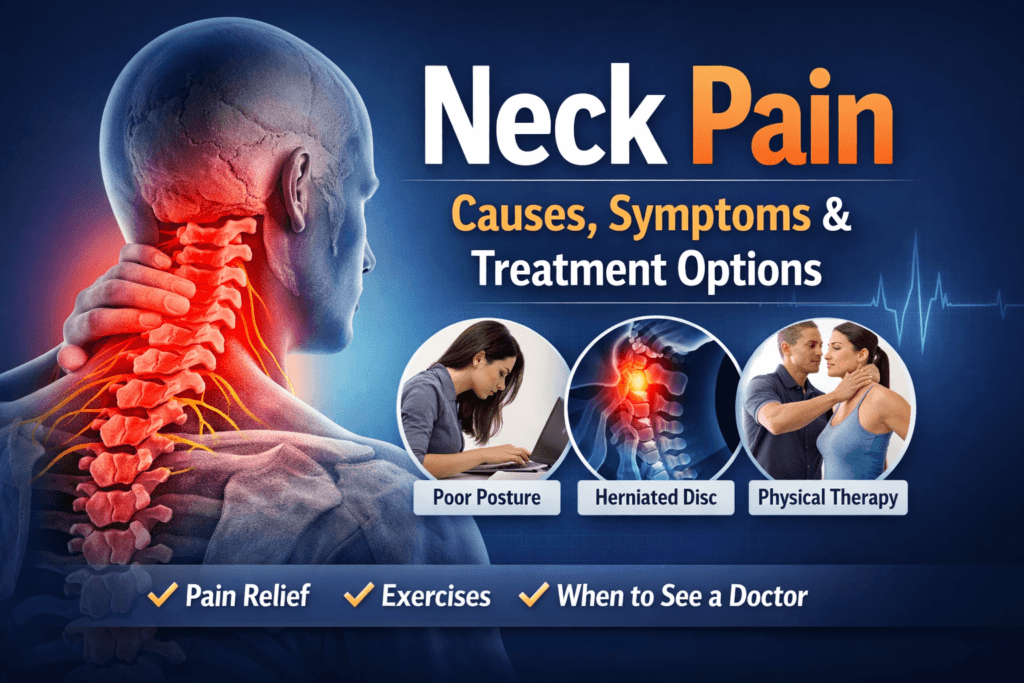
Top 10 Proven Neck Pain Causes, Symptoms and Treatment Options That Actually Work
Neck pain often starts quietly, a stiff morning. A dull ache after a long day at a desk, a sharp pull when turning your head. Many people ignore it at first, assuming it will resolve on its own. Sometimes it does, other times, it slowly worsens, interfering with sleep, concentration, work performance, and overall quality of life.
What makes neck pain challenging is that it can come from many different sources like muscle strain, poor posture, disc problems, nerve compression, arthritis, and even systemic illness can all produce similar symptoms. Treating neck pain without understanding its cause often leads to short term relief but long term frustration.
This guide breaks down neck pain in a clear, practical way. You will learn why it happens, how to recognize warning signs, and which treatment options are supported by medical evidence rather than myths or temporary fixes.
Understanding the Neck and Why It Is Vulnerable
The neck, medically referred to as the cervical spine, is a complex and highly specialized structure. It consists of seven vertebrae, labeled C1 through C7, stacked one on top of another. Together, these vertebrae support the weight of the head, protect the spinal cord, and allow an exceptional range of motion, including bending forward and backward, rotating side to side, and tilting the head.
To perform these tasks, the cervical spine relies on multiple interconnected structures, all of which can become sources of pain when stressed or damaged. These include:
- Cervical vertebrae, which provide structural support
- Intervertebral discs, which act as shock absorbers between the vertebrae
- Facet joints, which guide and limit movement
- Ligaments and muscles, which stabilize the neck and control motion
- Nerves and the spinal cord, which transmit signals between the brain and body
- Blood vessels, which supply the brain and surrounding tissues
Unlike the lower spine, which is designed primarily for stability and weight bearing, the neck prioritizes mobility. This mobility allows us to turn our heads freely but also makes the cervical spine more vulnerable to strain, overuse, degeneration, and injury. Even small disruptions in alignment, posture, or muscle balance can trigger pain and dysfunction.
Common Causes of Neck Pain
1. Muscle Strain and Tension
Muscle strain is the most common cause of neck pain and is often underestimated. The neck muscles work continuously to hold the head upright and respond quickly to changes in posture and movement. When these muscles are overworked or held in a shortened position for long periods, they become fatigued and painful.
Common triggers include:
- Poor posture during prolonged computer or smartphone use
- Sleeping with inadequate neck support or in awkward positions
- Sudden or jerky neck movements
- Long hours of driving or desk work without breaks
- Emotional or psychological stress that causes involuntary muscle tightening
Muscle related neck pain typically feels stiff, tight, or achy. It often worsens with movement and improves with rest, heat, or gentle stretching, while usually not dangerous, repeated muscle strain can become chronic if the underlying cause is not addressed.
2. Poor Posture and Tech Neck
Modern lifestyles have made posture related neck pain increasingly common. When the head tilts forward, even slightly, the effective weight of the head on the cervical spine increases dramatically. This phenomenon is often referred to as tech neck.
Sustained forward head posture leads to:
- Chronic muscle fatigue, especially in the neck and upper back
- Ligament strain from prolonged overstretching
- Increased stress on cervical discs
- Loss of normal spinal alignment
Over time, these changes can cause persistent pain, stiffness, headaches, and reduced mobility. If left uncorrected, postural strain can accelerate degenerative changes in the cervical spine.
3. Cervical Disc Degeneration
Intervertebral discs in the neck naturally change with age. As the years pass, these discs lose water content and elasticity, reducing their ability to absorb shock. This process is known as cervical degenerative disc disease.
Common effects include:
- Decreased shock absorption between vertebrae
- Gradual loss of disc height
- Increased pressure on facet joints and nearby nerves
Disc degeneration itself does not always cause pain, many people have degenerative changes on imaging without symptoms. Pain develops when degeneration leads to inflammation, instability, or nerve irritation.
4. Herniated or Bulging Cervical Disc
A cervical disc herniation occurs when the inner portion of a disc pushes outward and compresses nearby nerve roots. This is more likely after trauma, repetitive strain, or sudden loading of the neck.
Typical symptoms include:
- Neck pain that radiates into the shoulder, arm, or upper back
- Tingling or numbness in the fingers or hand
- Muscle weakness in the arm or reduced grip strength
Unlike muscle strain, disc related pain often follows a specific nerve pattern and may worsen with certain neck positions.
5. Cervical Spondylosis
Cervical spondylosis is a broad term used to describe age related wear and tear of the cervical spine. It often develops gradually and includes several structural changes, such as:
- Bone spur formation along vertebrae
- Progressive disc degeneration
- Inflammation and stiffness of facet joints
This condition is extremely common after age 50 and is often visible on imaging even in people without pain. When symptoms occur, they may include chronic neck stiffness, limited range of motion, headaches, and nerve related pain if nearby nerves are affected.
6. Whiplash Injury
Whiplash is a soft tissue injury caused by a rapid back and forth movement of the neck. It most commonly occurs during motor vehicle accidents but can also result from sports injuries or falls.
The sudden force strains muscles, ligaments, discs, and joints in the neck. Symptoms may include:
- Neck pain and stiffness
- Headaches, often starting at the base of the skull
- Dizziness or visual disturbances
- Shoulder or upper back pain
Notably, whiplash symptoms do not always appear immediately. Pain and stiffness can develop hours or even days after the injury, which is why delayed evaluation is common.
7. Nerve Compression and Cervical Radiculopathy
When a nerve root in the cervical spine becomes compressed or inflamed, the condition is known as cervical radiculopathy. This compression interferes with nerve signaling and produces symptoms beyond the neck itself.
Common features include:
- Sharp, burning, or electric pain radiating down the arm
- Numbness or tingling in the hand or fingers
- Weakness in specific muscle groups, depending on the affected nerve
The most frequent causes are disc herniation and bone spurs related to cervical spondylosis without appropriate treatment, nerve compression can lead to persistent weakness and sensory changes.
8. Arthritis and Inflammatory Conditions
Inflammatory conditions such as rheumatoid arthritis or ankylosing spondylitis can directly affect the cervical spine. Unlike common age-related wear and tear, these disorders involve the immune system attacking the joints, ligaments, and tissues of the neck. This can lead to chronic pain, stiffness, and reduced stability, which sometimes increases the risk of serious complications if not managed properly.
Typical features of inflammatory neck pain include:
- Persistent, aching neck pain that may worsen over weeks or months
- Morning stiffness lasting longer than 30 minutes, improving gradually with movement
- Feeling of instability in the neck, sometimes described as a loose or wobbly sensation
These conditions usually require medical management, often including anti-inflammatory or disease-modifying medications, physical therapy, and close monitoring by a rheumatologist. Self-treatment alone is rarely sufficient and may worsen the condition over time.
9. Serious but Less Common Causes
Although most neck pain is mechanical or age-related, certain rare but serious conditions require urgent attention. These include:
- Spinal infections: Infections of the vertebrae or discs can lead to severe pain, fever, and progressive neurological deficits
- Tumors: Both primary and metastatic cancers can involve the cervical spine
- Cervical fractures: Often resulting from trauma, falls, or osteoporosis
- Meningitis: Infection of the protective membranes around the brain and spinal cord, often accompanied by fever, neck stiffness, and headache
Pain accompanied by systemic symptoms such as fever, unexplained weight loss, or neurological changes should never be ignored. Prompt evaluation is critical to prevent long-term complications.
Symptoms of Neck Pain
Neck pain can present in many different ways depending on the underlying cause. Recognizing patterns helps guide treatment and determine when medical evaluation is necessary.
Common Symptoms
- Localized neck soreness or tenderness
- Stiffness and reduced range of motion
- Pain worsened by movement or prolonged postures
- Muscle tightness or spasms
Radiating and Neurological Symptoms
- Pain radiating to shoulders, arms, or upper back
- Tingling or numbness in the hands or fingers
- Weak grip strength or muscle weakness
- Electric shock-like or burning sensations along the arm
Associated Symptoms
- Headaches originating from the neck
- Jaw pain or discomfort
- Upper back or shoulder pain
- Dizziness, balance issues, or lightheadedness
When Neck Pain Becomes a Serious Concern
Certain warning signs indicate that neck pain may be caused by a more serious condition or that the nervous system is affected. Immediate medical attention should be sought if neck pain is accompanied by:
- Progressive weakness in the arms or hands
- Loss of bladder or bowel control
- Severe pain following trauma
- Fever, chills, or unexplained weight loss
- Night pain that does not improve with rest
These symptoms may indicate spinal cord compression, infection, tumor, or systemic disease and require urgent evaluation.
Diagnosis of Neck Pain
Most neck pain can be diagnosed through careful history taking and physical examination. Imaging is reserved for cases where symptoms are severe, persistent, or accompanied by red flags.
Medical History and Physical Exam
A clinician will typically assess:
- Onset, pattern, and duration of pain
- Range of motion and posture
- Muscle strength and reflexes
- Sensory changes such as numbness or tingling
Imaging Studies
Imaging is used selectively to clarify underlying structural problems:
- X-rays: Useful for evaluating alignment, bone structure, and signs of arthritis.
- MRI: Evaluates soft tissues including discs, nerves, and spinal cord.
- CT scans: Provides detailed bone images, especially after trauma.
Routine imaging is not recommended for simple, uncomplicated neck pain without warning signs, as it rarely changes initial management.
Evidence-Based Treatment Options for Neck Pain
Effective treatment depends on identifying the underlying cause and combining several approaches rather than relying on a single method.
1. Activity Modification and Rest
Short-term adjustments can reduce strain:
- Avoid prolonged bed rest, which can weaken muscles and slow recovery
- Maintain gentle neck and shoulder movement
- Reduce aggravating activities while symptoms improve
Complete immobility often delays recovery, so controlled movement is encouraged.
2. Physical Therapy
Physical therapy is one of the most effective ways to restore function and reduce pain. Programs are typically individualized and may include:
- Stretching exercises to improve flexibility
- Strengthening exercises targeting neck, shoulder, and upper back muscles
- Postural correction strategies
- Manual therapy to relieve stiffness and improve mobility
Consistency and adherence to exercises are more important than intensity or duration.
3. Pain Relief Medications
Medications are used to manage symptoms, not to cure underlying problems:
- Acetaminophen for mild, general pain
- Nonsteroidal anti-inflammatory drugs (NSAIDs) for inflammation and pain
- Short-term muscle relaxants for acute spasms
Long-term use should be monitored by a healthcare professional due to potential side effects.
4. Heat and Cold Therapy
- Heat therapy: Relaxes tight muscles, improves blood flow, and eases stiffness
- Cold therapy: Reduces inflammation, especially after acute injury
Applying the appropriate modality depending on the stage of injury can accelerate recovery.
5. Lifestyle and Ergonomic Changes
Simple daily adjustments can prevent neck pain recurrence:
- Correct desk and screen height to maintain neutral posture
- Take frequent breaks from sitting or screen use
- Use a supportive pillow and maintain proper sleep posture
- Avoid cradling phones between shoulder and ear
These small changes are highly effective for long-term neck health.
6. Cervical Support Devices
In certain cases, temporary use of cervical support devices can help relieve strain and provide stability. These include cervical collars, neck braces, or posture-correcting devices. They can reduce muscle fatigue and limit harmful movements, giving inflamed tissues a chance to heal.
Key points to remember:
- Use should be short term, usually only for a few hours or days at a time.
- Continuous use can weaken neck muscles, leading to dependency.
- Devices are most effective when combined with physical therapy or exercise programs.
Cervical support devices are not a cure but a tool to support recovery while underlying issues are addressed.
7. Injection Therapies
For persistent neck pain, especially when nerve involvement is present, injections can provide targeted relief. These are usually considered after conservative treatments like therapy and medications have failed. Common options include:
- Trigger point injections: Localized injections into tight or painful muscles to relieve spasms.
- Cervical epidural steroid injections: Reduce inflammation around compressed nerves to alleviate radiating pain.
- Facet joint injections: Target the small joints of the cervical spine to relieve joint-related pain.
Injections are generally part of a broader treatment plan and should be performed by a trained specialist. While they can provide significant short-term relief, they are rarely a standalone solution.
8. Surgical Treatment
Surgery for neck pain is uncommon and reserved for specific, severe cases. Indications include:
- Progressive neurological deficits such as weakness or loss of sensation
- Severe spinal cord compression threatening function
- Failure of conservative treatments over a sustained period
Surgical options depend on the underlying condition and may include discectomy, spinal fusion, or decompression procedures. Surgery aims to relieve nerve pressure, restore stability, and improve function, but it is considered only after careful evaluation.
Self-Care Strategies That Actually Work
Many cases of neck pain improve with consistent self-care, especially when incorporated into daily routines. Effective strategies include:
- Daily neck mobility exercises: Gentle stretches and range-of-motion exercises to maintain flexibility.
- Strengthening the upper back and shoulders: Improves posture and reduces neck strain.
- Stress management techniques: Meditation, breathing exercises, or yoga to prevent muscle tension from stress.
- Limiting screen time and frequent posture breaks: Reduces repetitive strain from prolonged forward head positions.
Quick fixes like temporary painkillers or brief stretches rarely provide lasting relief. Habit changes, consistency, and awareness of posture are what produce real results.
Preventing Neck Pain Long Term
Prevention is easier and more effective than treating chronic problems. The goal is to minimize repetitive strain and maintain spinal health through daily habits.
Key prevention tips:
- Maintain neutral posture, keeping the head aligned with the spine.
- Strengthen postural muscles of the neck, shoulders, and upper back.
- Take frequent breaks during screen or desk work.
- Use ergonomic furniture and supportive pillows.
- Manage stress and sleep quality, both of which impact muscle tension and healing.
Long-term prevention reduces the risk of recurrent pain and slows age-related degeneration.
Living With Chronic Neck Pain
Chronic neck pain can significantly affect quality of life, including sleep, work, and mental well-being. Managing it successfully often requires a multidisciplinary approach.
Effective management includes:
- Multidisciplinary care: Combining physical therapy, medical management, and lifestyle interventions.
- Realistic expectations: Understanding that improvement may be gradual, and some discomfort may persist.
- Gradual functional improvement: Focusing on restoring mobility, strength, and daily function rather than eliminating pain completely.
Chronic pain does not always indicate serious damage, but ignoring it can lead to worsening symptoms, compensatory posture problems, and reduced quality of life.
Final Thoughts
Neck pain often starts as a minor annoyance but can gradually affect your daily life, sleep, and mental well-being. Ignoring it or relying solely on temporary fixes rarely provides lasting relief. The most effective approach combines understanding the underlying cause, consistent self-care, posture correction, and, when needed, professional treatment.
Recovery requires patience and gradual improvement. Daily habits such as strengthening exercises, ergonomic adjustments, and stress management play a crucial role in reducing recurrence. Quick fixes or short-term relief methods alone do not address the root of the problem.
Chronic or severe neck pain, especially when accompanied by neurological symptoms like numbness, tingling, or weakness, requires prompt evaluation by a healthcare professional. The goal is not only to alleviate pain but to restore function, mobility, and overall quality of life. With the right strategies, most people can regain control over their neck health and prevent future episodes.
👩⚕️ Need Personalized Health Advice?
Get expert guidance tailored to your unique health concerns through MuseCare Consult. Our licensed doctors are here to help you understand your symptoms, medications, and lab results—confidentially and affordably.
👉 Book a MuseCare Consult Now
Dr. Ijasusi Bamidele, MBBS (Binzhou Medical University, China), is a medical doctor with 5 years of clinical experience and founder of MyMedicalMuse.com, a subsidiary of Delimann Limited. As a health content writer for audiences in the USA, Canada, and Europe, Dr. Ijasusi helps readers understand complex health conditions, recognize why they have certain symptoms, and apply practical lifestyle modifications to improve well-being