
⚠️ Affiliate Disclaimer: This post may contain affiliate links, which means I may earn a small commission at no extra cost to you, if you make a purchase through one of these links. I only recommend products or services I genuinely trust and believe can provide value. Thank you for supporting My Medical Muse!
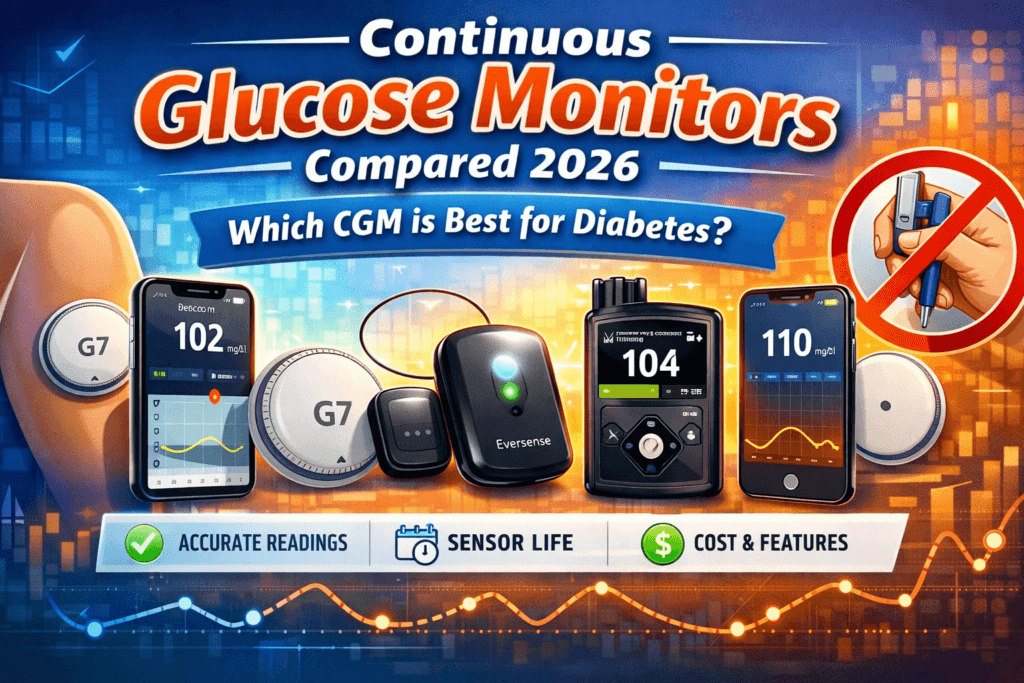
Continuous Glucose Monitors Compared 2026: 7 Best CGM Devices for Diabetes Control
Effectively managing diabetes today requires more than occasional finger-prick tests. Continuous Glucose Monitors (CGMs) have transformed the way people track and control their blood sugar, offering real-time insights, trend analysis, and alerts that traditional methods simply cannot provide. These devices empower users to make immediate, informed decisions about diet, exercise, and insulin management, helping prevent dangerous spikes and dips before they become serious.
With a growing number of CGM options in 2026, choosing the right device can feel overwhelming, each system differs in terms of accuracy, sensor longevity, app integration, comfort, and cost, making it important to understand which features matter most for your lifestyle and type of diabetes.
In this guide, we’ll compare the top CGMs currently available, highlight their key strengths and weaknesses, and provide actionable insights to help you select the device that best fits your needs, whether you’re managing type 1 diabetes, type 2 diabetes, or looking for prediabetes monitoring solutions. By the end, you’ll have a clear picture of which CGM offers the best combination of reliability, convenience, and value in 2026.
Why Continuous Glucose Monitors Are a Game-Changer
For decades, people with diabetes relied on finger-prick tests to monitor blood glucose, while these tests provide useful information, they only capture a single moment in time, leaving gaps in understanding patterns and trends. These blind spots can lead to unexpected highs, lows, and potential complications over time.
Continuous Glucose Monitors (CGMs) solve this problem by continuously tracking glucose levels through a small sensor placed under the skin, sending real-time data directly to a smartphone or dedicated receiver. The benefits go far beyond convenience:
- Real-Time Alerts: Receive instant notifications for dangerously high or low blood sugar levels, helping prevent emergencies before they escalate.
- Trend Analysis: Monitor how your glucose changes throughout the day, after meals, exercise, or medication providing actionable insights.
- Data-Driven Decisions: Make informed adjustments to your diet, insulin, or lifestyle proactively, instead of reacting to surprises.
For anyone serious about managing diabetes, a CGM isn’t just a convenience, it’s a tool that can improve quality of life, reduce complications, and provide peace of mind.
CGM | Sensor Life | MARD | Pros | Cons | Price |
Dexcom G7 | 10 days | 8.2% | Accurate, predictive alerts, intuitive app | Higher cost, sensor replaced every 10 days | $350-$450 |
FreeStyle Libre 3 | 14 days | 9.0% | Affordable, easy to use, discreet | Slightly less accurate, limited alert customization | $80-$130 |
Medtronic Guardian 4 | 7 days | 8.5% | Works with insulin pumps, predictive alerts | Requires calibration, short sensor life | $400–$500 |
Eversense E3 | 180 days | 8.0% | Long-term implant, minimal replacements, accurate | High upfront cost, minor implantation needed | $800-$1,000 |
Key Takeaways from the Comparison
- Accuracy: Dexcom G7 and Eversense E3 provide the most precise readings, ideal for users requiring tight glucose control.
- Sensor Longevity: Eversense E3 is unmatched with its 180-day implant, while FreeStyle Libre 3 offers a convenient 14-day sensor life.
- Alerts & Integration: Dexcom G7 and Guardian 4 provide advanced alerts and pump compatibility, making them perfect for intensive diabetes management.
- Affordability: FreeStyle Libre 3 balances cost and convenience for everyday users.
Links for Quick Purchase:
- Buy Eversense E3
Key Factors to Consider When Choosing a CGM
Not every Continuous Glucose Monitor (CGM) is the right fit for every user. Choosing the best device depends on several critical factors, from accuracy and sensor life to app features, ease of use, and cost. Here’s a detailed guide to help you make an informed decision:
1. Accuracy
Accuracy is the most important factor in a CGM because reliable readings are essential for safe diabetes management. The standard measure is MARD (Mean Absolute Relative Difference), the lower the percentage, the more precise the device.
- Dexcom G7: Offers excellent accuracy, making it ideal for type 1 diabetes patients or anyone requiring tight insulin control.
- Eversense E3: As an implantable sensor, it has the lowest MARD, providing long-term, highly reliable readings.
- FreeStyle Libre 3: Slightly less precise but still accurate enough for most type 2 diabetes users and everyday monitoring.
2. Sensor Wear Time
The lifespan of the sensor determines how often you need replacements and can impact both convenience and cost:
- Short-Term Sensors: Dexcom G7 (10 days) and Guardian 4 (7 days), require more frequent replacement but offer top-tier features and alerts.
- Medium-Term Sensors: FreeStyle Libre 3 (14 days), balances convenience, affordability, and accuracy.
- Long-Term Sensors: Eversense E3 (180-day implant), minimal replacements, consistent monitoring, and reduced maintenance.
3. App Integration & Alerts
A CGM’s usefulness is amplified by its app. Look for systems that provide:
- Real-Time Notifications: Alerts for dangerously high or low blood sugar.
- Trend Graphs: Visuals that help predict spikes or drops, so you can adjust your behavior proactively.
- Third-Party Integration: Syncs with insulin pumps, fitness trackers, and smartwatches for comprehensive monitoring.
Top performers: Dexcom G7 and Eversense E3 lead with intuitive apps, predictive trends, and robust alert customization.
4. Ease of Use
Comfort, insertion, and discretion matter especially if you plan to wear the device every day:
- Discreet: FreeStyle Libre 3 is nearly invisible under clothing and easy to scan.
- Slim & Lightweight: Dexcom G7 is small, comfortable, and unobtrusive.
- Implantable: Eversense E3 requires a minor procedure, but once in place, it lasts six months, reducing daily maintenance.
5. Cost & Insurance Coverage
CGM prices vary widely, both for the device and ongoing sensor replacements, while upfront costs can be high, many insurance plans now cover part or all of CGMs for type 1 and type 2 diabetes patients. Consider:
- Device cost: Initial purchase price
- Sensor replacement cost: Frequency of replacements affects long-term expenses
- Insurance coverage: Check your provider for eligibility and coverage limits
Detailed Comparison: Pros & Cons of the Top CGMs
Here’s a closer look at the leading CGMs and what sets them apart:
Dexcom G7
Pros:
- Highly accurate with low MARD
- Real-time alerts and predictive trends
- No calibration required
Cons:
- Higher upfront cost
- Sensor lasts 10 days, requiring regular replacements
FreeStyle Libre 3
Pros:
- Affordable and widely available
- Discreet and easy to use
- No calibration required
Cons:
- Slightly less accurate than other high-end CGMs
- Alerts are less customizable than Dexcom
Medtronic Guardian 4
Pros:
- Works seamlessly with insulin pumps
- Predictive alerts to prevent hypoglycemia
- App integration for trend monitoring
Cons:
- Shorter sensor lifespan (7 days)
- Requires calibration for optimal accuracy
Eversense E3
Pros:
- Long-term implant reduces replacement hassle
- Excellent accuracy
- On-body vibration alerts for discreet notifications
Cons:
- High upfront cost
- Requires minor procedure for implantation
Which CGM Is Best for Different Needs?
Choosing the right CGM depends on your diabetes type, lifestyle, and what you prioritize in a device. Here’s a quick guide to help you match your needs with the best option in 2026:
- Best for Accuracy & Tech Enthusiasts: Dexcom G7: Ideal for type 1 diabetes or anyone who wants top-tier accuracy, real-time alerts, and seamless app integration for advanced trend analysis.
- Best for Budget-Friendly Monitoring: FreeStyle Libre 3, Perfect for type 2 diabetes or users seeking an affordable, easy-to-use CGM that delivers reliable results without frequent calibration.
- Best for Insulin Pump Users: Medtronic Guardian 4: Fully integrated with compatible insulin pumps, offering predictive alerts and real-time data to help prevent hypoglycemia.
- Best for Long-Term Use: Eversense E3: Designed for minimal maintenance with a 180-day implant, ideal for users who prefer long-term monitoring without frequent sensor changes.
Links for Quick Purchase:
How to Maximize Your CGM Benefits
Even the best CGM is only as useful as the way you use it. Follow these practical tips to get the most out of your device:
- Check Your Data Daily: Look at trends, not just individual readings, to understand how your lifestyle impacts blood sugar.
- Sync With Apps: Many CGMs integrate with insulin pumps, fitness trackers, and nutrition apps for a complete picture of your health.
- Set Personalized Alerts: Customize notifications for highs, lows, and trend changes to stay ahead of potential emergencies.
- Understand Your Lifestyle Impact: Diet, exercise, stress, and sleep all influence glucose levels, knowing the patterns helps you adjust proactively.
- Consult Your Healthcare Provider: Regularly review your CGM data with a professional to optimize insulin, medications, and lifestyle interventions.
Real-World User Tips
Using a CGM effectively often comes down to small, practical habits:
- Meal Timing: Track post-meal spikes to make better carb and insulin decisions.
- Exercise Adjustments: Prevent exercise-induced hypoglycemia by monitoring trends before, during, and after workouts.
- Travel Use: Ensure your device and app are set up for time zone changes to avoid misaligned alerts.
- Sensor Placement: Follow manufacturer guidelines for insertion sites to maximize comfort and accuracy.
FAQs About Continuous Glucose Monitors
1.Can CGMs replace finger-prick tests entirely?
A: Modern CGMs like Dexcom G7 and FreeStyle Libre 3 are accurate enough for most daily decisions, but some users still verify unusual readings with a finger-prick test.
2. Are CGMs covered by insurance?
Many insurance plans cover CGMs for type 1 and type 2 diabetes, but coverage varies. Always check with your provider.
3.How painful is sensor insertion?
Insertion is typically quick and minimally uncomfortable. Eversense E3 requires a minor procedure for implantation but is painless after healing.
4.How often do I need to replace sensors
- Dexcom G7: 10 days
- FreeStyle Libre 3: 14 days
- Guardian 4: 7 days
- Eversense E3: 180 days (implantable)
Final Verdict
There is no one-size-fits-all CGM, the best choice depends on your diabetes type, lifestyle, and personal preferences:
- Tech-Savvy & Accuracy-Oriented: Dexcom G7
- Affordable & Convenient: FreeStyle Libre 3
- Pump Users: Medtronic Guardian 4
- Long-Term Monitoring: Eversense E3
For anyone serious about managing diabetes in 2026, a CGM is not just a convenience, it’s a powerful tool that saves time, reduces complications, and improves quality of life.
Purchase Links:
👩⚕️ Need Personalized Health Advice?
Get expert guidance tailored to your unique health concerns through MuseCare Consult. Our licensed doctors are here to help you understand your symptoms, medications, and lab results—confidentially and affordably.
👉 Book a MuseCare Consult NowRelated Post:
- 7 Critical Reasons Continuous Glucose Monitoring Can Transform Your Health
- Why Normal Blood Sugar Readings Can Still Hide Diabetes: 10 Shocking Truths You Must Know
- Fasting Blood Sugar vs HbA1c vs OGTT: 7 Critical Differences Every Patient Must Know
- Diabetes Mellitus: 10 Essential Insights on Causes, Types, Symptoms, Complications, and Modern Management
- Difference Between Type 1 and Type 2 Diabetes: 17 Critical Biological Differences Explained

Dr. Ijasusi Bamidele, MBBS (Binzhou Medical University, China), is a medical doctor with 5 years of clinical experience and founder of MyMedicalMuse.com, a subsidiary of Delimann Limited. As a health content writer for audiences in the USA, Canada, and Europe, Dr. Ijasusi helps readers understand complex health conditions, recognize why they have certain symptoms, and apply practical lifestyle modifications to improve well-being