⚠️ Affiliate Disclaimer: This post may contain affiliate links, which means I may earn a small commission at no extra cost to you, if you make a purchase through one of these links. I only recommend products or services I genuinely trust and believe can provide value. Thank you for supporting My Medical Muse!
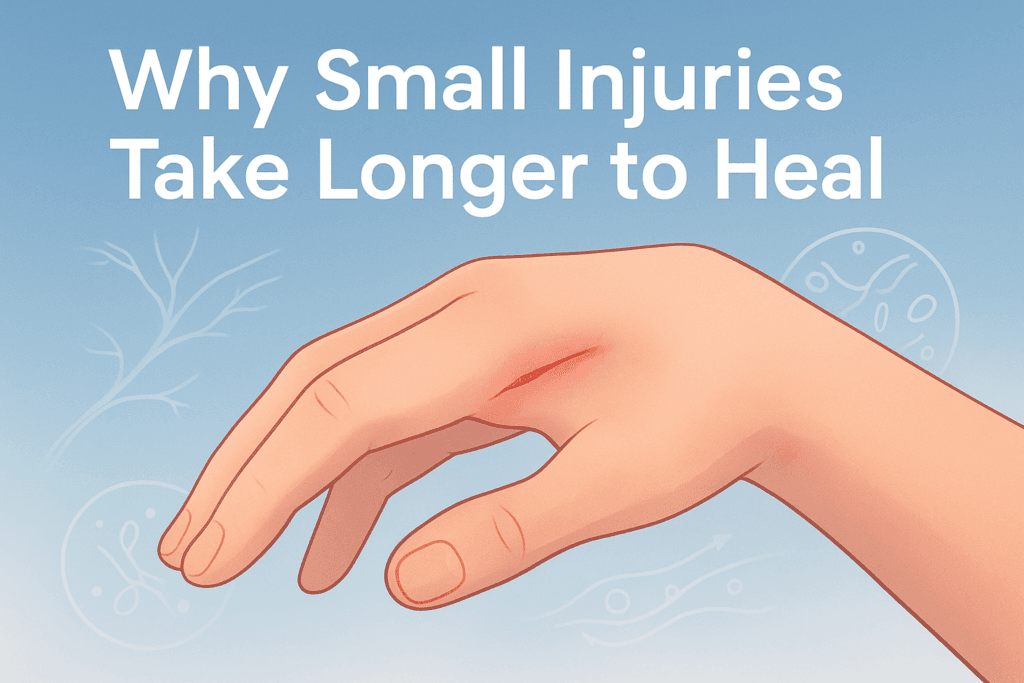
15 Surprising Reasons Why Small Injuries Take Longer to Heal
Understanding the Slowdown in the Body’s Repair System
You might have noticed it before, a tiny paper cut that used to disappear in a day now lingers for a week, or a small bruise refuses to fade as quickly as it once did. It feels frustrating, even unnecessary but the truth is, your body is trying to tell you something important. Minor injuries that take longer to heal are not random, they are signals that your repair systems are slowing down, that the intricate coordination between blood vessels, immune cells, connective tissue, hormones, nerves, and cellular energy is less efficient than it used to be.
These small delays are not trivial, they are early warnings that subtle changes in the body’s resilience are occurring. Understanding why this happens is crucial because it reveals the hidden state of your internal repair mechanisms and what might be done to support them.
1. Healing as an Active Biological Process
. Healing is far from a passive process. The body does not simply close a wound on its own. Instead, it initiates a carefully orchestrated series of biological events designed to restore tissue integrity. Even a minor cut or bruise triggers a cascade that includes immediate clotting and vascular responses, inflammation to remove damaged cells, proliferation of new cells, and remodeling of tissue to regain strength. Each of these stages requires precise timing, coordination, and energy.
Minor injuries rely heavily on the efficiency of these baseline repair systems. Major injuries can trigger emergency repair pathways that temporarily override minor inefficiencies. Small wounds, however, depend entirely on the everyday performance of blood flow, immune function, and cellular activity. This is why subtle declines in any system vascular health, immune responsiveness, or cellular energy can disproportionately affect the healing of seemingly insignificant injuries.
In practical terms, this means that a small cut or strain that once healed in a day or two may now take several extra days to close or feel tender longer. While the difference might seem minor, it reflects broader systemic changes in the body’s resilience and repair capacity.
2. Reduced Microcirculation Creates the First Bottleneck
Blood delivery is the first critical step in healing. Capillaries bring oxygen, nutrients, immune cells, and essential growth factors to injured tissues without adequate circulation, the cells responsible for repair cannot function efficiently, slowing the entire healing process.
Aging, chronic stress, inflammation, or metabolic disorders can weaken capillaries, making them narrower, more fragile, or less dense. When microcirculation is compromised, small injuries are particularly vulnerable because they rely entirely on these tiny vessels for their supply of repair resources. Even minor reductions in blood flow can significantly delay the arrival of oxygen and nutrients, slowing clotting, immune response, and collagen production.
For example, a paper cut on the fingertip may remain red and tender for days longer than expected because the microvascular network in the skin has reduced its capacity to rapidly deliver healing components. Similarly, minor bruises may linger because the cleanup of blood from damaged capillaries takes longer in tissues with impaired circulation.
3. Slower Immune Response Complicates Repair
Healing depends on a properly timed inflammatory response. When tissue is damaged, immune cells are mobilized to clear debris, fight potential infection, and signal other cells to begin tissue reconstruction. This inflammatory phase is critical, it sets the stage for the proliferation and remodeling phases that follow.
With aging or chronic stress, immune cells respond more slowly, cleanup is delayed, and the signaling between cells becomes less coordinated. This leads to low-grade, prolonged inflammation rather than a sharp, targeted response. The result is slower healing and prolonged discomfort, redness, swelling, or tenderness may persist longer than they should.
In practical terms, a small muscle strain that might once have resolved in a couple of days may continue to feel stiff or sore for a week. The immune system is still performing its cleanup duties, but it is doing so less efficiently, prolonging the recovery timeline.
4. Fibroblast Decline and the Collagen Problem
Fibroblasts are the primary cells responsible for producing collagen, the structural protein that gives skin, tendons, ligaments, and connective tissue their strength and elasticity. Collagen is essential for rebuilding damaged tissue and restoring function after injury.
Over time, fibroblast activity declines. These cells divide more slowly, produce collagen less efficiently, and often create thinner, less organized fibers. As a result, wounds take longer to close, scar tissue forms unevenly, and tendons or ligaments recover more slowly. Minor strains or tears that might have healed quickly in youth can linger, and repeated injuries may exacerbate structural weakness over time.
This is not just a cosmetic issue, ollagen is a key determcinant of tissue integrity, reduced fibroblast function can leave tissue more prone to further injury and contribute to chronic pain or recurrent minor injuries.
5. Mitochondrial Decline Reduces Cellular Energy
Healing is an energy-intensive process, every step, from immune cell activity to fibroblast collagen production, requires ATP, the energy currency produced by mitochondria in every cell. Adequate cellular energy ensures that repair processes occur at the proper speed and with sufficient quality.
With aging, metabolic stress, or chronic illness, mitochondrial function declines. Cells produce less ATP and experience higher oxidative stress, which damages cellular components. This energy shortfall slows every stage of healing, from inflammation to tissue remodeling. Fatigue and delayed wound closure often occur together because both stem from the same root cause: insufficient cellular energy to support repair.
For instance, someone with reduced mitochondrial efficiency may notice that even a minor bruise takes several extra days to fade, while their overall energy levels remain lower, reflecting the systemic nature of the problem.
6. Hormonal Shifts Affect Tissue Repair
Hormones play a critical role in the speed and efficiency of healing, growth hormone and IGF-1 regulate cell proliferation and collagen synthesis, sex hormones such as testosterone and estrogen influence tissue regeneration and repair, while thyroid hormones modulate metabolic activity and energy availability.
As people age, the levels of these hormones gradually decline, this slows protein synthesis, reduces collagen production, and diminishes the turnover of cells in damaged tissues. Minor injuries are the first to reflect these changes because they rely on subtle, baseline hormonal signaling rather than emergency repair pathways that are activated in severe trauma.
Practically, this means a small skin tear, strain, or bruise will feel slower to recover, and tenderness may persist longer than expected. Hormonal shifts affect not only repair speed but also the quality of the new tissue, leaving it more prone to future minor injuries.
7. Chronic Inflammation Diverts Resources
The body has a finite repair capacity, chronic inflammation, whether caused by poor sleep, ongoing psychological stress, insulin resistance, or gut imbalances, consumes energy and repair resources that would otherwise be available for healing injuries.
In this context, the body prioritizes vital organs and immediate survival needs over minor injuries. Small cuts, bruises, or strains do not get the full attention of repair systems. This does not mean the body ignores them rather, repair resources are diverted to areas with higher perceived urgency. As a result, minor injuries heal more slowly, and low-grade tissue damage can accumulate over time, compounding overall vulnerability.
8. Nervous System Signals Coordinate Healing
The nervous system is a key regulator of tissue repair, nerves release chemical messengers called neuropeptides, which increase blood flow, activate immune cells, and stimulate fibroblasts to produce collagen. This communication ensures that repair occurs efficiently and in the correct sequence.
With age or chronic stress, nerve signaling weakens, reduced sensitivity and slower communication between injury sites and repair systems prolong recovery. For example, a small skin cut may remain tender for several extra days because local nerves are slower to signal immune and repair cells to respond.
9. Skin Thinning and Loss of Cushioning
Skin naturally thins over time due to collagen loss, reduced elasticity, and diminished subcutaneous fat layers. These changes reduce the protective cushion around blood vessels and underlying tissues, making minor injuries more susceptible to micro-damage.
Thinner, less resilient skin also slows wound closure, cuts, scrapes, or minor bruises remain visible longer because the tissue lacks structural support, and new cells have more difficulty bridging the gap. Repeated minor injuries can compound this problem, making the skin more fragile over time.
10. Sleep and Healing Are Closely Linked
Sleep is critical for tissue repair and regeneration, deep sleep stages are when growth hormone peaks, immune coordination improves, and collagen synthesis is at its highest. These processes collectively accelerate tissue repair.
Chronic sleep deprivation suppresses repair hormones, prolongs inflammation, and delays tissue remodeling, even minor injuries which rely heavily on baseline repair efficiency, take longer to heal. For example, a small bruise might remain tender and discolored for several extra days in someone with insufficient sleep.
11. Nutrient Delivery and Utilization
Healing requires specific nutrients, protein for tissue building, vitamin C for collagen formation, zinc and copper for enzymatic repair processes, iron for oxygen transport, and omega-3 fatty acids for anti-inflammatory support.
Even when dietary intake is adequate, impaired circulation or digestive absorption can reduce delivery of these nutrients to the injury site. This limitation slows repair, a minor skin tear or small muscle strain may persist longer than expected if cells do not receive the materials necessary for tissue reconstruction in a timely manner.
12. Small Injuries Reveal Underlying Systemic Issues
Major injuries trigger emergency repair responses, often bypassing minor inefficiencies. Small injuries, however, rely on the body’s baseline efficiency and reserve capacity, when repair systems begin to degrade, minor injuries are the first to show signs of delay.
Lingering small wounds, prolonged soreness, or bruises that fade slowly can indicate underlying declines in vascular health, cellular energy, immune coordination, or connective tissue integrity. They serve as early warning signs of systemic issues before larger, more serious problems arise.
Understanding the Message Behind Slow Healing
Delayed healing is a signal, not a failure, it reflects reduced efficiency in blood flow, cellular energy production, protein synthesis, repair signaling, and resource allocation across the body.
Paying attention to these signals helps identify areas that require support, slow healing highlights weaknesses before they escalate into more serious conditions. Understanding and responding to these early warnings allows for targeted interventions that can restore repair efficiency and maintain tissue health.
The Risk of Ignoring Slow Healing
Ignoring slow-healing injuries allows micro-damage to accumulate, tissue weakness to grow, chronic inflammation to persist, and overall structural decline to accelerate. Even seemingly minor cuts, bruises, or strains can contribute to a cumulative burden of tissue damage over time.
Minor injuries that do not heal properly can lay the foundation for more severe health issues in the future, including chronic pain, recurrent injury, or connective tissue deterioration. Addressing slow healing proactively is essential for long-term resilience.
Supporting Efficient Healing
There is no single supplement, medication, or quick fix that restores healing speed on its own. True improvement comes from holistic support of the body’s repair systems. Key strategies include improving circulation, reducing chronic inflammation, optimizing mitochondrial function, ensuring adequate and restorative sleep, maintaining connective tissue health, and managing stress effectively.
Supporting baseline repair capacity allows injuries to heal faster, strengthens tissue integrity, and enhances resilience against future damage. Even as the body ages, adopting these strategies can significantly improve both the speed and quality of recovery from minor injuries.
The Bottom Line
Small injuries that take longer to heal are not random, imaginary, or meaningless. They are subtle but important signals from your body, revealing how efficiently your internal repair systems are functioning. A delayed cut, persistent bruise, or lingering strain can be an early indicator that your circulation, immune response, cellular energy, or tissue integrity is not performing at full capacity. These minor setbacks are often the first hints of larger systemic changes that, if ignored, could affect your overall resilience.
Paying attention to these early warnings allows you to act proactively. By recognizing that slow-healing injuries reflect underlying physiological processes, you can take steps to support recovery and prevent further decline. This includes optimizing circulation, managing inflammation, ensuring proper nutrition, supporting mitochondrial function, and maintaining adequate sleep and stress management. Addressing these areas does more than speed up healing, it strengthens the body’s capacity to respond to future challenges.
Ignoring slow healing does not make the problem go away, it merely delays understanding, allowing subtle declines to continue unnoticed. By responding to these signals, you not only improve the immediate recovery of small injuries but also reinforce the body’s overall repair and resilience. Paying attention to your body’s feedback ensures that minor injuries remain minor, prevents the accumulation of tissue damage, and supports long-term health. In essence, slow-healing injuries are not a nuisance, they are a roadmap pointing to where the body needs care and support.
👩⚕️ Need Personalized Health Advice?
Get expert guidance tailored to your unique health concerns through MuseCare Consult. Our licensed doctors are here to help you understand your symptoms, medications, and lab results—confidentially and affordably.
👉 Book a MuseCare Consult NowMust Read:
- Post-Operative Wound Care for Diabetic Patients: 12 Essential Tips for Faster Healing & Recovery
- 7 Shocking Reasons Your Skin Bruises More Easily With Age
- Capillary Fragility: 11 Hidden Early Signs of Aging Blood Vessels You Must Not Ignore
- 7 Little-Known Ways Mouth Ulcers Reveal Systemic Inflammation
- 7 Bone Density Boosters That Really Work, Supercharge Your Bone Health
- 7 Powerful Benefits of Vitamin K2 for Your Metabolic Health

Dr. Ijasusi Bamidele, MBBS (Binzhou Medical University, China), is a medical doctor with 5 years of clinical experience and founder of MyMedicalMuse.com, a subsidiary of Delimann Limited. As a health content writer for audiences in the USA, Canada, and Europe, Dr. Ijasusi helps readers understand complex health conditions, recognize why they have certain symptoms, and apply practical lifestyle modifications to improve well-being