⚠️ Affiliate Disclaimer: This post may contain affiliate links, which means I may earn a small commission at no extra cost to you, if you make a purchase through one of these links. I only recommend products or services I genuinely trust and believe can provide value. Thank you for supporting My Medical Muse!
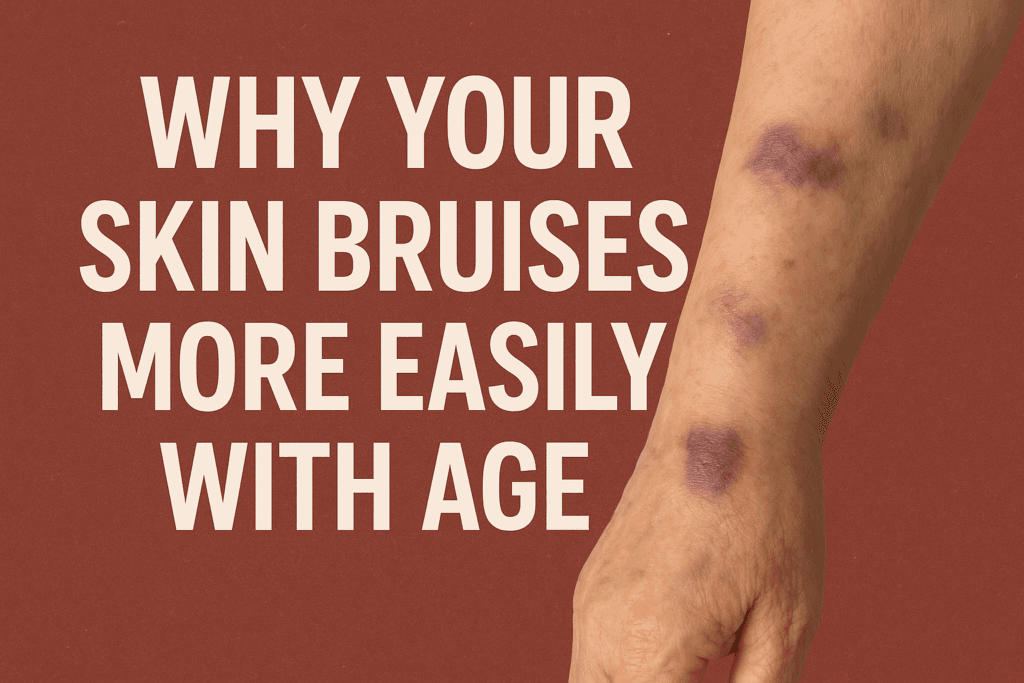
7 Shocking Reasons Your Skin Bruises More Easily With Age
Most people notice the bruises after they start appearing more often but by then, the process has usually been underway for years.
What looks like a harmless purple mark is actually one of the earliest visible signs that the body’s protective systems are wearing down. Long before major disease develops, the skin, blood vessels, and connective tissue begin to lose strength, flexibility, and repair capacity. Bruising is one of the few ways this internal decline becomes visible on the surface.
Calling it normal aging oversimplifies a complex biological process and in some cases, delays recognition of deeper systemic stress. Easy bruising is not just about fragile skin, it reflects changes in vascular integrity, collagen structure, immune regulation, and how efficiently the body absorbs and uses critical nutrients.
This article breaks down what truly changes with age, why bruises form more easily and linger longer, and when this seemingly minor symptom is a signal that should not be ignored.
What a Bruise Really Is (And Why That Matters)
A bruise, medically called a contusion forms when small blood vessels, primarily capillaries and venules, rupture, allowing blood to leak into the surrounding tissues beneath the skin.
In younger, healthier tissue, this process is tightly controlled.
In Younger Skin
- Blood vessels are flexible and resilient
- Surrounding connective tissue absorbs and disperses impact
- Leaked blood is rapidly reabsorbed, Inflammation is precise, brief, and well-regulated
As a result, minor bumps often leave no visible mark or a small bruise that fades quickly.
With Aging:
- Blood vessels become stiffer and more fragile
- Structural support around vessels deteriorates
- Blood leaks more easily into surrounding tissue
- Clearance of pooled blood slows significantly
- Bruises last longer, spread wider, and appear darker
The key point is this:
The bruise itself is not the problem. The problem is how little force it now takes to create one, that change reflects deeper structural decline not bad luck.
1. Thinning of the Skin: Loss of Protective Layers
One of the most powerful drivers of age-related bruising is skin atrophy, a gradual thinning of the skin’s protective layers.
What Actually Happens With Age
As the years pass:
- The epidermis becomes thinner and more fragile
- The dermis loses collagen and elastin, the proteins responsible for strength and elasticity
- Subcutaneous fat decreases, especially in the arms, hands, and lower legs
Together, these changes dramatically reduce the skin’s ability to absorb mechanical force.
Why Thinner Skin Bruises More Easily
Young skin functions like a padded jacket, it cushions impact and protects what lies underneath. Aged skin behaves more like a thin shirt. The same minor bump produces very different outcomes with reduced dermal thickness:
- Capillaries sit closer to the surface
- Even mild pressure can rupture delicate vessels
- Blood spreads more easily through tissue
- Bruises appear larger, darker, and more dramatic
This is why bruising commonly shows up on:
- Forearms
- Hands
- Shins
These areas lose padding early and are exposed to frequent, unnoticed impacts.
2. Collagen Breakdown: Structural Failure From the Inside
Collagen is often discussed as a cosmetic protein but that misses its real importance. Collagen is a load-bearing structural material.
Age-Related Collagen Changes
Beginning as early as the mid-20s:
- Collagen production declines by roughly 1% per year
- Existing collagen fibers become fragmented and disorganized
- Excessive cross-linking develops, making tissue stiffer but weaker
- Repair and replacement slow progressively
This results in tissue that looks intact but fails under stress.
Why Collagen Loss Causes Bruising
Collagen functions like rebar inside concrete:
- It stabilizes blood vessels
- Anchors capillaries within surrounding tissue
- Distributes mechanical stress across a wider area
When collagen integrity declines:
- Blood vessels lose critical structural support
- Capillaries shear or tear under minimal force
- Leaked blood spreads more freely into surrounding tissue
The result is bruising from impacts that once would have caused nothing at all, this is not simply “skin aging.”
It is connective tissue failure, visible on the surface long before deeper complications appear.
3. Capillary Fragility and Vascular Aging
Capillaries are the smallest blood vessels in the body, and the most vulnerable to age-related damage. Their walls are only a single cell thick, designed for exchange, not durability. As vascular aging sets in, these delicate structures are often the first to fail.
What Changes With Age
Several interconnected processes weaken capillaries over time:
- Endothelial cells lose flexibility, reducing their ability to adapt to mechanical stress
- Basement membranes thicken, but paradoxically become weaker and more brittle
- Nitric oxide signaling declines, impairing vessel relaxation and resilience
- Microvascular repair slows, allowing minor damage to accumulate
Instead of bending and recovering, aging capillaries are more likely to crack under pressure.
The Functional Consequences
These changes make capillaries:
- More brittle
- Less adaptable to sudden pressure or shear forces
- Slower to seal once injured
The Result
Minor trauma that once caused no visible effect now leads to:
- Capillary rupture
- Leakage of blood into surrounding tissue
- Clearly visible bruising
This process is significantly amplified in individuals with:
- Hypertension
- Diabetes or insulin resistance
- A history of smoking
- Chronic systemic inflammation
In many cases, easy bruising is the earliest outward sign of vascular aging, appearing years before more serious cardiovascular symptoms develop.
4. Loss of Subcutaneous Fat: Less Cushion, More Damage
Subcutaneous fat is often dismissed as excess weight, but biologically, it serves a critical protective role. It acts as a shock absorber, shielding blood vessels from mechanical stress.
What Happens With Aging
With age:
- Fat redistributes away from the limbs
- The skin becomes draped directly over muscle and bone
- Natural cushioning diminishes
- Mechanical shock is no longer absorbed efficiently
This is particularly noticeable in the forearms, hands, and lower legs.
How This Increases Bruising
Without this protective layer:
- Small impacts transmit force directly to underlying blood vessels
- Capillaries experience higher shear stress
- Vessel rupture occurs more easily
- Bruises form faster and penetrate deeper into tissue
This explains why older adults often notice bruises:
- After lightly bumping into furniture
- Without any clear memory of injury
- In areas that previously never bruised
The key change is simple but profound, the injury threshold has dropped.
5. Immune and Inflammatory Dysregulation
Bruising is not just a bleeding event, it is also an immune and inflammatory process.
Normal Bruise Resolution
In healthy tissue:
- Inflammation remains localized
- Macrophages efficiently clear leaked blood
- Hemoglobin breakdown products are removed quickly
- Tissue repair proceeds smoothly
Bruises fade rapidly and predictably.
How Aging Disrupts This System
With age:
- Immune responses become either sluggish or excessively prolonged
- Inflammatory signaling loses precision
- Clearance of hemoglobin and iron-containing byproducts slows
- Repair processes become inefficient
The Visible Consequences
As a result:
- Bruises last longer than they used to
- Color changes linger (purple- blue – green – yellow)
- The same areas bruise repeatedly
- Healing appears incomplete
This chronic, low-grade inflammatory state, often referred to as inflammaging amplifies the visibility of even minor injuries, making bruising more frequent and more noticeable.
6. Nutrient Absorption Declines (Even With A Good Diet)
Easy bruising is often blamed on poor nutrition. While diet can play a role, the more common problem in aging adults is impaired absorption, not inadequate intake.
Key Nutrients That Protect Against Bruising
Several nutrients are essential for maintaining vessel integrity and effective healing:
- Vitamin C: supports collagen synthesis and capillary strength
- Vitamin K: activates clotting factors that limit bleeding
- Protein: provides the building blocks for tissue repair
- Zinc: critical for wound healing and immune function
- Iron: supports oxygen delivery and vascular health
Why Absorption Declines With Age
Multiple age-related changes interfere with nutrient uptake:
- Reduced stomach acid production
- Alterations in the gut microbiome
- Interference from common medications
- Slower intestinal transport and enzyme activity
The Result
You can eat a balanced, nutrient-rich diet and still be functionally deficient.
Low-grade deficiencies weaken:
- Blood vessel walls
- Clotting efficiency
- Tissue repair capacity
As a result, bruises form more easily and heal more slowly, often without any obvious dietary warning signs.
7. Medication Effects: A Major, Often Overlooked Cause
Many commonly prescribed medications can dramatically increase the risk of bruising especially in older adults. These drugs interact with blood clotting, collagen integrity, and vascular resilience, compounding the natural fragility of aging tissue.
High-Impact Medications
- Aspirin: reduces platelet aggregation, limiting the blood’s ability to clot
- NSAIDs (ibuprofen, naproxen): interfere with clotting and can irritate vessel walls
- Anticoagulants (warfarin, DOACs): thin the blood, increasing bleeding risk
- Corticosteroids (oral or topical): suppress collagen synthesis, thin skin, and weaken vessels
- SSRIs: can affect platelet function, reducing clot formation
Why Age Matters
Older skin and vessels already operate near structural limits. When combined with these medications, even minor trauma can trigger bruising. Medications exacerbate vulnerability by:
- Inhibiting clotting
- Further thinning already fragile skin
- Suppressing collagen production and repair
This explains why many older adults notice sudden increases in bruising after starting a new medication, even if their lifestyle hasn’t changed.
8. Hormonal Changes and Tissue Integrity
Hormones are central to maintaining tissue strength and vascular resilience. Age-related hormonal shifts silently erode the body’s protective systems, making bruising more likely.
Estrogen Decline (Especially in Women)
Estrogen plays a crucial role in:
- Collagen synthesis
- Maintaining skin thickness
- Supporting vascular elasticity
After menopause:
- Collagen loss accelerates
- Skin thins rapidly
- Bruising becomes noticeably more frequent
Testosterone Decline (In Men)
Lower testosterone contributes to:
- Reduced protein synthesis
- Slower tissue repair
- Increased tissue fragility
These hormonal changes are gradual but cumulative, subtly weakening protective barriers and making minor impacts produce visible bruises.
9. Chronic Sun Exposure: Accelerated Structural Damage
Sun damage does more than create wrinkles, it directly weakens skin and blood vessels.
How UV Radiation Affects Tissue
- Collagen breakdown: decreases dermal strength
- Elastin degeneration: reduces elasticity and recoil
- Capillary wall damage: increases fragility
The Result: Solar Purpura
- Large purple bruises appear on sun-exposed areas such as forearms and hands
- Often mistaken for spontaneous bruising
- Reflect photodamaged vessels, not simply age-related thinning
Chronic sun exposure accelerates vascular and dermal aging, compounding other risk factors.
10. When Easy Bruising Is NOT Normal
While some bruising is expected with age, certain patterns signal potential underlying pathology.
Warning Signs
- Bruises appearing without any known trauma
- Rapid increase in frequency
- Very large or painful bruises
- Bruising accompanied by fatigue, unexplained weight loss, or other bleeding
- Bruising with nosebleeds, gum bleeding, or prolonged bleeding from minor cuts
These symptoms may indicate serious conditions such as:
- Blood disorders (e.g., platelet deficiencies, clotting factor abnormalities)
- Liver disease
- Bone marrow dysfunction
- Severe nutritional deficiencies
Ignoring these signs is not resilience, it is delayed diagnosis that could allow preventable complications to progress.
Why Bruising Is a Signal, Not a Flaw
Bruises are more than cosmetic nuisances. They are visible evidence that the body’s internal resilience is declining. They reflect:
- Structural degradation
- Vascular aging
- Reduced repair capacity
- Accumulated metabolic and environmental stress
Treating bruising as merely cosmetic misses the point: the skin is an early warning system signaling the body’s need for care and intervention.
What Actually Helps (And What Doesn’t)
What Helps
- Strength training: improves connective tissue and vascular resilience
- Adequate protein intake: supports tissue repair
- Sufficient Vitamin C and K: maintain collagen integrity and clotting
- Managing blood pressure and glucose: reduces stress on vessels
- Sun protection: prevents photodamage
- Reviewing medications regularly: adjusts doses or alternatives to reduce risk
What Doesn’t Help
- Ignoring bruising
- Simply covering bruises without investigation
- Assuming all bruising is just age
- Chasing miracle creams or superficial fixes
There is no topical solution for systemic decline. Addressing the underlying biology is the only way to reduce risk and improve tissue resilience.
The Bottom Line
Easy bruising with age is not random, harmless, or purely cosmetic. It is the body’s visible signal that internal resilience is declining. Every purple mark tells a story of:
- Thinning skin
- Collagen breakdown
- Capillary fragility
- Loss of cushioning
- Slower healing
- Broader systemic aging processes
While some changes are inevitable, many are modifiable if detected early. Ignoring bruises does not make them go away, it only lets underlying deterioration continue unchecked.
Your skin is not failing you. It is communicating clearly, revealing subtle shifts long before more serious problems arise. The real question is: will you listen?
👩⚕️ Need Personalized Health Advice?
Get expert guidance tailored to your unique health concerns through MuseCare Consult. Our licensed doctors are here to help you understand your symptoms, medications, and lab results—confidentially and affordably.
👉 Book a MuseCare Consult NowMore Like This:
- 9 Subtle Skin Color Changes Linked to Organ Stress You Should Never Ignore
- 10 Proven Ways Gut Health and Skin Are Connected: Stop Breakouts Fast
- 7 Powerful Reasons Why Your Skin’s Texture Changes Over Time
- 7 Surprising Reasons You Feel Drops of Water on your Skin (Causes & Relief)
- Why Does My Skin Feel Sunburned Even When It’s Not? 7 Hidden Causes & Solutions
- 5 Common Reasons Your Skin Is Burning Without a Rash: What You Should Know

Dr. Ijasusi Bamidele, MBBS (Binzhou Medical University, China), is a medical doctor with 5 years of clinical experience and founder of MyMedicalMuse.com, a subsidiary of Delimann Limited. As a health content writer for audiences in the USA, Canada, and Europe, Dr. Ijasusi helps readers understand complex health conditions, recognize why they have certain symptoms, and apply practical lifestyle modifications to improve well-being