Capillary Fragility: 11 Hidden Early Signs of Aging Blood Vessels You Must Not Ignore
Aging is often thought of in terms of what we can see, graying hair, wrinkles, sagging skin, or a slower pace in daily activities but some of the most critical changes happen quietly, deep within the body especially in the blood vessels that keep every organ nourished and functioning. These subtle shifts are often invisible to the naked eye yet can serve as early warnings of future cardiovascular problems. Among these silent signals, capillary fragility stands out as a telling indicator that your vascular system may be losing its strength long before high blood pressure, cholesterol, or other conventional markers appear.
Capillaries, the tiniest vessels in the body play a vital role in delivering oxygen and nutrients to tissues and removing waste products. When they begin to weaken, the consequences ripple through the body in ways that are often easy to dismiss, minor bruising from a light bump, unexplained gum bleeding, or small red spots on the skin. These seemingly minor issues are not just cosmetic, they are a window into the health of your entire vascular system.
But capillary fragility is just one piece of the puzzle. Aging vessels can manifest in other subtle ways that most people overlook, fatigue that comes too early during physical activity, cold hands and feet even in warm environments, or slight cognitive lapses that are easily attributed to stress or busyness. Recognizing these hidden signs gives you a unique opportunity to intervene early, slow vascular aging, and protect your long-term health before serious complications arise.
In this post, we’ll dive deep into what capillary fragility is, why it occurs, and the other hidden early signs of aging vessels. By understanding these indicators, you’ll gain insight into your body’s silent signals and practical steps to maintain resilient, healthy blood vessels well into later life.
Understanding the Vascular System
Before exploring the subtle signs of vascular aging, it’s important to understand the critical role your blood vessels play. The vascular system, comprising arteries, veins, and capillaries forms a vast network responsible for delivering oxygen and nutrients to tissues while removing waste products. Healthy vessels are not just passive tubes, they are dynamic, resilient structures capable of adapting to changes in blood pressure, physical activity, and metabolic demand.
Over time, however, this flexibility gradually diminishes, arteries may stiffen, capillaries become fragile, and the intricate microvascular networks that feed every organ can become compromised. These changes are often invisible in daily life but serve as early markers of aging. Beyond aesthetic concerns, they are predictive of serious health outcomes, including cardiovascular events, cognitive decline, kidney stress, and other chronic conditions. Recognizing these early alterations can be crucial for long-term health.
What is Capillary Fragility?
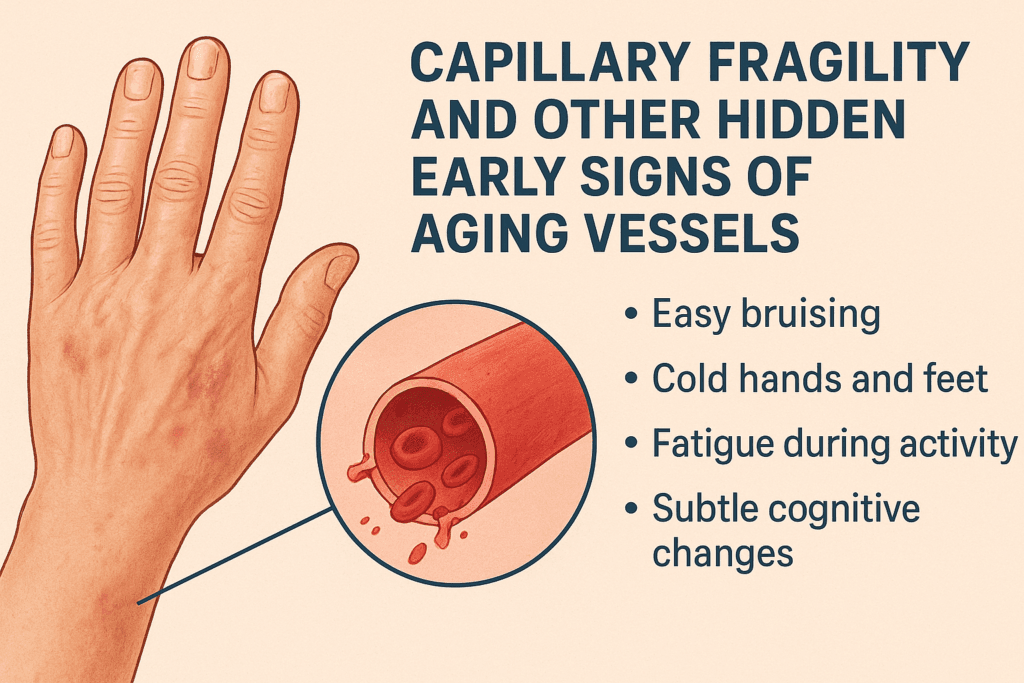
Capillaries are the smallest blood vessels in the body, forming a dense network that links arteries to veins. Their primary function is the exchange of oxygen, nutrients, and metabolic waste between the blood and surrounding tissues. Capillary fragility occurs when these tiny vessels weaken, making them more prone to rupture, leakage, or bruising.
Common Signs of Capillary Fragility
- Easy bruising from minor bumps or pressure.
- Petechiae: tiny red or purple spots on the skin, often appearing in clusters.
- Slow healing of minor cuts or abrasions.
- Visible veins or spider veins, especially on the legs.
- Gum bleeding or nosebleeds without an obvious cause.
Although these symptoms are often subtle and painless, they are important indicators of underlying vascular stress and early-stage aging of the circulatory system.
Why Capillaries Weaken with Age
Capillary fragility doesn’t occur randomly; it results from multiple physiological changes that accumulate over time:
- Reduced Collagen and Elastin Production
Collagen and elastin are structural proteins that provide strength and flexibility to blood vessel walls. As production declines with age, capillaries lose their structural integrity, increasing the risk of rupture or leakage. - Oxidative Stress and Free Radicals
Free radicals can damage the endothelial cells that line capillaries, leading to weakened vessels. Chronic oxidative stress accelerates this process and contributes to broader vascular aging. - Chronic Inflammation
Low-grade, long-term inflammation, often silent can degrade capillary walls and impair their function. Inflammatory processes are central to many age-related vascular changes. - Nutritional Deficiencies
Adequate levels of vitamin C, vitamin K, zinc, and bioflavonoids are critical for collagen synthesis and capillary resilience. Deficiencies in these nutrients can accelerate fragility. - Hormonal Changes
Hormonal shifts, such as declining estrogen in women or reduced testosterone in men, can negatively affect vascular elasticity and capillary strength.
Hidden Early Signs of Aging Vessels
Capillary fragility is only one clue that your vascular system is aging. Often, other subtle symptoms appear before obvious cardiovascular problems, providing an opportunity for early intervention.
1. Skin Color Changes and Texture
Reduced blood flow to the skin is a common consequence of vascular aging, manifesting as:
- Pale or sallow complexion
- Slow-healing bruises
- Thin, fragile skin
- Visible veins or spider veins
While these changes may seem minor or purely cosmetic, they are reliable indicators of microvascular stress and declining circulatory efficiency.
2. Cold Extremities
Persistent coldness in the hands and feet often signals impaired microcirculation. When capillaries and small arteries are less flexible, blood delivery to extremities becomes inefficient. This symptom is especially important because it may precede more serious vascular conditions such as endothelial dysfunction or peripheral artery disease.
3. Fatigue and Reduced Exercise Tolerance
As blood vessels lose elasticity, the heart must work harder to deliver oxygen-rich blood to tissues. The result is often subtle but persistent:
- Early fatigue during exercise or physical activity
- Shortness of breath even with moderate exertion
- Reduced endurance and slower recovery
These symptoms are frequently dismissed as normal signs of aging or being out of shape, but in reality, they may reflect the early stages of vascular aging.
4. Subtle Cognitive Changes
The brain is highly dependent on a steady, robust blood supply, and even minor disruptions in cerebral blood flow can affect its function. As vessels age and capillaries become fragile, early cognitive signs may emerge long before noticeable neurological disease occurs. These subtle changes can include:
- Difficulty concentrating on tasks that were previously simple
- Mild memory lapses, such as forgetting names, appointments, or details
- Brain fog, a sense of mental sluggishness or cloudiness
While these symptoms may seem unrelated to heart or vascular health, they often serve as early indicators of microvascular deterioration in the brain, which can precede more serious conditions such as vascular dementia or cognitive decline.
5. Gum Bleeding and Oral Health Issues
Fragile capillaries in the gums are a common yet often overlooked early sign of vascular aging. Minor trauma from brushing or flossing may cause unexpected bleeding, reflecting weakened microvessels.
Additionally, poor gum health including gingivitis or periodontitis is strongly linked to systemic inflammation. Chronic inflammation, in turn, stresses blood vessels throughout the body, accelerating vascular aging and increasing the risk of cardiovascular complications.
6. Eye Changes
The eyes are one of the most sensitive windows into vascular health. The retina contains a dense network of tiny blood vessels, making it highly susceptible to microvascular aging. Early ocular signs include:
- Small retinal hemorrhages, often detected during routine eye exams
- Retinal microaneurysms, indicating localized weakening of vessel walls
- Gradual vision changes, such as subtle blurring or difficulty seeing fine details
These ocular changes frequently appear before other cardiovascular symptoms are noticeable, providing an important opportunity for early detection and intervention.
Risk Factors Accelerating Vascular Aging
While aging is inevitable, certain lifestyle and health factors accelerate the deterioration of blood vessels, increasing the likelihood of capillary fragility and systemic vascular problems:
- High Blood Sugar
Chronic hyperglycemia, as seen in diabetes, damages capillaries and accelerates arterial stiffening, undermining overall circulation. - High Blood Pressure
Even modest increases in blood pressure place mechanical strain on vessel walls, weakening capillaries over time. - Sedentary Lifestyle
Physical inactivity reduces endothelial function, impairs microcirculation, and contributes to early vessel aging. - Smoking
Tobacco exposure increases oxidative stress and inflammation, directly damaging endothelial cells and reducing vascular flexibility. - Poor Diet
Diets high in sugar, processed foods, and trans fats promote inflammation and plaque buildup, harming both large and small vessels. - Chronic Stress
Persistent stress elevates cortisol and other stress hormones, constricting blood vessels and promoting inflammatory damage.
How Capillary Fragility Can Lead to Bigger Problems
While fragile capillaries may seem minor, they often reflect widespread vascular aging, which can escalate into serious health conditions if ignored:
- Cardiovascular Disease: Fragile capillaries often coexist with stiffened arteries and plaque buildup, increasing the risk of heart attack, stroke, and other cardiovascular events.
- Kidney Damage: The kidneys rely on an intricate capillary network for filtration. Fragility in these vessels may signal early kidney strain, sometimes before blood tests show abnormalities.
- Brain Health Decline: Aging microvasculature in the brain can impair cognitive function and increase the risk of vascular dementia.
- Wound Healing Issues: Weak capillaries impair nutrient and oxygen delivery to tissues, slowing recovery from cuts, abrasions, or surgery.
Diagnosing Vascular Aging and Capillary Fragility
Early detection is key to preventing serious complications. Several diagnostic tools can help identify vascular aging and capillary fragility before major problems arise:
- Clinical Examination
Physicians can evaluate patterns of bruising, gum bleeding, or skin changes that suggest weakened capillaries. - Capillaroscopy
This specialized technique examines the structure of capillaries, often in the nail bed allowing for detailed assessment of microvascular integrity. - Blood Tests
Bloodwork can reveal inflammatory markers, vitamin deficiencies, or cholesterol imbalances that reflect vascular stress. - Imaging Studies
Advanced imaging, including ultrasound, CT angiography, or MRI, can detect arterial stiffening, plaque buildup, or early microvascular changes before symptoms appear.
Strategies to Protect Capillaries and Blood Vessels
The good news is that vascular aging is not inevitable. While some decline is natural with age, lifestyle and dietary interventions can strengthen capillaries, improve circulation, and slow arterial stiffening, significantly reducing the risk of long-term cardiovascular and systemic complications. Here’s a closer look at the most effective strategies:
1. Nutrition
Diet is a cornerstone of vascular health. Specific nutrients directly support capillary integrity, endothelial function, and vascular elasticity:
- Vitamin C: Essential for collagen synthesis, which maintains the structural strength of capillary walls. Rich sources include citrus fruits, berries, bell peppers, and leafy greens.
- Vitamin K: Supports blood vessel elasticity and proper clotting, helping maintain capillary strength. Found in kale, spinach, broccoli, and other dark leafy greens.
- Bioflavonoids: Plant compounds that reinforce capillary walls, reduce inflammation, and combat oxidative stress. Found in berries, onions, citrus fruits, and tea.
- Omega-3 Fatty Acids: These anti-inflammatory fats improve endothelial function, reduce arterial stiffness, and protect microvasculature. Sources include fatty fish like salmon, mackerel, and sardines, as well as flaxseeds and walnuts.
- Minimize Processed Foods and Added Sugars: Diets high in refined sugar, trans fats, and heavily processed foods promote oxidative stress and inflammation, accelerating vascular aging. Focus on whole, nutrient-dense foods.
A balanced diet that emphasizes colorful fruits and vegetables, healthy fats, and lean proteins is one of the most impactful ways to maintain healthy blood vessels over time.
2. Exercise
Regular physical activity strengthens both large arteries and tiny capillaries, improving blood flow and overall vascular function:
- Aerobic Exercise: Activities like walking, cycling, swimming, and jogging enhance circulation, increase nitric oxide production, and improve endothelial health.
- Strength Training: Building muscle supports vascular flexibility, increases capillary density in muscles, and helps maintain healthy blood pressure.
- Flexibility and Mobility Work: Practices such as yoga, Pilates, and stretching reduce arterial stiffness, improve circulation, and promote microvascular health.
A combination of aerobic, strength, and flexibility exercises performed consistently at least 150 minutes per week of moderate activity is ideal for long-term vascular resilience.
3. Stress Management
Chronic stress produces excess cortisol and other stress hormones, which constrict blood vessels, increase inflammation, and accelerate capillary fragility. Effective stress reduction preserves vascular integrity and overall cardiovascular health:
- Meditation and mindfulness exercises calm the nervous system and improve endothelial function.
- Deep Breathing Techniques increase oxygen delivery to tissues and support healthy blood pressure.
- Mindful Movement, such as tai chi or yoga, combines physical activity with stress reduction for dual benefits.
Incorporating daily stress management routines even 10-15 minutes can have a measurable effect on vascular aging.
4. Avoid Smoking and Limit Alcohol
- Smoking: Tobacco accelerates oxidative damage, inflammation, and endothelial dysfunction, directly harming capillaries and arteries.
- Alcohol: Moderate alcohol may offer cardiovascular benefits, but excess consumption increases blood pressure and vascular strain, worsening capillary fragility.
Quitting smoking and moderating alcohol intake are among the most powerful steps to preserve healthy vessels.
5. Maintain Healthy Blood Pressure and Blood Sugar
High blood pressure and elevated blood sugar levels are silent drivers of vascular aging:
- Blood Pressure Management: Regular monitoring, dietary adjustments, exercise, and medication when necessary help protect capillaries and arterial walls.
- Blood Sugar Control: Avoiding chronic hyperglycemia through a balanced diet, physical activity, and medical guidance preserves microvascular integrity and reduces the risk of diabetes-related complications.
Maintaining these parameters within healthy ranges reduces stress on both large arteries and tiny capillaries, slowing the aging process.
6. Regular Check-Ups
Routine medical visits and lab work are essential for early detection of vascular aging signs. Key evaluations may include:
- Blood pressure and heart rate monitoring
- Blood tests for cholesterol, glucose, and inflammatory markers
- Eye exams to assess retinal microvasculature
- Capillary assessments if bruising or fragility is observed
Early detection allows for timely interventions, which can prevent or reverse damage before serious complications develop.
When to Seek Medical Attention
Certain signs should prompt consultation with a healthcare professional, as they may indicate progressive vascular aging or systemic vascular stress:
- Frequent or unexplained bruising
- Gum bleeding or nosebleeds without injury
- Persistent fatigue or shortness of breath
- Cognitive changes or brain fog
- Cold hands and feet not explained by temperature
- Vision changes or retinal hemorrhages
Early evaluation allows healthcare providers to implement interventions, lifestyle changes, monitoring, or medical therapies that slow or even reverse vascular aging.
Emerging Therapies for Vascular Aging
Scientific research is exploring interventions that target the underlying mechanisms of vascular aging, offering potential future strategies:
- Senolytic Therapies: Aim to selectively remove senescent (aging) cells that accelerate tissue and vascular aging.
- Antioxidant and Polyphenol Supplements: Reduce oxidative stress in blood vessels, helping maintain endothelial and capillary health.
- Advanced Endothelial Function Modulators: Experimental drugs designed to restore nitric oxide signaling, improving vessel elasticity and microcirculation.
While promising, these therapies are largely experimental and should complement not replace lifestyle and dietary measures. Sustainable habits remain the most effective, evidence-based approach to long-term vascular health.
The Bottom Line
Your blood vessels are silently telling a story, one that begins long before obvious health problems appear. Subtle signals like easy bruising, gum bleeding, cold extremities, or fleeting moments of brain fog are not random, they are early warnings that your capillaries and arteries are under stress. Ignoring them may allow vascular aging to progress unchecked, increasing the risk of serious cardiovascular, kidney, and cognitive complications.
The encouraging truth is that you have real power to influence the health of your vessels. Simple, consistent actions such as eating a nutrient-rich diet, engaging in regular exercise, managing stress, avoiding smoking, and attending routine medical check-ups can preserve capillary strength, enhance circulation, and slow the aging of your arteries.
By learning to recognize these hidden signs and responding proactively, you are not just treating symptoms, you are investing in your long-term vascular resilience. Every mindful choice today strengthens your circulation, protects your organs, and contributes to a longer, healthier life with blood vessels that remain strong, flexible, and full of vitality.
👩⚕️ Need Personalized Health Advice?
Get expert guidance tailored to your unique health concerns through MuseCare Consult. Our licensed doctors are here to help you understand your symptoms, medications, and lab results—confidentially and affordably.
👉 Book a MuseCare Consult NowRecommended Post:
- 10 Life-Changing Morning Habits That Naturally Lower Blood Pressure
- 7 Powerful Reasons Why Your Blood Pressure Rises at the Doctor’s Office (The White Coat Effect Explained)
- 7 Surprising Reasons Your Blood Vessels Stiffen Early (And How to Prevent It)
- 9 Subtle Skin Color Changes Linked to Organ Stress You Should Never Ignore
- Why You Urinate More at Night: 7 Early Cardiovascular Warning Signs You Must Know
⚠️ Affiliate Disclaimer: This post may contain affiliate links, which means I may earn a small commission at no extra cost to you, if you make a purchase through one of these links. I only recommend products or services I genuinely trust and believe can provide value. Thank you for supporting My Medical Muse!

Dr. Ijasusi Bamidele, MBBS (Binzhou Medical University, China), is a medical doctor with 5 years of clinical experience and founder of MyMedicalMuse.com, a subsidiary of Delimann Limited. As a health content writer for audiences in the USA, Canada, and Europe, Dr. Ijasusi helps readers understand complex health conditions, recognize why they have certain symptoms, and apply practical lifestyle modifications to improve well-being