⚠️ Affiliate Disclaimer: This post may contain affiliate links, which means I may earn a small commission — at no extra cost to you — if you make a purchase through one of these links. I only recommend products or services I genuinely trust and believe can provide value. Thank you for supporting My Medical Muse!
9 Proven Ways Micro-Stress Disrupts Cortisol Rhythm and How to Fix It
You wake up feeling a bit groggy, even after a full night’s sleep. By mid-morning, a tiny email irritation or a traffic delay leaves you unusually tense. By evening, your mind is still buzzing over small, seemingly inconsequential events. If this sounds familiar, you’re not imagining it and it’s not just in your head. These small, everyday frustrations, known in science as micro-stressors, may seem trivial, but they quietly shape your body’s stress response and hormonal rhythms in profound ways.
Cortisol, often called the stress hormone, plays a much bigger role than simply responding to crisis. It orchestrates metabolism, immunity, sleep-wake cycles, and even your mood. When your cortisol rhythm is balanced, you feel energized, focused, and resilient. When it’s disrupted, even minor challenges can leave you fatigued, irritable, and foggy-headed.
Most people assume that only major life events like job loss, moving, or a significant personal crisis can throw cortisol off track but research increasingly shows that the small, cumulative stressors of everyday life, a delayed train, a tense interaction with a coworker, constant digital notifications can silently flatten your cortisol curve, blunting your morning energy and keeping your evenings restless.
Understanding how micro-stressors affect cortisol is essential for anyone who wants to reclaim steady energy, sharper focus, and long-term health. In this article, we’ll explore what micro-stress is, how it disrupts your cortisol rhythm, and practical strategies to protect your body and mind from the hidden toll of daily stress.
What Are Micro-Stressors?
Micro-stressors are the small, everyday challenges that most people barely notice, but that quietly activate your body’s stress response. Unlike major stress events, which trigger dramatic spikes in cortisol and adrenaline, micro-stressors create low-level, chronic stress. Over time, this subtle but persistent activation can accumulate, disrupting your hormonal balance, mood, energy levels, and overall health.
Common examples of micro-stressors include:
- Getting stuck in traffic or dealing with commuting delays
- Responding to minor irritations in emails or messages
- Experiencing brief social awkwardness or tension
- Managing multiple small deadlines at work
- Multitasking while juggling household responsibilities
On their own, these moments might seem inconsequential but when they occur day after day, their cumulative effect is significant. This continuous, low-grade stress load is sometimes referred to as allostatic load, essentially, the “wear and tear” on the body caused by repeated stress. Over time, this can impair your body’s ability to regulate hormones, sleep, immunity, and even cognitive function.
Cortisol: The Body’s Daily Rhythm
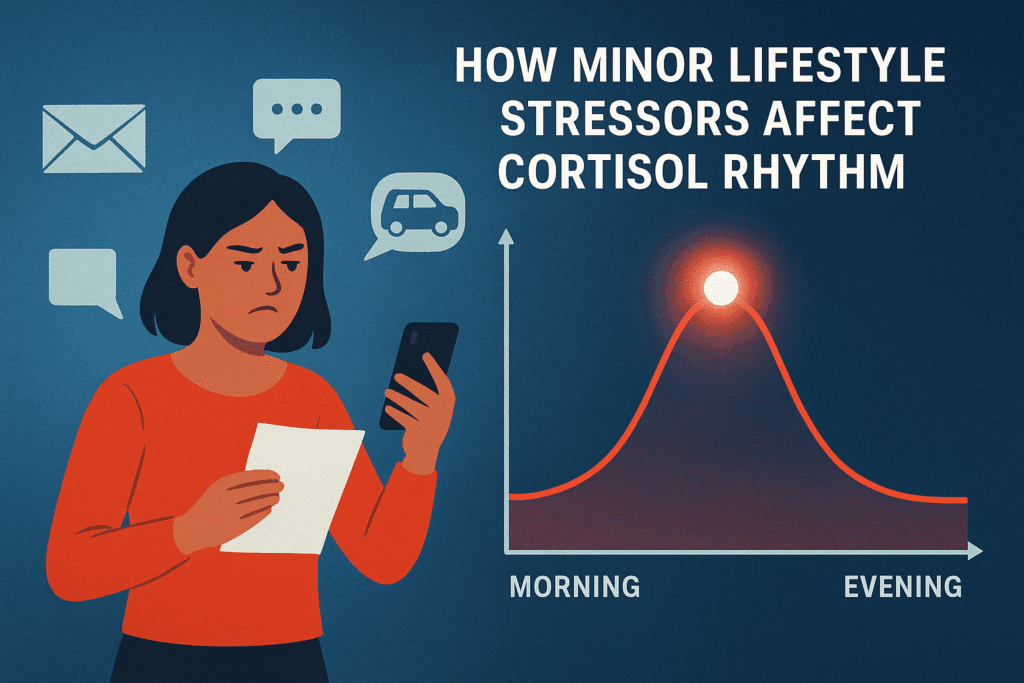
To understand how micro-stress affects the body, it’s essential to grasp cortisol’s normal daily pattern. Cortisol is not just a stress hormone, it is a master regulator that coordinates metabolism, immune function, alertness, and sleep. Its production follows a predictable circadian rhythm, rising and falling in a 24-hour cycle:
- Morning Peak (Cortisol Awakening Response, CAR)
Cortisol levels surge sharply in the first 30-45 minutes after waking, providing the energy and mental clarity needed to start the day. This natural boost helps you feel awake, motivated, and ready to handle the day’s challenges. - Gradual Decline Throughout the Day
After the morning peak, cortisol slowly declines, allowing your body to transition into periods of recovery, focus, and calmness. - Evening Low
By bedtime, cortisol reaches its lowest point. This dip is essential for melatonin production, which regulates sleep, facilitates restorative rest, and prepares the body for recovery.
Disruption of this rhythm can have noticeable consequences, fatigue, mood swings, difficulty concentrating, and, over time, metabolic and cardiovascular problems. Micro-stressors, even if minor, can subtly but profoundly alter this natural cortisol cycle.
How Micro-Stressors Disrupt Cortisol Rhythm
1. Blunted Morning Peak
One of the most common effects of chronic micro-stress is a blunted cortisol awakening response (CAR). Instead of a sharp surge upon waking, cortisol rises slowly or to a lower peak.
Consequences of a blunted morning peak include:
- Persistent morning grogginess and low energy
- Difficulty focusing and maintaining mental clarity
- Reduced motivation to start the day
- Lower resilience to stress later in the day
Research shows that individuals experiencing frequent small stressors such as daily work pressures or ongoing interpersonal irritations, often exhibit this blunted morning response. The body essentially becomes tired of overreacting to stress, dampening its natural surge and making it harder to feel alert and energized in the morning.
2. Elevated Evening Cortisol
Micro-stress doesn’t necessarily end when the workday does. Lingering worries, late-night emails, endless notifications, and even exposure to screens can lead to elevated cortisol levels in the evening.
Consequences of elevated evening cortisol include:
- Difficulty falling asleep or staying asleep
- Reduced deep and REM sleep, which are critical for mental and physical recovery
- Nighttime anxiety, restlessness, or racing thoughts
- Impaired memory consolidation and learning
Chronic evening elevation of cortisol is a hallmark of modern life and is closely linked to insomnia, weight gain, mood disorders, and impaired cognitive function. Even when the stressors seem minor, their cumulative effect can prevent your body from naturally winding down at night.
3. Flattened Cortisol Curve
When micro-stress persists day after day, cortisol patterns may eventually become flattened, meaning there is little difference between morning peaks and evening lows. This pattern indicates chronic stress and dysregulation of the hypothalamic-pituitary-adrenal (HPA) axis, the body’s main stress-response system.
Consequences of a flattened cortisol curve include:
- Persistent fatigue despite adequate sleep
- Brain fog and difficulty concentrating
- Low motivation and mood swings
- Increased susceptibility to illness
Flattened cortisol rhythms are often observed in caregivers, high-pressure professionals, and anyone exposed to continuous low-level stress. Over time, this dysregulation can affect metabolism, immunity, cardiovascular health, and mental well-being.
Why Micro-Stress Can Be So Sneaky
One of the reasons micro-stress is so harmful is that it often goes unnoticed. Major life events are obvious triggers that prompt immediate coping strategies. Micro-stress, by contrast, accumulates quietly. It activates the body’s stress systems repeatedly throughout the day, gradually altering hormonal patterns without clear awareness. This subtle, chronic activation is what makes micro-stress a “hidden disruptor” of energy, mood, and overall health.
The Physiological Mechanisms Behind Micro-Stress
Understanding why micro-stressors disrupt cortisol requires a look at the body’s stress-response systems. Even seemingly trivial stress events can trigger complex, interconnected physiological processes that affect hormonal balance.
1. HPA Axis Activation
At the center of stress regulation is the hypothalamic-pituitary-adrenal (HPA) axis. Even small stressors like a tight deadline or a tense conversation activate this system, prompting the release of cortisol. While acute stress triggers a temporary, adaptive spike, chronic low-level stress can desensitize feedback mechanisms. Over time, this leads to either a blunted morning cortisol peak or elevated evening levels, both of which disrupt the natural daily rhythm.
2. Sympathetic Nervous System Overdrive
Micro-stress also activates the sympathetic nervous system (SNS), the body’s “fight or flight” response. This leads to the release of adrenaline and norepinephrine, keeping the body in a subtle state of alertness. Prolonged activation of the SNS contributes to higher cortisol levels throughout the day, preventing the body from fully relaxing and interfering with normal circadian patterns.
3. Sleep Disruption Feedback Loop
Even minor stressors can impact sleep quality. Tossing and turning over small concerns can reduce deep and REM sleep, which are essential for recovery and memory consolidation. Poor sleep, in turn, disrupts cortisol rhythms, morning levels may be blunted, while evening levels remain high. This creates a self-reinforcing cycle of stress and hormonal imbalance.
4. Inflammatory Signaling
Chronic micro-stress can also trigger low-grade inflammation, which further influences cortisol regulation. Cytokines such as IL-6 and TNF-α can affect the HPA axis, altering cortisol production and creating a feedback loop of stress, inflammation, and hormonal dysregulation. This is one reason why prolonged low-level stress is linked to metabolic and immune dysfunction.
Real-Life Sources of Micro-Stress
Some micro-stressors are unavoidable, but identifying them is the first step toward minimizing their impact. Common everyday triggers include:
- Digital Overload
- Constant notifications, emails, and social media scrolling create repetitive bursts of stress that keep the body in a state of alertness.
- Minor Interpersonal Conflicts
- Small disagreements or passive-aggressive encounters can spike cortisol, even if they seem trivial in the moment.
- Time Pressure
- Rushing to meet multiple deadlines, even for minor tasks, elevates stress hormone levels and contributes to a sense of chronic urgency.
- Environmental Stressors
- Noise, commuting hassles, poor lighting, and workplace distractions generate low-grade stress that accumulates over time.
- Health and Lifestyle Factors
- Skipping meals, dehydration, irregular exercise, and poor sleep can amplify the body’s stress response, making it harder to regulate cortisol effectively.
Micro-Stress and Long-Term Health
Although individual micro-stressors are minor, their cumulative effect can be significant. Chronic disruption of cortisol rhythm has been linked to numerous health issues:
- Metabolic Dysregulation: Weight gain, insulin resistance, and higher risk of type 2 diabetes.
- Cardiovascular Strain: Elevated blood pressure, endothelial dysfunction, and increased risk of heart disease.
- Mental Health Issues: Anxiety, depression, and cognitive decline.
- Immune Dysregulation: Reduced ability to fight infections and slower recovery from illness.
- Sleep Disorders: Insomnia, restless sleep, and poor sleep quality.
Even though each stressor seems insignificant on its own, the hidden toll of chronic micro-stress can quietly undermine long-term health.
Measuring Micro-Stress Effects on Cortisol
Researchers have developed several methods to study how micro-stress impacts cortisol patterns:
- Salivary Cortisol Sampling
- Participants collect saliva multiple times throughout the day to track real-time cortisol fluctuations.
- Hair Cortisol Analysis
- Provides a long-term measure of cortisol accumulation over weeks or months, reflecting chronic stress exposure.
- Ambulatory Stress Tracking
- Combines wearable sensors, heart rate variability (HRV), and self-reported stress events to correlate daily stress with cortisol patterns.
- Subjective Stress Diaries
- Participants log minor stressors and their moods, helping researchers identify patterns that affect hormonal balance.
Studies consistently show that frequent, low-intensity stress events flatten cortisol curves, disrupt circadian rhythms, and contribute to fatigue, sleep problems, and long-term health risks.
Strategies to Mitigate Micro-Stress
The encouraging news is that the effects of micro-stress on cortisol can be effectively managed with intentional lifestyle adjustments. Small, consistent changes can restore balance to your hormonal rhythm, improve energy, and enhance overall well-being.
1. Prioritize Sleep Hygiene
Quality sleep is the foundation of cortisol regulation. To support your circadian rhythm:
- Maintain a consistent sleep schedule, even on weekends, to reinforce your body’s natural rhythm.
- Limit exposure to screens and bright light at least an hour before bed to promote melatonin production.
- Create an optimal sleep environment: dark, quiet, and cool rooms help your body naturally lower cortisol and prepare for restorative rest.
2. Mindful Awareness and Stress Buffering
Practices that cultivate mindfulness help buffer your body against micro-stress:
- Meditation or mindfulness practices: Even 5-10 minutes daily can lower cortisol and reduce mental reactivity to minor stressors.
- Breathing exercises: Slow, deep breathing activates the parasympathetic nervous system, counteracting stress-induced “fight or flight” responses.
- Journaling: Writing down small frustrations can prevent rumination, giving your mind a structured way to process minor stress events.
3. Time and Task Management
Effective organization can prevent micro-stress from accumulating:
- Break tasks into manageable steps to reduce feelings of overwhelm.
- Batch emails or notifications rather than checking constantly, which lowers repetitive cortisol spikes.
- Set realistic boundaries to protect your time and reduce the pressure of trying to do everything at once.
4. Movement and Physical Activity
Physical activity is a powerful regulator of stress hormones:
- Moderate exercise helps normalize cortisol rhythms and improve stress resilience.
- Even short walks, stretching sessions, or light resistance training multiple times per day can significantly reduce cumulative stress.
5. Nutrition and Hydration
Supporting your body through proper nutrition reduces stress sensitivity:
- Eat regular meals to stabilize blood sugar, preventing cortisol surges caused by energy dips.
- Stay hydrated, as dehydration can trigger cortisol release.
- Include nutrient-dense foods that support adrenal health, such as leafy greens, healthy fats, and high-quality proteins.
6. Social Support and Connection
Humans are wired for connection, and social support buffers stress:
- Positive interactions with friends, family, or colleagues can lower cortisol responses to minor stressors.
- Sharing minor worries helps prevent cumulative activation of the HPA axis, reducing the long-term hormonal toll of daily stress.
7. Digital Hygiene
Modern technology contributes to micro-stress in subtle ways:
- Limit notifications and social media exposure, which trigger frequent cortisol spikes.
- Schedule “digital detox” periods during the day to allow your nervous system and hormonal rhythm to reset.
8. Environmental Adjustments
Your surroundings affect stress levels more than you may realize:
- Reduce noise, improve lighting, and optimize comfort in work and rest spaces.
- Small adjustments, like organizing your workspace or decluttering your environment, can prevent chronic low-level stress activation.
Micro-Stress and Resilience
Interestingly, not all micro-stress is harmful. When managed correctly, minor stressors can build resilience:
- Experiencing small challenges is normal and adaptive, helping the body and mind learn to respond effectively.
- Chronic, unmanaged stress, however, leads to dysregulation of the HPA axis and long-term health consequences.
- Recovery periods, through quality sleep, mindfulness, and social connection, allow cortisol rhythms to reset and restore balance.
Developing awareness of your micro-stressors and consistently applying proactive strategies strengthens not only hormonal health but also mental resilience, energy, and overall well-being. Over time, this approach helps transform stress from a silent disruptor into an opportunity for growth and adaptation.
Conclusion
Micro-stressors may feel small and insignificant, but their impact on your cortisol rhythm and overall health can be surprisingly powerful. Those daily irritations, minor conflicts, constant notifications, and the endless juggling of tasks add up, quietly blunting morning energy, elevating evening cortisol, and flattening the natural rhythm your body relies on to function optimally.
The good news is that this cumulative stress is not inevitable. It can be recognized, understood, and managed. By taking intentional steps, prioritizing quality sleep, practicing mindfulness, staying physically active, nourishing your body, fostering meaningful connections, and managing digital exposure, you can protect your hormonal balance, sharpen mental clarity, and restore resilient energy.
Think of micro-stressors not as annoyances to endure, but as signals from your body that something in your daily routine needs attention. When you respond thoughtfully, you can turn these small stress triggers into opportunities to strengthen resilience, improve health, and cultivate lasting vitality.
Your body thrives on rhythm, balance, and recovery. By addressing micro-stress proactively, you’re not just surviving the day, you’re creating a foundation for sustainable energy, sharper focus, and long-term well-being.
👩⚕️ Need Personalized Health Advice?
Get expert guidance tailored to your unique health concerns through MuseCare Consult. Our licensed doctors are here to help you understand your symptoms, medications, and lab results—confidentially and affordably.
👉 Book a MuseCare Consult NowMust Read:
- 10 Powerful Ways Everyday Habits Affect Your Hormones and Energy Levels
- 10 Signs Your Wellness Routine Is Harmful and How to Fix It
- 10 Powerful Ways to Fix Energy Drops in Your 30s and Regain Vitality Naturally
- 10 Proven Ways Intermittent Fasting Improves Hormone Balance and Your Biological Clock
- 7 Critical Facts You Must Know: How to Choose the Right Multivitamin

Dr. Ijasusi Bamidele, MBBS (Binzhou Medical University, China), is a medical doctor with 5 years of clinical experience and founder of MyMedicalMuse.com, a subsidiary of Delimann Limited. As a health content writer for audiences in the USA, Canada, and Europe, Dr. Ijasusi helps readers understand complex health conditions, recognize why they have certain symptoms, and apply practical lifestyle modifications to improve well-being