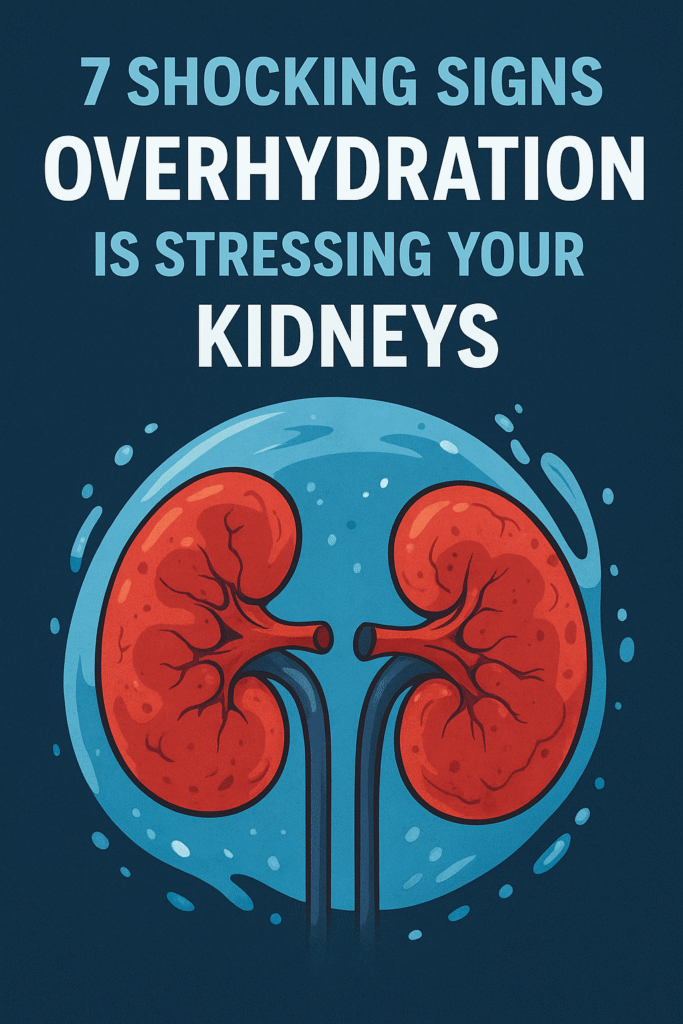
7 Shocking Signs Overhydration Is Stressing Your Kidneys (And How to Prevent It)
⚠️ Affiliate Disclaimer: This post may contain affiliate links, which means I may earn a small commission — at no extra cost to you — if you make a purchase through one of these links. I only recommend products or services I genuinely trust and believe can provide value. Thank you for supporting My Medical Muse!
Can Overhydration (Too Much Water) Stress Your Kidneys?
We are constantly told to drink more water. It improves skin, boosts energy, helps digestion, and supports overall health. All true but there’s a critical piece missing from that advice, one that most people never hear, drinking too much water can actually be harmful.
Yes, it sounds counterintuitive. We often fear dehydration more than anything else, yet excessive hydration, consuming more water than your kidneys can safely process can stress your body. This stress primarily affects your kidneys and electrolyte balance, and in extreme cases, it can become life-threatening.
Understanding the risks of overhydration is essential for anyone who wants to stay healthy without accidentally causing harm. This article will break down exactly how overhydration affects your kidneys, what warning signs to watch for, and how to hydrate intelligently without underdoing or overdoing it.
What Your Kidneys Actually Do with Water
Your kidneys are far more than simple water filters. They are sophisticated regulators of your body’s internal environment. They manage fluid levels, remove waste, balance essential minerals, and even help control blood pressure. Every day, your kidneys work tirelessly to keep your body in equilibrium, making sure that nothing is too high or too low in your blood.
A healthy pair of kidneys can process roughly 0.8 to 1 liter of water per hour. This means that under normal circumstances, your kidneys can handle a steady intake of water without any problems but problems arise when you consistently drink more water than your kidneys can efficiently eliminate. Excess water begins to accumulate in your bloodstream, diluting essential electrolytes and putting unnecessary stress on your organs.
What Happens When You Drink Too Much Water
At a balanced rate of intake, your kidneys remove the water your body doesn’t need while maintaining the right electrolyte balance. Sodium, potassium, and other electrolytes remain steady, allowing nerves, muscles, and cells to function properly.
When you overload your system, excess water dilutes the sodium in your blood, creating a condition called hyponatremia. Sodium is crucial for fluid balance, nerve impulses, and muscle contractions. When it drops too low, water begins to move into your cells, causing them to swell.
Swelling in most cells is uncomfortable, but swelling in brain cells is dangerous. Symptoms can include headaches, confusion, fatigue, nausea, and in severe cases, seizures, coma, or death. While overhydration of this severity is uncommon, it is very real and has been documented in endurance athletes, military trainees, participants in extreme water-drinking challenges, and people who consume excessive water under the belief that it is always beneficial.
Does Overhydration Damage the Kidneys?
Excessive water doesn’t damage your kidneys in the same way as chronic conditions like high blood pressure or diabetes. However, it does overload and stress them.
When you consistently drink too much water:
- Your kidneys must work continuously to eliminate the surplus.
- Hormonal regulation, particularly the antidiuretic hormone (ADH), becomes disrupted, affecting your body’s ability to retain or excrete water appropriately.
- Electrolyte balance becomes unstable, placing strain on multiple organ systems.
- Individuals with reduced kidney function face higher risks because their organs are already less efficient.
For healthy adults, occasional overdrinking may not cause lasting damage but repeated overhydration can gradually strain the kidneys, particularly in older adults or those with preexisting kidney or hormonal conditions. Over time, this may compromise kidney efficiency and disrupt the body’s natural fluid and electrolyte balance.
Physical Signs You Might Be Drinking Too Much Water
Overhydration rarely starts with dramatic symptoms. Most people overlook subtle early signs, thinking they are harmless or unrelated. Recognizing these warning signs can prevent complications.
Early indicators of overhydration include:
- Urine that is consistently clear throughout the day
- Frequent urination, often more than 8-10 times daily.
- Waking at night multiple times to urinate.
- Bloating or puffiness in the face, hands, or feet.
- Headaches without any obvious cause
- Fatigue, irritability, or mental fog
- Nausea or reduced appetite
- Feeling unusually cold while others around you are comfortable
More serious symptoms that require immediate attention include:
- Confusion or difficulty thinking clearly
- Muscle cramps or twitching
- Shortness of breath not linked to exercise or illness
- Sudden, severe headaches accompanied by dizziness
- Seizures in extreme cases of hyponatremia
Awareness of these signs is crucial. Early recognition allows you to adjust your hydration habits before serious complications arise.
Who Is at Risk of Overhydration?
While anyone can potentially overhydrate, some groups are more vulnerable:
- People with existing kidney, heart, or liver problems, as their organs may not efficiently process large amounts of fluid.
- Individuals on low-sodium diets, which can make them more susceptible to electrolyte imbalances when drinking excessive water.
- Athletes and endurance exercisers who consume large amounts of water without replacing the sodium lost through sweat.
- People with anxiety or compulsive habits that lead them to drink water excessively, even when not thirsty.
- Elderly adults, whose kidney function naturally declines with age, reducing their ability to excrete excess fluids efficiently.
- Anyone attempting “water challenges” or following extreme hydration advice found online, which often encourages intake far beyond safe limits.
Recognizing your risk factors is key to preventing overhydration. Understanding that your kidneys have limits and that hydration is about balance not extremes can protect your health over the long term.
Your kidneys are remarkably capable, but they are not invincible. Overhydration doesn’t usually cause immediate, dramatic damage, but repeated excessive water intake can overload your kidneys, disrupt electrolyte balance, and trigger serious health problems. The safest approach is simple, listen to your body, drink when you’re thirsty, stop when you’re satisfied, and monitor signs like urine color and frequency. Replace fluids intelligently, especially after heavy sweating or physical exertion, and avoid blindly following extreme hydration trends.
Balanced hydration is about respecting your body’s natural cues, protecting your kidneys, and supporting overall health not chasing a number on a water bottle.
Signs Your Hydration Is Balanced
Knowing whether you’re properly hydrated is simpler than many people think. You’re usually well-hydrated if:
- You feel thirst occasionally not constantly, and not never.
- Your urine is a pale yellow most of the day.
- You urinate around 5 to 7 times per day.
- You don’t wake up multiple times at night to use the bathroom.
- Your energy levels feel steady throughout the day.
- You don’t experience unusual swelling, puffiness, or mental fog.
These simple signals from your body are reliable indicators that your fluid intake is in a healthy range.
How Much Water Do You Actually Need?
There isn’t a single number that fits everyone. The often-quoted “eight glasses a day” is a rough guideline, not a strict rule. Your hydration needs depend on several factors:
- Temperature and climate, hotter environments increase water loss.
- Activity level, exercise or physical labor increases fluid requirements.
- Diet, fruits, vegetables, and soups all contribute to hydration.
- Age and kidney function, kidneys naturally become less efficient with age.
- Medical conditions, certain illnesses or medications can affect hydration.
- Salt and mineral intake, electrolyte balance affects how much water your body can handle.
A better, more natural approach is to drink when you’re thirsty, stop when you’re satisfied, and monitor your urine color.
- Light yellow urine indicates good hydration.
- Crystal clear urine all day may suggest you’re drinking too much.
- Dark or amber urine signals dehydration.
Trust your body’s built-in hydration sensors, they are far more accurate than rigid rules.
The Real Difference Between Dehydration and Overhydration
- Dehydration occurs when your body lacks sufficient fluid. It often causes low urine output, dry mouth, dizziness, and elevated sodium levels.
- Overhydration happens when your body has more fluid than it can handle. This can lead to high urine output, diluted electrolytes, nausea, swelling, or headaches.
Both extremes are harmful. The key is balance, enough water to support bodily functions without overwhelming your system.
Hydration Tips That Actually Work
- Don’t drink water just to reach a target number. Numbers can be misleading and may encourage overhydration.
- Let thirst guide your drinking, unless you have a medical condition that affects your natural sense of thirst.
- If you sweat heavily, replace both water and electrolytes to maintain balance.
- Avoid constantly drinking if your urine is clear all day.
- Don’t force yourself to drink when you’re not thirsty, unless you’re in extreme heat, ill, or experiencing dehydration.
By following these simple principles, you can stay properly hydrated without putting unnecessary stress on your kidneys or disrupting your body’s natural balance. Balanced hydration is about listening to your body, not chasing numbers.
Final Truth: Hydrate Wisely, Not Excessively
Water is absolutely essential for life, but more is not always better. Drinking excessively can backfire, placing stress on your kidneys and destabilizing your body’s delicate balance of electrolytes. Your kidneys are remarkably efficient at maintaining this balance, but they are not invincible. Overload them with too much water, and they are forced to work overtime, struggling to process the excess. This is where the real danger lies,not in water itself, but in the imbalance it creates.
Healthy hydration isn’t about forcing fluids or chasing a number on a water bottle. It’s about paying attention to your body’s needs, responding to thirst cues, and maintaining a natural equilibrium. Proper hydration supports energy, cognitive function, digestion, and overall health without overtaxing your organs.
It’s important to remember that hydration is a tool, not a goal in itself. Drink water to nourish your body, not to prove a point or follow trends. Replace fluids intelligently, especially after heavy sweating or physical exertion, and always respect your natural thirst signals.
In short, stay hydrated, but avoid waterlogging your system. Give your body what it truly needs, when it truly needs it, and let your kidneys do what they do best, maintain balance and keep you healthy. Hydration is a support system for your body, not a performance to push to extremes.
👩⚕️ Need Personalized Health Advice?
Get expert guidance tailored to your unique health concerns through MuseCare Consult. Our licensed doctors are here to help you understand your symptoms, medications, and lab results—confidentially and affordably.
👉 Book a MuseCare Consult NowRecommended Post:
- Can Dehydration Raise Blood Sugar Levels? 7 Powerful Reasons Why
- Can Dehydration Raise Your Blood Pressure? 10 Powerful Reasons Why
- Dehydration Headache? 10 Proven Ways to Stop It Fast & Stay Pain-Free
- Can Eating Too Much Fruit Daily Cause Blood Sugar Issues? 12 Surprising Facts
- 7 Surprising Health Benefits of Drinking Lemon Water Every Morning

Dr. Ijasusi Bamidele, MBBS (Binzhou Medical University, China), is a medical doctor with 5 years of clinical experience and founder of MyMedicalMuse.com, a subsidiary of Delimann Limited. As a health content writer for audiences in the USA, Canada, and Europe, Dr. Ijasusi helps readers understand complex health conditions, recognize why they have certain symptoms, and apply practical lifestyle modifications to improve well-being