⚠️ Affiliate Disclaimer: This post may contain affiliate links, which means I may earn a small commission — at no extra cost to you — if you make a purchase through one of these links. I only recommend products or services I genuinely trust and believe can provide value. Thank you for supporting My Medical Muse!
Autism and Burnout: 7 Powerful Reasons Why It Hits Harder
Autism and Burnout: Why It Hits Harder
Burnout is a term that has entered everyday language, often used to describe the emotional, physical, and mental exhaustion that comes from prolonged stress. In workplaces, it might show up as low motivation, irritability, or trouble meeting deadlines. In personal life, it may manifest as feeling drained by responsibilities, family obligations, or the constant pace of modern living. For most people, burnout is uncomfortable but temporary; a vacation, a lighter workload, or time to recharge can often ease its impact.
For autistic individuals, however, burnout is not only more common but also far more intense. It doesn’t just leave someone feeling tired or uninspired for a week or two it can linger for months, even years, profoundly disrupting a person’s ability to function. Everyday tasks such as cooking a meal, answering an email, or holding a conversation may suddenly feel impossible. This experience is widely referred to as autistic burnout.
Unlike conventional burnout, autistic burnout isn’t solely the result of long hours at work or taking on too many responsibilities. Instead, it’s deeply tied to the unique ways autistic brains process information, manage sensory input, and navigate a world built for neurotypical expectations. Social pressures, constant masking, and sensory overload all combine to create a heavier, more enduring burden.
In this article, we’ll explore what autistic burnout is, how it differs from typical burnout, why it hits harder, and what strategies can help autistic individuals and those who support them recognize, prevent, and recover from it.
What is Autistic Burnout?
Autistic burnout is a state of pervasive exhaustion that is mental, physical, and emotional all at once. It occurs when the cumulative demands of navigating life as an autistic person exceed one’s capacity to cope. Over time, the gap between what is expected and what feels sustainable widens until it results in a full collapse of energy and functioning.
Many autistic adults describe autistic burnout as:
- Feeling like “the mask has cracked” the strategies once used to blend in or cope suddenly stop working.
- Losing previously reliable coping skills, such as organizing routines or managing emotions.
- Experiencing heightened sensory overload, where sounds, lights, or textures that were once tolerable now feel unbearable.
- Having little to no energy for even the most basic self-care tasks like showering, eating properly, or leaving the house.
The result is not just fatigue, but a dramatic reduction in overall functioning. Someone who once managed full-time work, social commitments, and hobbies may find themselves unable to maintain employment, keep up relationships, or engage in activities they once enjoyed.
Importantly, autistic burnout is not a sign of laziness, weakness, or lack of resilience. It is a natural response to being pushed beyond sustainable limits for too long in environments that rarely account for autistic needs.
Key Differences from Typical Burnout
While both autistic and non-autistic people can experience burnout, the autistic experience differs in several critical ways, particularly in its intensity, triggers, and duration.
1. Masking-Driven Exhaustion
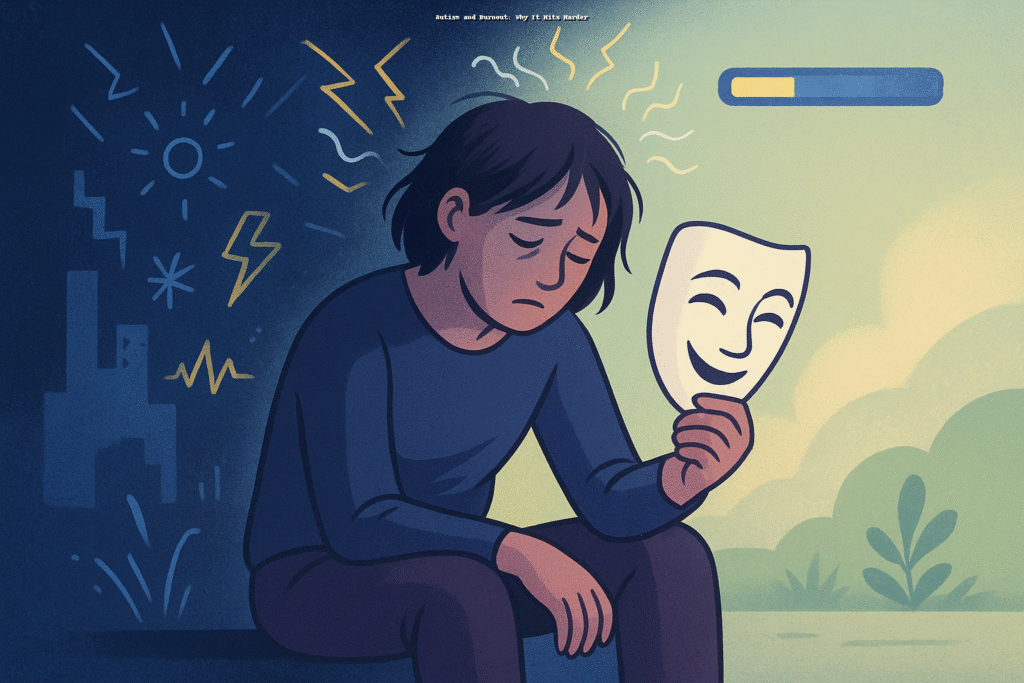
One of the core drivers of autistic burnout is masking, the conscious or unconscious effort to hide or suppress autistic traits in order to blend in with neurotypical peers. This might mean forcing eye contact, suppressing stimming behaviors, copying social mannerisms, or rehearsing conversations in advance.
While masking can make social or professional settings easier to navigate, it comes at a steep cost. The constant self-monitoring and suppression of natural instincts drains enormous amounts of cognitive and emotional energy. Over weeks, months, and years, this invisible labor builds up and eventually contributes to burnout in a way that most neurotypical people never experience.
2. Extended Recovery Time
Conventional burnout, say, from working long hours or taking on too many commitments, often improves with rest, vacation, or a change in workload. Autistic burnout, on the other hand, doesn’t simply fade after a weekend of relaxation. Recovery can take months or even years because it requires more than physical rest, it demands deep lifestyle adjustments, unmasking, and changes to one’s environment.
For many autistic individuals, recovery involves reassessing the way they live and interact with the world, not just taking a short break.
3. Broader Impact Across Life
Where typical burnout may primarily affect work performance or motivation, autistic burnout tends to spread into all areas of life. It can interfere with:
- Communication: Speech may become difficult, or words may feel harder to access.
- Sensory tolerance: Everyday stimuli like fluorescent lighting, background noise, or fabric textures can suddenly feel unbearable.
- Relationships: Social interactions may become overwhelming, leading to withdrawal even from close friends or family.
- Daily living: Basic routines such as cooking, cleaning, or paying bills can feel insurmountable.
In short, autistic burnout doesn’t just dim productivity, it can destabilize a person’s entire sense of functioning and independence.
Why Burnout Hits Harder in Autism
1. The Energy Cost of Masking
Masking refers to the strategies autistic people use to hide or minimize traits that may be seen as “different” by others. This could include:
- Forcing eye contact.
- Suppressing stimming behaviors like hand-flapping or rocking.
- Rehearsing conversations in advance.
- Mimicking neurotypical mannerisms to blend in socially.
While masking may help autistic people navigate social expectations, it is mentally exhausting. It requires constant self-monitoring and suppression of instinctual behaviors. Over weeks, months, or years, this relentless effort drains cognitive and emotional reserves, making burnout more likely and more severe.
2. Sensory Overload and Environmental Stress
Autistic people often experience heightened or atypical responses to sensory input, sounds, lights, textures, smells, or even movement. Modern environments are rarely designed with sensory diversity in mind, fluorescent lighting, crowded offices, open-plan classrooms, noisy streets.
Daily exposure to overwhelming sensory stimuli leads to a steady build-up of stress. Over time, the nervous system is pushed into a chronic state of overdrive. When combined with social pressures, this sensory burden accelerates burnout and makes recovery slower.
3. Higher Rates of Co-Occurring Conditions
Autism frequently overlaps with other conditions such as ADHD, anxiety, depression, and chronic health issues. These co-occurring conditions add layers of stress, requiring extra management and self-advocacy.
For example:
- Anxiety amplifies fear of social rejection and failure.
- Depression compounds exhaustion and lowers motivation to seek help.
- ADHD may create additional challenges in maintaining structure, leading to cycles of stress and self-blame.
When multiple conditions intersect, the risk of deep, prolonged burnout increases dramatically.
4. Lack of Understanding and Support
Societal misunderstanding of autism plays a major role in burnout. Many autistic people grow up being told to “try harder,” “fit in,” or “stop being so sensitive.” This lack of validation forces individuals to push beyond their limits, often ignoring signs of overload.
Workplaces and schools often fail to provide adequate accommodations, leaving autistic individuals unsupported, without proper adjustments like flexible schedules, sensory-friendly spaces, or communication alternatives, demands continue to outweigh resources, leading to crisis points.
5. Recovery is More Complex
Unlike typical burnout, autistic burnout doesn’t always resolve with rest. The brain and body need more than just a break, they need a recalibration of lifestyle, environment, and expectations.
Recovery can involve:
- Unmasking and learning to live authentically.
- Establishing firm boundaries around energy use.
- Rebuilding daily routines around sensory and cognitive needs.
This is why autistic burnout often feels like a full system shutdown, not just temporary fatigue.
Signs and Symptoms of Autistic Burnout
Recognizing autistic burnout is vital for timely intervention. Common signs include:
Emotional Signs
- Intense irritability or emotional numbness.
- Feeling detached from oneself or others.
- Heightened anxiety or depressive symptoms.
Cognitive Signs
- Sudden difficulty with executive functioning (planning, organizing, starting tasks).
- Memory lapses or difficulty with speech and word recall.
- Reduced ability to mask or maintain social scripts.
Physical Signs
- Extreme fatigue that doesn’t improve with rest.
- Increased sensory sensitivity (e.g., lights, noises, textures feel unbearable).
- Frequent shutdowns or meltdowns.
Behavioral Signs
- Withdrawing from social interactions, even with close friends or family.
- Losing interest in previously enjoyable activities.
- Neglecting self-care or daily responsibilities.
The Long-Term Impact of Burnout
When not addressed, autistic burnout can have lasting consequences:
- Loss of independence: Some individuals find themselves unable to work, study, or manage daily tasks.
- Identity crisis: Burnout often forces a reckoning with years of masking and suppressed identity.
- Health risks: Chronic stress contributes to physical health problems, including immune dysfunction and cardiovascular issues.
- Employment instability: Many autistic adults leave jobs during burnout, facing financial insecurity.
This is why prevention and proactive management are crucial.
Preventing and Managing Autistic Burnout
Autistic burnout may feel overwhelming, but it is not inevitable. With proactive strategies and the right supports, it is possible to minimize its impact and foster resilience. Prevention and recovery involve both individual approaches and external support systems.
1. Energy Accounting
Many autistic adults describe their energy as a finite resource, almost like a currency that must be budgeted carefully. Energy accounting helps track how daily tasks, environments, and social interactions affect overall stamina.
- Identify energy drains: Notice which activities consistently leave you exhausted such as crowded social events, noisy environments, or multi-tasking.
- Balance with restorative activities: Pair demanding tasks with downtime, sensory regulation, or special interests that replenish energy.
- Use visual or written tools: Some autistic individuals find it helpful to use planners, apps, or simple traffic-light systems (green- energizing, yellow- neutral, red- draining) to monitor patterns.
Over time, this practice builds self-awareness and helps prevent overextension.
2. Unmasking Where Possible
Masking, suppressing or disguising autistic traits may ease social interactions but is one of the greatest contributors to burnout. Learning to unmask, even in small ways, reduces stress and conserves energy.
- Allow stimming in safe environments without shame. Movements like rocking, hand-flapping, or fidgeting are natural self-regulation tools, not habits to “fix.”
- Communicate preferences openly, whether it’s needing written instructions instead of verbal, or choosing text over phone calls.
- Seek safe spaces where authenticity is accepted, such as neurodiversity-affirming communities or support groups.
Unmasking is often a gradual process, but each step toward authenticity lifts the long-term burden.
3. Setting Boundaries
Boundaries act as protective barriers for limited energy reserves. They are not about shutting others out, but about creating space for sustainable living.
- Say “no” without guilt to unnecessary commitments, especially those that prioritize others’ comfort over your well-being.
- Request sensory accommodations at work, school, or public spaces such as quieter seating, dimmer lighting, or flexibility with breaks.
- Schedule downtime intentionally, treating rest as non-negotiable rather than optional.
Boundaries may feel difficult at first, particularly in environments that expect constant compliance, but they are essential for preventing burnout.
4. Building Support Networks
Support systems reduce the isolation that often accompanies autistic burnout. Validation, empathy, and shared experiences can make recovery smoother and less overwhelming.
- Personal support: Friends, family, or partners who understand your needs can offer encouragement and practical help.
- Community support: Online forums, local autism groups, or advocacy organizations provide connection with people who truly “get it.”
- Peer mentoring: Some autistic individuals find mentorship, learning from others who have navigated burnout are particularly valuable.
Knowing that burnout is not a personal failing but a shared experience within the community can bring relief and hope.
5. Professional Support
Therapists, occupational therapists, and life coaches can help create tailored coping strategies, but it’s essential to find professionals with neurodiversity-affirming approaches.
- Conventional therapy models may mistakenly pathologize autistic traits rather than supporting them.
- Look for practitioners familiar with autistic burnout, masking, and sensory regulation.
- Professional support can also extend to vocational counselors or disability service providers who assist with accommodations in education and employment.
The right professional guidance can help rebuild skills and confidence while respecting autistic identity.
6. Restorative Practices
True recovery requires engaging in activities that restore, rather than drain, energy. What feels restorative will vary by individual, but common practices include:
- Immersing in special interests, which provide joy and focus.
- Using sensory tools such as weighted blankets, fidget items, or noise-canceling headphones to regulate the nervous system.
- Spending time in nature, which can reduce stress and provide calming sensory input.
- Practicing mindfulness or meditation not as forced relaxation, but as a way to create quiet space for thought and recovery.
These restorative activities should be prioritized daily, not just in moments of crisis.
The Role of Society in Reducing Autistic Burnout
While personal strategies are vital, autistic burnout is not merely an individual problem. It is also a systemic issue rooted in environments that fail to accommodate neurodivergent needs. For meaningful change, society must address the structural causes of burnout.
In Schools
- Implement flexible teaching methods that allow for different learning styles.
- Create sensory-friendly classrooms with quiet zones and adjustable lighting.
- Normalize alternative communication methods, such as AAC (Augmentative and Alternative Communication) tools or written responses.
- Educate peers and staff about neurodiversity, reducing stigma and fostering acceptance
In Workplaces
- Offer remote or hybrid work options, reducing commuting and sensory strain.
- Provide quiet workspaces and allow flexible scheduling.
- Encourage clear, direct communication rather than relying on ambiguous social cues.
- Incorporate neurodiversity training into management practices, ensuring supervisors understand autistic needs.
In Communities
- Launch awareness campaigns to help the public recognize autistic burnout and its signs.
- Enact policies that support disability accommodations, ensuring equal access to services, events, and opportunities.
- Include autistic voices in decision-making spaces, from local government to healthcare boards, ensuring policies are informed by lived experience.
When environments adapt to meet autistic needs rather than forcing autistic people to adapt at great personal cost the prevalence of burnout can be significantly reduced.
Moving Forward: Embracing Sustainable Living
Autistic burnout isn’t a sign of weakness, it’s a vital warning signal that current demands have surpassed sustainable limits. It represents the body and mind’s way of saying, “Enough. Something has to change.” While incredibly challenging, many autistic people describe burnout as a turning point, a moment that forces them to re-evaluate their lives and begin building healthier, more authentic ways of living.
Embracing sustainable living does not mean lowering aspirations or giving up on goals. Instead, it means creating a life that honors autistic needs, reduces unnecessary strain, and prioritizes long-term well-being over constant self-sacrifice.
Steps Toward Sustainable Living
- Recognizing personal limits without shame
Everyone has limits, but autistic people often push past theirs due to societal pressure to “fit in.” Sustainable living requires acknowledging limits as valid, not as flaws. Learning to say no, decline invitations, or step back from overwhelming responsibilities is not avoidance, it’s self-preservation. - Building environments that honor sensory needs
Adjusting surroundings can dramatically reduce daily stress. This might involve creating quiet zones at home, using noise-canceling headphones, choosing sensory-friendly clothing, or requesting workplace accommodations. Small environmental changes add up to big energy savings. - Seeking relationships that embrace authenticity
Supportive relationships allow autistic individuals to unmask and be fully themselves without fear of judgment. Prioritizing connections with people who respect boundaries, understand sensory needs, and value authenticity fosters resilience and belonging. - Advocating for systemic change
Sustainable living is not solely an individual responsibility. True progress requires systemic shifts in schools, workplaces, and communities. Advocacy, whether personal, collective, or policy-driven ensures that environments become more accessible and inclusive. This benefits not only autistic individuals but also society as a whole by valuing neurodiversity.
By understanding why autistic burnout hits harder and taking both personal and collective steps to prevent it, autistic people and the broader communities around them can move toward healthier, more inclusive futures.
Conclusion
Burnout is a universal human experience, but in autism, it carries unique and often more profound consequences. The relentless strain of masking, enduring overwhelming sensory environments, managing co-occurring conditions, and navigating societal misunderstanding all combine to make autistic burnout deeper, longer-lasting, and harder to recover from than typical burnout.
The path forward requires a two fold approach:
- Personal strategies: conserving energy, unmasking where possible, building supportive environments, and seeking communities that embrace authenticity.
- Systemic change: workplaces, schools, and society at large must adapt to reduce unnecessary pressures, provide accommodations, and normalize neurodiversity rather than suppress it.
Autistic burnout should never be seen as inevitable or “just part of being autistic.” With awareness, compassion, and structural support, it is possible to reduce its frequency and severity. When autistic people are empowered to live authentically and sustainably, they don’t just survive, they thrive and when society values and supports that authenticity. Everyone benefits from a richer, more diverse, and more inclusive world.
👩⚕️ Need Personalized Health Advice?
Get expert guidance tailored to your unique health concerns through MuseCare Consult. Our licensed doctors are here to help you understand your symptoms, medications, and lab results—confidentially and affordably.
👉 Book a MuseCare Consult NowRelated Blog Post You Might Like:
- The Hidden Struggle of Masking in Neurodivergent Adults: 10 Shocking Costs You Need to Know
- Why ADHD Is Often Misdiagnosed as Depression: 7 Powerful Differences You Must Know
- 7 Proven Ways ADHD Affects Sleep and Productivity (And How to Fix It)
- 10 Early Signs of Autism in Adults You Shouldn’t Ignore
- 20 Powerful Signs of ADHD in Adults That Most People Miss

Dr. Ijasusi Bamidele, MBBS (Binzhou Medical University, China), is a medical doctor with 5 years of clinical experience and founder of MyMedicalMuse.com, a subsidiary of Delimann Limited. As a health content writer for audiences in the USA, Canada, and Europe, Dr. Ijasusi helps readers understand complex health conditions, recognize why they have certain symptoms, and apply practical lifestyle modifications to improve well-being