⚠️ Affiliate Disclaimer: This post may contain affiliate links, which means I may earn a small commission — at no extra cost to you — if you make a purchase through one of these links. I only recommend products or services I genuinely trust and believe can provide value. Thank you for supporting My Medical Muse!
Dehydration Headache? 10 Proven Ways to Stop It Fast & Stay Pain-Free
Headaches are one of the most common health complaints in the world, yet one of their simplest causes is often ignored, dehydration. If you have ever noticed a headache easing after drinking water, that was not a coincidence. Your body may have been sending an early warning sign that it needed fluids, not medication.
Even mild dehydration can affect blood flow to the brain, disrupt electrolytes, and trigger pain-sensitive structures inside the head. The problem is that dehydration does not always feel dramatic. You may not feel intensely thirsty, overheated, or sick. Instead, the first sign may be a dull, persistent headache that worsens as the day goes on.
Many people treat these headaches incorrectly, they reach for painkillers, skip meals, or push through the discomfort without addressing the real cause. Over time, this can lead to frequent headaches that seem mysterious but are actually preventable.
This guide breaks down dehydration headaches in clear, practical terms. You will learn:
Why dehydration causes headaches
How to tell dehydration headaches apart from migraines or tension headaches
How hydration affects brain function and focus
Common hydration myths that keep people underhydrated
Who is most at risk of dehydration-related headaches
How food and electrolytes support proper hydration
Natural ways to relieve dehydration headaches
Simple daily habits to prevent them from returning
When a headache is a sign you need medical care
By the end, you will be able to recognize dehydration headaches early, treat them effectively, and reduce how often they happen. Sometimes, the solution is not stronger medication. Sometimes, it is simply giving your body what it needs most: water.
Why Dehydration Triggers Headaches
When your body does not have enough fluids, several changes occur that can directly trigger headache pain. These effects are not subtle and they happen faster than most people realize.
1. Brain tissue contraction
Water makes up a large portion of brain tissue. When fluid levels drop, the brain loses volume slightly and pulls away from the skull. This stretching irritates pain-sensitive membranes and can cause a dull or throbbing headache.
2. Reduced blood flow to the brain
Dehydration lowers circulating blood volume, with less blood available, oxygen and nutrients reach the brain less efficiently. This reduced supply can trigger pain, dizziness, and mental fatigue.
3. Electrolyte imbalance
Fluids help maintain proper levels of sodium, potassium, magnesium, and calcium. These electrolytes control nerve signaling and muscle function. When they fall out of balance, nerves can misfire, increasing the likelihood of headaches.
4. Increased inflammation
Water helps flush waste products and regulate inflammatory responses. Dehydration allows inflammatory compounds to build up, which can intensify headache pain and prolong recovery.
Common triggers that lead to dehydration headaches
Heavy sweating from exercise or heat exposure
Alcohol or excessive caffeine intake
Vomiting, diarrhea, or fever
Going hours without drinking fluids
High-salt meals or processed snacks
Long flights or high-altitude environments
Fasting, crash dieting, or skipping meals
In many cases, headaches appear after more than one of these factors combine.
The Science of Hydration and Brain Function
Your brain is approximately 75 percent water. Even mild dehydration, as little as a 1 to 2 percent drop in body water, can affect how your brain functions.
Common cognitive effects of dehydration
Reduced concentration and focus
Slower reaction times
Poor short-term memory
Increased irritability and anxiety
Mental fatigue and brain fog
What research shows
Studies published in Frontiers in Human Neuroscience have shown that dehydrated individuals perform worse on attention and memory tasks. Research in The Journal of Nutrition found that mild dehydration in women increased fatigue, tension, and difficulty concentrating.
Dehydration can also affect neurotransmitters such as serotonin and dopamine. These chemicals help regulate mood and pain perception. When levels drop, headaches may feel more intense and harder to tolerate.
Adequate hydration is essential for mental clarity, emotional balance, and pain control.
Hydration Myths Debunked
Misinformation about hydration causes many people to stay chronically underhydrated.
1. Everyone needs exactly eight glasses of water a day:
Hydration needs vary based on body size, physical activity, diet, climate, and health status. Some people need more, others less.
2. Thirst always signals dehydration
Thirst is a delayed response. By the time you feel thirsty, dehydration has already begun.
3. Coffee and tea do not count as hydration
Caffeine has a mild diuretic effect, but moderate amounts of coffee or tea still contribute to total fluid intake.
4. Clear urine means perfect hydration
Pale yellow urine is ideal. Completely clear urine may signal overhydration and diluted electrolytes.
Hydration is not one-size-fits-all. It depends on your daily habits, environment, and physical demands. Listening to your body and adjusting fluid intake accordingly is more effective than following rigid rules.
Signs Your Headache Is Due to Dehydration
Not all headaches are migraines or tension headaches. Many are caused by low fluid levels, especially after long hours without drinking water, physical exertion, or heat exposure.
Common signs of a dehydration headache
Dehydration headaches often come with a cluster of physical clues rather than pain alone:
Dull, steady, or throbbing head pain
Dry mouth, lips, or tongue
Dark yellow urine
Urinating less often than usual
Fatigue or low energy
Brain fog or difficulty concentrating
Faster heart rate
Dry skin or sunken-looking eyes
Light-headedness when standing up
Bad breath caused by dry mouth
If several of these symptoms appear alongside a headache, especially after exercise, heat exposure, travel, or long periods without fluids, dehydration is a likely cause.
How to Confirm a Dehydration Headache
A simple hydration test can help confirm it.
The water test
Drink 500 to 600 mL of water slowly.
Sit or lie down in a quiet, cool environment.
Reassess your headache after 20 to 30 minutes.
Helpful additions
Add a pinch of sea salt or an electrolyte tablet to improve absorption.
Avoid caffeine and alcohol temporarily, as they may worsen fluid loss.
Check your urine color. Pale yellow suggests improving hydration.
If the headache improves within 30 to 60 minutes, dehydration was likely the trigger.
Who Is at Higher Risk of Dehydration Headaches?
Some people are more prone to dehydration-related headaches due to higher fluid needs or reduced thirst signals.
High-risk groups include:
Athletes and physically active individuals who sweat heavily
Pregnant or breastfeeding women with increased fluid demands
Older adults with reduced thirst perception
Children and teenagers who dehydrate faster
People using diuretics or laxatives
Individuals with chronic kidney or heart conditions
Travelers, especially during long flights or in hot climates
If you fall into any of these categories, consistent hydration is especially important.
Dehydration Headache vs Migraine: How to Tell the Difference
| Feature | Dehydration Headache | Migraine |
|---|---|---|
| Onset | Gradual | Sudden, sometimes with aura |
| Location | Generalized or back of the head | Usually one-sided |
| Duration | Improves with rehydration | Can last hours to days |
| Other symptoms | Dry mouth, fatigue, dizziness | Nausea, light or sound sensitivity |
| Relief | Water, electrolytes, rest | Often requires medication |
Tracking headaches in a journal can help identify patterns related to hydration, activity level, and environmental triggers.
How to Fix a Dehydration Headache (Without Medication)
Most dehydration headaches respond quickly once fluid levels are restored. The key is to rehydrate correctly rather than drinking large amounts too fast.
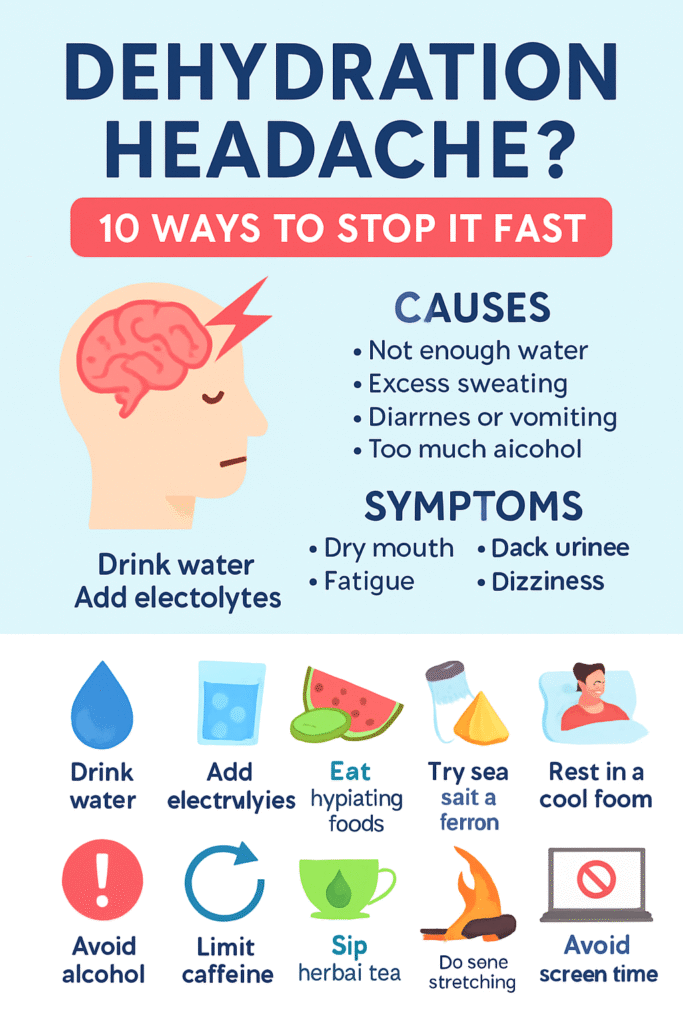
A simple relief protocol
Drink 1 to 2 cups of room-temperature water slowly to allow proper absorption.
Add electrolytes or a small pinch of natural salt to help retain fluids.
Rest in a cool, dark, and quiet environment to reduce sensory strain.
Eat hydrating foods such as watermelon, cucumber, citrus fruits, or warm broth.
Gently stretch the neck and shoulders to ease muscle tension that can worsen pain.
Sip calming herbal teas like ginger, peppermint, or chamomile.
Avoid screens, bright lights, caffeine, and alcohol until symptoms improve.
In many cases, headache intensity decreases within 20 to 30 minutes when dehydration is the primary cause.
Hydration Habits to Prevent Future Headaches
Hydration works best as a daily habit rather than a reaction to pain. Small, consistent behaviors can dramatically reduce the frequency of dehydration-related headaches.
Practical hydration habits
Start your day with a full glass of water before coffee or breakfast to replace fluids lost during sleep.
Use a water bottle with time markers or a tracking app to maintain steady intake throughout the day.
Flavor water naturally with lemon, cucumber, mint, or berries to make drinking more enjoyable.
Eat water-rich foods such as celery, lettuce, tomatoes, oranges, grapes, and watermelon.
Increase fluid intake during workouts, hot weather, illness, or travel.
Check urine color regularly. Pale yellow suggests adequate hydration, while darker shades indicate fluid deficiency.
Set reminders on your phone or smartwatch if you tend to forget to drink.
Limit excessive caffeine and alcohol, as both can increase fluid loss.
Keep a reusable water bottle nearby as a constant visual reminder to hydrate.
Consistency matters more than volume. Regular intake prevents dehydration before symptoms appear.
Hydration and Nutrition Connection
Hydration is not just about drinking water. What you eat plays a major role in fluid balance and water retention.
Hydrating foods
Fruits such as watermelon, cucumber, oranges, strawberries
Soups, stews, and broths
Leafy greens including lettuce, spinach, and romaine
Yogurt, kefir, and smoothies
Nutrients that support hydration
Fiber: Slows digestion and helps the body retain water longer.
Salt in moderation: Maintains fluid balance and supports blood pressure.
Natural sugars from fruit: Improve water absorption without the dehydrating effects of added sugars.
Simple hydrating meal ideas
Greek yogurt topped with mixed berries
Cucumber and tomato salad with olive oil
Vegetable-rich chicken soup
Coconut water smoothie with banana and spinach
Eating water-rich foods enhances the effectiveness of fluid intake and supports longer-lasting hydration.
What About Electrolytes?
Electrolytes are minerals that help the body absorb, distribute, and retain water. Losing them through sweat, illness, or physical activity can prevent proper hydration even when water intake seems adequate.
Essential electrolytes
Sodium: Regulates fluid balance and blood pressure
Potassium: Supports nerve signaling and muscle contraction
Magnesium: Aids muscle relaxation and energy production
Calcium: Plays a role in nerve transmission and hydration regulation
Natural ways to replenish electrolytes
Unsweetened coconut water
Oral rehydration salts, especially after illness or heavy sweating
Homemade electrolyte drinks made with water, salt, lemon, and a small amount of honey
Electrolyte powders or tablets
Bone broth, which provides minerals and collagen
Including electrolytes allows fluids to be absorbed more efficiently and reduces the risk of recurring dehydration headaches.
When to See a Doctor
Most dehydration headaches resolve with proper fluid and electrolyte intake. However, medical evaluation is important if symptoms suggest a more serious issue.
Seek medical care if:
Headaches persist despite consistent hydration
You experience vomiting, confusion, fainting, or severe dizziness
You have underlying conditions such as kidney disease, heart disease, or diabetes
Urine remains dark or minimal for more than 24 hours
Headaches become frequent, severe, or interfere with daily activities
You suspect heat exhaustion, heatstroke, or severe electrolyte imbalance
Prompt evaluation helps rule out serious conditions and ensures appropriate treatment.
Final Thoughts: Listen to What Your Body Is Telling You
Not every headache needs medication, in many cases, it needs hydration.
Dehydration headaches are among the most common and most preventable types of head pain. Even mild fluid loss can reduce blood flow to the brain, disrupt electrolytes, and trigger discomfort. The good news is that small, consistent changes can make a meaningful difference. Drinking enough water, eating hydrating foods, and maintaining proper electrolyte balance can significantly reduce how often these headaches occur and how severe they feel.
Before reaching for a painkiller, pause for a moment and ask yourself a simple question: Have I had enough fluids today? That brief check can save you from unnecessary medication and recurring pain.
Staying hydrated is not about following rigid rules or forcing large amounts of water at once. It is about paying attention to your body, responding early to warning signs, and building habits that support hydration throughout the day.
When you hydrate regularly, eat smart, and respect your body’s signals, you are not just preventing headaches. You are supporting brain function, energy levels, and overall well-being. Water is not just a drink, it is one of the most effective and underestimated tools for protecting your brain from pain.
👩⚕️ Need Personalized Health Advice?
Get expert guidance tailored to your unique health concerns through MuseCare Consult. Our licensed doctors are here to help you understand your symptoms, medications, and lab results—confidentially and affordably.
👉 Book a MuseCare Consult NowRelated Post:
- 10 Essential Medications for Headaches: Benefits, Risks, and How They Work
- 10 Proven Exercise and Headache Solutions That Help, Not Hurt
- 7 Powerful Ways Stress Causes Headaches and How to Stop Them
- 7 Ways Hormones Affect Headaches in Women and How to Stop Them
- When Headaches Signal Something Serious: 10 Warning Signs You Should Never Ignore
- 10 Proven Ways Sleep Triggers Chronic Headaches (And How to Fix Them)

Dr. Ijasusi Bamidele, MBBS (Binzhou Medical University, China), is a medical doctor with 5 years of clinical experience and founder of MyMedicalMuse.com, a subsidiary of Delimann Limited. As a health content writer for audiences in the USA, Canada, and Europe, Dr. Ijasusi helps readers understand complex health conditions, recognize why they have certain symptoms, and apply practical lifestyle modifications to improve well-being