Is Your Poop Trying to Tell You Something? Let’s be honest, poop is rarely a topic we feel comfortable discussing but when your body is running low on essential nutrients like iron, your stool might be one of the first places symptoms show up. In fact, noticing a change in your stool color could be an early, visible sign that something is off internally including a potential iron deficiency.
So, what does iron-deficient poop actually look like? Is black poop normal when taking iron supplements? Could pale stool also mean something’s wrong?
Let’s dive into the colorful truth about stool, iron, and what your bathroom habits might be trying to tell you.
Table of Contents
1. What Is Iron Deficiency?
2. How Iron Affects Stool Color
3. Normal Stool Colors
4. Stool Colors Linked to Iron Deficiency
5. Other Signs of Iron Deficiency
6. Iron Supplements and Black Poop
7. When to See a Doctor
8. Can Pale Stool Indicate Iron Deficiency?
9. How to Confirm Iron Deficiency
10. Dietary Tips to Prevent Iron Deficiency
11. Natural Iron Boosters
12. Final Thoughts
What Is Iron Deficiency?
Iron deficiency occurs when your body doesn’t have enough iron to produce sufficient hemoglobin, the protein in red blood cells responsible for transporting oxygen to every tissue and organ, without enough iron, your body’s cells struggle to get the oxygen they need, which can affect energy levels, organ function, and overall health.
Several factors can contribute to iron deficiency:
Blood loss: Heavy menstrual periods or internal bleeding in the gastrointestinal tract can deplete iron stores.
Inadequate dietary intake: Diets low in iron-rich foods, especially heme iron from animal sources, may not meet the body’s needs.
Increased requirements: Periods of rapid growth in children, pregnancy, or breastfeeding increase iron demands.
Malabsorption issues: Conditions like celiac disease, Crohn’s disease, or surgical alterations to the digestive tract can reduce the body’s ability to absorb iron efficiently.
When iron levels drop significantly, deficiency can progress to anemia, a condition characterized by fatigue, weakness, dizziness, and shortness of breath. Yet, before these systemic symptoms appear, your stool may already be sending subtle signals that something is off.
How Iron Affects Stool Color
The color of your stool is influenced by diet, medications, digestive health, and the body’s handling of nutrients like iron. Iron status, whether too low or supplemented, can impact stool appearance in different ways.
Iron deficiency itself doesn’t always directly alter stool color. However, related issues such as gastrointestinal bleeding, bile production problems, or malabsorption can result in noticeable changes.
Iron supplementation often causes stool to turn dark green or black. This is a normal reaction caused by unabsorbed iron interacting with digestive compounds, and it’s usually harmless.
While there isn’t a single stool color that definitively signals iron deficiency, paying attention to unexpected changes can help you detect underlying issues early. Any persistent color changes, especially when accompanied by fatigue or other symptoms, warrant a closer look and possibly lab testing.
Normal Stool Colors And What They Mean
Understanding what’s normal for stool is the first step in identifying potential health issues. Stool color is influenced by diet, bile production, gut bacteria, and nutrient absorption. Here’s a breakdown of typical colors and what they indicate:
Brown: This is considered the standard for healthy stool. The color comes from bile and bilirubin, substances produced by the liver and gallbladder that help digest fats. Brown stool usually indicates a well-functioning digestive system.
Green: Occasionally green stool is normal, often resulting from eating leafy greens or taking iron supplements. It can also appear if stool passes quickly through the intestines, limiting the time bile has to break down fully.
Yellow: Yellow stool may sometimes indicate fat malabsorption or digestive enzyme deficiencies, but it can also appear due to dietary choices, such as high-fat or high-carotenoid meals.
Dark Brown: Deep brown stools are normal, especially in individuals who consume meat or iron-rich foods regularly.
Consistency matters just as much as color, ideal stool is firm, sausage-shaped, and easy to pass. Changes in shape, texture, or frequency can provide additional clues about digestive health and nutrient absorption.
Stool Colors Linked to Iron Deficiency
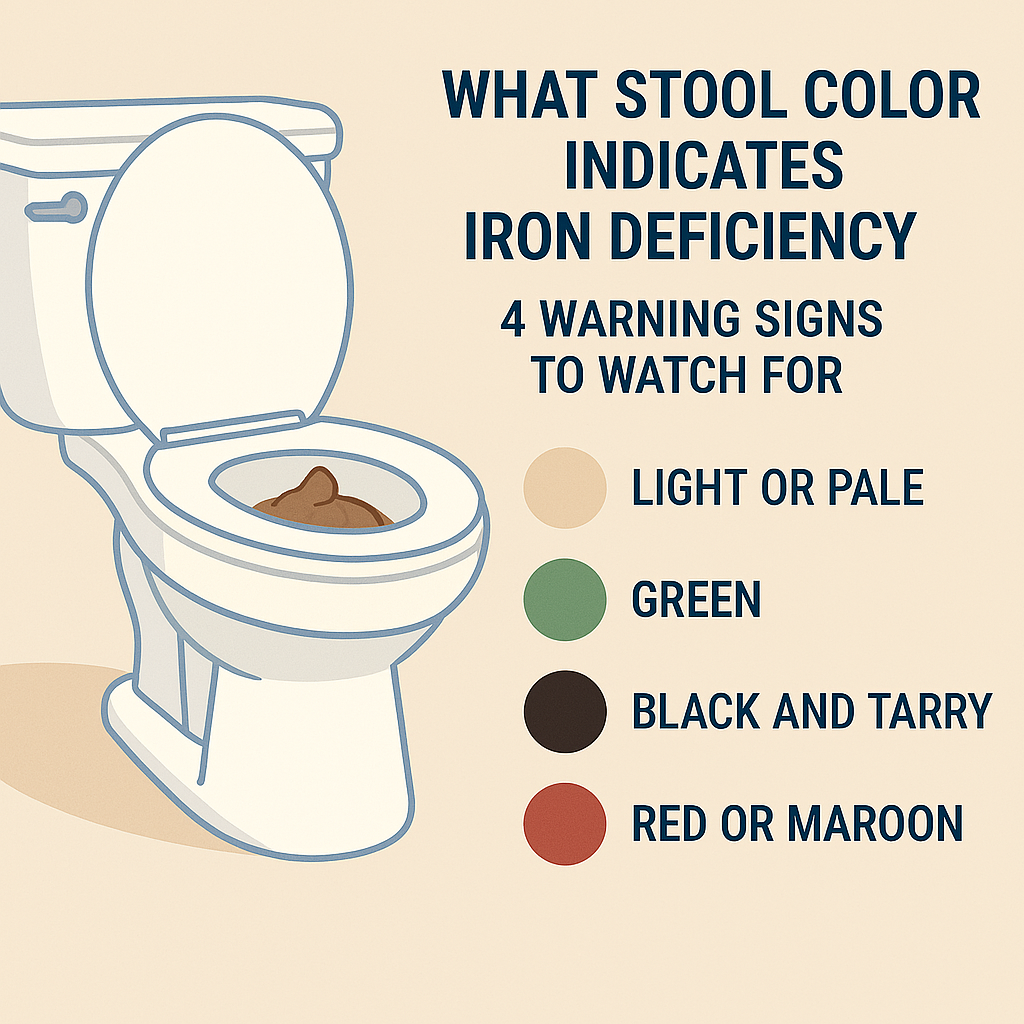
While there’s no single stool color that confirms iron deficiency, certain shades can raise red flags:
Black or Tarry Stool (Melena): Black, sticky, or tarry stool can indicate bleeding in the upper gastrointestinal tract, such as from ulcers, gastritis, or esophageal varices. It’s important to note that black stool is also a common side effect of iron supplements and is usually harmless in that context. Persistent black stool unrelated to supplements should prompt medical evaluation.
Pale or Clay-Colored Stool: Light-colored stool may reflect low bile production or issues with the liver or gallbladder. Since bile is essential for absorbing fat-soluble nutrients including iron, pale stool could indirectly signal impaired nutrient absorption.
Green Stool: Beyond diet, green stool can result from iron supplements or rapid intestinal transit, such as diarrhea or gut inflammation. While not always dangerous, frequent green stools may point to underlying issues that could affect iron absorption.
Bright Red Streaks: Fresh red blood in the stool typically comes from hemorrhoids or anal fissures. While usually minor, chronic blood loss from these sources can eventually contribute to iron deficiency anemia.
Stool color alone cannot diagnose iron deficiency, but persistent or unusual changes should not be ignored. Combined with other symptoms like fatigue, dizziness, or pale skin, stool observations can guide you toward necessary lab testing and medical review.
Other Signs of Iron Deficiency
While stool changes can offer clues, iron deficiency often shows up in other ways too. These include:
- Chronic fatigue or low energy
- Pale skin and inner eyelids
- Shortness of breath
- Headaches or dizziness
- Rapid heartbeat or palpitations
- Cold hands and feet
- Brittle nails or hair loss
- Cravings for non-food items (ice, clay)
- Restless legs syndrome
If you experience several of these symptoms alongside unusual stool color, it’s time to investigate further.
Iron Supplements and Black Poop
If you’ve ever taken an iron supplement, you may have noticed a dramatic change in stool color. It often turns dark green or black, and that’s usually harmless.
Why does this happen: Unabsorbed iron reacts with compounds in your digestive tract, creating dark-colored stools. This is not blood and isn’t dangerous, but it can be confusing. If your black stool is tarry, sticky, or foul-smelling, and not linked to supplements, it could indicate bleeding and requires medical evaluation.
When to See a Doctor
It’s important to pay attention to persistent or unusual changes in your stool, especially when accompanied by other symptoms. You should consult a healthcare provider if you notice:
Stool that is consistently black or pale without explanation
Symptoms of anemia, such as fatigue, paleness, or dizziness.
Blood in your stool, whether bright red or dark.
A family history of colon disease or digestive disorders.
Your doctor may recommend diagnostic tests to determine the underlying cause, including:
Complete blood count (CBC): To check for anemia and red blood cell health
Iron studies: serum ferritin, total iron-binding capacity/TIBC: To assess your iron stores and transport capacity
Fecal occult blood test: To detect hidden blood in the stool
Endoscopy or colonoscopy: If gastrointestinal bleeding is suspected
Can Pale Stool Indicate Iron Deficiency?
Yes, but usually indirectly. Pale or clay-colored stool may indicate that your liver or bile ducts aren’t functioning properly. Bile is necessary for absorbing fat-soluble nutrients, including iron, so impaired bile production or flow can contribute to malabsorption and eventually lead to iron deficiency.
Other potential causes of pale stool include:
Liver disease
Gallstones blocking bile ducts
Pancreatic disorders
While pale stool alone doesn’t confirm iron deficiency, it’s a signal to investigate digestive and nutrient absorption health.
How to Confirm Iron Deficiency
If iron deficiency is suspected, your healthcare provider may order the following tests:
Hemoglobin and hematocrit: Basic screening for anemia
Serum ferritin: The best early indicator of iron stores
Total iron-binding capacity (TIBC): Measures the blood’s capacity to transport iron
Transferrin saturation: Indicates how much iron is bound in the blood
Additional tests may be needed to rule out gastrointestinal bleeding, malabsorption, or other underlying conditions that could be contributing to low iron levels.
Dietary Tips to Prevent Iron Deficiency
Eat more heme iron sources: Red meat, liver, poultry, and seafood
Include non-heme iron sources: Spinach, lentils, beans, tofu
Pair with vitamin C: Citrus fruits, bell peppers, or strawberries enhance iron absorption
Avoid iron blockers: Limit tea, coffee, calcium, and antacids around mealtime. Cooking in a cast iron skillet can increase the iron content of food!
Natural Iron Boosters
1. Moringa leaf powder: A superfood rich in bioavailable iron
2. Nettle leaf tea: Used traditionally to support blood health
3. Blackstrap molasses: A natural iron-rich sweetener
4.Beetroot and pomegranate juice: Support red blood cell production
5.Spirulina: A blue-green algae loaded with iron and B12
Always consult a healthcare provider before starting supplements or herbal remedies.
Final Thoughts
Stool color might not be the first thing you think of when it comes to iron deficiency, but it can provide valuable insight into your body’s health. Changes in your stool, from pale, clay-like shades to tarry black tones, can serve as early warning signs of issues such as malabsorption, liver or bile problems, or gastrointestinal bleeding that may ultimately affect iron levels.
It’s not just about color. Pay attention to accompanying symptoms like fatigue, dizziness, paleness, shortness of breath, or unusual cravings. These can collectively point toward iron deficiency long before more severe complications arise.
Being proactive matters. Track changes in your stool, note persistent symptoms, and don’t hesitate to seek medical evaluation if something feels off, with the right tests, dietary adjustments, and treatments, iron deficiency is highly treatable, meaning you can restore your energy, improve your overall health, and prevent long-term complications.
Your gut is trying to communicate, listen carefully, act promptly, and take control of your health.

Dr. Ijasusi Bamidele, MBBS (Binzhou Medical University, China), is a medical doctor with 5 years of clinical experience and founder of MyMedicalMuse.com, a subsidiary of Delimann Limited. As a health content writer for audiences in the USA, Canada, and Europe, Dr. Ijasusi helps readers understand complex health conditions, recognize why they have certain symptoms, and apply practical lifestyle modifications to improve well-being