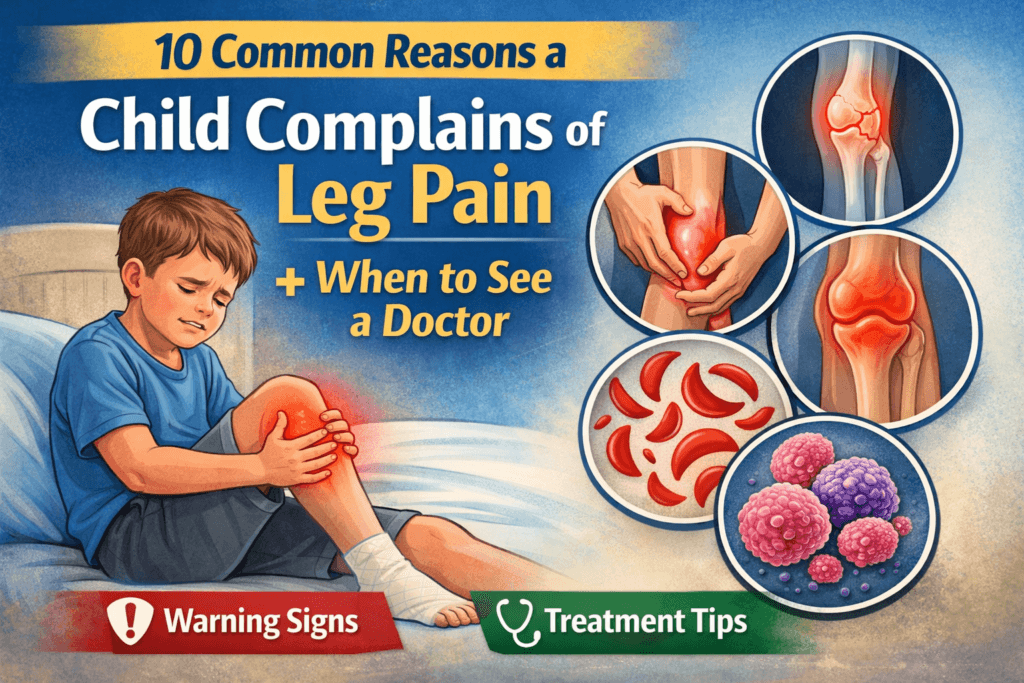
10 Common Reasons a Child Complains of Leg Pain + When to See a Doctor
Leg pain in children is one of the most common reasons parents end up worried, confused, and searching for answers. One day a child is running around normally, the next, they are holding their leg and saying it hurts. Sometimes the pain disappears as quickly as it came. Other times, it lingers and raises an uncomfortable question every parent eventually asks.
Is this normal, or is something wrong?
The truth is that leg pain in children sits on a wide spectrum. In many cases, it is harmless and temporary. It may be related to physical activity, muscle fatigue, or common childhood growth patterns, in other cases, however, leg pain is the first visible sign of a deeper medical problem that needs attention. The real challenge is not the pain itself. It is knowing which category it falls into.
Children also struggle to explain pain clearly. a child saying “my leg hurts” does not tell the full story. They may be feeling muscle soreness after play, stress carried in the body, joint inflammation, an early infection, or pain coming from the bones, nerves, or even the blood. Young children often lack the words to describe where the pain is coming from or how severe it feels. This makes it harder for parents to judge what is happening.
That uncertainty is what makes leg pain so stressful for caregivers, ignoring it can feel risky, overreacting can feel unnecessary. Most parents are left stuck in the middle, unsure of what to watch for and when to act.
This article breaks it all down in a clear and practical way, you will learn the common reasons children complain of leg pain, how to spot warning signs that should never be ignored, how doctors approach diagnosis, and when medical care is truly urgent. This is not guesswork or internet myths, everything here is grounded in pediatric medicine and real clinical patterns, explained in a way that actually makes sense for parents.
Understanding Leg Pain in Children
Leg pain in children is not one single problem, it is a symptom that can come from many different parts of the body. When a child says their leg hurts, they may be referring to discomfort anywhere from the hip down to the foot. This includes the hips, thighs, knees, calves, ankles, and feet.
The pain itself can show up in different ways. It may be sharp or dull, it may come and go, or it may stay constant. Some children describe mild discomfort, while others experience pain intense enough to stop them from walking or sleeping. These differences matter because they often give clues about the underlying cause.
Children experience leg pain differently from adults, their bones are still growing, their muscles are strengthening, and their nervous system is still developing. One important difference is the presence of growth plates, these are areas of soft tissue near the ends of bones that allow the bones to lengthen as a child grows. Growth plates are weaker than mature bone and are more prone to injury or inflammation. This means a child can have significant pain even when there is no obvious injury or swelling because of these factors, leg pain in children needs to be looked at through a different lens than leg pain in adults.
Broad Categories of Leg Pain
Doctors generally group leg pain in children into several broad categories to guide evaluation and treatment. These include:
Benign and self-limited causes
Musculoskeletal injuries
Inflammatory or autoimmune conditions
Infectious causes
Neurological causes
Bone and joint disorders
Hematologic or oncologic causes
Most children fall into the benign categories, but identifying where a child’s pain fits is essential. The goal is not to panic, but to avoid missing something serious.
Common Benign Causes of Leg Pain
1. Growing Pains
Growing pains are the most common cause of leg pain in children, especially between the ages of 3 and 12 years. Despite how alarming the pain can feel to parents, growing pains are considered harmless.
They have a very recognizable pattern, the pain usually appears in the evening or at night, often after a physically active day. It commonly affects both legs rather than just one and is most often felt in the calves, thighs, or behind the knees. Children with growing pains typically have no trouble walking, running, or playing during the day.
On examination, the child looks completely normal, there is no swelling, redness, warmth, or limitation in movement.
It is important to understand that growing pains are not directly caused by bones growing too fast. Current evidence suggests they are more likely related to muscle fatigue, high activity levels, and how a child’s nervous system processes pain.
One critical point parents need to know is this, growing pains do not cause fever, swelling, redness, limping, or persistent daytime pain. If any of those signs are present, the pain should not be labeled as growing pains.
2. Muscle Overuse and Fatigue
Another very common and harmless cause of leg pain is muscle overuse. Active children place a lot of stress on their muscles, especially when they start a new sport, increase training intensity, or spend long hours running and jumping.
Muscle-related pain usually has a clear pattern, it tends to appear after activity, improves with rest, and feels sore rather than sharp. The pain is typically located in the muscle itself, not inside the joint, within a few days, the discomfort fades as the muscles recover.
If pain continues despite adequate rest, keeps returning without increased activity, or worsens over time, it should be evaluated further.
3. Injuries and Trauma
Minor Injuries
Children fall, bump into things, twist awkwardly, and keep playing as if nothing happened. Many minor injuries are forgotten or never mentioned, especially in younger children.
Small muscle strains, ligament sprains, or bruises can cause localized leg pain. Parents may notice tenderness when touching a specific area or mild swelling, in most cases, these injuries heal on their own with rest and time.
However, pain that does not improve or that interferes with walking should not be dismissed as just a minor injury.
4. Stress Fractures
Stress fractures are tiny cracks in the bone caused by repeated stress rather than a single traumatic event. They are more common in children who participate in high-impact sports such as running, gymnastics, or football.
Unlike muscle pain, stress fracture pain worsens with activity and improves with rest. The pain is usually localized to one specific spot on the bone and is often tender to touch. Because stress fractures may not show up immediately on basic X-rays, medical evaluation and appropriate imaging are important.
Ignoring a stress fracture can lead to worsening injury and longer recovery.
Joint-Related Causes
1. Transient Synovitis
Transient synovitis is a temporary inflammation of the hip joint and is one of the most common causes of sudden leg pain or limping in young children, typically between ages 3 and 8.
It often appears after a recent viral illness such as a cold or flu. The child may suddenly limp, complain of hip, thigh, or knee pain, or refuse to put weight on the leg. Even though the pain is in the leg, the actual problem is often in the hip joint.
Most cases improve within one to two weeks with rest and anti-inflammatory care. However, transient synovitis must always be carefully distinguished from more serious joint infections, which can look similar in the early stages but require urgent treatment.
2. Juvenile Idiopathic Arthritis
Juvenile idiopathic arthritis is a long-term inflammatory condition that affects children and can be an important cause of persistent leg pain. Unlike temporary aches or injuries, this type of pain does not simply go away with rest.
Children with juvenile idiopathic arthritis often show a specific pattern of symptoms. One of the earliest clues is morning stiffness, parents may notice that the child struggles to move normally after waking up, but gradually loosens up as the day goes on. Swelling or puffiness around a joint is common, and the joint may feel warm to the touch even without redness.
Another key warning sign is duration, pain that lasts longer than six weeks, especially when accompanied by stiffness or swelling, should always be evaluated. Juvenile idiopathic arthritis is not rare, but it is frequently missed early on.
Delayed diagnosis can lead to permanent joint damage, reduced mobility, and long-term disability. Early treatment significantly improves outcomes.
Bone Disorders
1. Osteomyelitis
Osteomyelitis is a bacterial infection of the bone and is considered a medical emergency in children. Bacteria can reach the bone through the bloodstream or after an injury, and the infection can spread quickly.
Children with osteomyelitis typically develop severe, localized leg pain that is clearly different from common aches. The pain is often intense, constant, and worsens with movement. Fever is common, and the affected area may become swollen, red, and warm.
In many cases, the child refuses to move or bear weight on the affected limb because of the pain, this level of discomfort is a major red flag.
Prompt diagnosis and intravenous antibiotics are essential, delayed treatment can result in permanent bone damage or spread of infection.
2. Slipped Capital Femoral Epiphysis
Slipped capital femoral epiphysis occurs when the top part of the thigh bone slips at the growth plate, it usually affects adolescents, particularly during periods of rapid growth.
The pain is often misleading, instead of hip pain, the child may complain of pain in the thigh or knee. Limping is common, and parents may notice limited movement of the hip, especially when the child tries to rotate the leg inward.
This condition requires urgent orthopedic evaluation, continued walking on the affected leg can worsen the slip and lead to long-term joint damage.
Neurological Causes of Leg Pain
1. Nerve Compression or Irritation
Although less common, problems involving the nerves or spine can cause leg pain in children. In these cases, the pain may not originate in the leg itself but is instead referred from the nervous system.
Nerve-related pain often feels different from muscle or joint pain. Children may describe it as shooting, burning, or electric-like. Tingling, numbness, or weakness in the leg can also occur. These symptoms suggest that the nerves are involved.
Neurological causes should never be ignored, especially if pain is accompanied by weakness or changes in sensation.
2. Infectious Causes
Viral Myositis
Some viral infections can temporarily inflame muscles, leading to sudden leg pain. This condition often appears shortly after a child recovers from a common viral illness.
The pain most often affects the calves and can be severe enough to make walking difficult or painful. Parents may be alarmed when a previously active child suddenly refuses to walk or walks on their toes.
Blood tests may show elevated muscle enzymes, confirming muscle inflammation. Fortunately, viral myositis is usually self-limited and resolves on its own with rest and hydration, but it should still be evaluated to rule out more serious conditions.
3. Septic Arthritis
Septic arthritis is a bacterial infection of a joint and is one of the most serious causes of leg pain in children. The condition develops rapidly and causes intense pain.
Affected joints become swollen, hot, and extremely tender. The child often refuses to move the joint at all, fever is usually present, and the child may appear generally unwell.
Septic arthritis is a surgical emergency, immediate treatment is required to prevent permanent joint damage and life-threatening complications.
Blood Disorders and Serious Causes
1. Sickle Cell Disease
Children with sickle cell disease can experience episodes of severe leg pain due to blocked blood flow in small blood vessels. These painful episodes can occur suddenly and may be triggered by infection, dehydration, or cold temperatures.
The pain is often intense, recurrent, and may be associated with swelling of the affected limb. Early recognition and appropriate management are critical to prevent complications and reduce pain severity.
2. Bone Tumors and Leukemia
Although rare, cancer must always be considered when leg pain does not follow a benign pattern. Certain warning signs raise concern for serious underlying disease.
These include pain that is persistent and progressive, pain that is worse at night, and pain that does not improve with rest. Associated symptoms such as unexplained weight loss, fatigue, pale appearance, or frequent infections should never be ignored.
Leukemia can cause leg pain due to expansion of the bone marrow, leading to deep, aching discomfort.
Persistent night pain is never normal in children and always warrants medical evaluation.
Red Flags Parents Must Never Ignore
Parents should seek immediate medical care if a child experiences any of the following:
Pain that regularly wakes them from sleep
Fever combined with leg pain
Swelling, redness, or warmth over a limb or joint
Limping or refusal to walk
Unexplained weight loss or ongoing fatigue
Pain lasting longer than two weeks
Pain occurring after minimal or no injury
These signs strongly suggest that the pain is not benign and needs prompt evaluation.
How Doctors Evaluate Leg Pain in Children
Medical History
A detailed history is the foundation of diagnosis. Doctors focus on the duration and location of the pain, how and when it started, and whether it is getting better or worse. They also ask about the child’s activity level, recent infections, injuries, and family history of autoimmune or blood disorders. Small details often provide the biggest clues.
Physical Examination
The physical exam includes watching how the child walks, checking joint movement, testing muscle strength, and identifying areas of tenderness. Neurological testing helps determine whether nerves are involved.
A careful examination often narrows the diagnosis significantly.
Imaging and Tests
Not every child needs imaging or blood tests. However, when red flags are present, further investigation is essential. Depending on the findings, doctors may order X-rays, MRI scans, blood tests, or ultrasound.
Imaging is used strategically, not routinely, but serious causes of leg pain must never be overlooked.
Treatment Depends on the Cause
There is no single treatment for leg pain in children because the cause determines everything. What helps one child may be completely inappropriate for another, this is why proper evaluation matters. Treating leg pain without understanding the reason behind it can delay recovery or worsen the problem.
Conservative Management
Many cases of leg pain in children are benign and improve with simple, supportive care. When the cause is muscle fatigue, minor strain, or growing pains, conservative management is often all that is needed.
This usually includes allowing the child to rest and avoiding activities that worsen the pain. Gentle stretching can help relieve muscle tightness, especially after physical activity. Heat or light massage may soothe discomfort and help the child relax, just as important is reassurance. When children understand that their pain is being taken seriously and is not dangerous, their anxiety often decreases, which can reduce how intense the pain feels.
These measures work best when the pain is mild, short-lived, and not associated with warning signs.
Medical Treatment
When leg pain is caused by inflammation, infection, or systemic disease, medical treatment is required. Inflammatory conditions may be treated with anti-inflammatory medications to reduce pain and swelling. Infections such as osteomyelitis or septic arthritis require antibiotics, often given through a vein, especially in severe cases.
Some autoimmune or inflammatory conditions may need steroids or other immune-modulating medications. In more serious situations, hospital admission is necessary to monitor the child closely, manage pain, and deliver treatment safely.
Medical treatment is not optional in these cases. Delays can result in lasting damage.
Surgical Intervention
Certain causes of leg pain cannot be managed without surgery. Septic arthritis requires urgent surgical drainage of the infected joint. Slipped capital femoral epiphysis often needs surgical stabilization to prevent further damage to the hip.
Surgery may sound frightening, but in these situations it is the fastest and safest way to protect the child’s long-term health and mobility.
What Parents Should Do at Home
Parents play a critical role in recognizing when leg pain is normal and when it is not. Paying attention to patterns often reveals more than any single complaint.
Observe when the pain occurs, how long it lasts, and whether it is getting better or worse. Note any triggers, such as physical activity, illness, or time of day. Avoid brushing off repeated complaints, even if the child seems fine otherwise.
Do not force a child to push through pain or continue activities that clearly make the discomfort worse. Pain is a signal, not a weakness.
When there is uncertainty, seeking medical advice is always the safer option. Parents should trust patterns, not assumptions.
Why Early Diagnosis Matters
Delaying evaluation of leg pain can have serious consequences. Conditions that start with mild symptoms can progress silently if left untreated.
Delayed diagnosis may lead to permanent joint damage, abnormal bone growth, chronic pain, or reduced mobility. In some cases, untreated infections or systemic diseases can become life-threatening.
Leg pain should never be ignored simply because a child is young, early assessment protects not only a child’s comfort today, but their health and mobility for years to come.
Final Thoughts
When a child complains of leg pain, it does not automatically mean something is seriously wrong. In most cases, the cause is harmless and temporary, and the pain fades with time and simple care. At the same time, leg pain should never be brushed aside or treated as meaningless.
The real difference between a minor issue and a serious one comes down to attention. Watching for patterns, recognizing warning signs, and acting early when something feels off makes all the difference. Parents do not need to panic, but they do need to stay alert and informed.
Children rely on adults to notice what they cannot explain clearly, listening to their complaints, even when they seem vague or inconsistent, is part of protecting their health.
When there is doubt, getting a child checked is the safer choice. A medical evaluation offers reassurance when everything is normal and early intervention when it is not. The cost of a missed diagnosis is always higher than the cost of an extra visit to the doctor.
Related Blog Post:
- Frequent Fever in Children: 9 Hidden Causes Parents Must Not Ignore
- 10 Powerful Reasons Your Child Is Tired All the Time (And What to Do)
- Child Not Eating Properly: 17 Doctor-Backed Reasons Parents Must Know
- 15 Common Childhood Symptoms Explained: What’s Normal and When to Worry
- Childhood Trauma and Adult Anxiety: 7 Powerful Ways to Heal

Dr. Ijasusi Bamidele, MBBS (Binzhou Medical University, China), is a medical doctor with 5 years of clinical experience and founder of MyMedicalMuse.com, a subsidiary of Delimann Limited. As a health content writer for audiences in the USA, Canada, and Europe, Dr. Ijasusi helps readers understand complex health conditions, recognize why they have certain symptoms, and apply practical lifestyle modifications to improve well-being